Mix the dough: In a large bowl, whisk flour, salt, and yeast.
Pour in warm water and stir with a spoon until a shaggy, sticky dough forms. It won’t look smooth. That’s perfect.
First rise (long rest): Cover the bowl with plastic wrap or a clean towel.
Let it rest at room temperature for 12–18 hours. You’ll know it’s ready when the surface is dotted with bubbles and the dough has doubled.
Prepare your surface: Lightly flour your counter. Scrape the dough out gently with a spatula.
Try not to deflate it too much.
Shape the dough: Dust your hands with flour. Fold the dough edges toward the center a few times to make a loose ball. Don’t overwork it.
The dough should stay soft and airy.
Second rise: Place the dough seam-side down on a piece of parchment or a floured towel. Dust the top with flour. Cover and let rise for 45–60 minutes, until puffy and slightly domed.
Preheat the oven and pot: About 30 minutes before baking, put a Dutch oven (with lid) in your oven and preheat to 450°F (230°C).
A preheated pot gives you that crisp, crackly crust.
Score the top: If you like, use a sharp knife or razor to make a shallow slit on top. This helps control the expansion in the oven.
Transfer to the pot: Carefully remove the hot Dutch oven. Lift the dough using the parchment and place it inside.
Cover with the lid.
Bake covered: Bake for 30 minutes with the lid on. The trapped steam helps the bread rise and form a glossy crust.
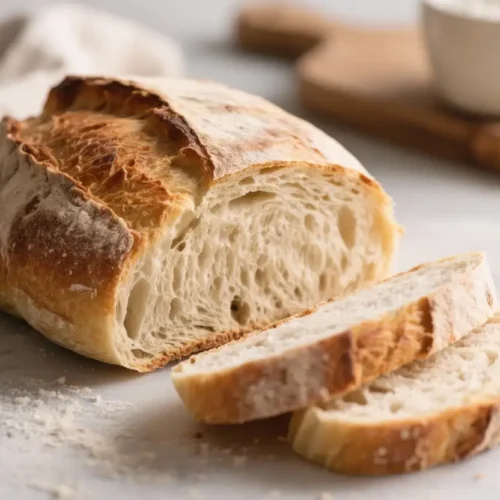
Finish uncovered: Remove the lid and bake another 12–18 minutes, until deep golden brown and crackly. The loaf should sound hollow when tapped on the bottom.
Cool completely: Transfer to a rack and let cool at least 45–60 minutes before slicing.
This sets the crumb and keeps it moist.
Serve: Slice and enjoy with butter, olive oil, soup, or anything you love. It’s excellent toasted the next day.