Soften the oats: Place 1 cup rolled oats in a bowl. Pour 1 cup boiling water over them, stir, and let sit for 10–15 minutes.
The oats should be soft and warm, not hot.
Activate the yeast (if using active dry): In a small bowl, mix warm milk, honey, and yeast. Let it stand 5–10 minutes until foamy. If using instant yeast, you can add it directly to the flour later.
Combine the base: In a large mixing bowl, add the softened oats, melted butter, salt, and the milk-yeast mixture (or milk + honey if using instant yeast).
Stir to combine.
Add the flour: Start with 2 1/2 cups bread flour. If using instant yeast, add it now. Mix with a spoon or dough hook until a shaggy dough forms.
If it’s very sticky, add flour 1 tablespoon at a time. If it feels stiff, add a splash of warm water.
Knead: Knead by hand on a lightly floured surface for 8–10 minutes, or by mixer on medium-low for 6–7 minutes. You’re looking for a smooth, slightly tacky dough that springs back when pressed. Don’t over-flour; a soft dough makes a softer loaf.
First rise: Place the dough in a lightly greased bowl, cover, and let it rise in a warm spot until doubled, about 60–90 minutes.
Shape the loaf: Gently deflate the dough.
Pat it into a rectangle (about 8x12 inches). Roll it up from the short side into a tight log, pinching the seam and tucking the ends under.
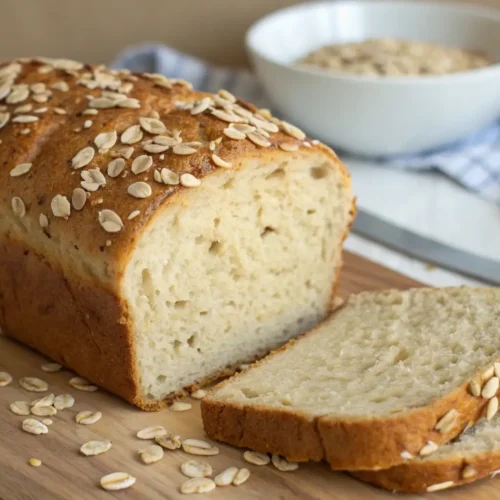
Pan and proof: Place the log seam-side down into a greased 9x5-inch loaf pan. Brush the top lightly with milk or water and sprinkle with oats.
Cover and let rise until the dough domes about 1 inch above the pan rim, 35–60 minutes depending on room temperature.
Preheat and bake: Preheat the oven to 350°F (175°C). Bake for 30–38 minutes. The top should be golden brown, and the internal temperature should read about 190–195°F.
If it’s browning too quickly, tent with foil for the last 10 minutes.
Cool: Remove from the pan and cool on a rack for at least 1 hour before slicing. This sets the crumb and keeps it from squishing.