Prep the pan. Line the bottom of a springform pan with parchment. Lightly grease the sides for easier release.
Make the crust. Combine crushed cookies, melted butter, and a pinch of salt.
Press firmly into the pan in an even layer. Chill in the fridge while you make the mousse. For extra sturdiness, bake at 350°F (175°C) for 8 minutes, then cool completely.
Blend the mango. If using fresh mangoes, peel, pit, and blend the flesh until smooth.
You’ll need about 2 cups of puree. Taste and adjust sweetness with sugar as needed.
Bloom the gelatin. In a small bowl, sprinkle 2 1/2 tsp gelatin over 3 tbsp cold water. Let it sit for 5–10 minutes until spongy.
Warm part of the puree. In a small saucepan over low heat, warm 1/2 cup of the mango puree with the sugar and a pinch of salt until the sugar dissolves and the mixture is hot but not boiling.
Remove from heat.
Dissolve the gelatin. Stir the bloomed gelatin into the warm mango mixture until fully dissolved. Whisk in the remaining mango puree and lemon or lime juice. Let cool to room temperature, stirring occasionally so it doesn’t set.
Whip the cream. In a cold bowl, whip heavy cream and vanilla to soft peaks.
Don’t overbeat; it should be smooth and billowy.
Fold it together. Gently fold one-third of the whipped cream into the mango mixture to lighten it. Fold in the rest just until combined. The mousse should be airy and uniform.
Fill the pan. Pour the mango mousse over the chilled crust.
Smooth the top with an offset spatula. Tap the pan gently to remove large air bubbles.
Chill to set. Cover and refrigerate for at least 4–6 hours, or overnight for best texture.
Make the mango topping (optional). Bloom 1 tsp gelatin in 1 tbsp cold water. Warm 1/2 cup mango puree with 2 tbsp water and sugar if needed.
Remove from heat, stir in the bloomed gelatin until dissolved, and cool until just slightly thickened.
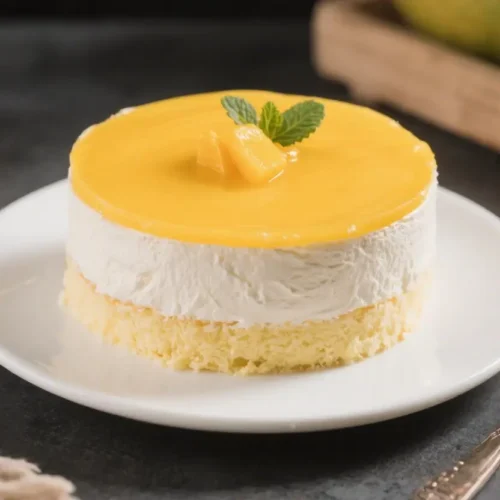
Add the glaze. Pour the cooled mango topping over the set mousse, tilting the pan for an even layer. Chill 45–60 minutes to set.
Unmold and garnish. Run a thin knife around the edge, release the springform ring, and transfer to a serving plate. Garnish with fresh mango slices, mint leaves, or toasted coconut.
Slice and serve. Use a warm, dry knife for clean slices.
Wipe between cuts.