Warm the milk. Heat the milk until it’s warm to the touch, not hot.
If using active dry yeast, stir it into the milk with a pinch of sugar and let it sit for 5–10 minutes until foamy. If using instant yeast, you can skip proofing and add it directly to the flour.
Mix the wet ingredients. In a large bowl, whisk the Greek yogurt, egg, honey, and oil until smooth. Add the warm milk (with proofed yeast if using active dry).
Combine the dry ingredients. In a separate bowl, mix flour, yeast (if instant), and salt.
Add this to the wet mixture. Stir with a wooden spoon or dough whisk until a shaggy dough forms.
Knead the dough. Turn the dough onto a lightly floured surface. Knead for 8–10 minutes until smooth and elastic.
If it’s sticky, dust lightly with flour as you go. The dough should feel soft and slightly tacky but not cling to your hands.
First rise. Place the dough in a lightly oiled bowl, turning once to coat. Cover with a clean towel or plastic wrap and let it rise in a warm spot until doubled, about 60–90 minutes.
Shape the loaf. Punch down the dough gently to release air.
Pat it into a rectangle roughly the length of your loaf pan. Roll it up tightly, pinch the seam, and tuck the ends under. Place seam-side down in a greased 9x5-inch (23x13 cm) loaf pan.
Second rise. Cover the pan lightly and let the dough rise until it crests about 1 inch above the rim, 30–45 minutes depending on room temperature.
Preheat and bake. While the dough rises, preheat the oven to 350°F (175°C).
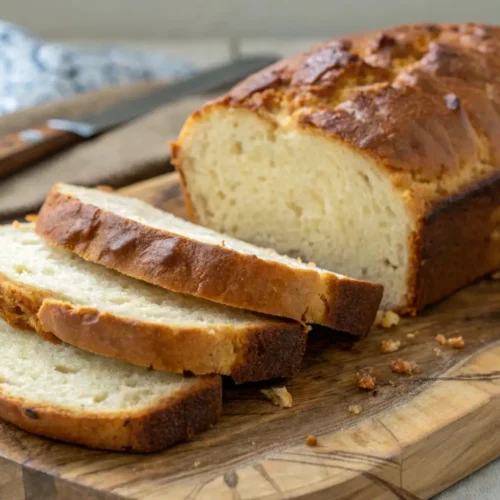
Bake for 28–35 minutes, until the top is golden and the loaf sounds hollow when tapped. An instant-read thermometer inserted in the center should read about 190–195°F (88–90°C).
Finish and cool. Brush the hot loaf with melted butter for a softer crust (optional). Let it cool in the pan for 10 minutes, then transfer to a rack to cool completely before slicing.