Proof the yeast (if using active dry): In a large bowl, mix warm water with sugar and sprinkle the yeast on top. Let it sit 5–10 minutes until foamy. If using instant yeast, skip this and combine it directly with the flour.
Mix the dough: Add flour and salt to the bowl.
Stir with a spatula until no dry spots remain. The dough will be shaggy and sticky. Drizzle in 2 tablespoons olive oil and fold to coat.
First rise: Cover the bowl tightly and let the dough rest in a warm spot for 1–1 ½ hours, or until doubled.
For more flavor, you can refrigerate the covered dough for 8–24 hours and let it finish rising at room temperature.
Prepare the pan: Generously oil a 9x13-inch pan or a large sheet pan with 2–3 tablespoons olive oil. Don’t skimp—this helps create that crisp, golden bottom.
Pan the dough: Transfer the dough to the pan. Gently stretch it toward the corners.
If it resists, let it rest 10 minutes, then continue stretching.
Second rise: Cover the pan and let the dough rise again for 30–45 minutes, until puffy. You should see bubbles forming under the surface.
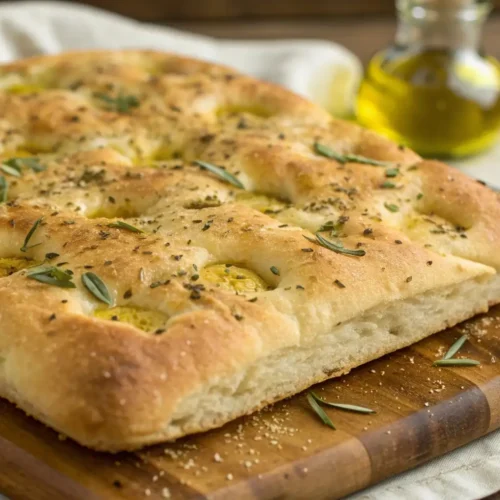
Make the dimples: Pour 2 tablespoons olive oil over the dough. With oiled fingers, press straight down to create deep dimples across the surface.
Don’t be shy—you’re encouraging those pockets of air.
Top it: Sprinkle with flaky sea salt and chopped rosemary. Add thinly sliced garlic if you like. You can also scatter halved cherry tomatoes, olives, or red onion slices.
Bake: Preheat to 425°F (220°C).
Bake for 20–25 minutes, until the top is golden and the edges are crisp. If using a darker pan, start checking at 18 minutes.
Finish and cool: Brush or drizzle with a little more olive oil while hot. Let it cool in the pan for 10–15 minutes before slicing so the crumb sets.