Preheat and set up: Heat the oven to 325°F (160°C). Arrange 6–8 shallow ramekins (4–6 oz each) in a deep baking dish or roasting pan. This will be your water bath.
Warm the cream: In a saucepan, add cream and milk (if using). Scrape the vanilla seeds into the pan and drop in the pod. Heat over medium until steaming and just below a simmer. Remove from heat, cover, and let steep for 10–15 minutes. Remove the pod.
Whisk the yolks and sugar: In a mixing bowl, whisk egg yolks, 1/2 cup sugar, and a pinch of salt until slightly lightened—about 30–45 seconds. You want it smooth, not fluffy.
Temper the eggs: Slowly pour the warm cream into the yolk mixture while whisking gently. Aim for a steady stream and avoid whipping in air. If using vanilla extract instead of a bean, stir it in now.
Strain for silkiness: Pour the custard through a fine-mesh sieve into a large measuring cup or bowl with a spout. This removes bubbles and any cooked bits for a smoother set.
Fill the ramekins: Divide the custard among the ramekins, leaving a little space at the top. Pop any surface bubbles with a quick pass of a kitchen torch or by briefly tapping the ramekins.
Prepare the water bath: Place the pan on the oven rack. Carefully pour hot water into the pan until it reaches halfway up the sides of the ramekins. This ensures gentle, even cooking.
Bake: Bake 30–40 minutes, depending on ramekin depth. You’re looking for edges set and centers slightly wobbly, like Jell-O. If you nudge a ramekin, the center should jiggle, not slosh.
Cool and chill: Remove ramekins from the water bath and cool to room temperature, about 30–45 minutes. Cover and chill at least 3 hours, ideally overnight. The custard firms and flavors meld.
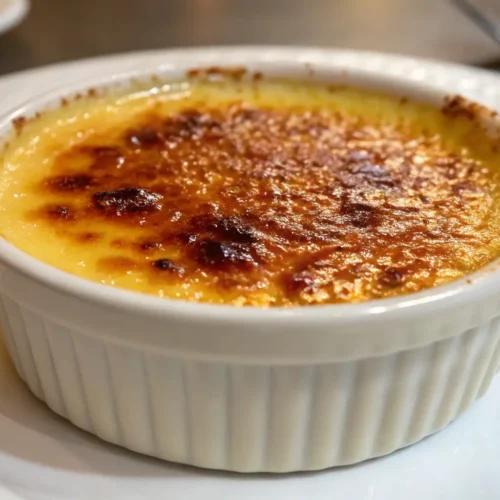
Caramelize the sugar: Right before serving, sprinkle an even, thin layer (about 1–2 teaspoons) of granulated sugar over each custard. Use a kitchen torch to melt the sugar, moving in circles to avoid burning spots. Let cool 1–2 minutes to harden. For a thicker top, add a second light layer and torch again.