Make the biga (the night before): In a medium bowl, mix water and yeast until dissolved.
Stir in the flour until no dry bits remain. It will be thick and sticky. Cover and let rest at cool room temperature for 12–16 hours.
The biga should be domed, bubbly, and fragrant.
Combine the dough: In a large bowl or stand mixer, add the biga, water, yeast, flour, salt, and olive oil (if using). Mix until shaggy and combined. Rest for 10 minutes to hydrate the flour.
Knead or mix to develop gluten: If using a stand mixer, knead on medium-low for 6–8 minutes.
By hand, use the slap-and-fold method for about 8–10 minutes. The dough should be smooth, very elastic, and still sticky. Resist adding extra flour.
First rise (bulk fermentation): Transfer to a lightly oiled bowl.
Cover and let rise for 60–90 minutes at warm room temperature, performing 3 sets of stretch-and-folds every 20–30 minutes. To stretch and fold: with wet hands, lift one edge of the dough up and fold it over itself; rotate the bowl and repeat 3–4 times. This builds structure without deflating the dough.
Check for readiness: The dough should be puffy, jiggly, and about doubled.
Bubbles should be visible along the sides. If not quite there, give it another 15–20 minutes.
Prepare the baking surface: Line a rimmed baking sheet with parchment. Dust generously with flour and a pinch of semolina or cornmeal for extra crunch and easy release.
Turn out and shape gently: Flour your work surface well.
Tip the dough out carefully to avoid popping air bubbles. Dust the top lightly with flour. Using a bench scraper, coax the dough into a rough rectangle, about 1 inch thick.
Do not press down.
Divide into rolls: Cut into 8 equal rectangles for sandwich rolls, or 10–12 for smaller rolls. Use quick, firm cuts with the bench scraper to avoid squashing the dough.
Second rise: Transfer each piece to the prepared sheet, spacing slightly. Gently stretch each piece to elongate a bit, keeping the thickness even.
Cover loosely with a floured towel. Proof for 30–45 minutes, until puffy with visible bubbles. They should wobble slightly when nudged.
Preheat the oven: Heat to 475°F (245°C) with a rack in the middle.
Place an empty metal pan on the bottom rack to create steam later.
Steam and bake: Right before baking, spritz the rolls lightly with water. Place the tray in the oven. Carefully pour a cup of hot water into the bottom pan to create steam and close the door quickly.
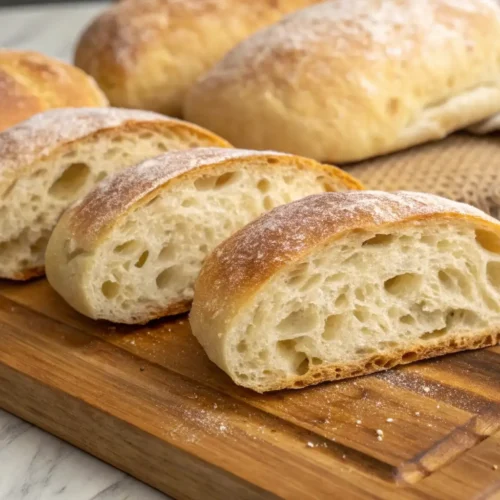
Bake 12–16 minutes, rotating once, until deep golden brown with blistered crusts.
Check doneness: The rolls should sound hollow when tapped on the bottom. Internal temperature should read about 205–210°F (96–99°C).
Cool completely: Transfer to a wire rack and let cool at least 45 minutes. This sets the crumb and preserves the crust.