
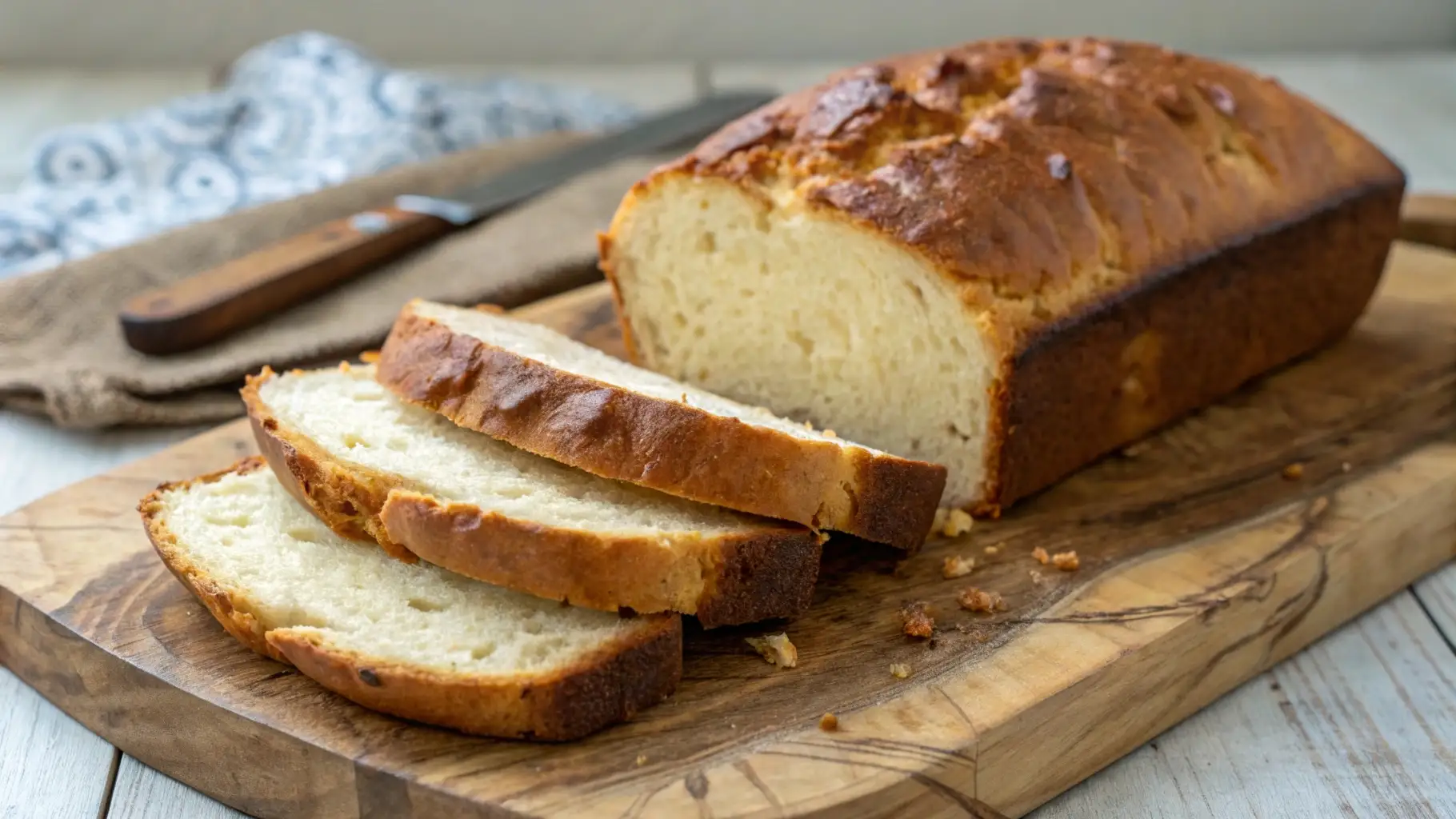
This Greek yogurt bread is the kind of recipe you come back to again and again. It bakes into a soft, moist loaf with a gentle tang and a fine, even crumb. It slices cleanly, toasts beautifully, and stays tender for days.
Whether you’re new to baking or just want a dependable everyday bread, this loaf fits the bill. Plus, it uses basic pantry ingredients and one bowl for easy cleanup.
Why This Recipe Works
Greek yogurt adds moisture and a little acidity, which helps the dough rise and keeps the crumb extra tender. The result is a loaf that’s soft without being cakey.
Using a mix of milk and yogurt creates a balanced dough that’s easy to handle.
The dough stays supple and smooth, so kneading is more forgiving.
A touch of honey brings subtle sweetness without making it taste like dessert. It rounds out the flavor and helps with browning.
Finally, a standard loaf pan gives the bread structure. You get a consistent shape that’s perfect for sandwiches and toast.
What You’ll Need
- 3 cups (360 g) bread flour (or all-purpose flour, plus 1–2 tablespoons extra during kneading if needed)
- 2 1/4 teaspoons (1 packet) instant yeast or active dry yeast
- 1 teaspoon fine sea salt
- 2 tablespoons honey (or sugar)
- 3/4 cup (180 g) plain Greek yogurt (full-fat or 2% works best)
- 1/2 cup (120 ml) warm milk (about 110°F/43°C)
- 2 tablespoons neutral oil (like canola, sunflower, or light olive oil)
- 1 large egg, room temperature
- Optional: 1–2 tablespoons melted butter for brushing the top after baking
How to Make It
- Warm the milk. Heat the milk until it’s warm to the touch, not hot.
If using active dry yeast, stir it into the milk with a pinch of sugar and let it sit for 5–10 minutes until foamy. If using instant yeast, you can skip proofing and add it directly to the flour.
- Mix the wet ingredients. In a large bowl, whisk the Greek yogurt, egg, honey, and oil until smooth. Add the warm milk (with proofed yeast if using active dry).
- Combine the dry ingredients. In a separate bowl, mix flour, yeast (if instant), and salt.
Add this to the wet mixture. Stir with a wooden spoon or dough whisk until a shaggy dough forms.
- Knead the dough. Turn the dough onto a lightly floured surface. Knead for 8–10 minutes until smooth and elastic.
If it’s sticky, dust lightly with flour as you go. The dough should feel soft and slightly tacky but not cling to your hands.
- First rise. Place the dough in a lightly oiled bowl, turning once to coat. Cover with a clean towel or plastic wrap and let it rise in a warm spot until doubled, about 60–90 minutes.
- Shape the loaf. Punch down the dough gently to release air.
Pat it into a rectangle roughly the length of your loaf pan. Roll it up tightly, pinch the seam, and tuck the ends under. Place seam-side down in a greased 9×5-inch (23×13 cm) loaf pan.
- Second rise. Cover the pan lightly and let the dough rise until it crests about 1 inch above the rim, 30–45 minutes depending on room temperature.
- Preheat and bake. While the dough rises, preheat the oven to 350°F (175°C).
Bake for 28–35 minutes, until the top is golden and the loaf sounds hollow when tapped. An instant-read thermometer inserted in the center should read about 190–195°F (88–90°C).
- Finish and cool. Brush the hot loaf with melted butter for a softer crust (optional). Let it cool in the pan for 10 minutes, then transfer to a rack to cool completely before slicing.
Keeping It Fresh
Let the bread cool completely before storing.
Warm bread traps steam and makes the crust soggy.
Store at room temperature, wrapped in a clean kitchen towel or in a bread box for up to 3 days. For extra softness, use a resealable bag, but expect a softer crust.
For longer storage, slice and freeze in a zip-top bag. Pull out slices as needed and toast directly from frozen.
Health Benefits
- Protein boost from Greek yogurt: Yogurt adds extra protein compared to traditional milk-only loaves, which helps keep you satisfied.
- Less sugar, more balance: A small amount of honey enhances flavor and browning without turning the bread sweet.
- Better texture with fewer enrichments: The yogurt’s natural acidity and fat create a tender crumb, letting you use less butter overall.
- Customizable flour blend: You can replace up to one-third of the flour with whole wheat for added fiber while keeping the loaf soft.
What Not to Do
- Don’t use cold ingredients. Cold milk or yogurt can slow the yeast dramatically.
Room temp yogurt and warm milk give you a reliable rise.
- Don’t add too much flour. Over-flouring leads to a dense loaf. Aim for a slightly tacky dough and flour your hands if needed.
- Don’t rush the rise. If the dough hasn’t doubled, give it more time. Under-proofed dough bakes up tight and heavy.
- Don’t slice while hot. Hot bread tears and compresses.
Cooling sets the crumb so you get clean slices.
Explore more irresistible bread recipes you won’t want to miss:
Alternatives
- Flour swap: Use half bread flour and half all-purpose for a softer bite. For more nutrition, swap 1 cup of the flour for white whole wheat.
- Dairy changes: No milk? Use water and add 1 extra tablespoon oil.
For a richer loaf, use whole milk and full-fat yogurt.
- Sweetener options: Replace honey with sugar or maple syrup in equal amounts.
- Yeast choices: Instant yeast is the simplest. If using active dry, proof it first. For sourdough lovers, replace yeast with 150 g active starter and reduce the flour and milk slightly, but expect longer rise times.
- Toppings: Brush the top with milk and sprinkle sesame or poppy seeds before baking for a bakery-style finish.
FAQ
Can I use nonfat Greek yogurt?
Yes, but the loaf will be a bit less tender.
If using nonfat yogurt, add an extra 1 teaspoon of oil to help with softness.
Why is my dough sticky?
Greek yogurt varies in thickness. Start with the listed flour, then add 1 tablespoon at a time during kneading until the dough is tacky but manageable. Avoid dumping in lots of flour at once.
How do I know it’s fully baked?
The top should be golden and the loaf should sound hollow when tapped.
For certainty, use a thermometer and look for 190–195°F (88–90°C) in the center.
Can I make this bread by hand without a mixer?
Absolutely. Stir with a spoon until shaggy, then knead by hand for 8–10 minutes. The dough will smooth out as the gluten develops.
What if my bread doesn’t rise?
Check your yeast’s freshness and the temperature of your liquids.
Milk that’s too hot can kill yeast; too cold and it won’t activate well. Give the dough more time in a warm, draft-free spot.
Can I bake it as rolls?
Yes. After the first rise, divide into 10–12 pieces, shape into balls, place in a greased pan, and let rise until puffy.
Bake at 350°F (175°C) for 18–22 minutes.
Is this bread good for sandwiches?
It’s excellent. The crumb is soft but sturdy, so it holds fillings without falling apart. It also toasts evenly for grilled cheese or breakfast toast.
How do I add whole grains without making it dense?
Swap 1 cup of the white flour for white whole wheat and add 1 extra tablespoon milk if the dough feels stiff.
Keep the rest of the method the same.
Can I make it dairy-free?
Use a thick dairy-free yogurt and warm water instead of milk. Add 1–2 extra tablespoons oil to maintain softness. Texture will be slightly different but still good.
How long does it stay fresh?
At room temperature, it’s best within 2–3 days.
Freeze slices for longer storage and toast straight from the freezer when needed.
In Conclusion
This Greek yogurt bread is simple to make, easy to love, and versatile enough for everyday meals. It gives you a soft, moist crumb with real flavor and a clean slice. Once you try it, you’ll likely keep a loaf on the counter or a stash of slices in the freezer.
It’s the kind of homemade bread that makes weekday breakfasts and simple sandwiches feel special without a lot of effort.
Greek Yogurt Bread Recipe Soft and Moist Homemade Loaf – Simple, Tender, and Reliable
Ingredients
- 3 cups (360 g) bread flour (or all-purpose flour, plus 1–2 tablespoons extra during kneading if needed)
- 2 1/4 teaspoons (1 packet) instant yeast or active dry yeast
- 1 teaspoon fine sea salt
- 2 tablespoons honey (or sugar)
- 3/4 cup (180 g) plain Greek yogurt (full-fat or 2% works best)
- 1/2 cup (120 ml) warm milk (about 110°F/43°C)
- 2 tablespoons neutral oil (like canola, sunflower, or light olive oil)
- 1 large egg, room temperature
- Optional: 1–2 tablespoons melted butter for brushing the top after baking
Instructions
- Warm the milk. Heat the milk until it’s warm to the touch, not hot.If using active dry yeast, stir it into the milk with a pinch of sugar and let it sit for 5–10 minutes until foamy. If using instant yeast, you can skip proofing and add it directly to the flour.
- Mix the wet ingredients. In a large bowl, whisk the Greek yogurt, egg, honey, and oil until smooth. Add the warm milk (with proofed yeast if using active dry).
- Combine the dry ingredients. In a separate bowl, mix flour, yeast (if instant), and salt.Add this to the wet mixture. Stir with a wooden spoon or dough whisk until a shaggy dough forms.
- Knead the dough. Turn the dough onto a lightly floured surface. Knead for 8–10 minutes until smooth and elastic.If it’s sticky, dust lightly with flour as you go. The dough should feel soft and slightly tacky but not cling to your hands.
- First rise. Place the dough in a lightly oiled bowl, turning once to coat. Cover with a clean towel or plastic wrap and let it rise in a warm spot until doubled, about 60–90 minutes.
- Shape the loaf. Punch down the dough gently to release air.Pat it into a rectangle roughly the length of your loaf pan. Roll it up tightly, pinch the seam, and tuck the ends under. Place seam-side down in a greased 9×5-inch (23×13 cm) loaf pan.
- Second rise. Cover the pan lightly and let the dough rise until it crests about 1 inch above the rim, 30–45 minutes depending on room temperature.
- Preheat and bake. While the dough rises, preheat the oven to 350°F (175°C).Bake for 28–35 minutes, until the top is golden and the loaf sounds hollow when tapped. An instant-read thermometer inserted in the center should read about 190–195°F (88–90°C).
- Finish and cool. Brush the hot loaf with melted butter for a softer crust (optional). Let it cool in the pan for 10 minutes, then transfer to a rack to cool completely before slicing.