
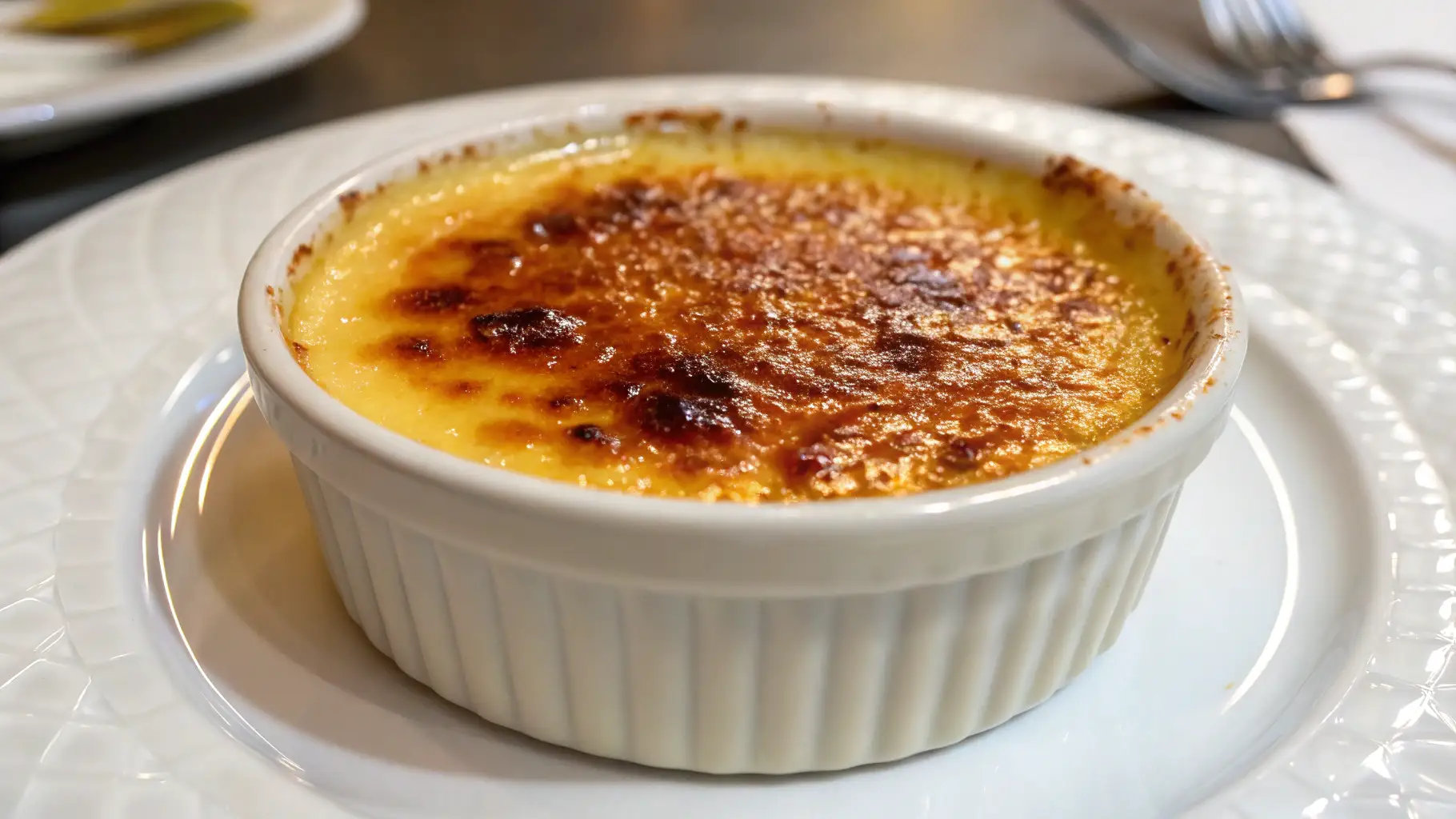
Crème brûlée feels fancy, but it’s surprisingly doable at home with a few smart steps. You get a silky-smooth vanilla custard under a thin, glassy lid of caramelized sugar that shatters with a spoon tap. It’s elegant, comforting, and ideal for make-ahead entertaining. With the right technique, you can skip the guesswork and get that perfect contrast of creamy and crisp every time.
What Makes This Special
This crème brûlée leans on a gentle, low-and-slow bake for the creamiest texture. A whisper of real vanilla makes the custard shine without overpowering it. The sugar top is all about control—just the right amount, evenly melted, for a glass-like finish. You’ll also learn small tricks—like straining the custard and resting it—that make a big difference.
Ingredients
- Heavy cream: 2 cups (480 ml)
- Whole milk: 1/2 cup (120 ml) for a slightly lighter texture (optional; replace with cream for extra richness)
- Egg yolks: 6 large
- Granulated sugar: 1/2 cup (100 g) for the custard, plus about 1/3 cup (65 g) for topping
- Vanilla bean: 1 whole, split and scraped (or 2–2.5 tsp pure vanilla extract)
- Fine sea salt: a small pinch
- Hot water: for the water bath
Step-by-Step Instructions
- Preheat and set up: Heat the oven to 325°F (160°C). Arrange 6–8 shallow ramekins (4–6 oz each) in a deep baking dish or roasting pan. This will be your water bath.
- Warm the cream: In a saucepan, add cream and milk (if using). Scrape the vanilla seeds into the pan and drop in the pod. Heat over medium until steaming and just below a simmer. Remove from heat, cover, and let steep for 10–15 minutes. Remove the pod.
- Whisk the yolks and sugar: In a mixing bowl, whisk egg yolks, 1/2 cup sugar, and a pinch of salt until slightly lightened—about 30–45 seconds. You want it smooth, not fluffy.
- Temper the eggs: Slowly pour the warm cream into the yolk mixture while whisking gently. Aim for a steady stream and avoid whipping in air. If using vanilla extract instead of a bean, stir it in now.
- Strain for silkiness: Pour the custard through a fine-mesh sieve into a large measuring cup or bowl with a spout. This removes bubbles and any cooked bits for a smoother set.
- Fill the ramekins: Divide the custard among the ramekins, leaving a little space at the top. Pop any surface bubbles with a quick pass of a kitchen torch or by briefly tapping the ramekins.
- Prepare the water bath: Place the pan on the oven rack. Carefully pour hot water into the pan until it reaches halfway up the sides of the ramekins. This ensures gentle, even cooking.
- Bake: Bake 30–40 minutes, depending on ramekin depth. You’re looking for edges set and centers slightly wobbly, like Jell-O. If you nudge a ramekin, the center should jiggle, not slosh.
- Cool and chill: Remove ramekins from the water bath and cool to room temperature, about 30–45 minutes. Cover and chill at least 3 hours, ideally overnight. The custard firms and flavors meld.
- Caramelize the sugar: Right before serving, sprinkle an even, thin layer (about 1–2 teaspoons) of granulated sugar over each custard. Use a kitchen torch to melt the sugar, moving in circles to avoid burning spots. Let cool 1–2 minutes to harden. For a thicker top, add a second light layer and torch again.
Keeping It Fresh
Crème brûlée keeps well in the fridge, tightly covered, for up to 3 days—without the sugar top. Add and torch the sugar just before serving so it stays crisp. If you need to brulée ahead, do it no more than 30–60 minutes before serving and store uncovered in the fridge to help keep the top hard. Avoid freezing; it can compromise the silky texture.
Benefits of This Recipe
- Make-ahead friendly: Bake the custards a day in advance, then torch when guests arrive.
- Reliable texture: The water bath and gentle heat protect against curdling and graininess.
- Balanced sweetness: The custard is lightly sweet, letting the caramel top shine.
- Restaurant-style finish: A crisp, glassy top that shatters—no gimmicks, just good technique.
Pitfalls to Watch Out For
- Overbaking: If it doesn’t jiggle, it’s overdone. Overbaking leads to a rubbery or curdled texture.
- Thick sugar layer: Too much sugar gives a bitter, uneven top. Aim for a thin, even coat.
- High heat on the stove: Overheating the cream can scramble the eggs when you temper. Keep it just below a simmer.
- Skipping the strain: Unstrained custard can be grainy and have air bubbles that mar the finish.
- Caramelizing too early: The sugar top softens in the fridge. Torch right before serving when possible.
Alternatives
- Flavor twists: Add a strip of orange zest or a crushed cardamom pod to the cream as it warms. Steep, then strain.
- Espresso brûlée: Stir 1–2 teaspoons instant espresso into the warm cream for a mocha note.
- Maple variation: Replace 2–3 tablespoons of the sugar with pure maple syrup added to the warm cream. Reduce vanilla slightly.
- Dairy-free option: Use full-fat coconut milk plus coconut cream, and add an extra yolk for structure. Flavor with vanilla and a tiny splash of rum or almond extract.
- No torch method: Set oven to broil. Chill custards well, then place under the broiler with an ice-filled tray beneath the ramekins to keep custard cool. Watch closely and rotate for even caramelization. Note: results are less precise than a torch.
Explore more irresistible recipes you won’t want to miss:
FAQ
Why is my custard grainy or curdled?
It likely overheated. Use a water bath, keep the oven at 325°F, and pull them when the centers still wobble. Always strain the custard and avoid whisking too vigorously, which adds bubbles and uneven cooking.
Can I use just heavy cream?
Yes. Using only cream makes the custard richer and a touch denser. The version with a little milk is slightly lighter but still silky. Both work beautifully.
What sugar works best for the top?
Regular granulated sugar melts evenly and gives a crisp finish. Superfine sugar also works well and can caramelize a bit faster. Avoid brown sugar—it burns quickly and can taste bitter.
How do I know when to stop torching?
Look for the sugar to melt, bubble, and turn amber with small darker patches. Keep the torch moving. Stop as soon as the surface is mostly glassy; it will continue to darken slightly as it cools.
Can I make this without a vanilla bean?
Absolutely. Use 2–2.5 teaspoons of pure vanilla extract. For extra depth, add a tiny splash of vanilla at the end of tempering so the flavor stays bright.
My sugar top is soft. What went wrong?
The layer may have been too thick or the custard too warm. Chill custards thoroughly, use a thin, even sugar coat, and let the caramel cool for a minute to harden. Avoid covering after torching—steam softens the shell.
How do I get a smooth surface before adding sugar?
Blot any moisture on top with a paper towel before sprinkling sugar. If bubbles remain after baking, lightly torch them or skim with a spoon before chilling.
Can I scale this recipe?
Yes. Double it for a crowd, but use multiple pans so the water bath depth stays consistent. Baking time may vary slightly; still use the jiggle test.
Wrapping Up
Crème brûlée is all about simple ingredients handled with care. Warm the cream gently, strain the custard, bake low and slow, then finish with a thin, even sugar crust. With these steps, you get that luxurious spoonful every time—cool, silky custard below and a crisp caramel top above. It’s a classic for a reason, and now it’s one you can master at home.
Crème Brûlée Recipe with a Perfect Caramelized Sugar Top
Ingredients
- Heavy cream: 2 cups 480 ml
- Whole milk: 1/2 cup 120 ml for a slightly lighter texture (optional; replace with cream for extra richness)
- Egg yolks: 6 large
- Granulated sugar: 1/2 cup 100 g for the custard, plus about 1/3 cup (65 g) for topping
- Vanilla bean: 1 whole split and scraped (or 2–2.5 tsp pure vanilla extract)
- Fine sea salt: a small pinch
- Hot water: for the water bath
Instructions
- Preheat and set up: Heat the oven to 325°F (160°C). Arrange 6–8 shallow ramekins (4–6 oz each) in a deep baking dish or roasting pan. This will be your water bath.
- Warm the cream: In a saucepan, add cream and milk (if using). Scrape the vanilla seeds into the pan and drop in the pod. Heat over medium until steaming and just below a simmer. Remove from heat, cover, and let steep for 10–15 minutes. Remove the pod.
- Whisk the yolks and sugar: In a mixing bowl, whisk egg yolks, 1/2 cup sugar, and a pinch of salt until slightly lightened—about 30–45 seconds. You want it smooth, not fluffy.
- Temper the eggs: Slowly pour the warm cream into the yolk mixture while whisking gently. Aim for a steady stream and avoid whipping in air. If using vanilla extract instead of a bean, stir it in now.
- Strain for silkiness: Pour the custard through a fine-mesh sieve into a large measuring cup or bowl with a spout. This removes bubbles and any cooked bits for a smoother set.
- Fill the ramekins: Divide the custard among the ramekins, leaving a little space at the top. Pop any surface bubbles with a quick pass of a kitchen torch or by briefly tapping the ramekins.
- Prepare the water bath: Place the pan on the oven rack. Carefully pour hot water into the pan until it reaches halfway up the sides of the ramekins. This ensures gentle, even cooking.
- Bake: Bake 30–40 minutes, depending on ramekin depth. You’re looking for edges set and centers slightly wobbly, like Jell-O. If you nudge a ramekin, the center should jiggle, not slosh.
- Cool and chill: Remove ramekins from the water bath and cool to room temperature, about 30–45 minutes. Cover and chill at least 3 hours, ideally overnight. The custard firms and flavors meld.
- Caramelize the sugar: Right before serving, sprinkle an even, thin layer (about 1–2 teaspoons) of granulated sugar over each custard. Use a kitchen torch to melt the sugar, moving in circles to avoid burning spots. Let cool 1–2 minutes to harden. For a thicker top, add a second light layer and torch again.