
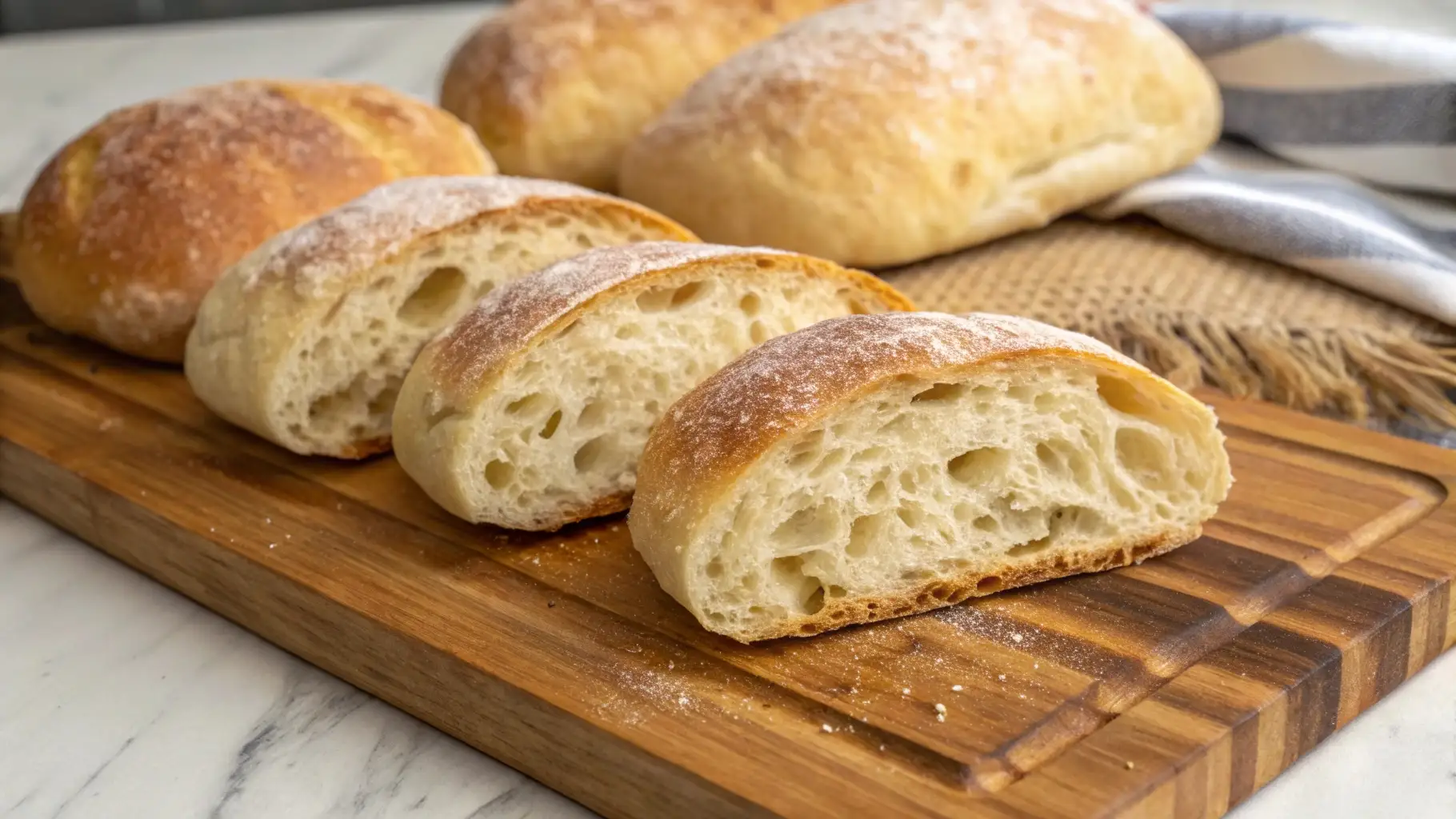
Warm, crackly crust. Soft, airy centers. A roll that stands up to juicy fillings without getting soggy.
That’s what you get with homemade ciabatta rolls, and they’re easier than you might think. With a simple overnight preferment for flavor and a gentle hand to keep the dough airy, these rolls deliver bakery-quality results at home. Perfect for sandwiches, burgers, or dunking in soup, this recipe is a staple you’ll make again and again.
What Makes This Recipe So Good
- Deep flavor from a biga (preferment): An overnight starter builds complexity and that signature tang without sourness.
- Open, airy crumb: High hydration and minimal handling keep those big, beautiful holes inside the roll.
- Shatteringly crisp crust: Steam and high heat create a golden, crackly exterior that stays crisp.
- Reliable and forgiving: The dough is sticky by design, but the method walks you through step by step.
- Freezer-friendly: Bake once, stash extras, and reheat whenever you need sandwich rolls in a flash.
What You’ll Need
- Biga (Preferment) – Make the night before:
- 1 cup (240 g) room-temperature water
- 1/8 teaspoon instant yeast
- 2 cups (260 g) bread flour
- Main Dough:
- All of the biga
- 3/4 cup plus 2 tablespoons (210 g) lukewarm water
- 2 1/4 cups (295 g) bread flour
- 1 1/2 teaspoons fine sea salt
- 1 teaspoon instant yeast
- 1 tablespoon olive oil (optional, for a touch of tenderness)
- Extra flour and a little semolina or cornmeal for dusting
- Equipment:
- Large bowl or stand mixer with dough hook
- Bowl scraper or rubber spatula
- Bench scraper
- Rimmed baking sheet
- Parchment paper
- Clean kitchen towel or plastic wrap
- Spray bottle with water (for steam)
Step-by-Step Instructions
- Make the biga (the night before): In a medium bowl, mix water and yeast until dissolved.
Stir in the flour until no dry bits remain. It will be thick and sticky. Cover and let rest at cool room temperature for 12–16 hours.The biga should be domed, bubbly, and fragrant.
- Combine the dough: In a large bowl or stand mixer, add the biga, water, yeast, flour, salt, and olive oil (if using). Mix until shaggy and combined. Rest for 10 minutes to hydrate the flour.
- Knead or mix to develop gluten: If using a stand mixer, knead on medium-low for 6–8 minutes.
By hand, use the slap-and-fold method for about 8–10 minutes. The dough should be smooth, very elastic, and still sticky. Resist adding extra flour.
- First rise (bulk fermentation): Transfer to a lightly oiled bowl.
Cover and let rise for 60–90 minutes at warm room temperature, performing 3 sets of stretch-and-folds every 20–30 minutes. To stretch and fold: with wet hands, lift one edge of the dough up and fold it over itself; rotate the bowl and repeat 3–4 times. This builds structure without deflating the dough.
- Check for readiness: The dough should be puffy, jiggly, and about doubled.
Bubbles should be visible along the sides. If not quite there, give it another 15–20 minutes.
- Prepare the baking surface: Line a rimmed baking sheet with parchment. Dust generously with flour and a pinch of semolina or cornmeal for extra crunch and easy release.
- Turn out and shape gently: Flour your work surface well.
Tip the dough out carefully to avoid popping air bubbles. Dust the top lightly with flour. Using a bench scraper, coax the dough into a rough rectangle, about 1 inch thick.Do not press down.
- Divide into rolls: Cut into 8 equal rectangles for sandwich rolls, or 10–12 for smaller rolls. Use quick, firm cuts with the bench scraper to avoid squashing the dough.
- Second rise: Transfer each piece to the prepared sheet, spacing slightly. Gently stretch each piece to elongate a bit, keeping the thickness even.
Cover loosely with a floured towel. Proof for 30–45 minutes, until puffy with visible bubbles. They should wobble slightly when nudged.
- Preheat the oven: Heat to 475°F (245°C) with a rack in the middle.
Place an empty metal pan on the bottom rack to create steam later.
- Steam and bake: Right before baking, spritz the rolls lightly with water. Place the tray in the oven. Carefully pour a cup of hot water into the bottom pan to create steam and close the door quickly.
Bake 12–16 minutes, rotating once, until deep golden brown with blistered crusts.
- Check doneness: The rolls should sound hollow when tapped on the bottom. Internal temperature should read about 205–210°F (96–99°C).
- Cool completely: Transfer to a wire rack and let cool at least 45 minutes. This sets the crumb and preserves the crust.
How to Store
- Room temperature: Keep in a paper bag inside a loose plastic bag for up to 2 days.
The paper protects the crust; the plastic slows staling.
- Freeze: Wrap rolls individually in plastic, then place in a freezer bag. Freeze up to 3 months. Thaw at room temp, then re-crisp in a 350°F (175°C) oven for 8–10 minutes.
- Refresh the crust: If the crust softens, bake at 375°F (190°C) for 5–7 minutes.
Let cool briefly before slicing.
Benefits of This Recipe
- Better flavor than store-bought: The preferment develops nutty, toasty notes you won’t find in packaged rolls.
- Perfect for hearty fillings: The crumb is light yet sturdy, ideal for steak sandwiches, grilled veggies, or saucy pulled chicken.
- Simple ingredients, big payoff: Flour, water, yeast, and salt turn into bakery-level bread with a few key techniques.
- Flexible schedule: The timeline works for weekend baking, and the rolls freeze beautifully for weekday meals.
- Beginner-friendly skills: You’ll learn stretch-and-fold, handling high-hydration dough, and steam baking—core bread skills.
What Not to Do
- Don’t add too much flour: The dough should be sticky. Extra flour tightens the crumb and kills those airy holes.
- Don’t knead aggressively after the first rise: Overhandling deflates the dough and leads to dense rolls.
- Don’t skip steam: No steam means dull crust and less oven spring. Even a quick spritz helps.
- Don’t slice while hot: Warm bread seems gummy and compresses easily.
Cooling completes the bake.
- Don’t rush fermentation: If the dough isn’t puffy, wait. Time and bubbles are your friends.
Alternatives
- Same-day version: Skip the biga and add 1 extra teaspoon yeast to the main dough. Flavor won’t be as complex, but you’ll still get a great roll.
- Sourdough ciabatta: Replace the biga and half the water with 200 g active sourdough starter (100% hydration).
Adjust water as needed for a soft, sticky dough. Fermentation will take longer.
- Whole wheat twist: Swap up to 25% of the bread flour with whole wheat. Add 1–2 tablespoons extra water to keep hydration high.
- Olive and herb: Fold in chopped olives, rosemary, or thyme during the last minute of mixing.
Reduce added salt slightly if olives are briny.
- Garlic crust: Brush baked rolls lightly with olive oil and rub with a cut garlic clove while still warm.
Explore more irresistible bread recipes you won’t want to miss:
FAQ
Can I use all-purpose flour instead of bread flour?
Yes. Bread flour gives a chewier texture and better structure, but all-purpose works fine. If using AP, reduce the water by about 1 tablespoon at first and add as needed to keep the dough sticky and elastic.
Do I really need the biga?
It’s worth it.
The biga adds flavor, better rise, and a more open crumb. That said, you can use the same-day alternative in a pinch and still get delicious rolls.
Why is my dough so sticky?
Ciabatta dough is high hydration by design. Stickiness is normal and helps create an open crumb.
Use wet hands and a bench scraper instead of extra flour to handle it.
How do I create steam without a pan?
Spritz the oven walls with water right after loading the rolls, then again 2 minutes later. You can also bake with an overturned preheated metal bowl on the tray for the first 10 minutes to trap steam.
Can I make larger sandwich rolls?
Absolutely. Divide into 6 pieces and bake 2–4 minutes longer.
Aim for the same deep golden color and a hollow sound when tapped.
What if I don’t have a stand mixer?
Hand mixing works. Use a dough whisk or sturdy spoon to combine, rest 10 minutes, then perform slap-and-folds for several minutes. The stretch-and-folds during bulk rise do the rest.
How do I get bigger holes in the crumb?
Use higher hydration, handle gently, avoid pressing during shaping, and don’t overproof.
A hot oven with steam boosts oven spring, which opens the crumb.
Can I cold-proof the shaped rolls?
Yes. After shaping, cover and refrigerate up to 12 hours. Bake straight from the fridge, adding 2–3 extra minutes as needed.
In Conclusion
These ciabatta rolls bring together a crisp, blistered crust and a light, open crumb that’s perfect for hearty sandwiches.
With a simple overnight biga and a few gentle handling techniques, you can bake bakery-quality bread at home. Keep a batch in the freezer, refresh in the oven, and you’re always minutes away from the perfect roll. Once you taste them, store-bought won’t stand a chance.
Ciabatta Rolls Recipe for Crusty Homemade Sandwich Bread – Simple, Rustic, and Delicious
Ingredients
- Biga (Preferment) – Make the night before: 1 cup (240 g) room-temperature water
- 1/8 teaspoon instant yeast
- 2 cups (260 g) bread flour
- Main Dough: All of the biga
- 3/4 cup plus 2 tablespoons (210 g) lukewarm water
- 2 1/4 cups (295 g) bread flour
- 1 1/2 teaspoons fine sea salt
- 1 teaspoon instant yeast
- 1 tablespoon olive oil (optional, for a touch of tenderness)
- Extra flour and a little semolina or cornmeal for dusting
- Equipment: Large bowl or stand mixer with dough hook
- Bowl scraper or rubber spatula
- Bench scraper
- Rimmed baking sheet
- Parchment paper
- Clean kitchen towel or plastic wrap
- Spray bottle with water (for steam)
Instructions
- Make the biga (the night before): In a medium bowl, mix water and yeast until dissolved.Stir in the flour until no dry bits remain. It will be thick and sticky. Cover and let rest at cool room temperature for 12–16 hours.The biga should be domed, bubbly, and fragrant.
- Combine the dough: In a large bowl or stand mixer, add the biga, water, yeast, flour, salt, and olive oil (if using). Mix until shaggy and combined. Rest for 10 minutes to hydrate the flour.
- Knead or mix to develop gluten: If using a stand mixer, knead on medium-low for 6–8 minutes.By hand, use the slap-and-fold method for about 8–10 minutes. The dough should be smooth, very elastic, and still sticky. Resist adding extra flour.
- First rise (bulk fermentation): Transfer to a lightly oiled bowl.Cover and let rise for 60–90 minutes at warm room temperature, performing 3 sets of stretch-and-folds every 20–30 minutes. To stretch and fold: with wet hands, lift one edge of the dough up and fold it over itself; rotate the bowl and repeat 3–4 times. This builds structure without deflating the dough.
- Check for readiness: The dough should be puffy, jiggly, and about doubled.Bubbles should be visible along the sides. If not quite there, give it another 15–20 minutes.
- Prepare the baking surface: Line a rimmed baking sheet with parchment. Dust generously with flour and a pinch of semolina or cornmeal for extra crunch and easy release.
- Turn out and shape gently: Flour your work surface well.Tip the dough out carefully to avoid popping air bubbles. Dust the top lightly with flour. Using a bench scraper, coax the dough into a rough rectangle, about 1 inch thick.Do not press down.
- Divide into rolls: Cut into 8 equal rectangles for sandwich rolls, or 10–12 for smaller rolls. Use quick, firm cuts with the bench scraper to avoid squashing the dough.
- Second rise: Transfer each piece to the prepared sheet, spacing slightly. Gently stretch each piece to elongate a bit, keeping the thickness even.Cover loosely with a floured towel. Proof for 30–45 minutes, until puffy with visible bubbles. They should wobble slightly when nudged.
- Preheat the oven: Heat to 475°F (245°C) with a rack in the middle.Place an empty metal pan on the bottom rack to create steam later.
- Steam and bake: Right before baking, spritz the rolls lightly with water. Place the tray in the oven. Carefully pour a cup of hot water into the bottom pan to create steam and close the door quickly.Bake 12–16 minutes, rotating once, until deep golden brown with blistered crusts.
- Check doneness: The rolls should sound hollow when tapped on the bottom. Internal temperature should read about 205–210°F (96–99°C).
- Cool completely: Transfer to a wire rack and let cool at least 45 minutes. This sets the crumb and preserves the crust.