
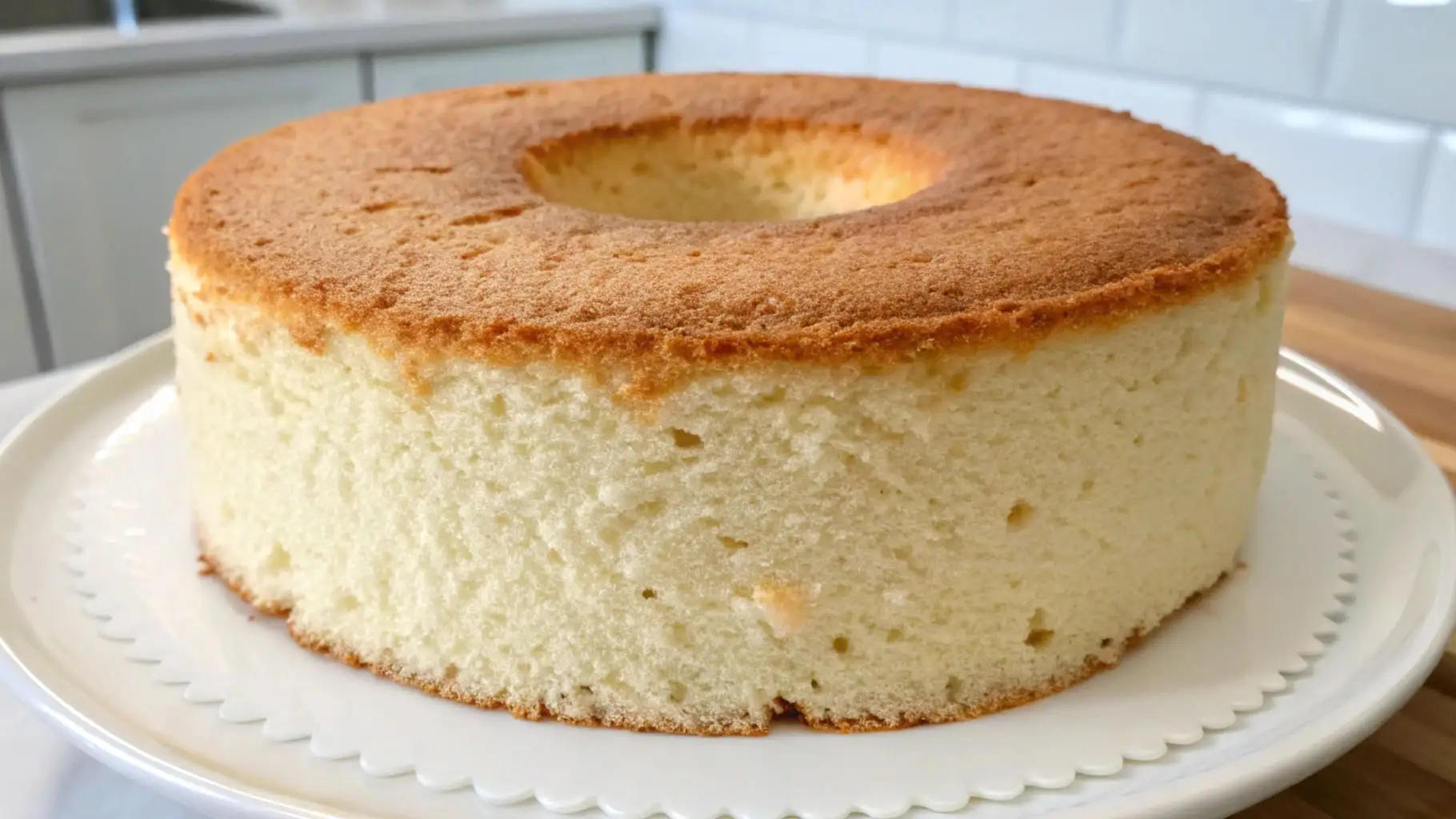
Chiffon cake is the kind of dessert that makes you stop and smile after the first bite. It’s tall, airy, and incredibly soft—almost like a cloud. The best part is that it looks fancy but uses basic ingredients you probably already have.
With the right technique and a few helpful tips, you can bake a chiffon cake that’s tender, moist, and perfectly springy. This recipe walks you through each step so you get consistent results, even if it’s your first time making one.
What Makes This Recipe So Good
- Ultra-light texture: Whipped egg whites give the cake its signature height and fluffiness without heaviness.
- Moist and tender crumb: Oil keeps the cake soft and silky, even after refrigeration.
- Balanced flavor: A touch of lemon and vanilla brightens the cake without overpowering it.
- Beginner-friendly method: Clear steps and tips help you avoid common pitfalls like deflated batter or a dense crumb.
- Versatile base: Serve it plain, with berries, or a light glaze. It’s also great for layer cakes and trifles.
Ingredients
- 1 1/2 cups (180 g) cake flour (spooned and leveled)
- 1 cup (200 g) granulated sugar, divided (3/4 cup for yolk batter, 1/4 cup for meringue)
- 1 1/2 teaspoons baking powder
- 1/2 teaspoon fine salt
- 7 large eggs, separated, at room temperature
- 1/2 cup (120 ml) neutral oil (like canola, vegetable, or grapeseed)
- 3/4 cup (180 ml) whole milk, room temperature
- 2 teaspoons pure vanilla extract
- 1 tablespoon fresh lemon juice (plus 1 teaspoon lemon zest, optional)
- 1/2 teaspoon cream of tartar (or 1 teaspoon lemon juice as a substitute)
Special equipment: 10-inch (25 cm) ungreased tube pan with a removable bottom; metal or glass bowl for whipping egg whites.
Step-by-Step Instructions
- Preheat and prep: Preheat the oven to 325°F (165°C).
Make sure your tube pan is completely ungreased. Any grease will prevent the cake from climbing the sides.
- Mix dry ingredients: In a large bowl, whisk cake flour, 3/4 cup sugar, baking powder, and salt until evenly combined.
- Make the yolk mixture: In a separate bowl, whisk egg yolks, oil, milk, vanilla, lemon juice, and zest (if using) until smooth and slightly frothy.
- Combine wet and dry: Pour the yolk mixture into the dry ingredients. Whisk gently until just smooth.
Don’t overmix—stop when no dry streaks remain.
- Beat egg whites: In a clean, dry bowl, add egg whites and cream of tartar. Beat on medium speed until foamy, then gradually add the remaining 1/4 cup sugar. Increase to medium-high and beat to soft, glossy peaks that hold their shape but have a gentle curl at the tip.
- Fold in the meringue: Add one-third of the whipped whites to the yolk batter.
Fold gently with a spatula to lighten. Add the rest in two more additions, folding with slow, sweeping motions from the bottom up. Avoid deflating the batter.
- Fill the pan: Pour batter into the tube pan.
Use a skewer or thin knife to swirl through the batter once or twice to pop large air pockets. Smooth the top.
- Bake: Bake for 50–60 minutes, until the top is golden and springs back lightly when touched, and a skewer inserted near the center comes out clean or with a few moist crumbs.
- Invert to cool: Remove from the oven and immediately invert the pan onto a bottle or pan feet. Cool completely upside down for at least 1 1/2 hours. This prevents collapse and keeps the crumb fluffy.
- Release the cake: Run a thin knife around the sides and center tube.
Lift the cake out with the removable bottom, then run the knife under the base to release.
- Serve: Slice with a serrated knife using a gentle sawing motion. Serve plain, dusted with powdered sugar, or with whipped cream and fresh berries.
How to Store
- Room temperature: Keep covered at cool room temperature for up to 2 days. Use a cake dome or an inverted bowl to avoid squishing the crumb.
- Refrigerator: Store in an airtight container for 4–5 days.
The oil-based crumb stays tender even when chilled.
- Freezer: Wrap slices or the whole cake tightly in plastic, then foil. Freeze up to 2 months. Thaw at room temperature, unwrapped once the exterior is no longer icy, to prevent condensation.
Benefits of This Recipe
- Reliable rise: The balance of flour, liquid, and meringue gives you a tall, even cake.
- Everyday ingredients: No butter needed, and most items are pantry staples.
- Light yet satisfying: Great after a rich meal or as a simple afternoon treat.
- Flexible flavors: Swap lemon for orange, add almond extract, or fold in citrus zest for a new twist.
- Make-ahead friendly: Holds texture well for several days, making it ideal for gatherings.
Pitfalls to Watch Out For
- Greasy equipment: Any fat in the bowl or on the whisk can prevent egg whites from whipping properly.
- Overbeaten whites: Stiff, clumpy whites are hard to fold and can cause a dry, uneven crumb.
Aim for soft, glossy peaks.
- Heavy-handed folding: Stirring instead of folding deflates air. Use gentle, sweeping motions.
- Underbaking: A pale top or a skewer with wet batter means it needs more time. Chiffon should be well set before inverting.
- Skipping the invert: Cooling upright leads to collapse.
Always invert the pan right out of the oven.
- Oiled pan: Do not grease the tube pan. The batter needs to cling to the sides to climb and rise.
Alternatives
- Flavor swaps: Replace lemon juice and zest with orange, yuzu, or lime. Add 1/2 teaspoon almond or coconut extract for a different profile.
- Dairy-free: Use an equal amount of unsweetened almond milk, oat milk, or soy milk.
- Gluten-free: Use a high-quality 1:1 gluten-free baking flour with xanthan gum.
Sift well and avoid overmixing.
- Mini chiffons or cupcakes: Bake in ungreased muffin tins with paper liners removed after baking. Start checking at 18–22 minutes.
- Frosting options: Keep it light—stabilized whipped cream, a citrus glaze, or a thin layer of lemon curd works beautifully.
Explore more irresistible cake recipes you won’t want to miss:
FAQ
Why Does a Chiffon Cake Need an Ungreased Pan?
The batter needs to grip the walls to climb and rise. If the pan is greased, the cake slides down as it bakes and cools, leading to a short, dense result.
Can I Make This Without Cream of Tartar?
Yes.
Use 1 teaspoon lemon juice or 1/2 teaspoon white vinegar to help stabilize the egg whites. The acid strengthens the foam and improves volume.
How Do I Know My Egg Whites Are at Soft Peaks?
Lift the whisk and look for peaks that stand up but curl over at the tip. The foam should be glossy, not dry or clumpy.
If it’s dull and chunky, you’ve gone too far.
My Cake Collapsed. What Went Wrong?
Common causes include underbaking, overmixing, overbeaten or underbeaten egg whites, or cooling the cake upright. Next time, bake until well set and invert immediately to cool.
Can I Use All-Purpose Flour?
You can, but the texture will be slightly less tender.
If using all-purpose flour, measure carefully and consider removing 1 tablespoon per cup to reduce protein, or replace 2 tablespoons with cornstarch.
What’s the Best Way to Slice a Chiffon Cake?
Use a serrated knife and a gentle sawing motion. Avoid pressing down, which compresses the crumb and tears the delicate structure.
Do I Need a Tube Pan?
A tube pan gives the best rise and even baking. In a pinch, you can use two ungreased 8-inch round pans lined on the bottom with parchment.
Baking time will be shorter; start checking around 25–30 minutes.
Can I Add Fruit to the Batter?
Add-ins can weigh down the batter. If you want fruit, serve it on the side or fold in very small amounts of finely grated zest. For berries, use them as a topping, not mixed into the batter.
Final Thoughts
A great chiffon cake comes down to simple ingredients and mindful technique.
Keep your tools clean, whip the whites to the right stage, fold with care, and cool it upside down. Do those things, and you’ll get a tall, soft, and wonderfully fluffy cake every time. Serve it simply or dress it up—either way, it’s a crowd-pleaser that never feels heavy.
Soft and Fluffy Chiffon Cake Recipe – Light, Airy, and Simple
Ingredients
- 1 1/2 cups (180 g) cake flour (spooned and leveled)
- 1 cup (200 g) granulated sugar, divided (3/4 cup for yolk batter, 1/4 cup for meringue)
- 1 1/2 teaspoons baking powder
- 1/2 teaspoon fine salt
- 7 large eggs, separated, at room temperature
- 1/2 cup (120 ml) neutral oil (like canola, vegetable, or grapeseed)
- 3/4 cup (180 ml) whole milk, room temperature
- 2 teaspoons pure vanilla extract
- 1 tablespoon fresh lemon juice (plus 1 teaspoon lemon zest, optional)
- 1/2 teaspoon cream of tartar (or 1 teaspoon lemon juice as a substitute)
Instructions
- Preheat and prep: Preheat the oven to 325°F (165°C).Make sure your tube pan is completely ungreased. Any grease will prevent the cake from climbing the sides.
- Mix dry ingredients: In a large bowl, whisk cake flour, 3/4 cup sugar, baking powder, and salt until evenly combined.
- Make the yolk mixture: In a separate bowl, whisk egg yolks, oil, milk, vanilla, lemon juice, and zest (if using) until smooth and slightly frothy.
- Combine wet and dry: Pour the yolk mixture into the dry ingredients. Whisk gently until just smooth.Don’t overmix—stop when no dry streaks remain.
- Beat egg whites: In a clean, dry bowl, add egg whites and cream of tartar. Beat on medium speed until foamy, then gradually add the remaining 1/4 cup sugar. Increase to medium-high and beat to soft, glossy peaks that hold their shape but have a gentle curl at the tip.
- Fold in the meringue: Add one-third of the whipped whites to the yolk batter.Fold gently with a spatula to lighten. Add the rest in two more additions, folding with slow, sweeping motions from the bottom up. Avoid deflating the batter.
- Fill the pan: Pour batter into the tube pan.Use a skewer or thin knife to swirl through the batter once or twice to pop large air pockets. Smooth the top.
- Bake: Bake for 50–60 minutes, until the top is golden and springs back lightly when touched, and a skewer inserted near the center comes out clean or with a few moist crumbs.
- Invert to cool: Remove from the oven and immediately invert the pan onto a bottle or pan feet. Cool completely upside down for at least 1 1/2 hours. This prevents collapse and keeps the crumb fluffy.
- Release the cake: Run a thin knife around the sides and center tube.Lift the cake out with the removable bottom, then run the knife under the base to release.
- Serve: Slice with a serrated knife using a gentle sawing motion. Serve plain, dusted with powdered sugar, or with whipped cream and fresh berries.