
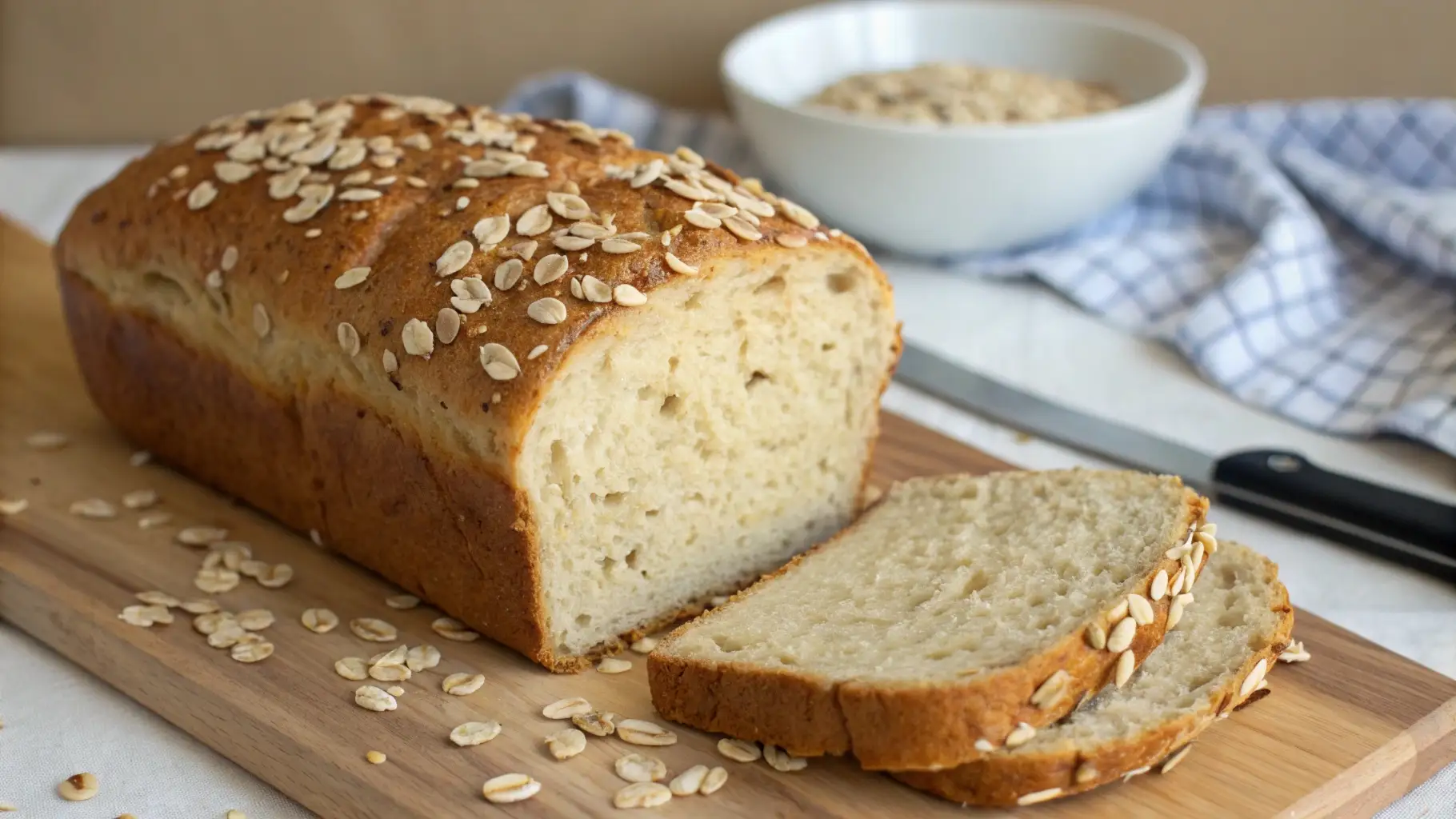
This soft oat bread makes the kind of sandwich loaf you’ll want to keep on your counter all week. It’s tender, slightly nutty, and perfect for toast, grilled cheese, or a PB&J. The oats add heartiness without weighing the bread down, and the crumb stays soft and fluffy.
If you’ve been wanting a reliable, healthier homemade loaf, this one delivers. No special tools needed—just a bowl, a loaf pan, and a bit of time.
What Makes This Special
This loaf brings together the best of both worlds: the softness of a classic sandwich bread and the nutrition of whole grains. Rolled oats add fiber and a gentle sweetness, while a touch of honey keeps the crumb moist.
The dough is forgiving and great for beginners, but satisfying enough for experienced bakers too. It slices cleanly, holds up to spreads, and stays soft for days—without preservatives.
What You’ll Need
- Rolled oats (old-fashioned): 1 cup, plus extra for topping
- Boiling water: 1 cup (to soften the oats)
- Warm milk (dairy or unsweetened plant milk): 1/2 cup (about 100–110°F)
- Warm water: 1/4 cup (for adjusting dough as needed)
- Instant or active dry yeast: 2 1/4 teaspoons (one packet)
- Honey or maple syrup: 2–3 tablespoons
- Unsalted butter or neutral oil: 2 tablespoons, melted
- Salt: 1 1/4 teaspoons
- Bread flour: 2 1/2 to 3 cups (start low and add as needed)
- Optional add-ins: 1 tablespoon ground flaxseed or wheat germ for extra nutrition
- For topping: 1 tablespoon milk or water + 1 tablespoon oats
How to Make It
- Soften the oats: Place 1 cup rolled oats in a bowl. Pour 1 cup boiling water over them, stir, and let sit for 10–15 minutes.
The oats should be soft and warm, not hot.
- Activate the yeast (if using active dry): In a small bowl, mix warm milk, honey, and yeast. Let it stand 5–10 minutes until foamy. If using instant yeast, you can add it directly to the flour later.
- Combine the base: In a large mixing bowl, add the softened oats, melted butter, salt, and the milk-yeast mixture (or milk + honey if using instant yeast).
Stir to combine.
- Add the flour: Start with 2 1/2 cups bread flour. If using instant yeast, add it now. Mix with a spoon or dough hook until a shaggy dough forms.
If it’s very sticky, add flour 1 tablespoon at a time. If it feels stiff, add a splash of warm water.
- Knead: Knead by hand on a lightly floured surface for 8–10 minutes, or by mixer on medium-low for 6–7 minutes. You’re looking for a smooth, slightly tacky dough that springs back when pressed. Don’t over-flour; a soft dough makes a softer loaf.
- First rise: Place the dough in a lightly greased bowl, cover, and let it rise in a warm spot until doubled, about 60–90 minutes.
- Shape the loaf: Gently deflate the dough.
Pat it into a rectangle (about 8×12 inches). Roll it up from the short side into a tight log, pinching the seam and tucking the ends under.
- Pan and proof: Place the log seam-side down into a greased 9×5-inch loaf pan. Brush the top lightly with milk or water and sprinkle with oats.
Cover and let rise until the dough domes about 1 inch above the pan rim, 35–60 minutes depending on room temperature.
- Preheat and bake: Preheat the oven to 350°F (175°C). Bake for 30–38 minutes. The top should be golden brown, and the internal temperature should read about 190–195°F.
If it’s browning too quickly, tent with foil for the last 10 minutes.
- Cool: Remove from the pan and cool on a rack for at least 1 hour before slicing. This sets the crumb and keeps it from squishing.
Keeping It Fresh
Once fully cooled, store the loaf in a bread bag or wrapped in a clean kitchen towel at room temperature for up to 3 days. For longer storage, slice and freeze in a freezer bag; reheat slices straight from the freezer in a toaster.
Avoid the fridge—it dries out bread. If the crust softens over time, a quick toast brings it back to life.
Benefits of This Recipe
- Higher fiber, same comfort: Oats add fiber and a gentle, nutty flavor without making the loaf dense.
- Better-for-you sweetness: Honey or maple syrup gives light sweetness and moisture with minimal sugar.
- Meal-prep friendly: Slices freeze well and toast beautifully for quick breakfasts or lunches.
- Budget-conscious: A single loaf costs less than most store-bought options and skips preservatives.
- Beginner-friendly method: Straightforward steps, standard ingredients, and forgiving dough.
Pitfalls to Watch Out For
- Over-flouring the dough: Too much flour leads to a dry, heavy loaf. Keep it slightly tacky.
- Cutting too soon: Slicing while hot compresses the crumb.
Let it cool at least 1 hour.
- Under-proofing: If the loaf hasn’t risen above the pan rim before baking, it may bake up short and dense.
- Scalding the yeast: Liquids hotter than 115°F can kill yeast. Aim for warm, not hot.
- Skipping the oat soak: Dry oats steal moisture from the dough. The soak keeps the crumb soft.
Variations You Can Try
- Half whole wheat: Swap 1 cup bread flour for whole wheat flour.
Add 1–2 teaspoons extra water if needed.
- Seeded oat loaf: Stir in 2–3 tablespoons of sunflower, pumpkin, or chia seeds for extra crunch.
- Dairy-free: Use oat milk or almond milk and oil instead of butter. The loaf stays tender.
- No honey: Use maple syrup or 2 tablespoons sugar. Flavor stays balanced and lightly sweet.
- Overnight rise: After kneading, refrigerate the dough overnight.
Shape and proof the next day for deeper flavor and easier scheduling.
- Mini loaves or rolls: Divide dough into 8–10 rolls or two mini pans. Reduce bake time; start checking at 18–22 minutes.
Explore more irresistible bread recipes you won’t want to miss:
FAQ
Can I use quick oats instead of rolled oats?
Yes. Quick oats work fine and soften faster.
Avoid steel-cut oats here—they need longer cooking and will stay too firm in the loaf.
Do I need bread flour, or can I use all-purpose?
All-purpose flour works, but bread flour gives a slightly higher rise and chewier structure. If using all-purpose, hold back a tablespoon or two of liquid or add a touch more flour to reach that slightly tacky feel.
How do I know if the dough is kneaded enough?
It should feel smooth and elastic, and it will slowly spring back when pressed. You can stretch a small piece thin enough to see light through it (windowpane).
If it tears easily, knead a bit more.
Why is my loaf dense?
Common reasons include too much flour, under-proofing, or liquids that were too hot for the yeast. Next time, keep the dough soft, let it rise fully, and check your liquid temperature.
Can I make this gluten-free?
Not with simple swaps. Gluten-free yeast breads need a different flour blend and added binders.
Look for a recipe developed for gluten-free baking. You can still use oats certified gluten-free if needed for other recipes.
What’s the best way to slice it cleanly?
Let it cool fully and use a serrated bread knife. Slice using a gentle sawing motion.
For ultra-neat slices, chill the loaf for 30 minutes before cutting, then let slices return to room temp or toast them.
Can I use a bread machine?
Yes. Add ingredients per your machine’s order (usually liquids first), run the dough cycle, shape, proof in a 9×5 pan, and bake in the oven. Or use the full bake cycle if your machine makes a loaf size you like.
How sweet is this bread?
It’s lightly sweet, not dessert-like.
If you prefer more savory, use 1 tablespoon honey. For slightly sweeter toast bread, go up to 3 tablespoons.
Final Thoughts
This soft oat bread is the kind of everyday loaf that makes homemade feel effortless. It’s wholesome, simple, and reliably tender—ideal for sandwiches and toast alike.
Once you make it a couple of times, you’ll know the dough’s feel and can tweak it to your taste. Keep a loaf on hand, and you’ll always have a better slice waiting at home.
Soft Oat Bread Recipe Healthy Homemade Sandwich Loaf - Simple, Cozy, and Wholesome
Ingredients
- Rolled oats (old-fashioned): 1 cup, plus extra for topping
- Boiling water: 1 cup (to soften the oats)
- Warm milk (dairy or unsweetened plant milk): 1/2 cup (about 100–110°F)
- Warm water: 1/4 cup (for adjusting dough as needed)
- Instant or active dry yeast: 2 1/4 teaspoons (one packet)
- Honey or maple syrup: 2–3 tablespoons
- Unsalted butter or neutral oil: 2 tablespoons, melted
- Salt: 1 1/4 teaspoons
- Bread flour: 2 1/2 to 3 cups (start low and add as needed)
- Optional add-ins: 1 tablespoon ground flaxseed or wheat germ for extra nutrition
- For topping: 1 tablespoon milk or water + 1 tablespoon oats
Instructions
- Soften the oats: Place 1 cup rolled oats in a bowl. Pour 1 cup boiling water over them, stir, and let sit for 10–15 minutes.The oats should be soft and warm, not hot.
- Activate the yeast (if using active dry): In a small bowl, mix warm milk, honey, and yeast. Let it stand 5–10 minutes until foamy. If using instant yeast, you can add it directly to the flour later.
- Combine the base: In a large mixing bowl, add the softened oats, melted butter, salt, and the milk-yeast mixture (or milk + honey if using instant yeast).Stir to combine.
- Add the flour: Start with 2 1/2 cups bread flour. If using instant yeast, add it now. Mix with a spoon or dough hook until a shaggy dough forms.If it’s very sticky, add flour 1 tablespoon at a time. If it feels stiff, add a splash of warm water.
- Knead: Knead by hand on a lightly floured surface for 8–10 minutes, or by mixer on medium-low for 6–7 minutes. You’re looking for a smooth, slightly tacky dough that springs back when pressed. Don’t over-flour; a soft dough makes a softer loaf.
- First rise: Place the dough in a lightly greased bowl, cover, and let it rise in a warm spot until doubled, about 60–90 minutes.
- Shape the loaf: Gently deflate the dough.Pat it into a rectangle (about 8x12 inches). Roll it up from the short side into a tight log, pinching the seam and tucking the ends under.
- Pan and proof: Place the log seam-side down into a greased 9x5-inch loaf pan. Brush the top lightly with milk or water and sprinkle with oats.Cover and let rise until the dough domes about 1 inch above the pan rim, 35–60 minutes depending on room temperature.
- Preheat and bake: Preheat the oven to 350°F (175°C). Bake for 30–38 minutes. The top should be golden brown, and the internal temperature should read about 190–195°F.If it’s browning too quickly, tent with foil for the last 10 minutes.
- Cool: Remove from the pan and cool on a rack for at least 1 hour before slicing. This sets the crumb and keeps it from squishing.