
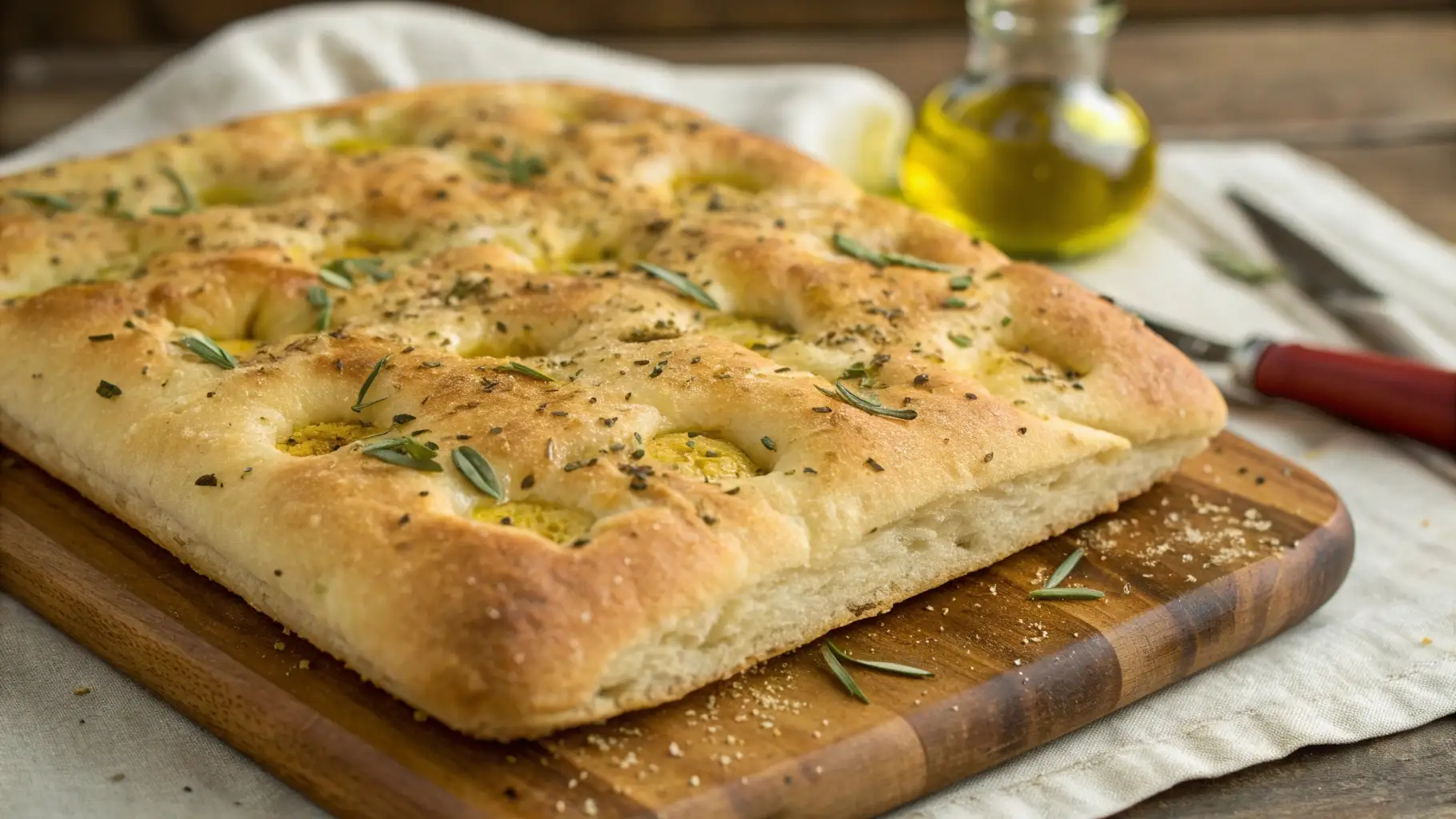
This focaccia hits that perfect sweet spot: airy inside, crisp and golden on top, with a deep olive oil flavor in every bite. It’s the kind of bread that makes your kitchen smell like a bakery and tastes amazing with almost anything. You don’t need special equipment or fancy techniques—just a few pantry staples and time for the dough to rest.
Whether you’re serving it with soup, building sandwiches, or snacking straight from the pan, this focaccia delivers. Let’s keep it simple, reliable, and incredibly good.
What Makes This Recipe So Good
- Simple ingredients, big flavor: Flour, water, yeast, salt, sugar, and olive oil—plus a little flaky salt and herbs. That’s it.
- Hands-off method: The dough does most of the work while it rests.
No complicated kneading needed.
- Great texture: The dough hydrates slowly and bakes up fluffy with that classic chewy bite and crisp edges.
- Foolproof for beginners: Clear steps, visual cues, and flexible timing make it hard to mess up.
- Endlessly customizable: Top with garlic, tomatoes, olives, or keep it classic with rosemary and sea salt.
Shopping List
- All-purpose flour (about 4 cups / 500 g)
- Warm water (about 1 ¾ cups / 420 ml, around 100–110°F)
- Active dry yeast (2 ¼ tsp / 1 packet) or instant yeast
- Sugar or honey (1 tsp) to help activate the yeast
- Kosher salt (1 ½ to 2 tsp for the dough)
- Extra-virgin olive oil (about 6–8 tbsp total)
- Flaky sea salt (for topping)
- Fresh rosemary (optional but highly recommended)
- Garlic (optional, for infused oil or topping)
Step-by-Step Instructions
- Proof the yeast (if using active dry): In a large bowl, mix warm water with sugar and sprinkle the yeast on top. Let it sit 5–10 minutes until foamy. If using instant yeast, skip this and combine it directly with the flour.
- Mix the dough: Add flour and salt to the bowl.
Stir with a spatula until no dry spots remain. The dough will be shaggy and sticky. Drizzle in 2 tablespoons olive oil and fold to coat.
- First rise: Cover the bowl tightly and let the dough rest in a warm spot for 1–1 ½ hours, or until doubled.
For more flavor, you can refrigerate the covered dough for 8–24 hours and let it finish rising at room temperature.
- Prepare the pan: Generously oil a 9×13-inch pan or a large sheet pan with 2–3 tablespoons olive oil. Don’t skimp—this helps create that crisp, golden bottom.
- Pan the dough: Transfer the dough to the pan. Gently stretch it toward the corners.
If it resists, let it rest 10 minutes, then continue stretching.
- Second rise: Cover the pan and let the dough rise again for 30–45 minutes, until puffy. You should see bubbles forming under the surface.
- Make the dimples: Pour 2 tablespoons olive oil over the dough. With oiled fingers, press straight down to create deep dimples across the surface.
Don’t be shy—you’re encouraging those pockets of air.
- Top it: Sprinkle with flaky sea salt and chopped rosemary. Add thinly sliced garlic if you like. You can also scatter halved cherry tomatoes, olives, or red onion slices.
- Bake: Preheat to 425°F (220°C).
Bake for 20–25 minutes, until the top is golden and the edges are crisp. If using a darker pan, start checking at 18 minutes.
- Finish and cool: Brush or drizzle with a little more olive oil while hot. Let it cool in the pan for 10–15 minutes before slicing so the crumb sets.
How to Store
- Room temperature: Wrap in foil or store in an airtight container for up to 2 days.
Re-crisp in a 375°F oven for 5–8 minutes.
- Freezer: Cool completely, slice, and freeze in a zip-top bag for up to 2 months. Reheat from frozen at 375°F for 10–12 minutes.
- Avoid the fridge: Refrigeration dries out bread and dulls flavor. Freeze instead if you won’t finish it quickly.
Health Benefits
- Olive oil provides healthy fats: Extra-virgin olive oil is rich in monounsaturated fats and antioxidants.
- Simple ingredients: No additives or preservatives—just pantry staples you can recognize.
- Customizable sodium: You control the salt, especially the topping, so you can dial it back if needed.
- Pair it smart: Serve with veggie-packed soups, protein-rich salads, or lean meats to round out the meal.
Pitfalls to Watch Out For
- Water too hot or cold: Very hot water can kill yeast; cold water slows the rise.
Aim for 100–110°F.
- Under-oiling the pan: Not enough oil means the crust won’t crisp and may stick. Be generous.
- Rushing the rise: If the dough hasn’t puffed, give it more time. Temperature and yeast freshness matter.
- Overbaking: Focaccia should be golden, not dark brown.
Start checking early to protect the crumb.
- Too much flour: The dough should be sticky. Adding too much flour makes it dense and dry.
Variations You Can Try
- Garlic-rosemary classic: Infuse olive oil with smashed garlic and rosemary, then drizzle before dimpling.
- Tomato and basil: Press halved cherry tomatoes into the dough and scatter fresh basil after baking.
- Olive and red onion: Add sliced olives and thin red onion for a salty, sweet contrast.
- Cheesy focaccia: Sprinkle grated Parmesan or shredded mozzarella in the last 5 minutes of baking.
- Everything seasoning: Top with everything bagel seasoning and a touch of sesame oil mixed into the olive oil.
- Whole wheat blend: Swap up to 30% of the flour with whole wheat for a nuttier flavor and more fiber.
Explore more irresistible bread recipes you won’t want to miss:
FAQ
Can I make the dough ahead of time?
Yes. After mixing, cover and refrigerate the dough for 8–24 hours.
Let it warm up for 30–60 minutes before stretching into the pan. The cold rise deepens the flavor and improves texture.
Do I need a stand mixer?
No. A spoon or spatula works fine.
This is a high-hydration dough, so minimal handling is best. Just mix until combined and let time do the work.
What’s the best flour to use?
All-purpose flour works well and gives a tender crumb. If you have bread flour, you can use it for a slightly chewier bite.
A 50/50 mix is also great.
How do I know when it’s done?
The top should be uniformly golden with crisp edges, and the bottom should be well-browned from the oil. If you tap the crust, it should sound lightly hollow.
Can I use a cast iron skillet?
Absolutely. A 12-inch cast iron skillet makes great focaccia with super crisp edges.
Oil it well and keep an eye on the bake time—it may cook a bit faster.
What if my yeast doesn’t foam?
If it doesn’t foam within 10 minutes, your yeast may be old or the water temperature was off. Start over with fresh yeast and water around 100–110°F.
How do I keep the top from drying out?
Be generous with olive oil before dimpling, and don’t overbake. A quick brush of oil right after it comes out of the oven locks in moisture and adds shine.
Why is my focaccia dense?
Common culprits are not enough rise time, too much flour, or old yeast.
Keep the dough sticky, let it puff visibly, and check your yeast freshness.
Wrapping Up
Focaccia should be unfussy, fragrant, and satisfying—and this recipe nails it. With a few simple steps and plenty of olive oil, you’ll get a fluffy, chewy crumb and a golden, crisp crust every time. Make it your own with herbs, cheese, or veggies, and enjoy it warm from the pan or tucked into tomorrow’s lunch.
Once you try it, this will be your go-to bread for weeknights and gatherings alike.
Easy Focaccia Bread Recipe – Fluffy, Chewy & Golden
Ingredients
- All-purpose flour (about 4 cups / 500 g)
- Warm water (about 1 ¾ cups / 420 ml, around 100–110°F)
- Active dry yeast (2 ¼ tsp / 1 packet) or instant yeast
- Sugar or honey (1 tsp) to help activate the yeast
- Kosher salt (1 ½ to 2 tsp for the dough)
- Extra-virgin olive oil (about 6–8 tbsp total)
- Flaky sea salt (for topping)
- Fresh rosemary (optional but highly recommended)
- Garlic (optional, for infused oil or topping)
Instructions
- Proof the yeast (if using active dry): In a large bowl, mix warm water with sugar and sprinkle the yeast on top. Let it sit 5–10 minutes until foamy. If using instant yeast, skip this and combine it directly with the flour.
- Mix the dough: Add flour and salt to the bowl.Stir with a spatula until no dry spots remain. The dough will be shaggy and sticky. Drizzle in 2 tablespoons olive oil and fold to coat.
- First rise: Cover the bowl tightly and let the dough rest in a warm spot for 1–1 ½ hours, or until doubled.For more flavor, you can refrigerate the covered dough for 8–24 hours and let it finish rising at room temperature.
- Prepare the pan: Generously oil a 9x13-inch pan or a large sheet pan with 2–3 tablespoons olive oil. Don’t skimp—this helps create that crisp, golden bottom.
- Pan the dough: Transfer the dough to the pan. Gently stretch it toward the corners.If it resists, let it rest 10 minutes, then continue stretching.
- Second rise: Cover the pan and let the dough rise again for 30–45 minutes, until puffy. You should see bubbles forming under the surface.
- Make the dimples: Pour 2 tablespoons olive oil over the dough. With oiled fingers, press straight down to create deep dimples across the surface.Don’t be shy—you’re encouraging those pockets of air.
- Top it: Sprinkle with flaky sea salt and chopped rosemary. Add thinly sliced garlic if you like. You can also scatter halved cherry tomatoes, olives, or red onion slices.
- Bake: Preheat to 425°F (220°C).Bake for 20–25 minutes, until the top is golden and the edges are crisp. If using a darker pan, start checking at 18 minutes.
- Finish and cool: Brush or drizzle with a little more olive oil while hot. Let it cool in the pan for 10–15 minutes before slicing so the crumb sets.