
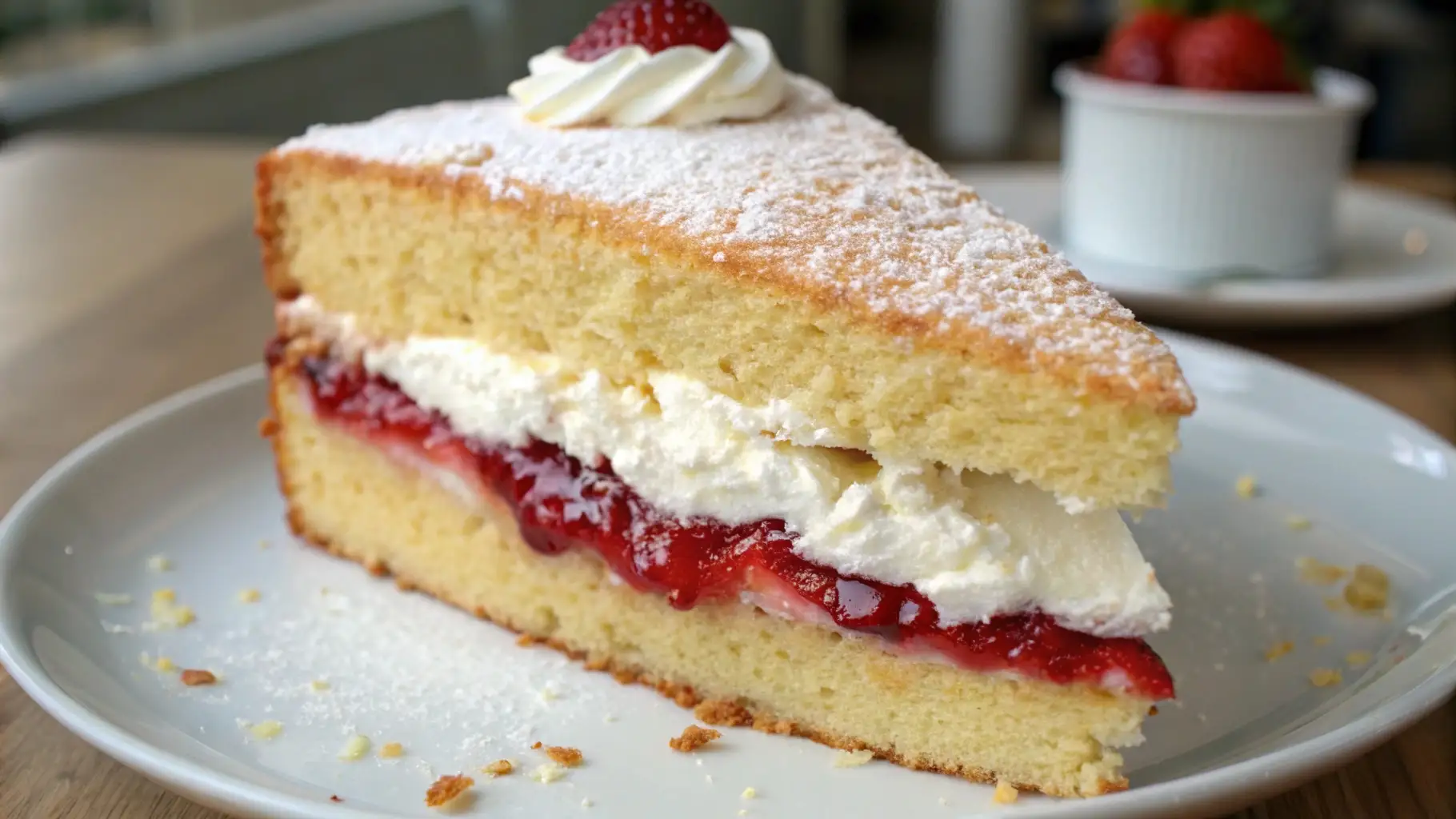
A Victoria sponge is the kind of cake that feels like a warm hello. Light, tender layers sandwiched with jam and softly whipped cream are simple, pretty, and endlessly comforting. You don’t need special equipment or fancy techniques—just a few pantry staples and an hour.
This version is straightforward, reliable, and perfect for birthdays, afternoon tea, or a sweet weekend treat. If you’ve never baked a sponge cake before, this is a great place to start.
What Makes This Special
This recipe sticks to the classic British style: two buttery sponge layers, raspberry jam, and softly whipped cream. It’s made using the creaming method, which gives the cake a fine crumb and a gentle rise.
The flavors are clean and well-balanced—sweet but not heavy. It’s also flexible: swap the jam, adjust the cream, or dust with icing sugar for a simple finish. Most importantly, it’s dependable and easy for home bakers.
Ingredients
- For the sponge:
- 200 g unsalted butter, softened (plus extra for greasing)
- 200 g caster sugar
- 4 large eggs, room temperature
- 200 g self-raising flour
- 1 tsp baking powder
- 1–2 tbsp whole milk (as needed)
- 1 tsp vanilla extract
- Pinch of fine salt
- For the filling:
- 200–250 ml double cream (heavy cream), chilled
- 1–2 tbsp icing sugar, plus extra for dusting
- 1 tsp vanilla extract (optional)
- 4–5 tbsp good-quality raspberry jam (or strawberry)
- To finish:
- Icing sugar, for dusting
- Fresh berries (optional)
Instructions
- Prep your tins and oven: Heat the oven to 180°C/160°C fan/350°F.
Grease and line two 20 cm (8-inch) round sandwich tins with baking paper. This helps the cakes release cleanly.
- Cream butter and sugar: In a large bowl, beat the softened butter and caster sugar together until very light and fluffy, about 3–4 minutes with an electric mixer. The mixture should look pale and increased in volume.
- Add the eggs: Beat in the eggs one at a time, mixing well after each.
If the mixture starts to look curdled, add a spoonful of flour to bring it back together.
- Flour and flavoring: Sift in the self-raising flour, baking powder, and salt. Add the vanilla. Fold gently with a spatula until just combined.
If the batter seems thick, stir in 1–2 tablespoons of milk to reach a soft, dropping consistency.
- Divide and level: Split the batter evenly between the two tins. Smooth the tops with the back of a spoon or an offset spatula. Even layers bake more evenly.
- Bake: Place on the middle rack and bake for 20–25 minutes.
The cakes are done when they’re golden, spring back to the touch, and a skewer comes out clean.
- Cool: Let the cakes cool in the tins for 5 minutes, then turn out onto a wire rack. Peel off the paper and leave to cool completely. Filling warm cakes will melt the cream.
- Whip the cream: In a chilled bowl, whisk the double cream, icing sugar, and vanilla (if using) to soft peaks.
It should hold its shape but still be smooth and spreadable.
- Assemble: Place one sponge layer on a serving plate. Spread a generous layer of jam over the top. Spoon or pipe the whipped cream over the jam, keeping a small border to prevent it from spilling out when you add the second layer.
- Finish: Gently place the second sponge on top.
Dust with icing sugar. Add a few fresh berries if you like.
- Serve: Slice with a serrated knife. Clean the blade between cuts for neat slices.
Storage Instructions
- Same day: Best enjoyed the day it’s made for the lightest crumb and freshest cream.
- Short-term: Store covered in the fridge for up to 2 days because of the cream.
Bring to room temperature for 20–30 minutes before serving to soften the texture.
- Make ahead: Bake the sponges a day ahead, wrap well, and keep at room temperature. Assemble with jam and cream on the day of serving.
- Freezing: Freeze the unfilled sponges (well wrapped) for up to 2 months. Thaw at room temperature, then fill and finish.
Benefits of This Recipe
- Simple and reliable: The ingredient ratios and method are classic and forgiving.
- Quick to prepare: From start to finish, you can have this on the table in about an hour.
- Everyday ingredients: Butter, sugar, eggs, flour—no obscure items needed.
- Customizable: Change the jam, add lemon zest, or use a stabilized cream if you’re transporting it.
- Perfect for sharing: Light, not cloying, and loved by kids and adults alike.
Common Mistakes to Avoid
- Cold ingredients: Cold butter or eggs can cause a curdled batter and a dense crumb.
Bring them to room temperature first.
- Overmixing: Once the flour goes in, fold gently. Overmixing makes the cake tough.
- Uneven tins: If the batter is uneven, one layer will bake faster. Weigh the batter or eye it carefully and level the tops.
- Opening the oven too soon: Wait at least 18–20 minutes before checking.
A draft can make the cakes sink.
- Overwhipped cream: Stop at soft peaks. If it starts to look grainy, fold in a splash of cream to loosen.
Alternatives
- Lemon twist: Add the zest of 1 lemon to the batter and use lemon curd with the cream.
- Strawberry and mascarpone: Swap double cream for a mix of mascarpone and cream for a richer filling. Add sliced fresh strawberries.
- Jam-only classic: For a more traditional take, skip the cream and use only jam with a dusting of icing sugar.
- Gluten-free: Use a trusted 1:1 gluten-free self-raising flour blend, and add an extra tablespoon of milk if the batter feels thick.
- Dairy-free: Replace butter with a dairy-free baking spread and use a plant-based whipping cream.
Check that your jam is vegan-friendly.
- Stabilized cream: If the cake needs to sit out longer, whisk in 1 tablespoon of instant vanilla pudding powder or 1 teaspoon of powdered gelatin (bloomed and cooled) to the cream.
Explore more irresistible cake recipes you won’t want to miss:
FAQ
Can I use plain flour instead of self-raising flour?
Yes. Use 200 g plain (all-purpose) flour plus 2 teaspoons baking powder and a pinch of salt. Sift well to distribute the leavening evenly.
Which jam works best?
Raspberry jam is classic because its tartness balances the sweet sponge.
Strawberry or blackberry also work. Choose a thick, good-quality jam so it doesn’t ooze out.
How do I keep the cake moist?
Don’t overbake—check at 20 minutes and remove when a skewer comes out clean. Using room-temperature butter and eggs also helps create a tender crumb.
If needed, brush the cooled layers with a light syrup (equal parts sugar and water) before filling.
Can I make this in one deep tin?
You can, but it will take longer to bake and may dome heavily. It’s easier and more reliable to bake in two tins. If using one tin, reduce the oven temperature slightly and bake until a skewer tests clean.
How do I stop the cream and jam from squeezing out?
Leave a small border when spreading the filling and don’t press the top layer down.
You can also pipe a thin ring of cream around the edge as a barrier, then spread jam inside it.
What if I don’t have an electric mixer?
You can make it by hand with a wooden spoon and a whisk. Cream the butter and sugar thoroughly to get as much air in as possible. It takes a bit longer, but it works.
Can I add fresh fruit inside?
Yes, just keep the pieces small and pat them dry.
Sliced strawberries or raspberries are great. Avoid very juicy fruit that could make the cake soggy.
In Conclusion
This Easy Victoria Sponge Cake with Jam and Cream is a dependable classic you can master in one go. The ingredients are simple, the method is straightforward, and the result feels special without any fuss.
Keep the technique gentle, don’t rush the cooling, and you’ll have a cake that looks lovely and tastes even better. Serve it with tea, share it with friends, and enjoy how something so simple can be so memorable.
Easy Victoria Sponge Cake With Jam and Cream - A Classic You Can Make Anytime
Ingredients
- For the sponge: 200 g unsalted butter, softened (plus extra for greasing)
- 200 g caster sugar
- 4 large eggs, room temperature
- 200 g self-raising flour
- 1 tsp baking powder
- 1–2 tbsp whole milk (as needed)
- 1 tsp vanilla extract
- Pinch of fine salt
- For the filling: 200–250 ml double cream (heavy cream), chilled
- 1–2 tbsp icing sugar, plus extra for dusting
- 1 tsp vanilla extract (optional)
- 4–5 tbsp good-quality raspberry jam (or strawberry)
- To finish: Icing sugar, for dusting
- Fresh berries (optional)
Instructions
- Prep your tins and oven: Heat the oven to 180°C/160°C fan/350°F.Grease and line two 20 cm (8-inch) round sandwich tins with baking paper. This helps the cakes release cleanly.
- Cream butter and sugar: In a large bowl, beat the softened butter and caster sugar together until very light and fluffy, about 3–4 minutes with an electric mixer. The mixture should look pale and increased in volume.
- Add the eggs: Beat in the eggs one at a time, mixing well after each.If the mixture starts to look curdled, add a spoonful of flour to bring it back together.
- Flour and flavoring: Sift in the self-raising flour, baking powder, and salt. Add the vanilla. Fold gently with a spatula until just combined.If the batter seems thick, stir in 1–2 tablespoons of milk to reach a soft, dropping consistency.
- Divide and level: Split the batter evenly between the two tins. Smooth the tops with the back of a spoon or an offset spatula. Even layers bake more evenly.
- Bake: Place on the middle rack and bake for 20–25 minutes.The cakes are done when they’re golden, spring back to the touch, and a skewer comes out clean.
- Cool: Let the cakes cool in the tins for 5 minutes, then turn out onto a wire rack. Peel off the paper and leave to cool completely. Filling warm cakes will melt the cream.
- Whip the cream: In a chilled bowl, whisk the double cream, icing sugar, and vanilla (if using) to soft peaks.It should hold its shape but still be smooth and spreadable.
- Assemble: Place one sponge layer on a serving plate. Spread a generous layer of jam over the top. Spoon or pipe the whipped cream over the jam, keeping a small border to prevent it from spilling out when you add the second layer.
- Finish: Gently place the second sponge on top.Dust with icing sugar. Add a few fresh berries if you like.
- Serve: Slice with a serrated knife. Clean the blade between cuts for neat slices.