
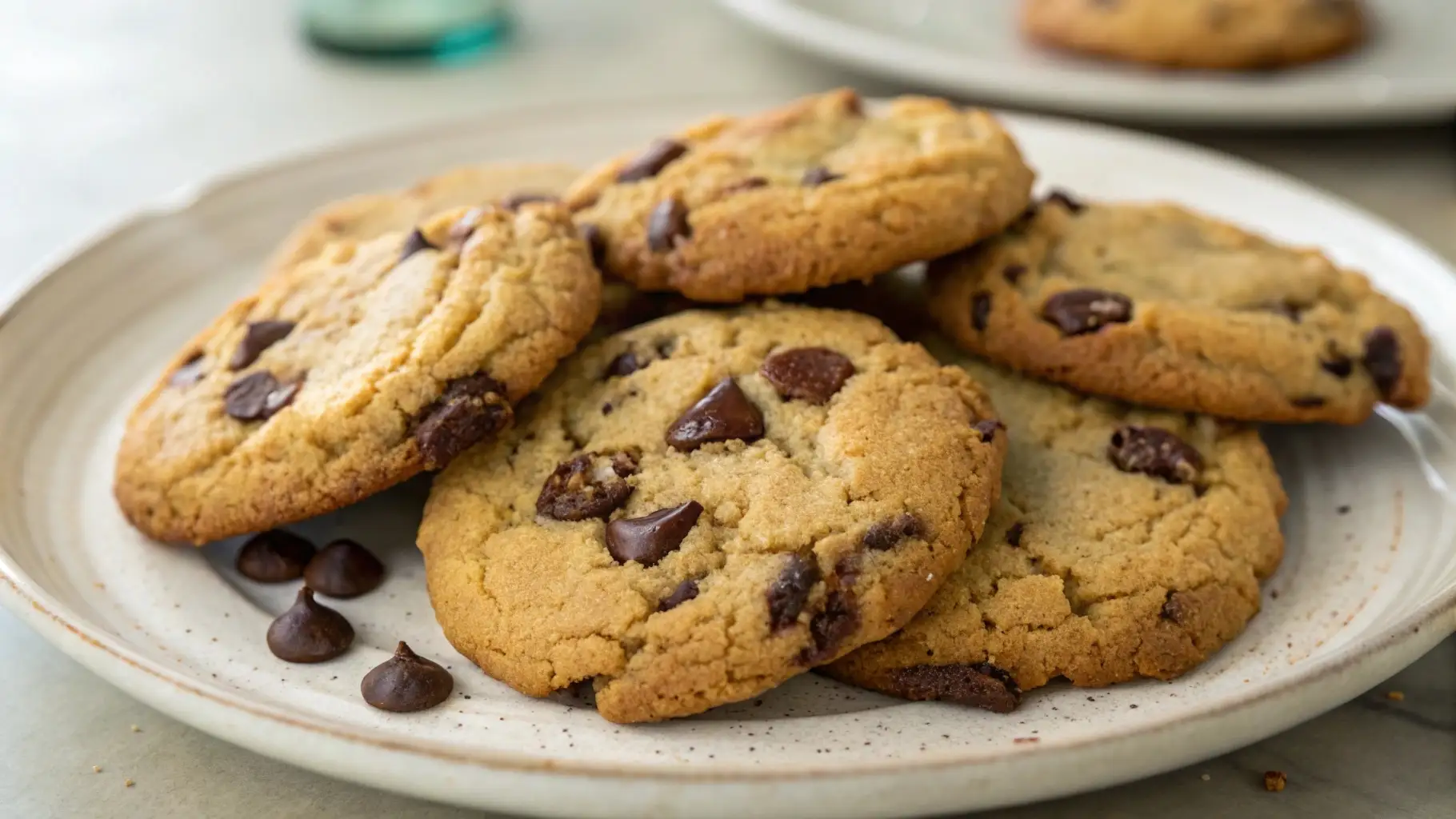
These cookies are proof that you don’t need butter or eggs to make something crave-worthy. Olive oil steps in with a smooth, slightly fruity flavor that pairs beautifully with dark chocolate. The dough comes together in one bowl, no mixer required, and bakes into cookies with crisp edges and chewy centers.
Whether you’re vegan or just out of butter, this recipe has your back.
What Makes This Special
Swapping butter for olive oil isn’t just a workaround—it creates a cookie with its own personality. The olive oil adds depth, a gentle fruitiness, and a clean finish. It also keeps the cookies moist for days.
With the right balance of sugars and a touch of cornstarch, you get that classic bakery-style texture: lightly crisp outside, soft and tender inside. Plus, the recipe is flexible and forgiving, ideal for weeknights or spur-of-the-moment baking.
What You’ll Need
- 1/2 cup (120 ml) extra-virgin olive oil (a mild, fruity variety works best)
- 1/2 cup (100 g) granulated sugar
- 1/2 cup (100 g) light brown sugar, packed
- 1/4 cup (60 ml) unsweetened non-dairy milk (oat, almond, or soy)
- 1 tablespoon vanilla extract
- 1 3/4 cups (220 g) all-purpose flour
- 2 tablespoons cornstarch (for tenderness and structure)
- 1/2 teaspoon baking soda
- 3/4 teaspoon baking powder
- 1/2 teaspoon fine sea salt
- 1 cup (170 g) dairy-free chocolate chips or chopped dark chocolate
- Flaky sea salt, for topping (optional but recommended)
Step-by-Step Instructions
- Preheat and prep: Heat your oven to 350°F (175°C). Line two baking sheets with parchment paper.
This helps prevent spreading and keeps cleanup easy.
- Whisk the wet ingredients: In a large bowl, whisk olive oil, granulated sugar, and brown sugar until glossy and well combined, about 30 seconds. Add the non-dairy milk and vanilla, and whisk again until the mixture looks smooth and slightly thick.
- Mix the dry ingredients: In a separate bowl, whisk flour, cornstarch, baking soda, baking powder, and salt. This step prevents clumps and ensures even rise.
- Combine: Add the dry ingredients to the wet mixture.
Stir with a spatula until just combined. The dough should be soft but not greasy. Avoid overmixing to keep the cookies tender.
- Fold in chocolate: Stir in the chocolate chips or chunks until evenly distributed.
If the dough feels loose, let it rest for 5–10 minutes; it will firm up slightly as the flour hydrates.
- Scoop: Use a 1.5-tablespoon cookie scoop or heaping tablespoon to portion the dough onto the lined sheets, spacing about 2 inches apart. For thicker cookies, chill the scooped dough for 15–20 minutes before baking.
- Bake: Bake for 9–12 minutes, until the edges are set and lightly golden but the centers still look soft. Rotate the pans halfway through for even baking.
- Finish: While the cookies are hot, gently tap the baking sheet on the counter to help them settle and get those pretty rippled edges.
Sprinkle with flaky sea salt if you like.
- Cool: Let cookies cool on the sheet for 5 minutes, then transfer to a rack to cool completely. They’ll firm up as they cool, keeping that chewy middle.
Keeping It Fresh
Store cookies in an airtight container at room temperature for up to 4 days. Slip in a small slice of bread to maintain moisture—the cookies will absorb it and stay soft.
For longer storage, freeze baked cookies in a zip-top bag for up to 2 months. Thaw at room temperature or warm for 2–3 minutes in a 300°F (150°C) oven.
You can also freeze the dough. Scoop onto a tray, freeze until solid, then transfer to a bag.
Bake from frozen, adding 1–2 extra minutes.
Benefits of This Recipe
- Vegan by default: No dairy or eggs, but still rich and satisfying.
- One bowl, no mixer: Quick to prep and easy to clean.
- Better-for-you fats: Olive oil brings heart-healthy monounsaturated fats.
- Reliable texture: Cornstarch and the sugar blend deliver soft centers and crisp edges.
- Pantry-friendly: Uses everyday ingredients you likely have on hand.
- Customizable: Works with different chocolates, add-ins, and flours.
What Not to Do
- Don’t use a strongly bitter olive oil: Choose a mild to medium, fruity oil. A very peppery oil can overwhelm the cookie.
- Don’t skip the salt: A little salt sharpens the chocolate and balances sweetness.
- Don’t overbake: Pull them when the centers look slightly underdone; they finish setting as they cool.
- Don’t pack the flour: Spoon and level your flour. Too much flour leads to cakey, dry cookies.
- Don’t overmix: Stir just until the flour disappears to avoid tough cookies.
Variations You Can Try
- Orange zest and almond: Add 1 teaspoon orange zest and 1/2 teaspoon almond extract for a bright, bakery-style twist.
- Espresso-chocolate: Whisk 1–2 teaspoons instant espresso powder into the wet ingredients to deepen the chocolate flavor.
- Nutty crunch: Fold in 1/2 cup chopped toasted walnuts, pecans, or pistachios.
- Sea salt tahini: Replace 2 tablespoons of olive oil with tahini for subtle sesame notes and extra chew.
- Gluten-free version: Use a 1:1 gluten-free all-purpose blend with xanthan gum.
Chill the dough 20–30 minutes before baking for best structure.
- Cardamom spice: Add 1/2 teaspoon ground cardamom to the dry mix for a warm, aromatic edge.
- Chunky bar swap: Use chopped dark chocolate from a bar. The irregular pieces create chocolate pools and a more artisanal look.
Explore more irresistible cookie recipes you won’t want to miss:
FAQ
Can I use regular olive oil instead of extra-virgin?
Yes. Extra-virgin brings more character, but a good-quality regular or “light” olive oil works if you prefer a milder flavor.
Just avoid anything with off or stale notes.
Why add cornstarch to cookies?
Cornstarch softens the crumb and helps the cookies hold their shape without eggs. It creates that tender, slightly chewy center that people love in bakery cookies.
My dough seems oily—did I do something wrong?
If the dough looks shiny, let it rest 5–10 minutes so the flour hydrates. If it’s very loose, add 1–2 tablespoons of flour.
Also check that you measured the oil correctly and didn’t pack the flour.
Can I reduce the sugar?
You can cut the total sugar by about 2–3 tablespoons without major texture issues. Any more and the cookies may bake up drier and less chewy. Consider using extra-dark chocolate to balance sweetness instead.
Which non-dairy milk is best?
Oat and soy milk both work well due to their body and mild flavor.
Almond milk is fine too. Just avoid strongly flavored milks that could clash with the olive oil.
How do I get thicker cookies?
Chill the dough balls for 20–30 minutes before baking, and bake on a cool, lined sheet. Slightly under-measuring the milk also helps.
Don’t press the dough down before baking.
Can I make them oil-free?
This specific recipe relies on olive oil for texture and flavor. For oil-free, you’d need a different formula—often using nut butter or applesauce—which will change the result quite a bit.
Do I need to cream the oil and sugar?
No. Olive oil doesn’t trap air like butter.
A thorough whisk to emulsify is enough. This is part of why the recipe is fast and simple.
What’s the best chocolate to use?
Use dairy-free chocolate chips or a chopped dark chocolate bar (60–75% cocoa). Chopped chocolate gives varied melt and those dramatic pools.
Chips hold their shape for a classic look.
Why top with flaky sea salt?
It cuts sweetness, highlights the olive oil, and makes the chocolate pop. A light sprinkle right after baking is all you need for a balanced, bakery-style finish.
Final Thoughts
These vegan olive oil chocolate chip cookies are simple, fast, and genuinely delicious. They deliver the texture you want—crisp edges, soft centers—with a flavor that feels a little more grown-up than classic butter cookies.
Keep a bottle of good olive oil and some chocolate on hand, and you can whip up a batch whenever the craving hits. Share them, freeze them, or enjoy them warm with a little flaky salt on top. Either way, they’ll become a repeat recipe in your kitchen.
Easy Vegan Olive Oil Chocolate Chip Cookies Recipe - Simple, Crispy-Edged, Soft-Centered Treats
Ingredients
- 1/2 cup (120 ml) extra-virgin olive oil (a mild, fruity variety works best)
- 1/2 cup (100 g) granulated sugar
- 1/2 cup (100 g) light brown sugar, packed
- 1/4 cup (60 ml) unsweetened non-dairy milk (oat, almond, or soy)
- 1 tablespoon vanilla extract
- 1 3/4 cups (220 g) all-purpose flour
- 2 tablespoons cornstarch (for tenderness and structure)
- 1/2 teaspoon baking soda
- 3/4 teaspoon baking powder
- 1/2 teaspoon fine sea salt
- 1 cup (170 g) dairy-free chocolate chips or chopped dark chocolate
- Flaky sea salt, for topping (optional but recommended)
Instructions
- Preheat and prep: Heat your oven to 350°F (175°C). Line two baking sheets with parchment paper.This helps prevent spreading and keeps cleanup easy.
- Whisk the wet ingredients: In a large bowl, whisk olive oil, granulated sugar, and brown sugar until glossy and well combined, about 30 seconds. Add the non-dairy milk and vanilla, and whisk again until the mixture looks smooth and slightly thick.
- Mix the dry ingredients: In a separate bowl, whisk flour, cornstarch, baking soda, baking powder, and salt. This step prevents clumps and ensures even rise.
- Combine: Add the dry ingredients to the wet mixture.Stir with a spatula until just combined. The dough should be soft but not greasy. Avoid overmixing to keep the cookies tender.
- Fold in chocolate: Stir in the chocolate chips or chunks until evenly distributed.If the dough feels loose, let it rest for 5–10 minutes; it will firm up slightly as the flour hydrates.
- Scoop: Use a 1.5-tablespoon cookie scoop or heaping tablespoon to portion the dough onto the lined sheets, spacing about 2 inches apart. For thicker cookies, chill the scooped dough for 15–20 minutes before baking.
- Bake: Bake for 9–12 minutes, until the edges are set and lightly golden but the centers still look soft. Rotate the pans halfway through for even baking.
- Finish: While the cookies are hot, gently tap the baking sheet on the counter to help them settle and get those pretty rippled edges.Sprinkle with flaky sea salt if you like.
- Cool: Let cookies cool on the sheet for 5 minutes, then transfer to a rack to cool completely. They’ll firm up as they cool, keeping that chewy middle.