
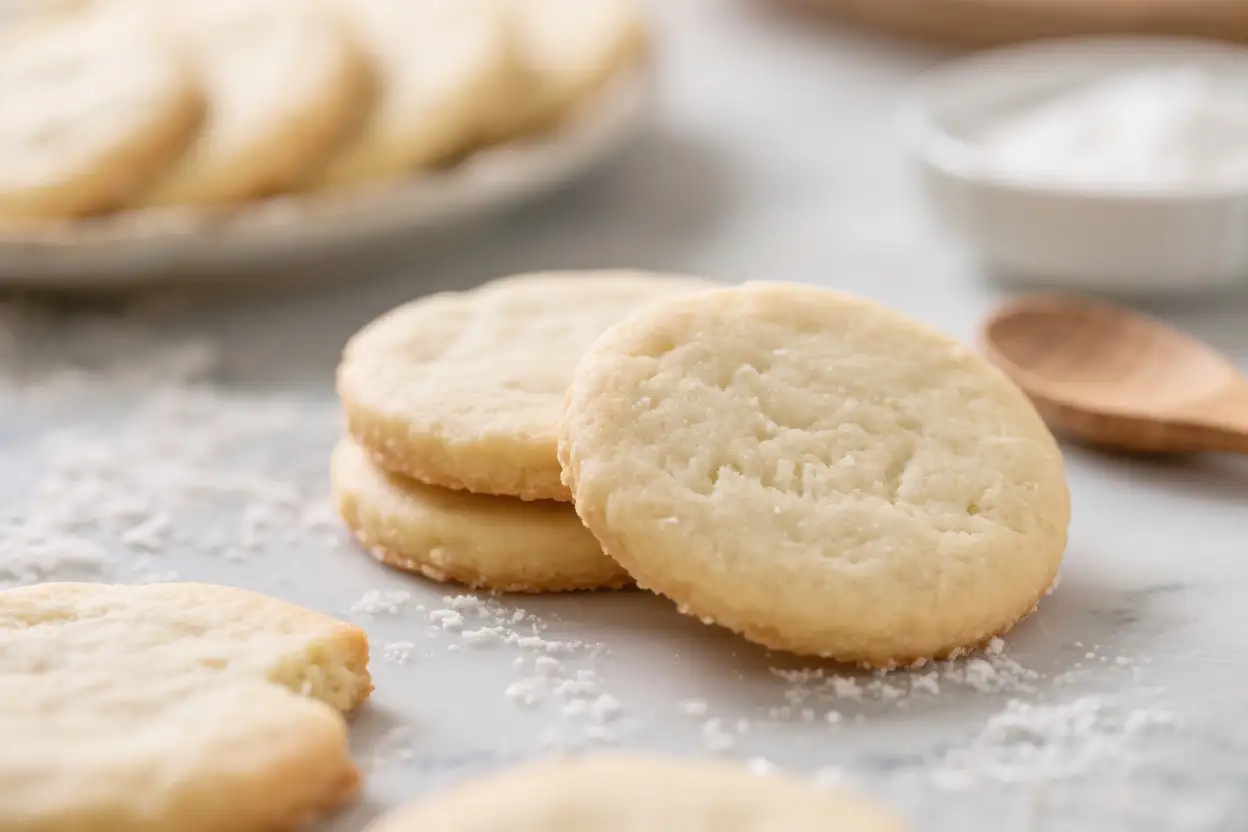
Sugar cookies shouldn’t be complicated. You want soft centers, chewy edges, and a simple dough that behaves every time. This recipe gives you all that without fuss, using pantry staples and a few smart tips.
The result is a cookie that holds its shape, tastes buttery and vanilla-rich, and stays soft for days. You can roll them in sugar for sparkle or frost them once cooled.
Why This Recipe Works
This recipe balances fat, sugar, and flour so the cookies spread just enough without turning thin. A mix of white and brown sugar adds moisture and subtle caramel notes, which keeps the texture soft.
Using room-temperature butter and a short chill helps control spread and improves flavor. A touch of cornstarch tenderizes the crumb, while an extra egg yolk adds richness and chew. Finally, baking just until the edges set ensures a soft center every time.
Shopping List
- Unsalted butter (1 cup/226 g), softened
- Granulated sugar (3/4 cup/150 g)
- Light brown sugar (1/2 cup/100 g), packed
- Large egg (1)
- Large egg yolk (1)
- Pure vanilla extract (2 teaspoons)
- All-purpose flour (2 1/2 cups/315 g)
- Cornstarch (2 teaspoons)
- Baking soda (1/2 teaspoon)
- Baking powder (1/2 teaspoon)
- Fine sea salt (1/2 teaspoon)
- Optional for rolling: extra granulated sugar or sanding sugar
- Optional for finishing: simple glaze or frosting, sprinkles
How to Make It
- Prep your tools and oven. Line two baking sheets with parchment paper.
Preheat the oven to 350°F (175°C). Make sure your butter is soft but not greasy.
- Cream the butter and sugars. In a large bowl, beat the butter, granulated sugar, and brown sugar together on medium speed for 2–3 minutes until light and fluffy. Proper creaming traps air and helps create that soft, chewy texture.
- Add egg, yolk, and vanilla. Mix in the egg, then the extra yolk, followed by vanilla.
Beat until smooth. Scrape the bowl so everything is well combined.
- Whisk the dry ingredients. In a separate bowl, whisk flour, cornstarch, baking soda, baking powder, and salt. This ensures even distribution so your cookies rise consistently.
- Combine wet and dry. Add the dry ingredients to the wet in two additions.
Mix on low just until the flour disappears. Avoid overmixing to keep the cookies tender.
- Chill briefly. Cover the bowl and chill the dough for 20–30 minutes. This quick rest firms the butter slightly and controls spread without making the dough hard to scoop.
- Portion the dough. Scoop into 1 1/2-tablespoon balls (about a heaping tablespoon).
Roll each ball smooth. If you like, roll in sugar or sanding sugar for a sparkly crust.
- Arrange and bake. Place dough balls on prepared sheets, spaced 2 inches apart. Bake for 9–11 minutes, until the edges look set and just turning pale golden.
The centers should look slightly underdone.
- Tap and cool. For extra crinkles, gently tap the baking sheet on the counter once right out of the oven. Let cookies cool on the sheet for 5 minutes, then move to a rack to cool completely.
- Optional finish. Once cool, drizzle with a simple vanilla glaze or frost lightly. Sprinkles are always welcome.
How to Store
- Room temperature: Store in an airtight container for 4–5 days.
Add a slice of bread to the container to keep cookies soft.
- Refrigerator: Not necessary for baked cookies. It can dry them out.
- Freezer (baked): Freeze in layers with parchment for up to 2 months. Thaw at room temp.
- Freezer (dough): Freeze portioned dough balls on a tray, then transfer to a bag.
Bake from frozen at 350°F (175°C) for 11–13 minutes.
Why This is Good for You
These cookies aren’t health food, but they’re good for the soul and simple to share. The ingredient list is short and straightforward, with no weird additives. Making them at home lets you control sweetness and portion size.
They also make a reliable base for adding flavors like citrus zest or warm spices, so you can tailor them to your tastes.
Common Mistakes to Avoid
- Overbaking: The cookies should look slightly soft in the center when you pull them. They finish setting as they cool.
- Skipping the chill: Even a short chill helps prevent spreading and improves texture.
- Butter too warm: Greasy, very soft butter leads to flat cookies. Aim for cool-room-temp butter that dents when pressed.
- Overmixing flour: Mixing too long after adding the dry ingredients can make cookies tough.
- Wrong measuring: Spoon and level your flour.
Too much flour makes dry, cakey cookies; too little makes them spread.
- Hot baking sheets: Adding dough to a warm sheet can cause premature spreading. Use cool sheets between batches.
Alternatives
- Gluten-free: Use a 1:1 gluten-free all-purpose blend with xanthan gum. Add 1 extra teaspoon of milk if the dough seems dry.
- Dairy-free: Swap butter for a high-quality vegan butter stick (not spread).
Chill the dough 10 minutes longer.
- Flavor twists: Add 1 teaspoon almond extract or 1 tablespoon lemon zest. For warm notes, add 1/2 teaspoon ground cinnamon.
- Frosting options: Vanilla buttercream, cream cheese frosting, or a simple glaze (1 cup powdered sugar + 1–2 tablespoons milk + 1/2 teaspoon vanilla).
- Cut-out version: Reduce baking soda to 1/4 teaspoon and chill 45–60 minutes. Roll to 1/4 inch and bake 8–10 minutes.
- Extra chewy: Swap 2 tablespoons flour for 2 tablespoons additional brown sugar and bake on the shorter end of the time.
Explore more irresistible cookie recipes you won’t want to miss:
FAQ
Can I make the dough ahead?
Yes.
Chill the dough up to 48 hours. If it’s firm, let it sit at room temp for 10–15 minutes before scooping. You can also portion and freeze the dough for easy baking later.
Why are my cookies flat?
Butter may have been too warm, the flour measurement may be light, or you skipped the chill.
Ensure your oven is truly at 350°F, and try adding 1–2 tablespoons extra flour if the dough feels soft and sticky.
How do I keep sugar cookies soft?
Don’t overbake, store in an airtight container, and consider adding a slice of bread to the container. The slight humidity keeps cookies tender without changing flavor.
Can I reduce the sugar?
You can reduce total sugar by about 2–3 tablespoons without hurting texture. Larger cuts will affect spread and softness.
If cutting more, keep the brown sugar portion for moisture.
What if I don’t have cornstarch?
Skip it or replace with the same amount of all-purpose flour. The cookies will still be great, just slightly less tender.
Do I need a mixer?
No, but it helps with creaming. If mixing by hand, let the butter soften well and use a sturdy spatula.
Beat vigorously for a couple of minutes to incorporate air.
Can I color or decorate them?
Absolutely. Add a few drops of gel food coloring to the dough after the eggs for colored cookies, or decorate with glaze, frosting, and sprinkles once cooled.
How do I make them thicker?
Chill the dough longer (up to 60 minutes), use slightly higher cookie mounds, and bake on parchment-lined, cool sheets. You can also add 1 extra tablespoon of flour.
Wrapping Up
With simple ingredients and a few reliable steps, these sugar cookies come out soft, chewy, and consistently delicious.
The dough is easy to handle, flexible for add-ins, and perfect for decorating or enjoying as-is. Keep an eye on the edges, don’t overbake, and you’ll have a batch that disappears fast. Save this recipe—you’ll use it again and again.
Easy Sugar Cookies Recipe – Soft, Chewy & Perfect Every Time
Ingredients
- Unsalted butter (1 cup/226 g), softened
- Granulated sugar (3/4 cup/150 g)
- Light brown sugar (1/2 cup/100 g), packed
- Large egg (1)
- Large egg yolk (1)
- Pure vanilla extract (2 teaspoons)
- All-purpose flour (2 1/2 cups/315 g)
- Cornstarch (2 teaspoons)
- Baking soda (1/2 teaspoon)
- Baking powder (1/2 teaspoon)
- Fine sea salt (1/2 teaspoon)
- Optional for rolling: extra granulated sugar or sanding sugar
- Optional for finishing: simple glaze or frosting, sprinkles
Instructions
- Prep your tools and oven. Line two baking sheets with parchment paper.Preheat the oven to 350°F (175°C). Make sure your butter is soft but not greasy.
- Cream the butter and sugars. In a large bowl, beat the butter, granulated sugar, and brown sugar together on medium speed for 2–3 minutes until light and fluffy. Proper creaming traps air and helps create that soft, chewy texture.
- Add egg, yolk, and vanilla. Mix in the egg, then the extra yolk, followed by vanilla.Beat until smooth. Scrape the bowl so everything is well combined.
- Whisk the dry ingredients. In a separate bowl, whisk flour, cornstarch, baking soda, baking powder, and salt. This ensures even distribution so your cookies rise consistently.
- Combine wet and dry. Add the dry ingredients to the wet in two additions.Mix on low just until the flour disappears. Avoid overmixing to keep the cookies tender.
- Chill briefly. Cover the bowl and chill the dough for 20–30 minutes. This quick rest firms the butter slightly and controls spread without making the dough hard to scoop.
- Portion the dough. Scoop into 1 1/2-tablespoon balls (about a heaping tablespoon).Roll each ball smooth. If you like, roll in sugar or sanding sugar for a sparkly crust.
- Arrange and bake. Place dough balls on prepared sheets, spaced 2 inches apart. Bake for 9–11 minutes, until the edges look set and just turning pale golden.The centers should look slightly underdone.
- Tap and cool. For extra crinkles, gently tap the baking sheet on the counter once right out of the oven. Let cookies cool on the sheet for 5 minutes, then move to a rack to cool completely.
- Optional finish. Once cool, drizzle with a simple vanilla glaze or frost lightly. Sprinkles are always welcome.