
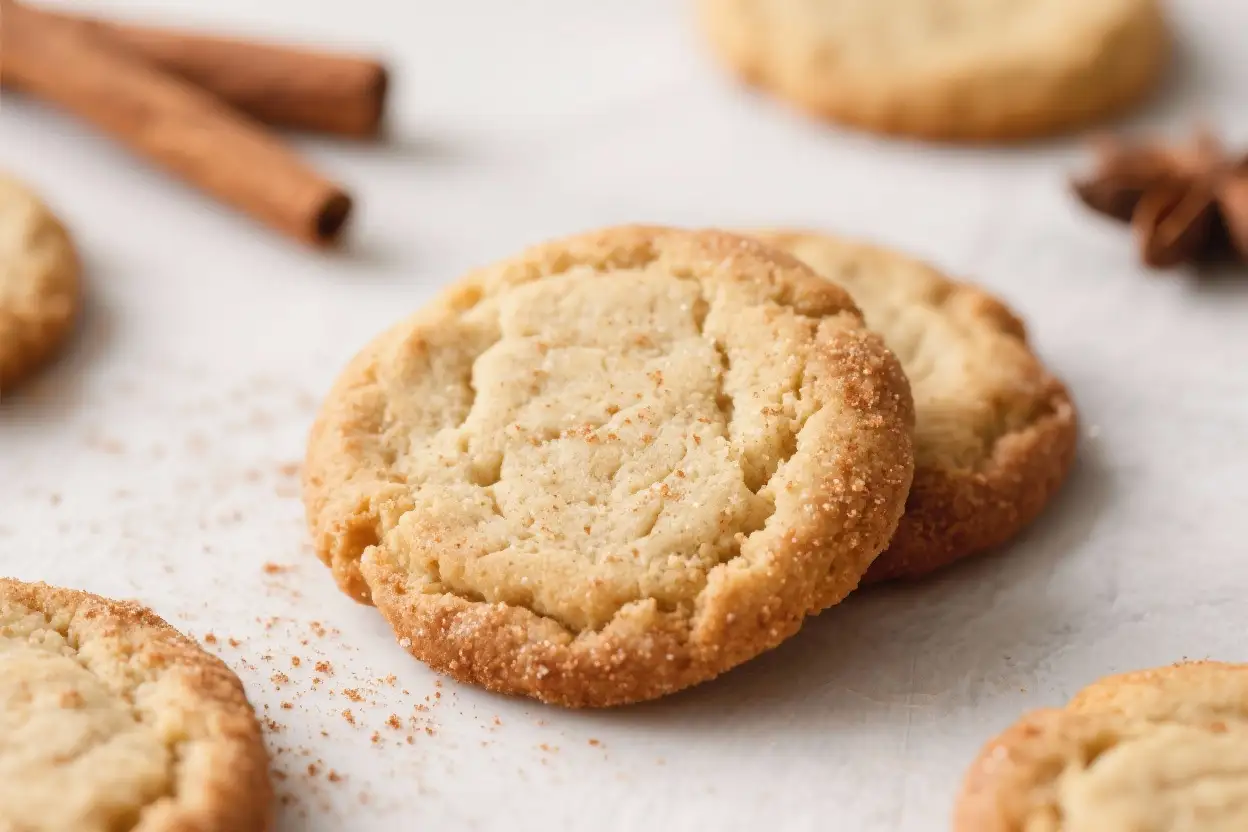
Snickerdoodles are the kind of cookie that feels like a warm hug. They’re soft in the center, just a little crisp at the edges, and coated in a fragrant cinnamon-sugar crust. No fancy ingredients, no complicated techniques—just classic, homey flavor.
If you’ve ever wondered what sets snickerdoodles apart from sugar cookies, it’s that signature tang from cream of tartar and the irresistible cinnamon coating. This recipe gives you the chewy texture and familiar warmth you’re after, every time.
What Makes This Recipe So Good
- Soft, chewy middle with light, crisp edges thanks to the right butter-to-flour ratio and a quick chill.
- Classic tang from cream of tartar, which also helps keep them soft longer.
- Balanced sweetness with cinnamon that’s present but not overpowering.
- Quick to make—you can have warm cookies on the table in under an hour.
- Reliable results using simple pantry staples and a straightforward method.
Ingredients
- 1 cup (226 g) unsalted butter, softened to room temperature
- 1 1/4 cups (250 g) granulated sugar
- 1 large egg + 1 egg yolk, room temperature
- 2 teaspoons vanilla extract
- 2 3/4 cups (330 g) all-purpose flour
- 2 teaspoons cream of tartar
- 1 teaspoon baking soda
- 1/2 teaspoon fine sea salt
- For rolling: 1/4 cup (50 g) granulated sugar + 2 teaspoons ground cinnamon
How to Make It
- Preheat and prep: Set the oven to 350°F (175°C). Line two baking sheets with parchment paper.
- Cream the butter and sugar: In a large bowl, beat the softened butter and 1 1/4 cups sugar until light and fluffy, about 2–3 minutes.
This traps air and helps the cookies rise and stay tender.
- Add eggs and vanilla: Beat in the egg, egg yolk, and vanilla until smooth. Scrape down the bowl to make sure everything is evenly mixed.
- Whisk dry ingredients: In a separate bowl, whisk the flour, cream of tartar, baking soda, and salt until combined.
- Combine wet and dry: Add the dry ingredients to the wet in two additions. Mix on low until just incorporated.
The dough should be soft and slightly sticky but manageable.
- Mix the coating: In a small bowl, stir together 1/4 cup sugar and 2 teaspoons cinnamon.
- Shape and roll: Scoop the dough into 1 1/2-tablespoon portions (a medium cookie scoop works well). Roll each into a ball, then coat generously in the cinnamon-sugar mixture.
- Optional chill: For thicker cookies, place the coated dough balls on a tray and chill for 20–30 minutes. If you want thinner, crinkly cookies, skip the chill.
- Bake: Arrange the dough balls on the prepared sheets, leaving about 2 inches between each.
Bake for 9–11 minutes, until the edges are set and the centers look slightly underbaked and puffy.
- Cool: Let the cookies rest on the baking sheet for 5 minutes, then move them to a wire rack to cool. They’ll firm up as they cool but stay soft inside.
Keeping It Fresh
- Room temperature: Store in an airtight container for up to 4 days. Add a slice of bread to the container to keep them soft (replace as it dries out).
- Freeze baked cookies: Freeze in a sealed bag or container for up to 2 months.
Thaw at room temperature.
- Freeze dough balls: Roll in cinnamon sugar first, then freeze on a sheet. Transfer to a bag once firm and bake from frozen at 350°F, adding 1–2 minutes to the bake time.
Why This is Good for You
- Homemade beats store-bought: Fewer additives, and you control the ingredients and sweetness.
- Portion control: Smaller cookies satisfy the craving without going overboard.
- Comfort factor: Warm, familiar flavors can boost mood and make sharing easy—great for gatherings and gifting.
- Balanced indulgence: They’re a treat, but you can tweak sugar levels and sizes to fit your goals.
Pitfalls to Watch Out For
- Overbaking: If they look fully set in the center when you pull them, they’ll end up dry. Slightly underbaked is perfect.
- Skipping cream of tartar: It’s key to that classic tang and chewy texture.
Don’t leave it out unless you’re using a tested substitute.
- Butter too soft or melted: Overly warm butter leads to flat cookies. Aim for soft, cool butter that dents when pressed.
- Measuring flour incorrectly: Too much flour makes them cakey. Spoon and level your flour or use a scale.
- Not enough cinnamon sugar: Be generous.
The coating creates the signature flavor and crackly crust.
Alternatives
- Brown butter: For a deeper, nutty flavor, brown the butter and let it cool until solid before creaming. Expect slightly richer cookies.
- Gluten-free: Use a 1:1 gluten-free all-purpose blend that includes xanthan gum. Chill the dough for 30 minutes to help with structure.
- Dairy-free: Substitute a good quality plant-based butter.
Choose one with at least 75–80% fat for best texture.
- Pumpkin spice twist: Replace half the cinnamon in the coating with pumpkin pie spice for a cozy fall version.
- Cinnamon-sugar center: Roll dough balls, then flatten slightly and add a pinch of cinnamon sugar inside. Seal, roll again, and coat. Extra cinnamon burst in the middle.
- Cardamom or chai: Swap 1/2 teaspoon of the cinnamon with ground cardamom or chai spice for a fragrant spin.
- Lemon snickerdoodles: Add 1 tablespoon fresh lemon zest to the dough and a tiny pinch to the sugar coating for a bright finish.
Explore more irresistible cookie recipes you won’t want to miss:
FAQ
Can I make these without cream of tartar?
Yes, but they won’t taste like classic snickerdoodles.
As a close substitute, use 2 teaspoons baking powder instead of the cream of tartar and baking soda. The flavor will be more like a cinnamon-sugar cookie and less tangy.
Why did my cookies turn out cakey?
Too much flour or overmixing are the usual culprits. Measure with a scale or spoon-and-level method, and mix only until the dough comes together.
Also make sure your butter wasn’t too cold, which can affect spread.
How do I get thicker cookies?
Chill the dough balls for 20–30 minutes before baking and use a slightly higher mound of dough. You can also bake on a cool, heavy baking sheet and avoid greased pans—parchment works best.
Can I reduce the sugar?
You can reduce the sugar in the dough by about 2–3 tablespoons without major changes. Keep the full cinnamon-sugar coating to maintain that classic snickerdoodle bite.
What’s the best way to keep them soft?
Store in an airtight container with a slice of fresh bread or a few marshmallows.
The cookies absorb moisture and stay tender for days.
Do I need to flatten the dough balls before baking?
Not usually. They spread on their own. If your kitchen is very cold or the dough is well-chilled, a gentle press can help ensure even spread and crackly tops.
Can I double the recipe?
Absolutely.
Double all ingredients and bake in batches, keeping extra dough chilled between rounds to keep the shape and texture consistent.
In Conclusion
These soft and chewy snickerdoodle cookies are everything you want in a classic: warm cinnamon sugar, a tender center, and a hint of tang. They’re simple, reliable, and endlessly adaptable for any season. Keep a batch of dough in the freezer, and you’ll always be just minutes away from fresh-baked comfort.
Whether for a bake sale, holiday tray, or just a cozy night in, this recipe is a keeper.
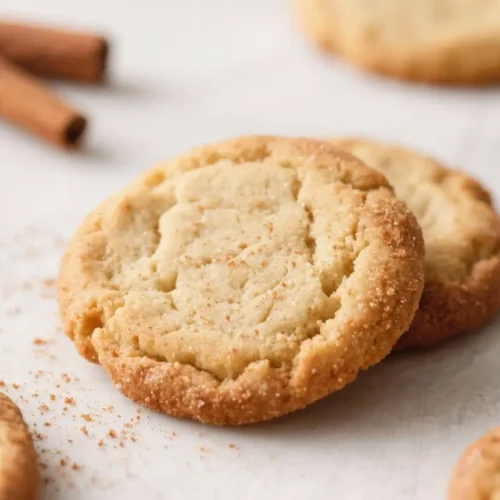
Soft & Chewy Snickerdoodle Cookies (Classic Cinnamon Sugar) – Cozy, Comforting, and Foolproof
Ingredients
- 1 cup (226 g) unsalted butter, softened to room temperature
- 1 1/4 cups (250 g) granulated sugar
- 1 large egg + 1 egg yolk, room temperature
- 2 teaspoons vanilla extract
- 2 3/4 cups (330 g) all-purpose flour
- 2 teaspoons cream of tartar
- 1 teaspoon baking soda
- 1/2 teaspoon fine sea salt
- For rolling: 1/4 cup (50 g) granulated sugar + 2 teaspoons ground cinnamon
Instructions
- Preheat and prep: Set the oven to 350°F (175°C). Line two baking sheets with parchment paper.
- Cream the butter and sugar: In a large bowl, beat the softened butter and 1 1/4 cups sugar until light and fluffy, about 2–3 minutes.This traps air and helps the cookies rise and stay tender.
- Add eggs and vanilla: Beat in the egg, egg yolk, and vanilla until smooth. Scrape down the bowl to make sure everything is evenly mixed.
- Whisk dry ingredients: In a separate bowl, whisk the flour, cream of tartar, baking soda, and salt until combined.
- Combine wet and dry: Add the dry ingredients to the wet in two additions. Mix on low until just incorporated.The dough should be soft and slightly sticky but manageable.
- Mix the coating: In a small bowl, stir together 1/4 cup sugar and 2 teaspoons cinnamon.
- Shape and roll: Scoop the dough into 1 1/2-tablespoon portions (a medium cookie scoop works well). Roll each into a ball, then coat generously in the cinnamon-sugar mixture.
- Optional chill: For thicker cookies, place the coated dough balls on a tray and chill for 20–30 minutes. If you want thinner, crinkly cookies, skip the chill.
- Bake: Arrange the dough balls on the prepared sheets, leaving about 2 inches between each.Bake for 9–11 minutes, until the edges are set and the centers look slightly underbaked and puffy.
- Cool: Let the cookies rest on the baking sheet for 5 minutes, then move them to a wire rack to cool. They’ll firm up as they cool but stay soft inside.