
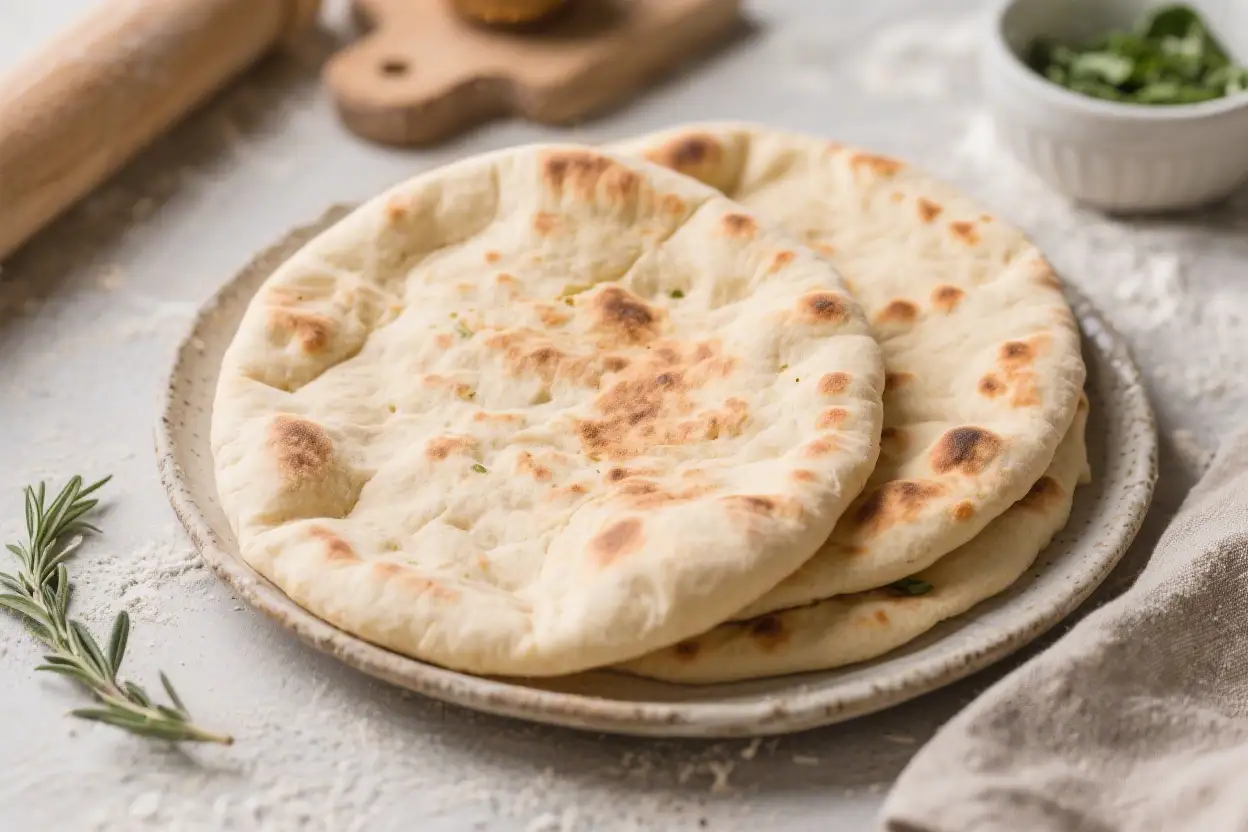
Warm, puffy pita bread is one of those small kitchen miracles that never gets old. It’s simple, affordable, and tastes miles better than anything in a bag. With a few pantry staples and a hot oven or skillet, you’ll get soft rounds that split open to reveal a tender pocket.
The steps are straightforward, the ingredients are basic, and the payoff is huge. Whether you’re stuffing them with falafel, scooping up hummus, or making a quick sandwich, homemade pita fits right into everyday cooking.
Why This Recipe Works
Homemade pita relies on a quick-rising dough and high heat to create that signature pocket. The heat turns the moisture in the dough into steam, which puffs the pita from the inside.
A short rest after shaping relaxes the gluten so the dough inflates evenly. Using a little olive oil keeps the crumb tender, while a touch of sugar or honey feeds the yeast and helps browning. With a hot baking steel or preheated sheet pan, you’ll get a fast bake, great color, and reliable puff.
Shopping List
- All-purpose flour (or a mix of all-purpose and bread flour)
- Instant or active dry yeast
- Warm water (about 105–110°F / 40–43°C)
- Olive oil
- Sugar or honey
- Salt
- Optional: Whole wheat flour (for a partial swap), semolina for dusting
Step-by-Step Instructions
- Proof the yeast (if using active dry). In a bowl, mix warm water with sugar or honey and stir in the yeast.
Let it sit 5–10 minutes until foamy. If using instant yeast, you can skip proofing and add it straight to the flour.
- Make the dough. In a large bowl, combine flour and salt. Add the foamy yeast mixture (or water for instant yeast), plus olive oil.
Stir with a spoon until a shaggy dough forms.
- Knead until smooth. Turn the dough onto a lightly floured surface. Knead 7–10 minutes until soft, elastic, and slightly tacky but not sticky. Add flour sparingly to avoid drying it out.
You can also use a stand mixer with a dough hook for 6–8 minutes on medium-low.
- First rise. Shape the dough into a ball and place it in a lightly oiled bowl, turning once to coat. Cover and let it rise in a warm spot until doubled, about 1 to 1½ hours.
- Preheat for baking. Place a baking steel, pizza stone, or an upside-down sheet pan in the oven and heat to 475°F (245°C) for at least 20 minutes. For stovetop cooking, heat a heavy skillet over medium-high for several minutes.
- Divide and rest. Turn the risen dough out and gently deflate.
Divide into 8 equal pieces for medium pitas (or 10 for smaller). Roll each into a ball, cover, and rest 10 minutes to relax the gluten.
- Roll the rounds. On a lightly floured surface, roll each ball into a circle about 6–7 inches wide and 1/8 inch thick. Keep the thickness even—this is key for good puff.
Dust off excess flour.
- Optional bench rest. Let the rolled rounds rest 5–10 minutes. This quick pause improves puff and prevents shrinking.
- Bake in the oven. Place 2–3 rounds onto the hot stone or pan. Bake 2–3 minutes until they balloon dramatically, then another 1–2 minutes for light browning.
Don’t overbake; you want soft, not cracker-crisp.
- Or cook on the stovetop. Lay a round in the hot dry skillet. Cook 1–2 minutes until bubbles form, flip, and cook 1–2 minutes more. Flip again; with a gentle press using a spatula, it should puff.
Adjust heat as needed to avoid scorching.
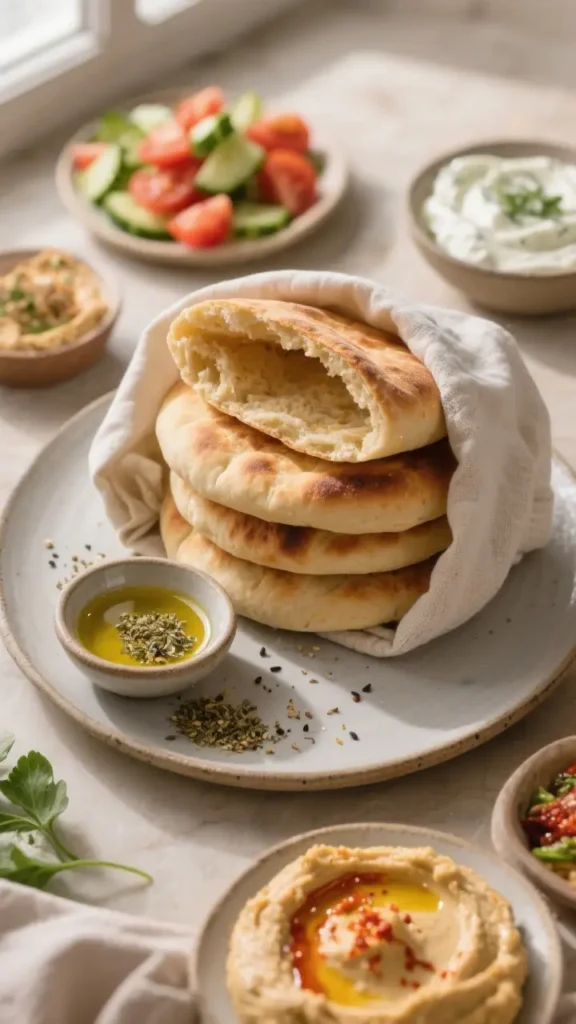
- Cover as they finish. Transfer hot pitas to a clean kitchen towel and wrap them to keep steam in. This step helps keep them supple and prevents drying.
- Serve or store. Enjoy warm, or cool completely before storing. If some don’t puff, they’ll still taste great and work perfectly for dipping or wraps.
Keeping It Fresh
Store cooled pitas in a zip-top bag or airtight container at room temperature for up to 2 days.
For longer storage, freeze in a stack with parchment between each piece to prevent sticking. Reheat frozen pitas straight from the freezer: wrap in foil and warm in a 300°F (150°C) oven for 8–10 minutes, or toast briefly in a skillet. To restore softness, sprinkle a few drops of water on the pita before reheating to create steam.
Benefits of This Recipe
- Fast and forgiving: The dough is simple, and the rise time is manageable even on a weeknight.
- Budget-friendly: Flour, water, yeast, and a little oil—nothing fancy required.
- Customizable: Swap in some whole wheat, add spices like za’atar, or brush with garlic oil after baking.
- Better texture: Fresh pita stays soft and pliable, perfect for stuffing without tearing.
- Versatile: Use for sandwiches, mezze platters, breakfast wraps, or quick pizzas.
Pitfalls to Watch Out For
- Oven not hot enough: Low heat is the number one reason pitas don’t puff.
Preheat thoroughly.
- Uneven rolling: Thick edges and thin centers lead to poor inflation. Keep the circle even.
- Too much flour on the surface: Excess flour can prevent the layers from sealing and puffing properly.
- Overbaking: A minute too long makes them dry and brittle. Pull when lightly golden and still soft.
- Dough too dry: Stiff dough won’t expand well.
Aim for soft and slightly tacky after kneading.
Alternatives
- Whole wheat version: Replace 25–50% of the flour with whole wheat. Add a bit more water if the dough feels tight.
- Gluten-free pita: Use a gluten-free bread flour blend with xanthan gum. Expect less dramatic puff, but you’ll still get soft, tasty rounds.
- No-yeast shortcut: In a pinch, use 1½ teaspoons baking powder and ½ teaspoon baking soda with yogurt for a quick flatbread.
It won’t pocket like classic pita, but it’s great for wraps.
- Herb and spice add-ins: Mix in 1–2 teaspoons dried oregano, za’atar, or nigella seeds for flavor.
- Olive oil brushed finish: Right after baking, brush with olive oil and a pinch of salt for extra tenderness and shine.
Explore more irresistible bread recipes you won’t want to miss:
FAQ
Why didn’t my pita puff?
A few common reasons: the oven or skillet wasn’t hot enough, the dough was rolled unevenly, or the dough was too dry. Make sure to preheat fully, keep thickness even, and maintain a soft dough. Also, avoid too much bench flour when rolling.
Can I use only whole wheat flour?
Yes, but expect a denser texture and slightly less puff.
Start with 50% whole wheat and adjust water as needed. If you go 100% whole wheat, add a tablespoon of extra olive oil to help tenderness.
What’s the best flour for maximum puff?
All-purpose flour works great, but a 50/50 mix of all-purpose and bread flour gives extra strength for impressive pockets. The higher protein helps trap steam.
How do I get that perfect pocket every time?
Use high heat, roll evenly to about 1/8 inch, and let the rounds rest briefly before baking.
Baking on a preheated stone or steel boosts your success rate. Covering pitas after baking keeps them soft and flexible.
Can I make the dough ahead?
Yes. After the first rise, refrigerate the dough up to 24 hours.
Let it come to room temperature, then divide, rest, and roll. Cold fermentation also improves flavor.
How do I reheat without drying them out?
Wrap in foil and warm at 300°F (150°C) for a few minutes, or toast briefly in a hot skillet. A light sprinkle of water before reheating adds steam and keeps them pliable.
Is a baking stone necessary?
Not required, but helpful.
An upside-down, preheated sheet pan mimics the effect well. For stovetop cooking, a cast-iron skillet does the job nicely.
What should I serve with pita?
Great pairings include hummus, baba ghanoush, tzatziki, grilled chicken, lamb kebabs, falafel, or simple tomato-cucumber salads. It also makes quick personal pizzas in minutes.
Wrapping Up
Fresh pita is all about simple ingredients, a soft dough, and strong heat.
Once you try it, you’ll see how approachable it is—and how much better it tastes than store-bought. Keep your oven hot, roll evenly, and don’t overthink it. In under two hours, you’ll have warm, pillowy bread ready for stuffing, dipping, and everyday meals.
How to Make Pita Bread at Home Simple and Authentic – Soft, Puffy, and Fresh
Ingredients
- All-purpose flour (or a mix of all-purpose and bread flour)
- Instant or active dry yeast
- Warm water (about 105–110°F / 40–43°C)
- Olive oil
- Sugar or honey
- Salt
- Optional: Whole wheat flour (for a partial swap), semolina for dusting
Instructions
- Proof the yeast (if using active dry). In a bowl, mix warm water with sugar or honey and stir in the yeast.Let it sit 5–10 minutes until foamy. If using instant yeast, you can skip proofing and add it straight to the flour.
- Make the dough. In a large bowl, combine flour and salt. Add the foamy yeast mixture (or water for instant yeast), plus olive oil.Stir with a spoon until a shaggy dough forms.
- Knead until smooth. Turn the dough onto a lightly floured surface. Knead 7–10 minutes until soft, elastic, and slightly tacky but not sticky. Add flour sparingly to avoid drying it out.You can also use a stand mixer with a dough hook for 6–8 minutes on medium-low.
- First rise. Shape the dough into a ball and place it in a lightly oiled bowl, turning once to coat. Cover and let it rise in a warm spot until doubled, about 1 to 1½ hours.
- Preheat for baking. Place a baking steel, pizza stone, or an upside-down sheet pan in the oven and heat to 475°F (245°C) for at least 20 minutes. For stovetop cooking, heat a heavy skillet over medium-high for several minutes.
- Divide and rest. Turn the risen dough out and gently deflate.Divide into 8 equal pieces for medium pitas (or 10 for smaller). Roll each into a ball, cover, and rest 10 minutes to relax the gluten.
- Roll the rounds. On a lightly floured surface, roll each ball into a circle about 6–7 inches wide and 1/8 inch thick. Keep the thickness even—this is key for good puff.Dust off excess flour.
- Optional bench rest. Let the rolled rounds rest 5–10 minutes. This quick pause improves puff and prevents shrinking.
- Bake in the oven. Place 2–3 rounds onto the hot stone or pan. Bake 2–3 minutes until they balloon dramatically, then another 1–2 minutes for light browning.Don’t overbake; you want soft, not cracker-crisp.
- Or cook on the stovetop. Lay a round in the hot dry skillet. Cook 1–2 minutes until bubbles form, flip, and cook 1–2 minutes more. Flip again; with a gentle press using a spatula, it should puff.Adjust heat as needed to avoid scorching.
- Cover as they finish. Transfer hot pitas to a clean kitchen towel and wrap them to keep steam in. This step helps keep them supple and prevents drying.
- Serve or store. Enjoy warm, or cool completely before storing. If some don’t puff, they’ll still taste great and work perfectly for dipping or wraps.