
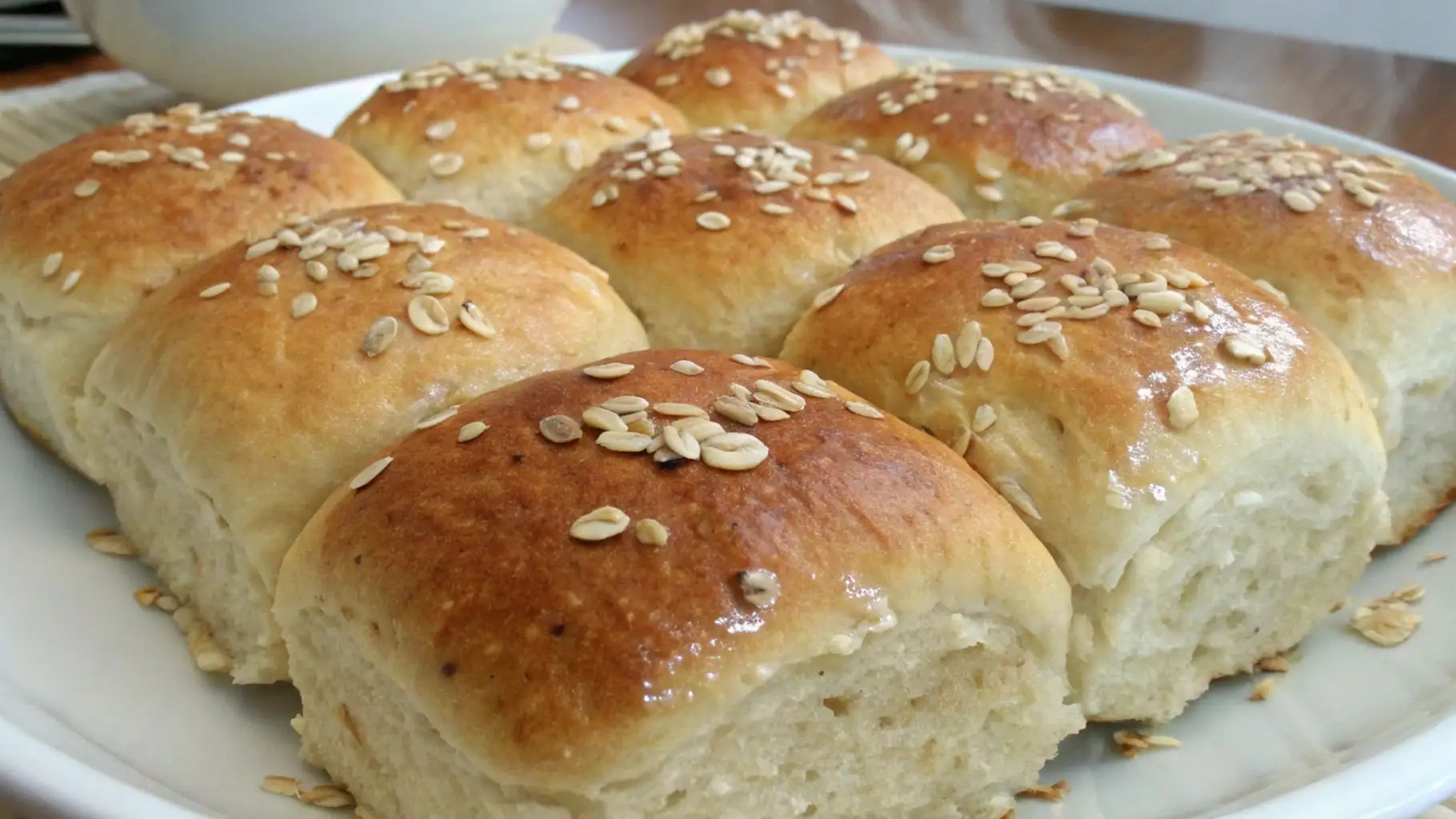
Warm, soft dinner rolls make any meal feel a little more special. These oatmeal dinner rolls are tender, slightly sweet, and surprisingly simple to make. They have a buttery, pull-apart texture and a subtle nutty flavor from oats that sets them apart from plain white rolls.
If you’re new to baking with yeast, don’t worry—this recipe is friendly and forgiving. You’ll get bakery-level rolls with everyday ingredients and easy steps.
What Makes This Special
Oats add gentle flavor and keep these rolls extra moist without making them heavy. The texture is incredibly soft, thanks to a mix of all-purpose flour and a warm oat mixture that enriches the dough.
A touch of honey brings a mellow sweetness that pairs well with savory dishes or jam at breakfast. These rolls also rise beautifully and bake up with golden tops and pillowy centers. They’re the kind of rolls people reach for seconds of—quietly and quickly.
What You’ll Need
- Old-fashioned rolled oats – 1 cup (not instant or steel-cut)
- Milk – 1 cup (whole or 2% works best)
- Water – 1/2 cup, warm for mixing with oats and yeast
- Unsalted butter – 4 tablespoons (plus 1 tablespoon melted for brushing)
- Honey – 3 tablespoons (or granulated sugar)
- Active dry yeast – 2 1/4 teaspoons (one standard packet)
- All-purpose flour – 3 1/2 to 4 cups (start low, add as needed)
- Salt – 1 1/2 teaspoons
- Egg – 1 large (for added richness and structure)
- Optional topping – Extra oats or flaky salt for sprinkling
Instructions
- Soften the oats. In a small pot, heat the milk, 1/4 cup water, butter, and honey until the butter melts and the mixture is hot but not boiling.
Stir in the oats. Remove from heat and let sit 10 minutes to soften and cool slightly. The mixture should be warm, not hot.
- Proof the yeast. In a small bowl, mix the remaining 1/4 cup warm water (about 105–110°F) with the yeast.
Let stand 5–10 minutes until foamy. If it doesn’t foam, your yeast may be inactive—start over with fresh yeast.
- Build the dough. In a large mixing bowl, combine 3 1/2 cups flour and salt. Add the warm oat mixture, the egg, and the foamy yeast.
Stir with a wooden spoon or dough hook until a shaggy dough forms.
- Knead to smooth. Knead by hand on a lightly floured surface or in a stand mixer on medium-low for 6–8 minutes. Add flour 1 tablespoon at a time only if the dough is too sticky. You want a soft, slightly tacky dough that clears the sides of the bowl but clings a bit to the bottom.
- First rise. Shape the dough into a ball and place it in a lightly oiled bowl, turning once to coat.
Cover with a clean towel or plastic wrap. Let rise in a warm, draft-free spot until doubled, about 60–90 minutes.
- Shape the rolls. Gently punch down the dough to release air. Turn out onto a lightly floured surface and divide into 12–16 equal pieces, depending on your preferred size.
Shape each piece into a smooth ball by tucking edges under and rolling under your palm.
- Pan and proof. Arrange the balls in a greased 9×13-inch baking dish or on a parchment-lined sheet, leaving a little space between them. Cover and let rise until puffy and touching, about 30–45 minutes.
- Preheat and prep. While the rolls proof, preheat the oven to 375°F (190°C). Brush the tops with melted butter and, if you like, sprinkle a few oats or flaky salt on top.
- Bake. Bake for 16–20 minutes, until the rolls are golden on top and sound hollow when tapped.
If browning too quickly, tent loosely with foil for the last few minutes.
- Finish and serve. Brush again with butter for a soft sheen. Let cool 10 minutes, then serve warm. They pull apart beautifully.
Storage Instructions
- Room temperature: Store cooled rolls in an airtight bag or container for up to 2 days.
Add a paper towel to absorb moisture and keep them soft.
- Freeze: Wrap tightly in plastic, then place in a freezer bag for up to 2 months. Thaw at room temperature and warm in a 300°F oven for 8–10 minutes.
- Make-ahead: After shaping, cover and refrigerate overnight. Bring to room temperature, let them puff a bit more if needed, then bake as directed.
Benefits of This Recipe
- Softer texture and better moisture: Oats lock in tenderness without heaviness.
- Approachable for beginners: Clear steps, simple tools, and forgiving dough.
- Balanced flavor: Honey gives a gentle sweetness that fits both savory and sweet meals.
- Versatile serving: Great with soups, roasts, holiday dinners, or breakfast spreads.
- Freezer-friendly: Bake ahead and warm when guests arrive.
Pitfalls to Watch Out For
- Dough too hot for yeast: If the oat mixture is steaming hot, it can kill yeast.
Let it cool to warm before mixing.
- Too much flour: Over-flouring makes dense rolls. Keep the dough slightly tacky and add flour sparingly.
- Under-proofing or over-proofing: Under-proofed rolls won’t rise well; over-proofed may collapse. Aim for puffy, gently springy dough.
- Old yeast: Expired yeast won’t foam properly.
Always proof to be sure it’s active.
- Dry tops: Skip the butter brush and you risk tougher crusts. That quick brush keeps them soft.
Recipe Variations
- Whole wheat blend: Swap 1 to 1 1/2 cups of the all-purpose flour for whole wheat. Add a splash more milk if the dough feels stiff.
- Seeded rolls: Mix in 2–3 tablespoons of sunflower, pumpkin, or sesame seeds.
Sprinkle extra on top before baking.
- Garlic herb: Add 1 teaspoon garlic powder and 2 teaspoons finely chopped fresh herbs (rosemary, thyme, or chives) to the dough.
- Cinnamon honey breakfast rolls: Increase honey to 1/4 cup and add 1 teaspoon cinnamon for a lightly sweet breakfast roll.
- Dairy-free: Use oat milk or almond milk and replace butter with olive oil or vegan butter. Texture will still be soft.
- Mini slider buns: Divide into 18–20 pieces and bake 12–15 minutes. Perfect for party sandwiches.
Explore more irresistible bread recipes you won’t want to miss:
FAQ
Can I use instant oats?
Yes, instant oats work in a pinch, but the texture will be slightly different.
Rolled oats give better chew and structure, while instant oats make a softer, more uniform crumb. Avoid steel-cut oats for this recipe.
Do I need a stand mixer?
No. Hand mixing with a wooden spoon and kneading on the counter works well.
The dough should be soft and slightly tacky, so a light dusting of flour on the surface is all you need.
How do I know the dough is kneaded enough?
It should feel smooth, elastic, and slightly tacky without sticking badly to your hands. If you stretch a small piece, it should thin out a bit without tearing right away. That’s a good sign of gluten development.
Can I make these gluten-free?
Not with a simple swap.
Yeasted rolls rely on gluten for structure. A tested gluten-free bread flour blend designed for yeast breads might work, but the texture will differ. Look for a recipe built specifically for gluten-free doughs for best results.
What if my rolls aren’t browning?
Extend baking by a few minutes and move the pan up one rack.
You can also brush the tops with a little milk or egg wash before baking for deeper color. Keep an eye on them to avoid overbaking.
Can I use sugar instead of honey?
Yes. Use the same amount of granulated sugar.
The flavor will be slightly less complex, but the rolls will still be soft and delicious.
How do I keep the bottoms from getting too dark?
Use a light-colored pan, line with parchment, or double up the baking pan to diffuse heat. You can also move the rack one notch higher in the oven.
Why did my rolls turn out dense?
Common causes include too much flour, dough that didn’t rise enough, or old yeast. Next time, measure flour by spooning and leveling, give the dough enough time to double, and always proof the yeast.
In Conclusion
These soft oatmeal dinner rolls are cozy, reliable, and easy enough for a weeknight.
The oats add gentle flavor and keep each roll tender and moist. With a short list of pantry staples and straightforward steps, you’ll have warm, golden rolls ready for any meal. Bake a batch, brush with butter, and watch them vanish from the table.
They’re the kind of bread that turns a simple dinner into something memorable.
Soft Oatmeal Dinner Rolls Easy Homemade Recipe – Fluffy, Cozy, and Foolproof
Ingredients
- Old-fashioned rolled oats – 1 cup (not instant or steel-cut)
- Milk – 1 cup (whole or 2% works best)
- Water – 1/2 cup, warm for mixing with oats and yeast
- Unsalted butter – 4 tablespoons (plus 1 tablespoon melted for brushing)
- Honey – 3 tablespoons (or granulated sugar)
- Active dry yeast – 2 1/4 teaspoons (one standard packet)
- All-purpose flour – 3 1/2 to 4 cups (start low, add as needed)
- Salt – 1 1/2 teaspoons
- Egg – 1 large (for added richness and structure)
- Optional topping – Extra oats or flaky salt for sprinkling
Instructions
- Soften the oats. In a small pot, heat the milk, 1/4 cup water, butter, and honey until the butter melts and the mixture is hot but not boiling.Stir in the oats. Remove from heat and let sit 10 minutes to soften and cool slightly. The mixture should be warm, not hot.
- Proof the yeast. In a small bowl, mix the remaining 1/4 cup warm water (about 105–110°F) with the yeast.Let stand 5–10 minutes until foamy. If it doesn’t foam, your yeast may be inactive—start over with fresh yeast.
- Build the dough. In a large mixing bowl, combine 3 1/2 cups flour and salt. Add the warm oat mixture, the egg, and the foamy yeast.Stir with a wooden spoon or dough hook until a shaggy dough forms.
- Knead to smooth. Knead by hand on a lightly floured surface or in a stand mixer on medium-low for 6–8 minutes. Add flour 1 tablespoon at a time only if the dough is too sticky. You want a soft, slightly tacky dough that clears the sides of the bowl but clings a bit to the bottom.
- First rise. Shape the dough into a ball and place it in a lightly oiled bowl, turning once to coat.Cover with a clean towel or plastic wrap. Let rise in a warm, draft-free spot until doubled, about 60–90 minutes.
- Shape the rolls. Gently punch down the dough to release air. Turn out onto a lightly floured surface and divide into 12–16 equal pieces, depending on your preferred size.Shape each piece into a smooth ball by tucking edges under and rolling under your palm.
- Pan and proof. Arrange the balls in a greased 9×13-inch baking dish or on a parchment-lined sheet, leaving a little space between them. Cover and let rise until puffy and touching, about 30–45 minutes.
- Preheat and prep. While the rolls proof, preheat the oven to 375°F (190°C). Brush the tops with melted butter and, if you like, sprinkle a few oats or flaky salt on top.
- Bake. Bake for 16–20 minutes, until the rolls are golden on top and sound hollow when tapped.If browning too quickly, tent loosely with foil for the last few minutes.
- Finish and serve. Brush again with butter for a soft sheen. Let cool 10 minutes, then serve warm. They pull apart beautifully.