
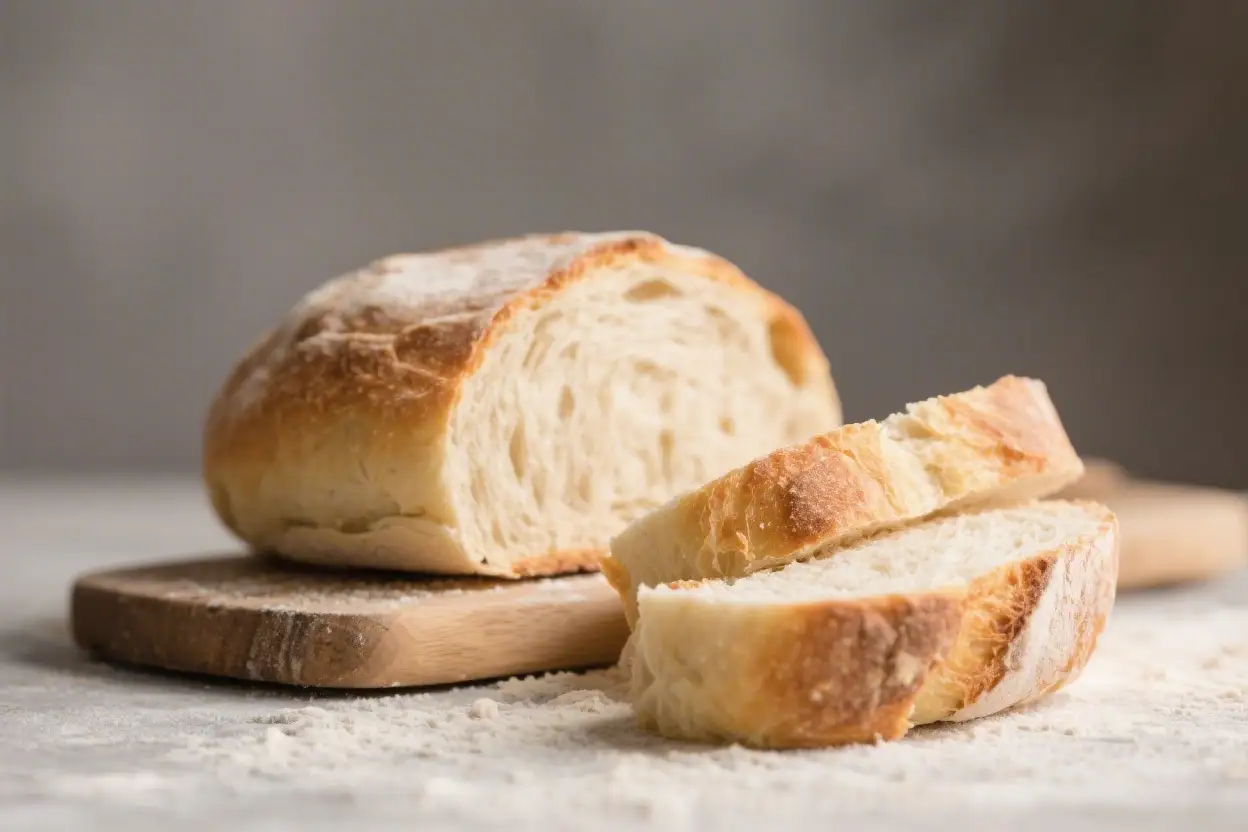
This no knead bread is the kind of recipe that makes you feel like a pro, even if it’s your first loaf. You’ll get a tender, airy crumb inside and a golden, crackly crust outside—without any kneading or special skills. All you need is time, a bowl, and a hot pot.
It’s budget-friendly, stress-free, and wildly satisfying. If you’ve been curious about baking bread at home, this is the perfect place to start.
Why This Recipe Works
The magic here is time. A long, slow rise lets gluten develop naturally, so you don’t need to knead.
High hydration (more water in the dough) creates an open, light crumb. Baking in a preheated Dutch oven traps steam, which gives you that coveted crusty exterior. With just four basic ingredients, the flavor stays clean and mildly tangy, improving the longer it ferments.
Ingredients
- 3 cups (360 g) all-purpose flour or bread flour
- 1 1/4 teaspoons (7 g) fine salt
- 1/2 teaspoon (1.5 g) instant yeast or active dry yeast
- 1 1/2 cups (360 ml) cool water (room temp or slightly cool)
- Optional: 1 tablespoon honey or sugar for a touch of sweetness
- Optional: 1 tablespoon olive oil for a softer crumb
- Dusting: Extra flour or cornmeal for shaping
How to Make It
- Mix the dough (takes 2 minutes): In a large bowl, whisk flour, salt, and yeast.
Stir in water (and honey/olive oil if using) until you get a shaggy, sticky dough. No need to make it smooth.
- First rise (no work for you): Cover the bowl tightly with plastic wrap or a reusable cover. Let it rest at room temperature for 12 to 18 hours, until doubled and bubbly on top.
A cooler room may need closer to 18 hours.
- Shape lightly: Dust your counter with flour. Scrape the dough out gently—it will be sticky and loose. Sprinkle the top with a little flour and fold the dough over itself a few times with a bench scraper or your hands to form a rough ball.
Don’t press hard; keep the gas bubbles intact.
- Second rise (short): Place the dough seam-side down on a square of parchment or a floured towel. Cover loosely and let rise for 30 to 60 minutes while the oven heats.
- Preheat the oven and pot: Put a 4–6 quart Dutch oven (with lid) into your oven. Preheat to 450°F (230°C) for at least 30 minutes.
The hot pot is key for great crust.
- Score and load: If using parchment, lift the dough by the parchment. If not, carefully transfer by hand. Optionally score the top with a sharp knife or razor—one simple slash helps control the rise.
- Bake covered: Remove the hot pot, lift the dough into it (parchment can go right in).
Cover and bake for 30 minutes. Steam builds inside, making the crust blister and rise beautifully.
- Finish uncovered: Remove the lid and bake another 12–18 minutes, until the crust is deep golden and the loaf sounds hollow when tapped. Internal temp should be around 205–210°F (96–99°C).
- Cool completely: Set the loaf on a rack and let it cool at least 1 hour.
This finishes the bake inside and keeps the crumb soft and even.
How to Store
- Room temperature: Keep the loaf cut-side down on a cutting board and cover loosely with a clean towel for up to 2 days. This keeps the crust crisp.
- For softness: Store in a paper bag or bread box. Avoid plastic if you want to preserve the crust.
- Freezing: Slice, then freeze in a zip-top bag for up to 2 months.
Toast straight from frozen.
- Revive the crust: Pop leftover slices in a 350°F (175°C) oven for 8–10 minutes to re-crisp.
Health Benefits
- Simple ingredients: Just flour, water, yeast, and salt—no additives or preservatives.
- Lower sodium control: You control the salt level. Reduce slightly if needed without hurting the bake.
- Better digestion: The long, slow fermentation can make bread easier on the stomach and deepen flavor.
- Energy and fiber: Use part whole wheat for extra fiber and minerals, while keeping a tender crumb.
Common Mistakes to Avoid
- Using warm water for the long rise: Stick to cool water to prevent overproofing overnight.
- Adding extra flour: The dough should be sticky and loose. Too much flour leads to a dense loaf.
- Skipping the preheat: A blazing-hot pot creates steam and oven spring.
Don’t rush this step.
- Cutting too soon: Slicing hot bread compresses the crumb and makes it gummy. Let it rest.
- Wrong pot size or material: Use a heavy Dutch oven with a tight lid. Thin pans won’t hold heat or steam as well.
Recipe Variations
- Seeded Crust: Roll the shaped dough in sesame, poppy, or sunflower seeds before the second rise.
- Garlic and Herb: Add 1–2 teaspoons dried rosemary or thyme and 2–3 minced garlic cloves to the dry mix.
- Olive and Rosemary: Fold in 1/2 cup chopped, well-drained olives and 1 teaspoon chopped fresh rosemary.
- Whole Wheat Blend: Swap 1 cup of the flour for whole wheat.
Add 1–2 tablespoons extra water if needed.
- Cheddar Jalapeño: Mix in 1 cup shredded sharp cheddar and 1–2 finely chopped jalapeños for a bold loaf.
- Sourdough-ish Flavor: Add 1 tablespoon apple cider vinegar for a mild tang without a starter.
Explore more irresistible bread recipes you won’t want to miss:
FAQ
Can I use active dry yeast instead of instant yeast?
Yes. Use the same amount. If you prefer, dissolve it in a few tablespoons of the recipe water first, then add to the dry ingredients.
The long rise gives it plenty of time to work.
My dough seems too wet. Is that normal?
Yes, this dough is intentionally sticky and loose. That high hydration creates the airy interior and crisp crust.
Lightly flour your hands and work surface to shape it without adding much extra flour.
What if I don’t have a Dutch oven?
Use a heavy oven-safe pot with a tight lid, a clay baker, or a deep cast-iron skillet covered with an inverted metal bowl. You can also bake on a hot baking stone with a pan of water to create steam, though results vary.
How do I know it’s fully baked?
The crust should be deep golden-brown, the loaf should feel light for its size, and it should sound hollow when tapped on the bottom. An instant-read thermometer should read around 205–210°F (96–99°C).
Can I speed up the rise?
You can, but flavor and texture will suffer.
If you must, let it rise for 3–4 hours at warm room temperature (75–80°F/24–27°C) until doubled. Expect a slightly tighter crumb and milder taste.
Why did my loaf spread instead of rising tall?
Most likely it was overproofed or the dough didn’t have enough structure. Keep the second rise shorter, handle the dough gently, and ensure your pot is fully preheated.
Using bread flour can also help.
Can I add sugar or honey?
Yes. A tablespoon of sugar or honey adds a hint of sweetness and can encourage browning. It won’t make the bread taste dessert-sweet.
How do I keep the crust from getting too hard?
Bake to golden brown, not dark brown, and store the cooled loaf in a paper bag or bread box.
For softer crust, brush the hot loaf lightly with olive oil or melted butter right after baking.
In Conclusion
This easy no knead bread gives you bakery results with almost no effort. Mix, rest, bake, and enjoy a loaf that’s soft inside and crusty outside every time. Once you’ve tried the base recipe, play with seeds, herbs, or flours to make it your own.
With a few simple steps and a hot pot, homemade bread becomes a low-stress, high-reward habit.
Easy No Knead Bread Recipe for Beginners Soft and Crusty - Simple, Reliable, and Delicious
Ingredients
- 3 cups (360 g) all-purpose flour or bread flour
- 1 1/4 teaspoons (7 g) fine salt
- 1/2 teaspoon (1.5 g) instant yeast or active dry yeast
- 1 1/2 cups (360 ml) cool water (room temp or slightly cool)
- Optional: 1 tablespoon honey or sugar for a touch of sweetness
- Optional: 1 tablespoon olive oil for a softer crumb
- Dusting: Extra flour or cornmeal for shaping
Instructions
- Mix the dough (takes 2 minutes): In a large bowl, whisk flour, salt, and yeast.Stir in water (and honey/olive oil if using) until you get a shaggy, sticky dough. No need to make it smooth.
- First rise (no work for you): Cover the bowl tightly with plastic wrap or a reusable cover. Let it rest at room temperature for 12 to 18 hours, until doubled and bubbly on top.A cooler room may need closer to 18 hours.
- Shape lightly: Dust your counter with flour. Scrape the dough out gently—it will be sticky and loose. Sprinkle the top with a little flour and fold the dough over itself a few times with a bench scraper or your hands to form a rough ball.Don’t press hard; keep the gas bubbles intact.
- Second rise (short): Place the dough seam-side down on a square of parchment or a floured towel. Cover loosely and let rise for 30 to 60 minutes while the oven heats.
- Preheat the oven and pot: Put a 4–6 quart Dutch oven (with lid) into your oven. Preheat to 450°F (230°C) for at least 30 minutes.The hot pot is key for great crust.
- Score and load: If using parchment, lift the dough by the parchment. If not, carefully transfer by hand. Optionally score the top with a sharp knife or razor—one simple slash helps control the rise.
- Bake covered: Remove the hot pot, lift the dough into it (parchment can go right in).Cover and bake for 30 minutes. Steam builds inside, making the crust blister and rise beautifully.
- Finish uncovered: Remove the lid and bake another 12–18 minutes, until the crust is deep golden and the loaf sounds hollow when tapped. Internal temp should be around 205–210°F (96–99°C).
- Cool completely: Set the loaf on a rack and let it cool at least 1 hour.This finishes the bake inside and keeps the crumb soft and even.