
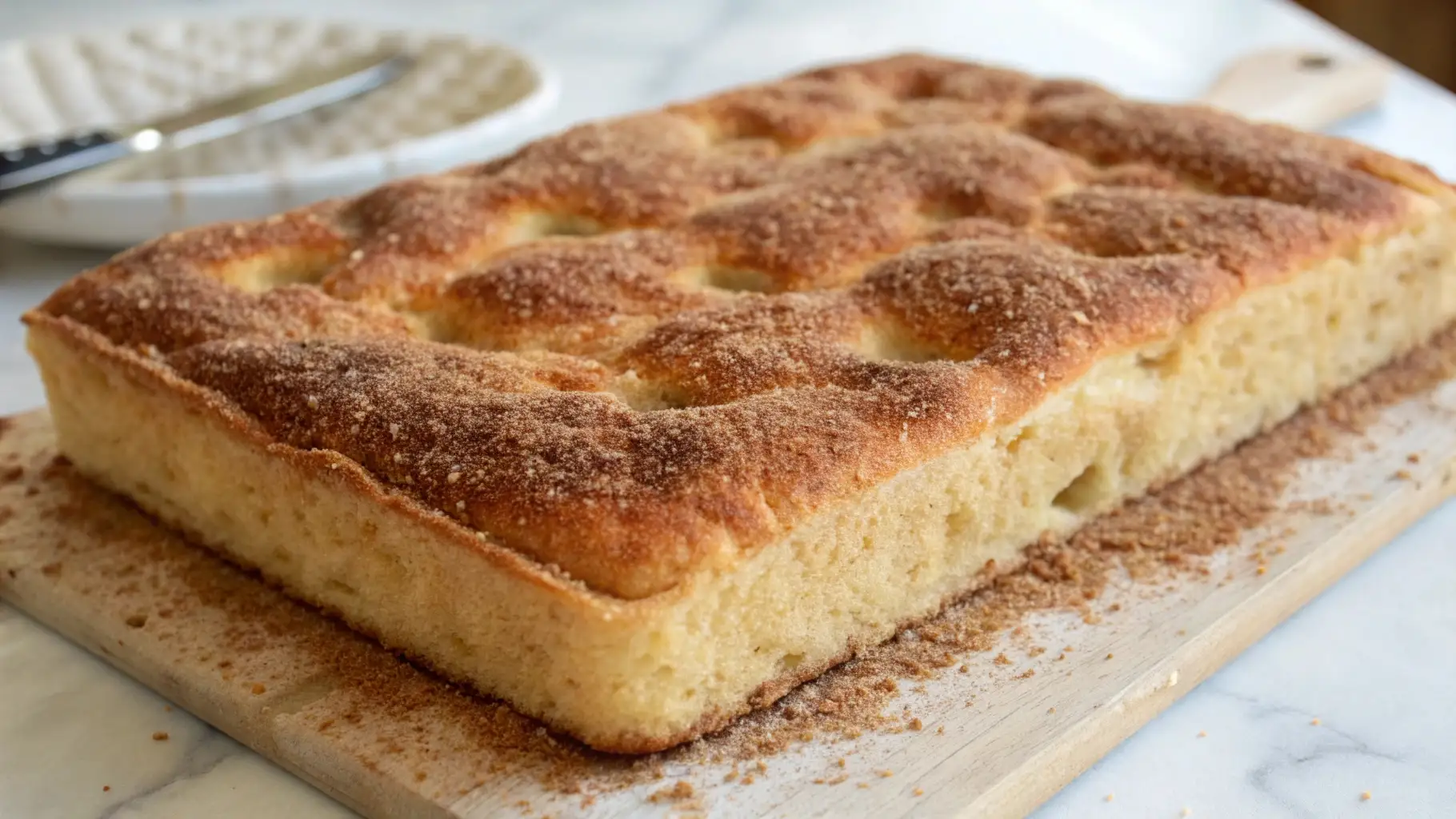
Moravian sugar cake is the kind of bake that makes a kitchen feel like home. It’s tender, buttery, and warmly spiced, with a caramelized top that crackles slightly as it cools. This old-world recipe comes from the Moravian communities of Central Europe and took deep root in American kitchens, especially in Pennsylvania and North Carolina.
It’s simple, unfussy, and incredibly comforting—perfect for weekend baking and sharing with neighbors. If you love cinnamon, brown sugar, and soft, yeasted dough, this cake will be your new favorite.
What Makes This Recipe So Good
- Soft, pillowy dough: The yeast-raised base bakes up light and tender, like a cross between coffee cake and sweet bread.
- Buttery cinnamon-sugar crust: Dots of butter melt into brown sugar and cinnamon, forming pockets of caramelized goodness.
- Familiar, nostalgic flavor: It tastes like a bakery classic but feels especially homemade and heartfelt.
- Easy to share: Baked in a large pan, it cuts cleanly into squares for brunches, potlucks, or holiday gatherings.
- Make-ahead friendly: The dough can rest overnight, and leftovers keep well for easy breakfasts.
Ingredients
- For the dough:
- 1 cup whole milk, warmed to 105–110°F
- 2 1/4 teaspoons active dry yeast (one 0.25-ounce packet)
- 1/3 cup granulated sugar
- 1/3 cup unsalted butter, melted and slightly cooled
- 1 large egg, at room temperature
- 1 teaspoon vanilla extract
- 1/2 teaspoon fine sea salt
- 3 to 3 1/4 cups all-purpose flour, plus extra for dusting
- For the topping:
- 1/2 cup unsalted butter, softened
- 1 cup light brown sugar, packed
- 2 teaspoons ground cinnamon
- 1/4 teaspoon ground nutmeg (optional)
- Pinch of salt
- Finishing touch (optional): 2–3 tablespoons heavy cream for brushing
Instructions
- Proof the yeast: In a large bowl, combine warm milk and yeast. Sprinkle in a pinch of sugar.
Let stand for 5–10 minutes, until foamy. If it doesn’t foam, the yeast may be inactive—start over with fresh yeast.
- Mix the wet ingredients: Whisk in the granulated sugar, melted butter, egg, vanilla, and salt until smooth.
- Add the flour: Stir in 3 cups of flour, 1/2 cup at a time, until a soft, slightly sticky dough forms. If needed, add the remaining 1/4 cup flour a little at a time.
The dough should pull away from the bowl but still feel tender.
- Knead the dough: Turn the dough onto a lightly floured surface and knead for 5–7 minutes, until smooth and elastic. You can also use a stand mixer with a dough hook on medium-low for 4–5 minutes.
- First rise: Place the dough in a lightly greased bowl, cover with a clean towel or plastic wrap, and let rise in a warm spot for 60–75 minutes, or until doubled in size.
- Prepare the pan: Grease a 9×13-inch baking pan with butter. You can also line it with parchment for easier removal.
- Shape the dough: Gently deflate the risen dough and pat or roll it into a rectangle to fit the pan.
Transfer it to the pan and stretch to the corners. Cover and let rest for 20 minutes.
- Make the topping: In a small bowl, combine softened butter, brown sugar, cinnamon, nutmeg (if using), and a pinch of salt. Mix until sandy and spreadable.
It should be soft but not melted.
- Dimple the dough: Use your fingertips to press deep dimples all over the dough, almost to the bottom of the pan. These little wells collect butter and sugar as it bakes.
- Add the topping: Dot the top evenly with spoonfuls of the cinnamon-sugar butter. Gently spread and press it into the dimples.
For extra richness, brush the surface with heavy cream.
- Second rise: Let the topped dough rise uncovered for 20–30 minutes while you preheat the oven to 375°F (190°C).
- Bake: Bake for 22–28 minutes, until the edges are deeply golden and the center is set. The topping should look bubbly and slightly crackly.
- Cool and serve: Cool in the pan for at least 15 minutes. Slice into squares and serve warm or at room temperature.
Storage Instructions
- Room temperature: Keep covered at room temp for up to 2 days.
A cake keeper or well-wrapped pan works best.
- Refrigerator: Store up to 5 days. Warm slices in a low oven or microwave to refresh the texture.
- Freezer: Wrap individual squares tightly and freeze for up to 2 months. Thaw at room temperature, then rewarm in a 300°F oven for 8–10 minutes.
Why This is Good for You
- Comfort and connection: Traditional recipes nurture more than hunger.
They connect you to community and heritage, which supports emotional well-being.
- Mindful baking: Working with yeast encourages patience and focus. Taking time to rise, knead, and bake can be calming and grounding.
- Simple, recognizable ingredients: Flour, milk, butter, sugar, and spices—no mystery additives, just pantry staples used with care.
- Portion-friendly: Because it’s rich, a small square satisfies. Enjoying treats in balanced portions fits comfortably into a varied diet.
Pitfalls to Watch Out For
- Milk too hot: If your milk exceeds 115°F, it can kill the yeast.
Aim for warm, not hot.
- Adding too much flour: A stiff dough leads to a dense cake. Keep the dough slightly tacky and soft.
- Rushing the rise: Under-proofed dough won’t be airy. Wait for visible puffing and a gentle spring when pressed.
- Overbaking: The topping can go from caramelized to dry quickly.
Check at 22 minutes and watch the color closely.
- Uneven topping: If butter and sugar clump in one spot, you’ll get burned patches and dry areas. Spread and dot evenly, pressing into the dimples.
Variations You Can Try
- Maple twist: Replace 1/4 cup of the brown sugar with pure maple sugar, or drizzle 2 tablespoons maple syrup over the topping before baking.
- Nutty crunch: Sprinkle 1/2 cup finely chopped pecans or walnuts over the topping for texture.
- Apple version: Press thinly sliced apples into the dimples before adding the topping. Reduce bake temp to 350°F and extend time a few minutes.
- Spice blend: Add 1/2 teaspoon cardamom to the topping for a gentle floral note, or swap nutmeg for allspice.
- Browned butter: Brown the topping butter first and let it cool until spreadable.
The nutty flavor is incredible.
- Overnight dough: After the first rise, refrigerate the dough covered overnight. Bring to room temp, shape, and proceed.
Explore more irresistible cake recipes you won’t want to miss:
FAQ
Is Moravian sugar cake a cake or a bread?
It’s technically a yeast-raised coffee cake, so it sits somewhere between bread and cake. The crumb is soft and fluffy like a sweet roll, with a caramelized sugar topping that feels very cake-like.
Can I use instant yeast instead of active dry yeast?
Yes.
Use the same amount and skip the proofing step. Mix instant yeast directly with the flour, then add the warm milk and other wet ingredients. Rise times should be similar.
What if I don’t have a 9×13-inch pan?
Two 8-inch square pans or a half-sheet pan (rimmed baking sheet) also work.
Adjust the thickness and check a bit earlier, since thinner dough bakes faster.
How do I know when it’s done?
Look for golden-brown edges, bubbling topping, and a center that springs back lightly when touched. If you use an instant-read thermometer, the dough should register about 195°F in the center.
Can I reduce the sugar?
You can cut the topping sugar to 3/4 cup without losing the signature flavor. The texture will be a little less gooey but still delicious.
What if my dough isn’t rising?
Check the yeast freshness and milk temperature.
Also make sure your kitchen isn’t too cold. A warm spot—like the oven with just the light on—can help.
Can I make this dairy-free?
Use a rich plant-based milk and a dairy-free butter that performs well in baking. Expect a slight change in flavor and texture, but it will still be tasty.
How should I serve it?
It’s wonderful warm, on its own or with coffee.
For a special touch, add a dollop of lightly sweetened whipped cream or a drizzle of heavy cream over a warm slice.
In Conclusion
Classic Moravian sugar cake is simple baking at its best: tender dough, buttery cinnamon sugar, and that cozy, old-fashioned flavor you can’t fake. It’s easy enough for a lazy Sunday but special enough for holidays and family gatherings. With a few pantry staples and some patient rising time, you’ll pull a golden, fragrant pan from the oven that everyone will want a slice of.
Bake it once, and it’ll become part of your home kitchen tradition.
Classic Moravian Sugar Cake Buttery Cinnamon Dessert – A Warm, Comforting Bake
Ingredients
- For the dough:
- 1 cup whole milk, warmed to 105–110°F
- 2 1/4 teaspoons active dry yeast (one 0.25-ounce packet)
- 1/3 cup granulated sugar
- 1/3 cup unsalted butter, melted and slightly cooled
- 1 large egg, at room temperature
- 1 teaspoon vanilla extract
- 1/2 teaspoon fine sea salt
- 3 to 3 1/4 cups all-purpose flour, plus extra for dusting
- For the topping:
- 1/2 cup unsalted butter, softened
- 1 cup light brown sugar, packed
- 2 teaspoons ground cinnamon
- 1/4 teaspoon ground nutmeg (optional)
- Pinch of salt
- Finishing touch (optional): 2–3 tablespoons heavy cream for brushing
Instructions
- Proof the yeast: In a large bowl, combine warm milk and yeast. Sprinkle in a pinch of sugar.Let stand for 5–10 minutes, until foamy. If it doesn’t foam, the yeast may be inactive—start over with fresh yeast.
- Mix the wet ingredients: Whisk in the granulated sugar, melted butter, egg, vanilla, and salt until smooth.
- Add the flour: Stir in 3 cups of flour, 1/2 cup at a time, until a soft, slightly sticky dough forms. If needed, add the remaining 1/4 cup flour a little at a time.The dough should pull away from the bowl but still feel tender.
- Knead the dough: Turn the dough onto a lightly floured surface and knead for 5–7 minutes, until smooth and elastic. You can also use a stand mixer with a dough hook on medium-low for 4–5 minutes.
- First rise: Place the dough in a lightly greased bowl, cover with a clean towel or plastic wrap, and let rise in a warm spot for 60–75 minutes, or until doubled in size.
- Prepare the pan: Grease a 9×13-inch baking pan with butter. You can also line it with parchment for easier removal.
- Shape the dough: Gently deflate the risen dough and pat or roll it into a rectangle to fit the pan.Transfer it to the pan and stretch to the corners. Cover and let rest for 20 minutes.
- Make the topping: In a small bowl, combine softened butter, brown sugar, cinnamon, nutmeg (if using), and a pinch of salt. Mix until sandy and spreadable.It should be soft but not melted.
- Dimple the dough: Use your fingertips to press deep dimples all over the dough, almost to the bottom of the pan. These little wells collect butter and sugar as it bakes.
- Add the topping: Dot the top evenly with spoonfuls of the cinnamon-sugar butter. Gently spread and press it into the dimples.For extra richness, brush the surface with heavy cream.
- Second rise: Let the topped dough rise uncovered for 20–30 minutes while you preheat the oven to 375°F (190°C).
- Bake: Bake for 22–28 minutes, until the edges are deeply golden and the center is set. The topping should look bubbly and slightly crackly.
- Cool and serve: Cool in the pan for at least 15 minutes. Slice into squares and serve warm or at room temperature.