
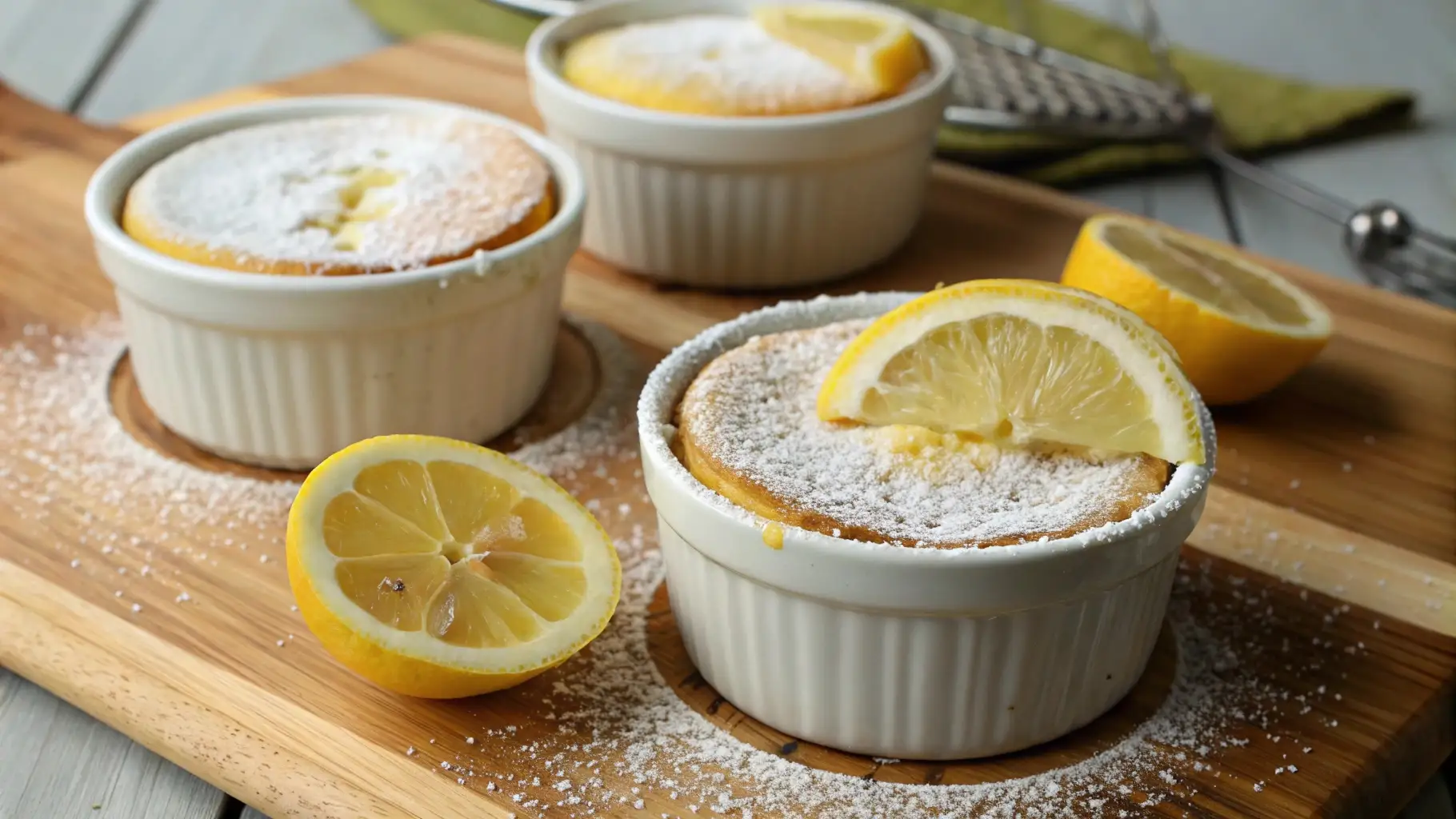
This lemon pudding cake is the kind of dessert that looks fancy but couldn’t be easier. It bakes into two irresistible layers: a fluffy, tender cake on top and a silky lemon pudding underneath. Every spoonful is tangy, creamy, and just sweet enough.
Serve it warm with a dusting of powdered sugar or a dollop of whipped cream, and it feels special without any fuss. If you love lemon desserts that are light yet satisfying, this one will hit the spot.
What Makes This Recipe So Good
- Two textures in one: The batter separates as it bakes, giving you a soft cake on top and a smooth pudding layer below.
- Big lemon flavor: Fresh lemon juice and zest keep the flavor bright and clean, never heavy.
- Simple pantry staples: Eggs, sugar, milk, flour, butter—nothing complicated or hard to find.
- Perfect for any season: Light enough for spring and summer, cozy enough to enjoy warm in winter.
- Scales easily: Bake it family-style in a dish or portion it into ramekins for an elegant dinner-party dessert.
Ingredients
- 4 large eggs, separated, at room temperature
- 3/4 cup granulated sugar
- 1/4 cup unsalted butter, melted and slightly cooled
- 1/2 cup all-purpose flour
- 1/4 teaspoon fine salt
- 1 cup whole milk, at room temperature
- 1/3 cup fresh lemon juice (about 2–3 lemons)
- 2 tablespoons lemon zest (finely grated)
- 1 teaspoon vanilla extract
- Powdered sugar, for dusting (optional)
- Lightly sweetened whipped cream or vanilla ice cream, for serving (optional)
How to Make It
- Prep the dish and oven: Heat oven to 350°F (175°C). Grease a 2-quart baking dish or 6–8 ramekins.
Set a larger roasting pan on the counter to use as a water bath.
- Separate the eggs: Place yolks in a large mixing bowl and whites in a clean medium bowl. Ensure no yolk gets into the whites.
- Whisk the base: To the yolks, add sugar and whisk until thick and pale, about 1–2 minutes. Whisk in melted butter and vanilla.
- Add lemon and milk: Stir in lemon zest and lemon juice.
Whisk in flour and salt just until smooth. Gradually whisk in milk until the batter is thin and well combined.
- Beat the egg whites: Using a hand mixer or stand mixer, beat egg whites to soft peaks. They should hold their shape but still look slightly glossy and droopy at the tip.
- Fold gently: Fold the whites into the lemon batter in 3 additions.
Use a spatula and a light hand. Some streaks are okay. This airy step creates the cake layer on top.
- Set up the water bath: Pour the batter into the prepared dish or divide among ramekins.
Place the dish inside the roasting pan. Pour hot water into the roasting pan until it reaches halfway up the sides of the baking dish.
- Bake: For a 2-quart dish, bake 35–45 minutes, until the top is golden and the center wobbles slightly but is not liquid. For ramekins, start checking at 22–28 minutes.
- Cool briefly: Remove from the water bath carefully.
Let it cool 10–15 minutes. The pudding layer will set slightly as it rests.
- Serve: Dust with powdered sugar. Spoon into bowls while warm, making sure to scoop both the fluffy top and the creamy pudding.
Add whipped cream or ice cream if you like.
Storage Instructions
- Refrigerate: Cool completely, cover, and store in the fridge for up to 3 days.
- Reheat: Warm individual portions in the microwave for 20–30 seconds, or set the dish in a low oven (300°F/150°C) until heated through.
- Freezing: Not ideal. The pudding layer can separate and turn watery after thawing.
- Make-ahead tip: You can assemble the batter up to the point of folding in egg whites. Hold the base covered in the fridge for up to 4 hours, then bring to room temperature, fold in freshly whipped whites, and bake.
Health Benefits
- Vitamin C boost: Fresh lemon juice and zest provide vitamin C, which supports immune function and collagen production.
- Reasonable portion comfort: This dessert is rich but not heavy.
A small serving satisfies thanks to the bright acidity and creamy texture.
- Simple, recognizable ingredients: No artificial flavorings needed; fresh citrus brings natural aroma and flavor.
- Customizable sweetness: You can reduce the sugar slightly or use less powdered sugar on top to fit your preferences.
What Not to Do
- Don’t skip the water bath: It keeps the pudding layer silky and prevents curdling or cracking.
- Don’t overbeat egg whites: Stiff, dry whites are hard to fold and can deflate the batter. Aim for soft peaks.
- Don’t overbake: If it’s fully firm in the center, the pudding layer will be minimal. A slight jiggle is perfect.
- Don’t use bottled lemon juice: Fresh juice and zest make a huge difference in flavor and aroma.
- Don’t add hot butter straight in: Let melted butter cool a bit so it doesn’t scramble the yolks.
Alternatives
- Dairy-free: Use full-fat canned coconut milk or a creamy oat milk.
Swap butter with a neutral oil or vegan butter. Expect a subtle flavor shift.
- Gluten-free: Replace flour with a cup-for-cup gluten-free baking blend. Avoid almond flour here—it won’t set the same.
- Less sweet, more tart: Reduce sugar to 2/3 cup and add an extra teaspoon of zest for a sharper bite.
- Meyer lemon twist: Use Meyer lemons for a softer, floral flavor.
You may want to cut the sugar by a tablespoon since Meyer lemons are sweeter.
- Citrus swap: Try half lemon, half lime for a punchy citrus mashup, or add a splash of orange juice for roundness.
- Ramekin servings: Portion into 6–8 ramekins for individual desserts. They bake faster and look elegant for entertaining.
Explore more irresistible cake recipes you won’t want to miss:
FAQ
Why does the batter separate into two layers?
The thin, custardy batter and airy whipped egg whites bake at different rates. The heavier, more liquid portion settles and sets into pudding, while the lighter, whipped mixture rises into a soft cake.
The water bath helps this gentle separation happen evenly.
Can I make it ahead of time?
Yes, but it’s best served warm. You can bake it a few hours ahead, let it cool, and rewarm gently before serving. The texture stays lovely, though the top may lose a bit of its delicate crust after chilling.
How do I know it’s done?
The top should be lightly golden and the center should jiggle like set custard, not slosh like liquid.
Insert a toothpick into the cake portion on top—some moist crumbs are fine. If it’s wet all the way through, give it a few more minutes.
Do I have to use a water bath?
It’s strongly recommended. Without it, the edges may overcook, and the pudding layer can curdle or become rubbery.
The water bath keeps the heat gentle and even, delivering that creamy bottom and tender top.
What can I serve with it?
Lightly sweetened whipped cream, a scoop of vanilla ice cream, or fresh berries. The berries add freshness and a pretty pop of color that pairs beautifully with lemon.
Can I reduce the sugar?
You can reduce the sugar to about 2/3 cup without hurting the structure. Keep in mind that sugar balances the acidity of the lemons, so cutting too much can make the dessert taste overly sharp.
In Conclusion
This lemon pudding cake is proof that simple ingredients can turn into something special.
With its delicate cake top and velvety lemon pudding underneath, it’s bright, cozy, and wonderfully satisfying. Keep lemons, milk, and a few pantry staples on hand, and you can whip it up anytime. It’s the kind of dessert everyone asks for again—and the kind you’ll love making just as much as eating.
Best Lemon Pudding Cake Easy Tangy And Creamy Dessert – A Bright, Comforting Treat
Ingredients
- 4 large eggs, separated, at room temperature
- 3/4 cup granulated sugar
- 1/4 cup unsalted butter, melted and slightly cooled
- 1/2 cup all-purpose flour
- 1/4 teaspoon fine salt
- 1 cup whole milk, at room temperature
- 1/3 cup fresh lemon juice (about 2–3 lemons)
- 2 tablespoons lemon zest (finely grated)
- 1 teaspoon vanilla extract
- Powdered sugar, for dusting (optional)
- Lightly sweetened whipped cream or vanilla ice cream, for serving (optional)
Instructions
- Prep the dish and oven: Heat oven to 350°F (175°C). Grease a 2-quart baking dish or 6–8 ramekins.Set a larger roasting pan on the counter to use as a water bath.
- Separate the eggs: Place yolks in a large mixing bowl and whites in a clean medium bowl. Ensure no yolk gets into the whites.
- Whisk the base: To the yolks, add sugar and whisk until thick and pale, about 1–2 minutes. Whisk in melted butter and vanilla.
- Add lemon and milk: Stir in lemon zest and lemon juice.Whisk in flour and salt just until smooth. Gradually whisk in milk until the batter is thin and well combined.
- Beat the egg whites: Using a hand mixer or stand mixer, beat egg whites to soft peaks. They should hold their shape but still look slightly glossy and droopy at the tip.
- Fold gently: Fold the whites into the lemon batter in 3 additions.Use a spatula and a light hand. Some streaks are okay. This airy step creates the cake layer on top.
- Set up the water bath: Pour the batter into the prepared dish or divide among ramekins.Place the dish inside the roasting pan. Pour hot water into the roasting pan until it reaches halfway up the sides of the baking dish.
- Bake: For a 2-quart dish, bake 35–45 minutes, until the top is golden and the center wobbles slightly but is not liquid. For ramekins, start checking at 22–28 minutes.
- Cool briefly: Remove from the water bath carefully.Let it cool 10–15 minutes. The pudding layer will set slightly as it rests.
- Serve: Dust with powdered sugar. Spoon into bowls while warm, making sure to scoop both the fluffy top and the creamy pudding.Add whipped cream or ice cream if you like.