
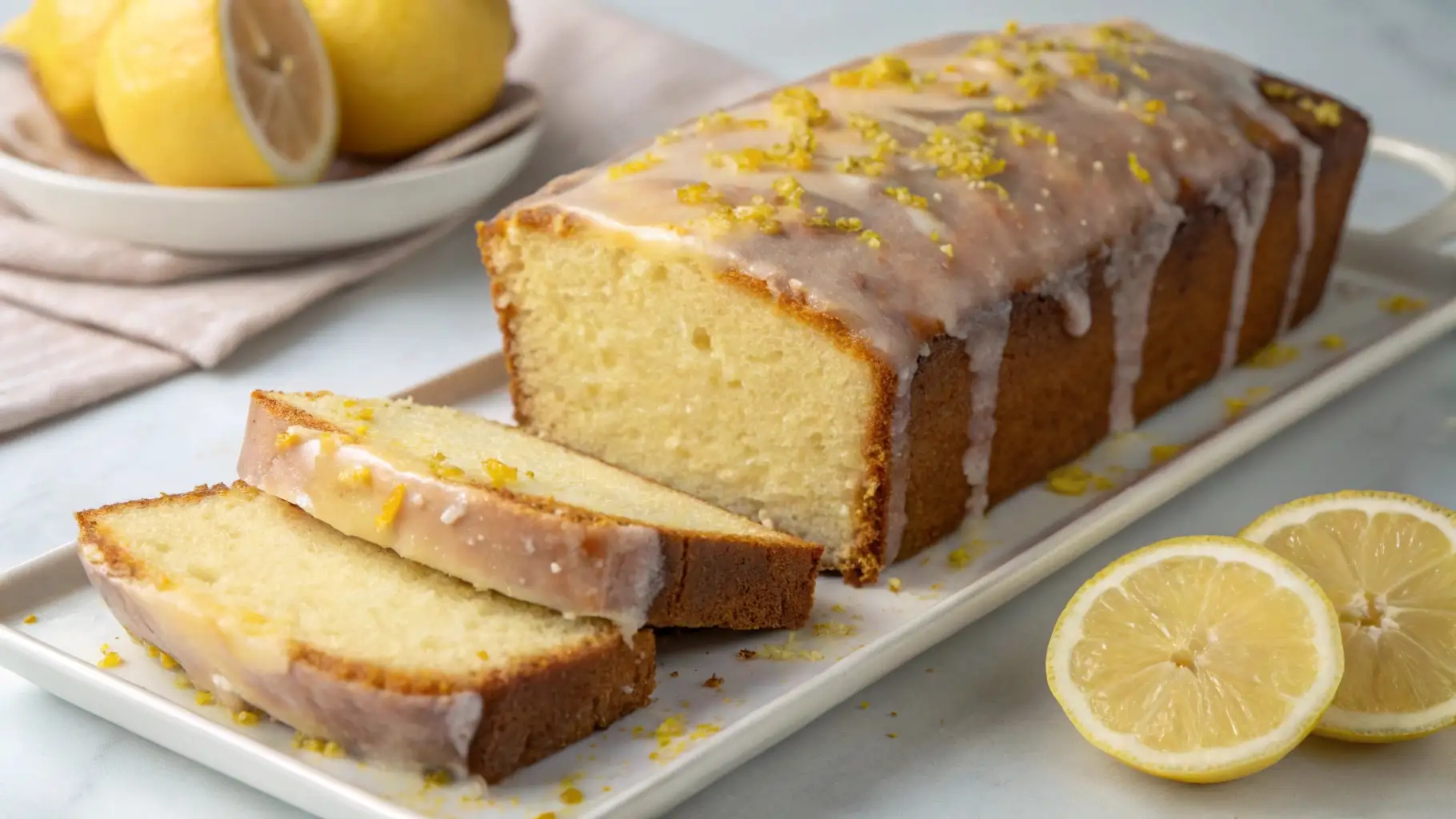
A good lemon pound cake feels like sunshine in cake form. It’s bright, buttery, and soft, with a tender crumb that melts in your mouth. This version keeps things simple while still giving you bold lemon flavor and that classic pound cake richness.
You don’t need special tools, just a few pantry staples and fresh lemons. Whether it’s for a weekend treat or a casual get-together, this cake delivers every time.
What Makes This Recipe So Good
- Big lemon flavor: Fresh zest and juice go into the batter and the glaze, so every bite tastes bright and citrusy.
- Moist, tender crumb: Sour cream (or yogurt) keeps the cake soft without making it dense or gummy.
- Simple techniques: No complicated steps—just creaming, mixing, and baking.
- Reliable results: Straightforward measurements and clear steps help you avoid common pound cake pitfalls.
- Freezer-friendly: This cake holds up well, so you can bake ahead.
Ingredients
- 1 cup (2 sticks) unsalted butter, softened to room temperature
- 1 1/2 cups granulated sugar
- 4 large eggs, room temperature
- 2 1/2 cups all-purpose flour
- 1 1/2 teaspoons baking powder
- 1/2 teaspoon fine sea salt
- 1/2 cup sour cream (or plain Greek yogurt), room temperature
- 1/2 cup whole milk, room temperature
- 2 large lemons (you’ll use the zest and juice)
- 2 teaspoons pure vanilla extract
For the lemon glaze:
- 1 1/2 cups powdered sugar
- 3–4 tablespoons fresh lemon juice (from the lemons above)
- 1 teaspoon lemon zest (optional for extra zing)
Step-by-Step Instructions
- Prep your pan and oven. Preheat the oven to 350°F (175°C). Grease a 9×5-inch loaf pan and line it with a parchment sling, leaving overhang for easy removal.
Lightly flour the pan, tapping out the excess.
- Mix the dry ingredients. In a medium bowl, whisk together flour, baking powder, and salt. Set aside.
- Beat the butter and sugar. In a large bowl, use a hand mixer or stand mixer to beat softened butter and granulated sugar on medium-high until pale and fluffy, about 3 minutes. This step traps air and helps the cake rise.
- Add the eggs. Beat in the eggs one at a time, mixing well after each addition.
Scrape down the bowl as needed so everything is fully combined.
- Flavor boost. Finely zest both lemons directly into the bowl to catch the oils, then add the vanilla. Mix just until blended. Juice the lemons and set aside for the glaze and batter.
- Combine wet ingredients. In a small bowl or measuring cup, whisk together sour cream, milk, and 2 tablespoons of fresh lemon juice.
- Bring it all together. Add the dry ingredients to the butter mixture in three additions, alternating with the sour cream mixture (dry-wet-dry-wet-dry).
Mix on low just until smooth. Avoid overmixing to keep the crumb tender.
- Fill the pan. Spoon the batter into the prepared loaf pan and smooth the top. Tap the pan gently on the counter to release any large air bubbles.
- Bake. Bake for 55–70 minutes, until the top is golden and a toothpick inserted in the center comes out mostly clean with a few moist crumbs.
If the top browns too quickly, tent loosely with foil during the last 15 minutes.
- Cool. Let the cake cool in the pan for 15 minutes. Lift it out using the parchment and transfer to a wire rack to cool completely before glazing.
- Make the glaze. Whisk powdered sugar with 3 tablespoons lemon juice until smooth and pourable. Add an extra tablespoon of juice if needed to thin.
Stir in lemon zest if you like it extra bright.
- Glaze and set. Pour the glaze over the cooled cake, letting it drip down the sides. Allow 20–30 minutes for the glaze to set before slicing.
Storage Instructions
- Room temperature: Store the glazed cake in an airtight container for up to 3 days. Keep it in a cool spot away from sunlight.
- Refrigerator: For extra longevity, refrigerate up to 1 week.
Bring slices to room temperature before serving for the best texture.
- Freezer: Wrap unglazed slices tightly in plastic, then in foil, and freeze up to 2 months. Thaw at room temperature and glaze before serving.
Why This is Good for You
- Real ingredients: You’re using simple pantry staples and fresh lemons, not artificial flavoring.
- Portion-friendly: A small slice satisfies thanks to the rich, buttery crumb and bold citrus notes.
- Uplifting flavor: Lemon brings natural brightness, making this a lighter-tasting option compared to heavy frosted cakes.
- Customizable sweetness: You control the glaze thickness and sweetness level.
Common Mistakes to Avoid
- Cold ingredients: Butter, eggs, sour cream, and milk should be room temperature so the batter emulsifies properly.
- Overmixing: Once you add flour, mix only until combined. Overmixing can make the cake tough.
- Skipping the creaming step: Properly beating butter and sugar builds structure.
Don’t rush it.
- Underbaking or overbaking: Start checking at 55 minutes. Look for a golden top and a toothpick with a few moist crumbs.
- Glazing a warm cake: The glaze will slide off and soak in unevenly. Cool the cake fully first.
Variations You Can Try
- Lemon-Blueberry Pound Cake: Fold in 1 cup fresh blueberries tossed with 1 tablespoon flour to prevent sinking.
- Lemon Poppy Seed: Add 1–2 tablespoons poppy seeds to the batter for a pleasant crunch.
- Double Citrus: Replace half the lemon juice with fresh orange juice and add orange zest for a mixed citrus vibe.
- Almond Lemon: Swap 1/2 teaspoon of the vanilla for almond extract and top with toasted sliced almonds after glazing.
- Lighter Glaze: Thin the glaze with a bit of milk for a softer, less tangy finish.
Explore more irresistible cake recipes you won’t want to miss:
Cream Cheese Pineapple Pound Cake
FAQ
Can I use bottled lemon juice instead of fresh?
Fresh juice and zest make a big difference in flavor.
Bottled juice can taste flat and slightly bitter. If possible, use fresh lemons for the best result.
What if I don’t have sour cream?
You can use plain Greek yogurt (full-fat or 2%). It provides the same moisture and slight tang, which keeps the cake tender.
Can I bake this in a bundt pan?
Yes.
Double the recipe for a standard 10–12 cup bundt pan or scale up by 50% for a smaller one. Adjust the bake time to 55–75 minutes and check doneness carefully.
Why did my cake sink in the middle?
This can happen if the batter was overmixed, the oven temperature was too low, or the cake was underbaked. Also make sure your baking powder is fresh and the pan wasn’t overfilled.
How do I get a stronger lemon flavor?
Add an extra tablespoon of zest to the batter and use all zest in the glaze.
You can also brush the warm cake with a simple lemon syrup (equal parts sugar and lemon juice heated until dissolved) before glazing.
Can I reduce the sugar?
You can cut the granulated sugar in the batter by about 1/4 cup without affecting structure too much. Keep the glaze as-is or thin with more lemon juice for tang over sweetness.
How do I prevent a dry pound cake?
Measure flour accurately, use room-temperature ingredients, and don’t overbake. Pull the cake when a toothpick shows moist crumbs, not a totally clean stick.
In Conclusion
This easy lemon pound cake gives you everything you want: bright citrus, buttery richness, and a soft crumb that stays moist for days.
The steps are simple, the ingredients are familiar, and the flavor is anything but basic. Keep this recipe on hand for brunches, birthdays, or whenever you want a sunny pick-me-up. One bowl of glaze later, you’ve got a classic treat that feels special with almost no fuss.
Easy Lemon Pound Cake Recipe – Bright, Buttery, and Moist
Ingredients
- 1 cup (2 sticks) unsalted butter, softened to room temperature
- 1 1/2 cups granulated sugar
- 4 large eggs, room temperature
- 2 1/2 cups all-purpose flour
- 1 1/2 teaspoons baking powder
- 1/2 teaspoon fine sea salt
- 1/2 cup sour cream (or plain Greek yogurt), room temperature
- 1/2 cup whole milk, room temperature
- 2 large lemons (you’ll use the zest and juice)
- 2 teaspoons pure vanilla extract
- 1 1/2 cups powdered sugar
- 3–4 tablespoons fresh lemon juice (from the lemons above)
- 1 teaspoon lemon zest (optional for extra zing)
Instructions
- Prep your pan and oven. Preheat the oven to 350°F (175°C). Grease a 9×5-inch loaf pan and line it with a parchment sling, leaving overhang for easy removal.Lightly flour the pan, tapping out the excess.
- Mix the dry ingredients. In a medium bowl, whisk together flour, baking powder, and salt. Set aside.
- Beat the butter and sugar. In a large bowl, use a hand mixer or stand mixer to beat softened butter and granulated sugar on medium-high until pale and fluffy, about 3 minutes. This step traps air and helps the cake rise.
- Add the eggs. Beat in the eggs one at a time, mixing well after each addition.Scrape down the bowl as needed so everything is fully combined.
- Flavor boost. Finely zest both lemons directly into the bowl to catch the oils, then add the vanilla. Mix just until blended. Juice the lemons and set aside for the glaze and batter.
- Combine wet ingredients. In a small bowl or measuring cup, whisk together sour cream, milk, and 2 tablespoons of fresh lemon juice.
- Bring it all together. Add the dry ingredients to the butter mixture in three additions, alternating with the sour cream mixture (dry-wet-dry-wet-dry).Mix on low just until smooth. Avoid overmixing to keep the crumb tender.
- Fill the pan. Spoon the batter into the prepared loaf pan and smooth the top. Tap the pan gently on the counter to release any large air bubbles.
- Bake. Bake for 55–70 minutes, until the top is golden and a toothpick inserted in the center comes out mostly clean with a few moist crumbs.If the top browns too quickly, tent loosely with foil during the last 15 minutes.
- Cool. Let the cake cool in the pan for 15 minutes. Lift it out using the parchment and transfer to a wire rack to cool completely before glazing.
- Make the glaze. Whisk powdered sugar with 3 tablespoons lemon juice until smooth and pourable. Add an extra tablespoon of juice if needed to thin.Stir in lemon zest if you like it extra bright.
- Glaze and set. Pour the glaze over the cooled cake, letting it drip down the sides. Allow 20–30 minutes for the glaze to set before slicing.