
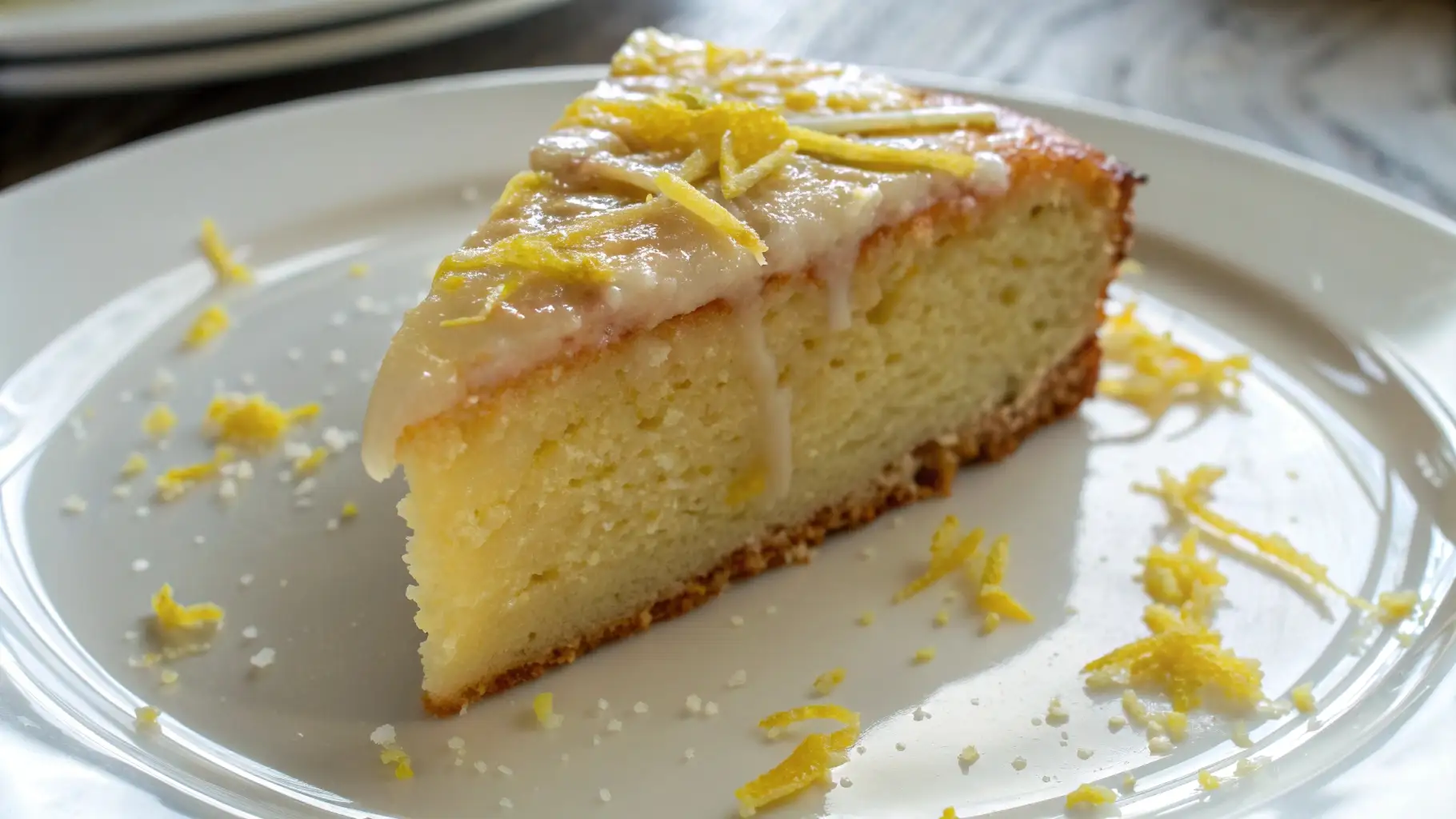
This lemon cake is everything you want in a simple, feel-good dessert: soft, moist, and packed with fresh citrus flavor. It’s the kind of cake you can whip up on a weeknight yet feels special enough for guests. The crumb is tender, the glaze is tangy, and the whole thing comes together with pantry staples.
No fancy tools, no complicated steps—just real lemon flavor and a reliable, easy method. Make it once, and it’ll become your go-to.
What Makes This Recipe So Good
- Bold lemon flavor: Fresh lemon zest and juice go into both the batter and the glaze for a bright, zesty finish.
- Soft, moist crumb: A bit of yogurt (or sour cream) keeps the cake tender without being heavy.
- Simple technique: The batter mixes up in minutes and bakes evenly, whether you use a loaf pan or an 8-inch round pan.
- Not too sweet: The fresh citrus balances the sugar so every bite tastes clean and refreshing.
- Versatile: Works as a breakfast treat, afternoon snack, or easy dessert. It also freezes well.
Shopping List
- Unsalted butter – softened to room temperature
- Granulated sugar
- Large eggs – room temperature
- Plain yogurt or sour cream – full-fat preferred
- Fresh lemons – you’ll need both zest and juice
- All-purpose flour
- Baking powder
- Fine sea salt
- Vanilla extract
- Powdered sugar – for the lemon glaze
- Milk or cream (optional) – to adjust glaze consistency
Instructions
- Prep your pan and oven: Heat the oven to 350°F (175°C).
Grease and line a 9×5-inch loaf pan with parchment, or use an 8-inch round cake pan with a parchment circle. Lightly flour the sides.
- Mix the dry ingredients: In a bowl, whisk 1 1/2 cups all-purpose flour, 1 1/2 teaspoons baking powder, and 1/2 teaspoon fine sea salt. Set aside.
- Cream the butter and sugar: In a large bowl, beat 1/2 cup softened unsalted butter with 3/4 cup granulated sugar until light and fluffy, about 2–3 minutes.
This step helps create a soft, airy crumb.
- Add eggs and flavor: Beat in 2 large eggs, one at a time, scraping the bowl as needed. Mix in 1 teaspoon vanilla extract, the finely grated zest of 2 lemons, and 2 tablespoons fresh lemon juice.
- Add yogurt: Stir in 1/2 cup plain yogurt or sour cream until smooth. The batter may look slightly curdled—totally fine.
- Combine wet and dry: Add the dry ingredients to the wet in two additions, mixing gently until just combined.
Do not overmix. The batter should be thick but spreadable.
- Fill the pan: Scrape the batter into your prepared pan and smooth the top. Tap the pan gently on the counter to release air bubbles.
- Bake: Bake for 45–55 minutes for a loaf pan or 30–38 minutes for an 8-inch round, until a toothpick inserted in the center comes out clean or with a few moist crumbs.
If the top browns too quickly, tent loosely with foil during the last 10 minutes.
- Make the lemon glaze: In a small bowl, whisk 1 cup powdered sugar with 2–3 tablespoons fresh lemon juice until smooth and pourable. Add a splash of milk or cream if you prefer a milder tang or thicker texture.
- Cool and glaze: Let the cake cool in the pan for 10–15 minutes, then lift it out to a wire rack. While still slightly warm, spoon the glaze over the top, letting it drip down the sides.
For a thicker crusted glaze, let the first layer set, then add a second.
- Slice and serve: Cool completely before slicing for the cleanest cuts. Enjoy plain, or add fresh berries and whipped cream.
Storage Instructions
- Room temperature: Store the glazed cake in an airtight container for up to 3 days. The flavor deepens by day two.
- Refrigerator: If your kitchen runs warm or you prefer a firmer glaze, refrigerate for up to 5 days.
Bring to room temp before serving for best texture.
- Freezer: Wrap slices or the whole unglazed cake tightly in plastic and foil. Freeze up to 2 months. Thaw overnight in the fridge, then glaze before serving.
Why This is Good for You
- Real ingredients: Fresh lemons provide vitamin C and natural flavor, so you don’t need artificial extracts.
- Balanced sweetness: The tart glaze lets you keep the sugar moderate without losing flavor.
- Portion-friendly: A dense, moist crumb means smaller slices still satisfy, which helps with mindful eating.
- Wholesome swaps: Using yogurt adds protein and moisture, letting you skip extra fat without sacrificing texture.
Common Mistakes to Avoid
- Overmixing the batter: This leads to a tough cake.
Mix just until the flour disappears.
- Cold ingredients: Butter and eggs should be room temperature so they incorporate smoothly and rise well.
- Too much lemon juice in the batter: It can curdle the batter and throw off the structure. Follow the amounts listed; put extra zest and juice in the glaze.
- Skipping the pan prep: Lining with parchment ensures clean release and keeps the edges from tearing.
- Glazing a hot cake: The glaze will melt and run off. Wait until the cake is warm, not hot, then finish cooling.
Recipe Variations
- Lemon Poppy Seed: Stir in 1–2 tablespoons poppy seeds with the dry ingredients.
- Lemon Blueberry: Fold in 1 cup fresh blueberries tossed with 1 teaspoon flour.
Bake until a tester comes out clean, adding a few minutes if needed.
- Meyer Lemon: Use Meyer lemons for a sweeter, floral twist. Reduce sugar in the glaze slightly, if desired.
- Almond Lemon: Replace 1/4 cup of the flour with almond flour and add 1/2 teaspoon almond extract. Top with toasted sliced almonds.
- Dairy-Free: Use a plant-based butter and a thick, unsweetened coconut yogurt.
The cake remains moist and flavorful.
- Lemon Syrup Soak: While the cake is still warm, poke holes and brush with a quick syrup (2 tablespoons lemon juice + 2 tablespoons sugar heated until dissolved). Finish with a light glaze for extra tang.
Explore more irresistible cake recipes you won’t want to miss:
Cream Cheese Pineapple Pound Cake
FAQ
Can I make this cake without a mixer?
Yes. Use a sturdy whisk and a rubber spatula.
Cream the butter and sugar by hand until pale and fluffy, then proceed as directed. It may take a bit more elbow grease, but it works.
Can I use oil instead of butter?
You can. Substitute 1/2 cup neutral oil for the butter.
The cake will be very moist with a slightly different crumb and less buttery flavor. Still delicious and soft.
How do I stop blueberries from sinking?
Toss them with a teaspoon of flour before folding into the batter, and make sure your batter is thick. Scatter a few berries on top after pouring the batter into the pan for an even distribution.
What if I don’t have yogurt?
Sour cream is a perfect swap.
In a pinch, use buttermilk (1/2 cup) and reduce lemon juice in the batter by 1 tablespoon to keep the liquid balance right.
How do I know it’s done?
The cake should spring back lightly when touched, and a toothpick inserted in the center comes out clean or with moist crumbs, not wet batter. If in doubt, bake 3–5 minutes more and check again.
Can I double the recipe?
Yes. Bake in two loaf pans or a 9×13-inch pan.
Start checking a 9×13 around 28–32 minutes; a loaf may take closer to 50–55 minutes.
Is the glaze necessary?
It’s optional but highly recommended. The glaze adds bright, fresh lemon flavor and seals in moisture. If you prefer less sweetness, brush with lemon syrup instead.
Wrapping Up
This lemon cake is simple, bright, and consistently good—exactly what a home baker needs in a reliable recipe.
With a few fresh lemons and basic ingredients, you get a soft crumb, a zesty glaze, and a crowd-pleasing flavor that works for any occasion. Keep it classic, or try one of the easy variations to make it your own. Either way, you’ll end up with a cake you’ll want to bake again and again.
The Best Homemade Lemon Cake (Soft, Zesty & Easy) - Bright Flavor, Foolproof Method
Ingredients
- Unsalted butter – softened to room temperature
- Granulated sugar
- Large eggs – room temperature
- Plain yogurt or sour cream – full-fat preferred
- Fresh lemons – you’ll need both zest and juice
- All-purpose flour
- Baking powder
- Fine sea salt
- Vanilla extract
- Powdered sugar – for the lemon glaze
- Milk or cream (optional) – to adjust glaze consistency
Instructions
- Prep your pan and oven: Heat the oven to 350°F (175°C).Grease and line a 9x5-inch loaf pan with parchment, or use an 8-inch round cake pan with a parchment circle. Lightly flour the sides.
- Mix the dry ingredients: In a bowl, whisk 1 1/2 cups all-purpose flour, 1 1/2 teaspoons baking powder, and 1/2 teaspoon fine sea salt. Set aside.
- Cream the butter and sugar: In a large bowl, beat 1/2 cup softened unsalted butter with 3/4 cup granulated sugar until light and fluffy, about 2–3 minutes.This step helps create a soft, airy crumb.
- Add eggs and flavor: Beat in 2 large eggs, one at a time, scraping the bowl as needed. Mix in 1 teaspoon vanilla extract, the finely grated zest of 2 lemons, and 2 tablespoons fresh lemon juice.
- Add yogurt: Stir in 1/2 cup plain yogurt or sour cream until smooth. The batter may look slightly curdled—totally fine.
- Combine wet and dry: Add the dry ingredients to the wet in two additions, mixing gently until just combined.Do not overmix. The batter should be thick but spreadable.
- Fill the pan: Scrape the batter into your prepared pan and smooth the top. Tap the pan gently on the counter to release air bubbles.
- Bake: Bake for 45–55 minutes for a loaf pan or 30–38 minutes for an 8-inch round, until a toothpick inserted in the center comes out clean or with a few moist crumbs.If the top browns too quickly, tent loosely with foil during the last 10 minutes.
- Make the lemon glaze: In a small bowl, whisk 1 cup powdered sugar with 2–3 tablespoons fresh lemon juice until smooth and pourable. Add a splash of milk or cream if you prefer a milder tang or thicker texture.
- Cool and glaze: Let the cake cool in the pan for 10–15 minutes, then lift it out to a wire rack. While still slightly warm, spoon the glaze over the top, letting it drip down the sides.For a thicker crusted glaze, let the first layer set, then add a second.
- Slice and serve: Cool completely before slicing for the cleanest cuts. Enjoy plain, or add fresh berries and whipped cream.