
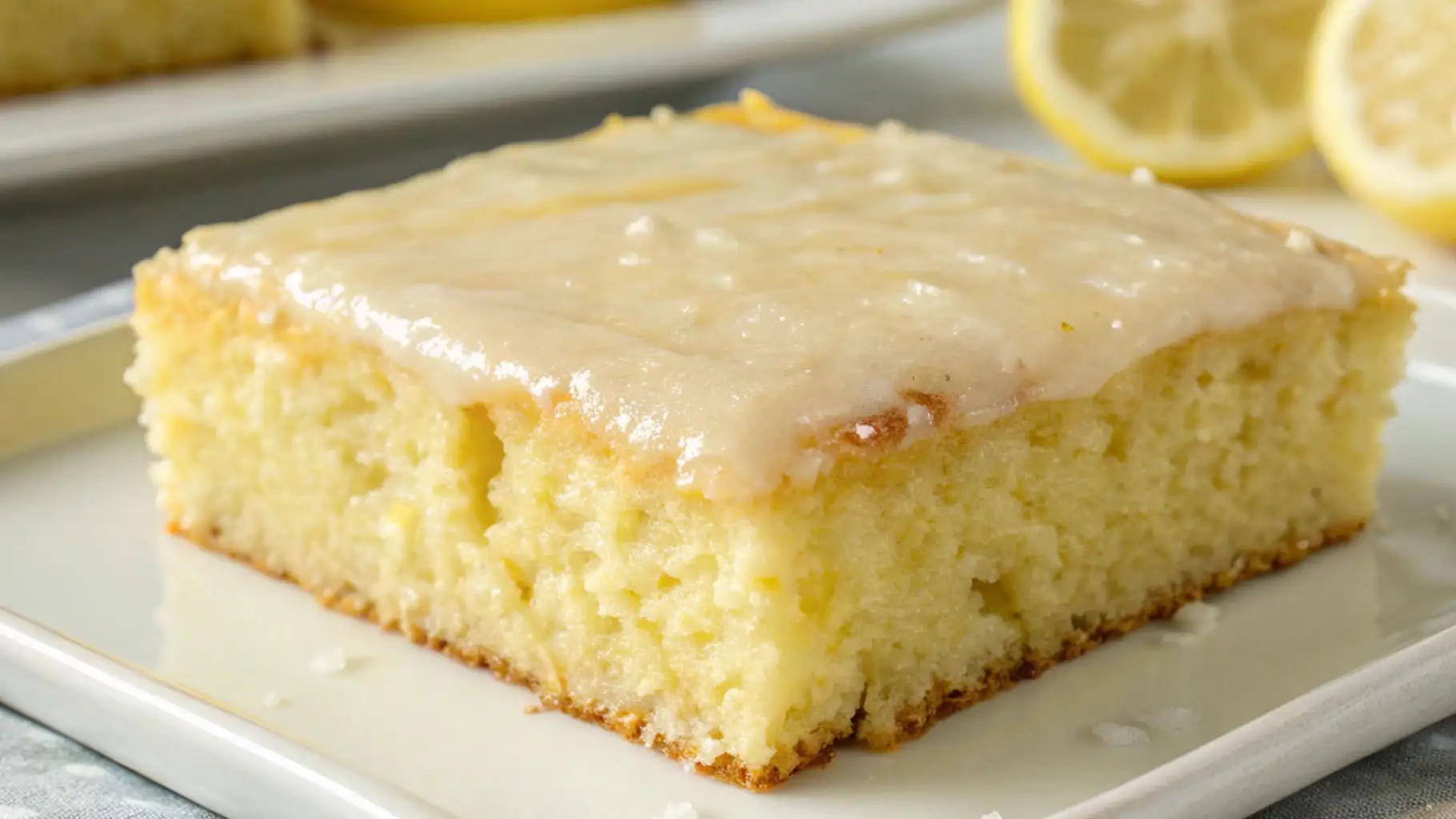
If you love a dessert that tastes like sunshine and feels like a hug, this lemon buttermilk sheet cake is it. It’s soft, moist, and scented with real lemon—no fancy techniques or hard-to-find ingredients. The buttermilk keeps it tender, while the easy sheet pan format makes it perfect for parties, potlucks, or a weeknight treat.
You get a bright lemon glaze that soaks into the top, making every bite sweet, tangy, and irresistible. It’s simple, comforting, and exactly the kind of cake you’ll want to make again and again.
Why This Recipe Works
- Buttermilk = moisture and tenderness: The acidity in buttermilk softens gluten and creates a delicate crumb. It also reacts with baking soda to give the cake lift.
- Real lemon flavor: Lemon zest carries natural oils that bring a bold citrus note.
Paired with fresh lemon juice, the flavor is clean and bright.
- Sheet cake simplicity: No stacking, no fuss. One pan, one bake, easy to glaze and serve.
- Quick lemon glaze: A simple powdered sugar and lemon juice glaze soaks into the warm cake for a tangy finish.
- Make-ahead friendly: The cake stays moist for days and tastes even better the next day.
What You’ll Need
- All-purpose flour – For structure.
- Granulated sugar – Sweetness and moisture.
- Unsalted butter – Richness and flavor.
- Eggs – Bind the batter and add structure.
- Buttermilk – Tender crumb and tang.
- Fresh lemon zest – Big lemon aroma.
- Fresh lemon juice – Bright, clean acidity.
- Vanilla extract – Rounds out the citrus.
- Baking powder and baking soda – Proper lift.
- Fine salt – Balances sweetness and enhances flavor.
- Powdered sugar – For the glaze.
- Neutral oil (optional) – A tablespoon adds extra moisture.
Step-by-Step Instructions
- Prep your pan and oven: Heat the oven to 350°F (175°C). Grease a 9×13-inch baking pan or line it with parchment, leaving overhang for easy lifting.
- Mix dry ingredients: In a medium bowl, whisk 2 1/2 cups all-purpose flour, 2 teaspoons baking powder, 1/2 teaspoon baking soda, and 1/2 teaspoon fine salt.
Set aside.
- Cream butter and sugar: In a large bowl, beat 3/4 cup unsalted butter (softened) with 1 1/2 cups granulated sugar until light and fluffy, about 2–3 minutes.
- Add eggs and flavorings: Beat in 3 large eggs, one at a time. Mix in 1 tablespoon lemon zest, 2 teaspoons vanilla extract, and 2 tablespoons fresh lemon juice. If using, add 1 tablespoon neutral oil.
- Combine with buttermilk: With the mixer on low, add the dry ingredients in three parts, alternating with 1 cup buttermilk, beginning and ending with the dry mix.
Mix just until combined. Do not overmix.
- Spread and bake: Pour the batter into the pan and smooth the top. Bake for 25–32 minutes, or until the center springs back and a toothpick comes out clean or with a few moist crumbs.
- Make the lemon glaze: In a bowl, whisk 1 1/2 to 2 cups powdered sugar with 3–4 tablespoons fresh lemon juice and a pinch of salt until smooth and pourable.
Adjust thickness with more juice or sugar as needed.
- Glaze while warm: Let the cake cool in the pan for 10 minutes. Poke the surface lightly with a skewer or fork. Pour the glaze over the warm cake and gently spread to the edges so it soaks in.
- Cool and serve: Allow the cake to cool completely so the glaze sets.
Slice into squares and serve plain or with berries and a dollop of whipped cream.
Storage Instructions
- Room temperature: Cover tightly and keep at room temp for up to 2 days.
- Refrigerator: Store in an airtight container for up to 5 days. Bring to room temp before serving for best texture.
- Freezer: Wrap slices individually in plastic, then foil, and freeze for up to 2 months. Thaw at room temp, then refresh with a light drizzle of fresh lemon juice if desired.
Health Benefits
- Lemon provides vitamin C: While baking reduces some nutrients, lemon juice and zest still contribute antioxidants and bright flavor without heavy add-ins.
- Buttermilk is lower in fat than cream: It adds richness and tang with fewer calories than higher-fat dairy.
- Portion control is easy: Sheet cakes slice neatly, making it simple to serve modest portions.
- Customizable sweetness: You can slightly reduce sugar in the glaze to suit your preferences without losing overall balance.
Common Mistakes to Avoid
- Overmixing the batter: This can make the cake tough.
Mix just until the flour disappears.
- Skipping the lemon zest: Zest adds most of the lemon flavor. Don’t leave it out.
- Using cold ingredients: Room-temperature butter, eggs, and buttermilk create a smoother batter and better rise.
- Overbaking: Check early. The cake should be moist with a tender crumb, not dry at the edges.
- Glazing a cold cake: Pour the glaze while the cake is warm so it absorbs and sets beautifully.
Variations You Can Try
- Lemon-blueberry: Fold 1 1/2 cups fresh blueberries tossed with 1 tablespoon flour into the batter before baking.
- Lemon-poppy seed: Add 2 tablespoons poppy seeds for a classic texture and look.
- Lemon-coconut: Stir 1 cup shredded unsweetened coconut into the batter and sprinkle a little on top of the glaze.
- Cream cheese frosting: Swap the glaze for a tangy frosting made with cream cheese, butter, powdered sugar, vanilla, and lemon zest.
- Extra tart: Add an additional tablespoon of lemon zest and a teaspoon of lemon extract for a bold citrus punch.
- Whole-wheat twist: Replace 1 cup of all-purpose flour with white whole-wheat flour for a slightly heartier crumb.
Explore more irresistible cake recipes you won’t want to miss:
FAQ
Can I make this cake without buttermilk?
Yes.
Make a quick substitute by mixing 1 tablespoon lemon juice or white vinegar with enough milk to reach 1 cup. Let it sit for 5 minutes, then use as directed. The flavor and texture will be close to the original.
What size pan works best?
A standard 9×13-inch pan is ideal.
You can also use a rimmed half-sheet pan for a thinner cake; just reduce the baking time and keep an eye on it.
How do I get more intense lemon flavor?
Use extra zest, not just juice. You can also rub the zest into the sugar before creaming to release more aromatic oils. A small amount of lemon extract can amplify the flavor without making the cake sour.
Can I make this ahead for a party?
Absolutely.
Bake the day before, glaze, cool completely, then cover tightly. The flavors meld overnight, and the texture stays soft and moist.
Why did my cake sink in the middle?
This usually happens from underbaking, overmixing, or opening the oven door too early. Check your leaveners are fresh, measure accurately, and bake until the center springs back.
Can I reduce the sugar?
You can cut the granulated sugar in the batter by about 1/4 cup without major issues, and reduce the glaze slightly.
Keep in mind that sugar affects moisture and texture, so avoid large reductions.
How do I store leftovers to keep them moist?
Cover tightly with plastic wrap or place in an airtight container. Store at room temperature for short-term or in the fridge for longer. Avoid leaving slices uncovered, as the glaze can dry out.
Is this cake suitable for freezing?
Yes.
Freeze whole (well-wrapped) or in individual slices. Thaw at room temperature and, if you like, add a fresh drizzle of lemon glaze before serving.
Final Thoughts
This lemon buttermilk sheet cake is the kind of dessert that feels effortless yet special. It’s bright, tender, and easy to share, with a tangy glaze that keeps each slice moist and flavorful.
Whether you’re baking for a birthday, a potluck, or a slow Sunday afternoon, this recipe delivers reliable results and fresh lemon goodness every time. Keep it simple, or try a fun variation—either way, it’s a keeper.
Lemon Buttermilk Sheet Cake Soft Moist Easy Homemade Dessert – Bright, Tender, and Crowd-Friendly
Ingredients
- All-purpose flour – For structure.
- Granulated sugar – Sweetness and moisture.
- Unsalted butter – Richness and flavor.
- Eggs – Bind the batter and add structure.
- Buttermilk – Tender crumb and tang.
- Fresh lemon zest – Big lemon aroma.
- Fresh lemon juice – Bright, clean acidity.
- Vanilla extract – Rounds out the citrus.
- Baking powder and baking soda – Proper lift.
- Fine salt – Balances sweetness and enhances flavor.
- Powdered sugar – For the glaze.
- Neutral oil (optional) – A tablespoon adds extra moisture.
Instructions
- Prep your pan and oven: Heat the oven to 350°F (175°C). Grease a 9×13-inch baking pan or line it with parchment, leaving overhang for easy lifting.
- Mix dry ingredients: In a medium bowl, whisk 2 1/2 cups all-purpose flour, 2 teaspoons baking powder, 1/2 teaspoon baking soda, and 1/2 teaspoon fine salt.Set aside.
- Cream butter and sugar: In a large bowl, beat 3/4 cup unsalted butter (softened) with 1 1/2 cups granulated sugar until light and fluffy, about 2–3 minutes.
- Add eggs and flavorings: Beat in 3 large eggs, one at a time. Mix in 1 tablespoon lemon zest, 2 teaspoons vanilla extract, and 2 tablespoons fresh lemon juice. If using, add 1 tablespoon neutral oil.
- Combine with buttermilk: With the mixer on low, add the dry ingredients in three parts, alternating with 1 cup buttermilk, beginning and ending with the dry mix.Mix just until combined. Do not overmix.
- Spread and bake: Pour the batter into the pan and smooth the top. Bake for 25–32 minutes, or until the center springs back and a toothpick comes out clean or with a few moist crumbs.
- Make the lemon glaze: In a bowl, whisk 1 1/2 to 2 cups powdered sugar with 3–4 tablespoons fresh lemon juice and a pinch of salt until smooth and pourable.Adjust thickness with more juice or sugar as needed.
- Glaze while warm: Let the cake cool in the pan for 10 minutes. Poke the surface lightly with a skewer or fork. Pour the glaze over the warm cake and gently spread to the edges so it soaks in.
- Cool and serve: Allow the cake to cool completely so the glaze sets.Slice into squares and serve plain or with berries and a dollop of whipped cream.