
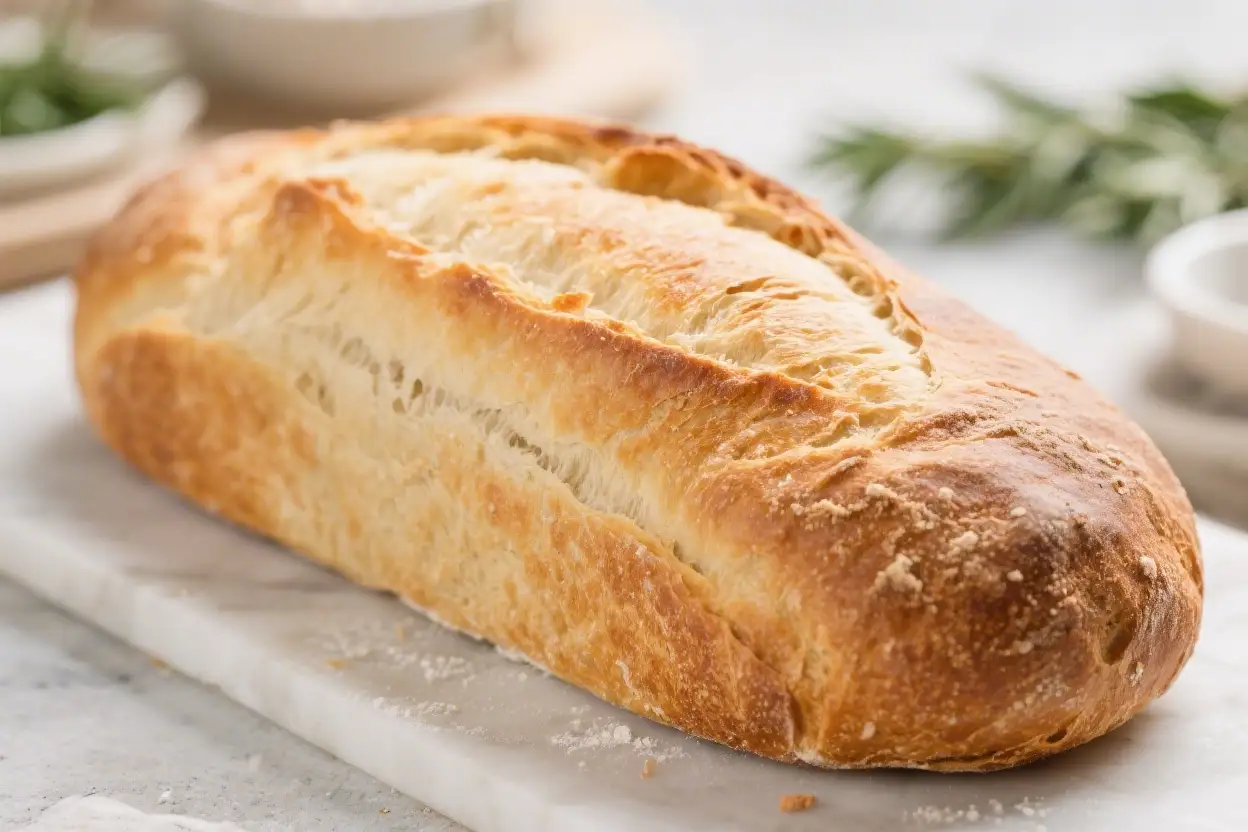
There’s nothing like the smell of a fresh loaf of Italian bread coming out of your own oven. This recipe gives you that classic bakery-style crust with a soft, airy interior—and you don’t need special equipment to pull it off. It’s simple, reliable, and perfect for beginners or seasoned home bakers.
Serve it with pasta, soup, or just swipe a slice through olive oil with a sprinkle of salt. You’ll wonder why you ever bought bread at the store.
What Makes This Special
This Italian bread is all about balance: a thin, golden crust and a tender crumb that’s ideal for sandwiches, garlic bread, or just butter. The dough is forgiving and uses pantry staples, so it’s easy to fit into a busy day.
With a few smart techniques—like a warm, steamy oven—you’ll get that signature artisan look at home. Best of all, the flavor is clean and mildly yeasty, so it pairs with almost anything.
Ingredients
- 4 cups (500 g) bread flour (all-purpose flour works in a pinch)
- 1 1/2 cups (360 ml) warm water (about 105–110°F / 40–43°C)
- 2 1/4 teaspoons (1 packet) active dry yeast
- 2 tablespoons olive oil (plus a little for greasing)
- 2 teaspoons sugar (or honey)
- 2 teaspoons fine sea salt
- 1 egg white (optional, for glaze)
- 1 tablespoon water (for egg wash, optional)
- Semolina or cornmeal (for dusting the baking sheet, optional)
How to Make It
- Activate the yeast. In a medium bowl, combine warm water and sugar. Sprinkle the yeast over the top, stir gently, and let it sit for 5–10 minutes until foamy.
If it doesn’t foam, your yeast may be expired or the water was too hot or too cold.
- Mix the dough. In a large bowl, whisk flour and salt. Add the foamy yeast mixture and olive oil. Stir with a wooden spoon until a shaggy dough forms and most of the flour is hydrated.
- Knead to smooth. Turn the dough onto a lightly floured surface.
Knead for 8–10 minutes until smooth, elastic, and slightly tacky but not sticky. Add small sprinkles of flour only if needed to prevent sticking.
- First rise. Lightly oil a clean bowl. Place the dough inside, turning it once to coat.
Cover with a clean towel or plastic wrap and let rise in a warm spot for 60–90 minutes, or until doubled in size.
- Shape the loaf. Gently punch down the dough to release air. Turn it out and press into a rough rectangle. Roll it up tightly from the long side into a log, tucking the ends under to create tension and a smooth surface.
- Second rise. Place the shaped loaf on a parchment-lined or semolina-dusted baking sheet.
Cover loosely and let it rise for 30–45 minutes, or until puffy and about 1.5 times its size. It should spring back slowly when poked.
- Preheat and steam setup. While the dough rises, preheat the oven to 425°F (220°C). Place an empty metal pan on the bottom rack to preheat—this will help create steam for a crisp crust.
- Score and glaze. Using a sharp knife or lame, make 3–4 diagonal slashes across the top of the loaf.
For shine, whisk the egg white with 1 tablespoon water and brush it lightly over the surface.
- Bake with steam. Place the loaf in the oven. Carefully pour 1 cup of hot water into the preheated pan to create steam, and quickly close the door. Bake for 25–30 minutes, until the crust is deep golden and the loaf sounds hollow when tapped.
- Cool before slicing. Transfer to a wire rack and let it cool for at least 30 minutes.
This sets the crumb and makes slicing cleaner.
Storage Instructions
- Room temperature: Wrap in a clean kitchen towel or store in a paper bag for up to 2 days. This helps maintain the crust.
- Freezer: Slice the bread, place slices in a freezer-safe bag, and freeze for up to 2 months. Toast straight from frozen or thaw at room temperature.
- Avoid plastic bags at room temp unless you prefer a softer crust.
Plastic traps moisture and can make the crust chewy.
- Refresh the crust: If it softens, warm the loaf at 350°F (175°C) for 8–10 minutes to crisp it back up.
Health Benefits
- Simple ingredients: Just flour, water, yeast, salt, and olive oil—no additives or preservatives.
- Olive oil adds healthy fats, which can support heart health when used in moderation.
- Homemade control: You control the salt and sugar content, which can help reduce overall sodium compared to some store-bought loaves.
- Energy source: Carbohydrates provide quick fuel, ideal when paired with protein and veggies for a balanced meal.
What Not to Do
- Don’t rush the rise. Underproofed dough leads to dense bread and weak oven spring.
- Don’t drown the dough in flour. Too much flour during kneading makes the loaf dry and tough.
- Don’t skip the steam. Steam helps form a crisp, glossy crust. Without it, the crust may be dull and soft.
- Don’t slice hot bread. Cutting too soon compresses the crumb and makes it gummy.
- Don’t proof in very hot places. High heat can kill yeast or cause off flavors. Aim for warm, not hot.
Variations You Can Try
- Sesame crust: Brush with egg wash and sprinkle sesame seeds before baking for nutty flavor and crunch.
- Herb and garlic loaf: Mix 1–2 teaspoons dried Italian herbs and 1 teaspoon garlic powder into the flour for a savory twist.
- Sourdough boost: Replace 1/2 cup water and 1/2 cup flour with 1 cup active sourdough starter.
Reduce yeast to 1 teaspoon.
- Whole wheat blend: Swap 1–1.5 cups of the bread flour with whole wheat. Add 1–2 teaspoons extra water as needed.
- Round boule: Shape into a round and bake on a preheated baking stone for even more oven spring.
- Garlic bread upgrade: After baking, slice and brush with melted butter, minced garlic, and parsley. Toast until fragrant.
Explore more irresistible bread recipes you won’t want to miss:
FAQ
Can I use instant yeast instead of active dry?
Yes.
Use the same amount and mix it directly with the dry ingredients. You can skip the initial activation step, but still use warm water for best results.
What if my dough is too sticky?
Sticky dough is normal at first. Knead for a few minutes before adding more flour.
If it’s still too wet, add flour 1 tablespoon at a time until it’s tacky but manageable.
How do I get bigger air pockets?
Hydration, proper proofing, and gentle handling are key. Don’t overwork the dough after the first rise. A hot oven with steam also encourages a more open crumb.
Can I bake this in a Dutch oven?
Yes.
Shape the loaf, place it on parchment, and score. Preheat the Dutch oven at 450°F (230°C), transfer the dough inside, cover, bake 20 minutes, then uncover and bake 10–15 more until golden.
Why did my crust get too hard?
It may have baked too long or cooled uncovered in a very dry environment. Shorten the bake by a few minutes next time, or brush the warm crust lightly with water or olive oil to soften slightly.
How do I know it’s fully baked?
The loaf should be deep golden and sound hollow when tapped.
For extra certainty, use a thermometer: the internal temperature should reach about 200–205°F (93–96°C).
Can I make the dough ahead?
Yes. After the first rise, punch down, cover tightly, and refrigerate up to 24 hours. Let it come to room temperature, shape, and proof until puffy before baking.
Is bread flour necessary?
No, but it helps.
Bread flour has more protein, which improves structure and chew. All-purpose flour will still make a lovely loaf—just a bit softer.
What can I use instead of an egg wash?
Brush with water or milk for a softer sheen. For extra shine and color without egg, use a little olive oil, though it won’t be as glossy.
Can I add toppings like rosemary or olives?
Absolutely.
Fold chopped olives or fresh rosemary into the dough after the first rise, or sprinkle herbs and flaky salt over the egg wash before baking.
In Conclusion
This Italian bread delivers bakery quality with home-kitchen simplicity. With a few basic ingredients and easy steps, you’ll get a golden crust, a tender crumb, and a loaf that fits any meal. Make it once, and it’ll become a regular on your table—warm, fragrant, and impossible to resist.
Italian Bread Recipe Easy Homemade Bakery Style Loaf - Simple, Crusty, and Flavorful
Ingredients
- 4 cups (500 g) bread flour (all-purpose flour works in a pinch)
- 1 1/2 cups (360 ml) warm water (about 105–110°F / 40–43°C)
- 2 1/4 teaspoons (1 packet) active dry yeast
- 2 tablespoons olive oil (plus a little for greasing)
- 2 teaspoons sugar (or honey)
- 2 teaspoons fine sea salt
- 1 egg white (optional, for glaze)
- 1 tablespoon water (for egg wash, optional)
- Semolina or cornmeal (for dusting the baking sheet, optional)
Instructions
- Activate the yeast. In a medium bowl, combine warm water and sugar. Sprinkle the yeast over the top, stir gently, and let it sit for 5–10 minutes until foamy.If it doesn’t foam, your yeast may be expired or the water was too hot or too cold.
- Mix the dough. In a large bowl, whisk flour and salt. Add the foamy yeast mixture and olive oil. Stir with a wooden spoon until a shaggy dough forms and most of the flour is hydrated.
- Knead to smooth. Turn the dough onto a lightly floured surface.Knead for 8–10 minutes until smooth, elastic, and slightly tacky but not sticky. Add small sprinkles of flour only if needed to prevent sticking.
- First rise. Lightly oil a clean bowl. Place the dough inside, turning it once to coat.Cover with a clean towel or plastic wrap and let rise in a warm spot for 60–90 minutes, or until doubled in size.
- Shape the loaf. Gently punch down the dough to release air. Turn it out and press into a rough rectangle. Roll it up tightly from the long side into a log, tucking the ends under to create tension and a smooth surface.
- Second rise. Place the shaped loaf on a parchment-lined or semolina-dusted baking sheet.Cover loosely and let it rise for 30–45 minutes, or until puffy and about 1.5 times its size. It should spring back slowly when poked.
- Preheat and steam setup. While the dough rises, preheat the oven to 425°F (220°C). Place an empty metal pan on the bottom rack to preheat—this will help create steam for a crisp crust.
- Score and glaze. Using a sharp knife or lame, make 3–4 diagonal slashes across the top of the loaf.For shine, whisk the egg white with 1 tablespoon water and brush it lightly over the surface.
- Bake with steam. Place the loaf in the oven. Carefully pour 1 cup of hot water into the preheated pan to create steam, and quickly close the door. Bake for 25–30 minutes, until the crust is deep golden and the loaf sounds hollow when tapped.
- Cool before slicing. Transfer to a wire rack and let it cool for at least 30 minutes.This sets the crumb and makes slicing cleaner.