
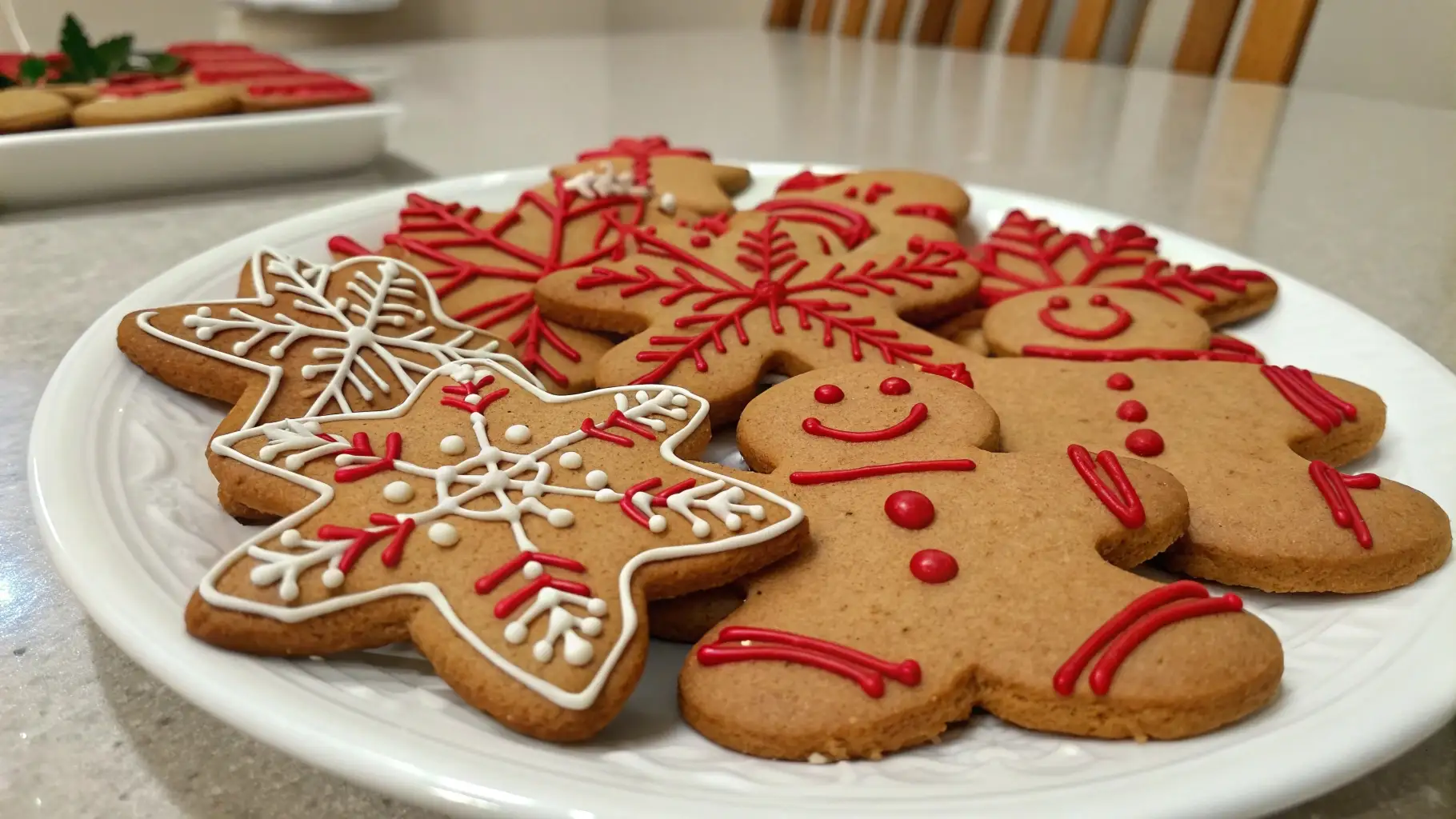
Is there anything more heartwarming than the smell of gingerbread cookies filling your kitchen during holiday baking season? If you’ve ever wanted that cozy, nostalgic bite with warm spices and a rich molasses flavor, you’re in the right place.
This recipe is designed to be easy, crowd-pleasing, and wonderfully flexible—make them soft and chewy for snacking, or roll the dough for cut-out gingerbread cookies that are perfect for decorating. Whether you’re baking with kids, prepping for a cookie exchange, or just craving a classic treat, these cookies deliver that “wildly popular for a reason” kind of comfort.
Key Benefits of Gingerbread Cookies
If you love gingerbread cookies that feel like a warm hug, this recipe is built for you. It’s the kind of holiday baking staple you’ll come back to every year—reliable, flexible, and genuinely satisfying from the first spicy-sweet bite.
Why you’ll want to make these
Big cozy flavor, zero fuss
You get that classic combination of warm spices and rich molasses flavor without complicated steps or hard-to-find ingredients.
A true crowd-pleasing cookie
These are made for sharing—cookie exchanges, family gatherings, teacher gifts—anywhere you want something familiar and “gone in minutes” good.
Soft and chewy or perfectly shaped cut-outs
Prefer a tender, soft and chewy cookie? Easy. Want cut-out gingerbread cookies for decorating? The dough rolls smoothly and holds its shape beautifully when chilled.
Make-ahead friendly for busy weeks
You can prep the dough in advance, chill it overnight, and bake when you’re ready. It’s a simple way to make holiday baking feel calm instead of chaotic.
Beginner-friendly with built-in success cues
Clear texture and timing tips help you avoid the usual pitfalls—dry cookies, spreading, or overbaking—so you can bake with confidence even if it’s your first batch.
By the time you pull these from the oven, your kitchen will smell like the holidays—and you’ll have a batch of gingerbread cookies that look and taste like you really know what you’re doing.
Ingredients of Gingerbread Cookies
Before you start mixing, take a quick minute to set everything out. Gingerbread cookies come together smoothly when your ingredients are measured and ready—especially because the dough has molasses and spices that deserve even mixing.
What you’ll need
Dry ingredients
3 cups all-purpose flour (360 g), plus more for rolling
1 tsp baking soda
1/2 tsp fine salt
1 tbsp ground ginger
1 tbsp ground cinnamon
1/2 tsp ground cloves
Wet ingredients
3/4 cup unsalted butter (170 g), softened
3/4 cup dark brown sugar, packed (150 g)
2/3 cup unsulphured molasses (160 g)
1 large egg
1 tsp vanilla extract
Quick ingredient notes that make a difference
Use unsulphured molasses: It’s the key to that deep, classic flavor in spiced molasses cookies—and it gives the dough its rich color.
Softened butter, not melted: Soft butter creams properly with the sugar, helping you get a tender texture and better-shaped cookies.
Spice control: If you prefer a gentler cookie, reduce cloves to 1/4 tsp. If you love bold warm spices, keep it as written.
Optional add-ins for a personal twist
1 tsp orange zest for a bright, festive lift
1/4 tsp nutmeg for extra cozy depth
Pinch of black pepper for a subtle, bakery-style warmth
Once these are measured and ready, you’re set up for smooth mixing and beautifully fragrant holiday gingerbread cookies.
Step-by-Step Instructions for Gingerbread Cookies
You’re just a few simple steps away from gingerbread cookies that taste like pure holiday baking comfort. I’ll walk you through it like I’m right there in your kitchen—because the little details (butter temperature, chill time, and bake cues) are what make these cookies reliably great.
1) Mix the dry ingredients
In a medium bowl, whisk together the flour, baking soda, salt, ginger, cinnamon, and cloves.
Set aside—this helps the warm spices distribute evenly so every cookie tastes balanced.
2) Cream the butter and sugar
In a large bowl, beat the softened butter and dark brown sugar for 2–3 minutes, until lighter and fluffy.
Don’t rush this step—the creaming creates structure and helps your cookies bake up tender instead of dense.
3) Add the molasses and egg
Beat in the molasses until fully blended (the mixture will look glossy and smell incredible).
Add the egg and vanilla, then mix just until smooth.
4) Combine wet and dry
Add the dry ingredients to the wet mixture in 2 additions, mixing on low.
Stop as soon as you don’t see streaks of flour. Overmixing can make homemade gingerbread cookies tougher than they need to be.
5) Chill the dough
Divide the dough into 2 discs, wrap tightly, and refrigerate for at least 2 hours (overnight is great).
Chilling is the secret to cut-out gingerbread cookies that hold their shape and don’t spread.
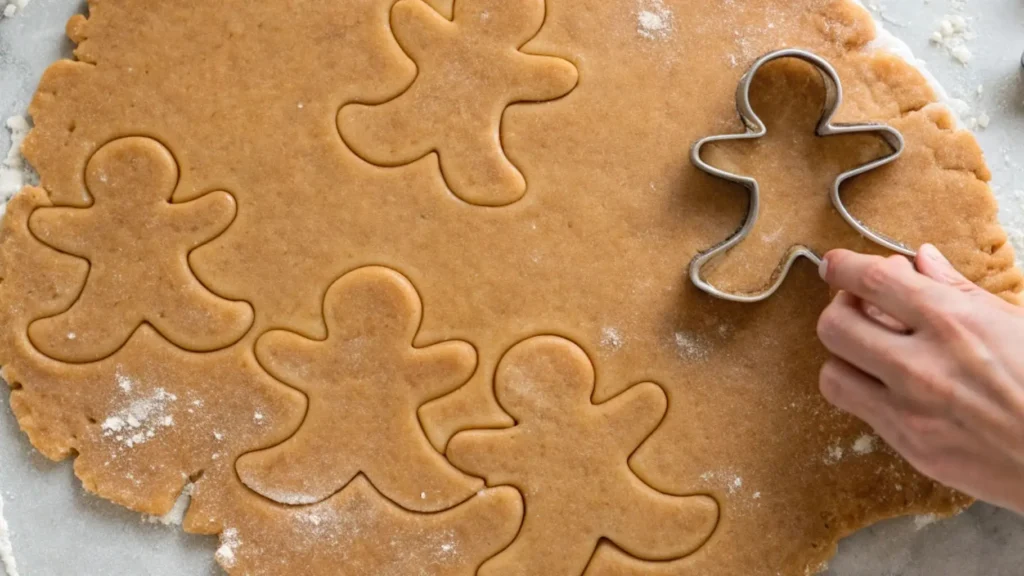
6) Roll and cut
Preheat your oven to 350°F (175°C) and line baking sheets with parchment.
On a lightly floured surface, roll one dough disc to about 1/4 inch (6 mm) thick.
Cut into shapes with cookie cutters and place them 1 inch apart on the prepared sheets.
If the dough starts feeling sticky or warm, slide the cut shapes into the fridge for 10 minutes before baking—instant shape insurance.
7) Bake and cool
Bake for 8–10 minutes for smaller cookies, 10–12 minutes for larger ones.
Look for this cue: edges set, centers slightly soft. That’s how you get that soft and chewy bite without dryness.
Let cookies cool on the baking sheet for 5 minutes, then transfer to a wire rack to cool completely.
Quick success checks
Cookies spreading? Dough may be too warm—chill it longer or re-chill the cut shapes.
Cookies too crisp? Pull them earlier; gingerbread continues firming as it cools.
Ready to decorate? Make sure they’re fully cool, especially if you’ll use icing or royal icing later.
That’s it—you’ve got classic gingerbread cookies with rich molasses flavor and cozy spice, ready to enjoy plain or dress up for the season.
Pro Tips and Variations
Once you’ve made gingerbread cookies a time or two, you’ll notice they’re wonderfully forgiving—as long as you respect two things: dough temperature and bake time. Use the tips below to get the exact texture you want, plus a few fun ways to make the recipe feel new every year.
Pro tips for consistent results
Weigh your flour if you can
Too much flour is the fastest route to dry cookies. If you’re using measuring cups, spoon flour into the cup and level it off—don’t scoop straight from the bag.
Chill the dough for clean edges and less spreading
For cut-out gingerbread cookies, cold dough is your best friend. If your shapes start looking soft or puffy around the edges, pop the tray in the fridge for 10 minutes before baking.
Roll evenly for even baking
Aim for about 1/4 inch thickness. Thinner cookies bake faster and turn crisp; thicker cookies stay more soft and chewy.
Don’t overbake—use visual cues
The cookies should look set at the edges but still a touch soft in the center. They finish firming up as they cool, which helps protect that classic rich molasses flavor from tasting “toasty” or dry.
Rotate your pan for uniform color
Halfway through baking, rotate the sheet front to back. It’s a small step that makes a noticeable difference if your oven runs hot on one side.
Choose your texture
Want to tailor your holiday gingerbread cookies to your personal preference? Here are easy adjustments that don’t complicate the process:
For softer, chewier cookies
Roll slightly thicker, closer to 5/16 inch
Bake on the lower end of the time range
Store with a small piece of bread in the container to help maintain softness
For crisper cookies with more snap
Roll a little thinner, closer to 3/16 inch
Bake 1–2 minutes longer, just until the surface looks matte and fully set
Let them cool completely before storing so they stay crisp
Flavor variations that still taste like gingerbread
Keep the cozy warm spices, but add a little personality:
Orange-spice gingerbread: add 1–2 tsp orange zest to the dough
Extra-gingery: add 1/2 tsp more ground ginger for a bolder bite
Deeper spice profile: add 1/4 tsp nutmeg or a pinch of allspice
Dark cocoa gingerbread: add 2 tbsp unsweetened cocoa powder and reduce flour by 2 tbsp for a richer color and subtle chocolate note
Decorating options that fit your time
Whether you’re going all-in or keeping it simple, you’ve got choices:
Classic royal icing for sharp lines and sturdy details (best for gifting and cookie exchanges)
Quick glaze with powdered sugar and a splash of milk for a glossy finish
Minimalist “bakery-style” dusting of powdered sugar for a softer, cozy look
If you’re decorating, let the cookies cool fully first—warm cookies melt icing and blur details. With these tweaks in your back pocket, your gingerbread cookies can be picture-perfect, ultra-cozy, or both.

Serving Suggestions
Freshly baked gingerbread cookies are wonderful on their own, but a few thoughtful pairings can turn them into a full-on holiday baking moment—whether you’re hosting, gifting, or just treating yourself after dinner.
Serve them the cozy way
If you want maximum comfort with minimal effort, try these classic pairings:
Hot cocoa with a pinch of cinnamon on top
Chai latte or spiced black tea to echo the warm spices in the cookies
Coffee (especially with a splash of cream) to balance the rich molasses flavor
Warm apple cider for a festive, family-friendly option
Make a cookie platter people actually reach for
For a party tray or cookie exchange, variety is everything. Build a platter that feels abundant without being fussy:
A mix of cut-out gingerbread cookies and a few simple drop cookies
Small bowls of royal icing or glaze for dipping
Crunchy elements like toasted nuts or peppermint pieces for contrast
Fresh fruit accents (orange slices, pomegranate arils, or grapes) for color
Turn them into easy edible gifts
These cookies travel well, which makes them perfect for sharing:
Stack 4–6 cookies, tie with twine, and add a handwritten label
Use a tin lined with parchment to keep cookies from sliding
If you’ve decorated with royal icing, let it set fully before packing so the designs stay crisp
Fun ways to dress them up
When you want something a little extra (but still easy):
Ice cream sandwiches: sandwich vanilla ice cream between two cookies and freeze for 15–20 minutes
Dessert board: add chocolate bark, dried fruit, and marshmallows alongside the cookies
Decorating night: set out sprinkles and icing and let everyone customize their own—perfect for kids and guests
No matter how you serve them, these gingerbread cookies bring that familiar holiday warmth to the table—and they tend to disappear faster than you expect.
Conclusion
If you’re craving a classic that instantly makes your kitchen feel cozier, these gingerbread cookies deliver every time. With warm spices, a rich molasses flavor, and a dough that’s easy to handle, they’re the kind of holiday baking recipe you can rely on—whether you’re making simple treats for the week or rolling out cut-out gingerbread cookies for decorating.
Before you tuck the butter away and call it a day, here are a few final reminders that keep this recipe “wildly popular” for good reason:
Chill the dough for clean edges and better shape
Roll evenly so every cookie bakes at the same pace
Pull them when the centers still look slightly soft for that perfect soft-and-chewy finish
Make a batch, share a few, and keep a couple for yourself—because nothing says comfort quite like homemade gingerbread cookies cooling on the counter, filling the house with that unmistakable holiday warmth.
Explore more irresistible cookie recipes you won’t want to miss:
No-bake Chocolate Oatmeal Cookies

Gingerbread Cookies heartwarming and wildly popular this year
Ingredients
- Before you start mixing take a quick minute to set everything out. Gingerbread cookies come together smoothly when your ingredients are measured and ready—especially because the dough has molasses and spices that deserve even mixing.
What you’ll need
- Dry ingredients
- 3 cups all-purpose flour 360 g, plus more for rolling
- 1 tsp baking soda
- 1/2 tsp fine salt
- 1 tbsp ground ginger
- 1 tbsp ground cinnamon
- 1/2 tsp ground cloves
- Wet ingredients
- 3/4 cup unsalted butter 170 g, softened
- 3/4 cup dark brown sugar packed (150 g)
- 2/3 cup unsulphured molasses 160 g
- 1 large egg
- 1 tsp vanilla extract
- Quick ingredient notes that make a difference
- Use unsulphured molasses: It’s the key to that deep classic flavor in spiced molasses cookies—and it gives the dough its rich color.
- Softened butter not melted: Soft butter creams properly with the sugar, helping you get a tender texture and better-shaped cookies.
- Spice control: If you prefer a gentler cookie reduce cloves to 1/4 tsp. If you love bold warm spices, keep it as written.
Optional add-ins for a personal twist
- 1 tsp orange zest for a bright festive lift
- 1/4 tsp nutmeg for extra cozy depth
- Pinch of black pepper for a subtle bakery-style warmth
- Once these are measured and ready you’re set up for smooth mixing and beautifully fragrant holiday gingerbread cookies.
Instructions
- You’re just a few simple steps away from gingerbread cookies that taste like pure holiday baking comfort. I’ll walk you through it like I’m right there in your kitchen—because the little details (butter temperature, chill time, and bake cues) are what make these cookies reliably great.
Mix the dry ingredients
- In a medium bowl, whisk together the flour, baking soda, salt, ginger, cinnamon, and cloves.
- Set aside—this helps the warm spices distribute evenly so every cookie tastes balanced.
Cream the butter and sugar
- In a large bowl, beat the softened butter and dark brown sugar for 2–3 minutes, until lighter and fluffy.
- Don’t rush this step—the creaming creates structure and helps your cookies bake up tender instead of dense.
Add the molasses and egg
- Beat in the molasses until fully blended (the mixture will look glossy and smell incredible).
- Add the egg and vanilla, then mix just until smooth.
Combine wet and dry
- Add the dry ingredients to the wet mixture in 2 additions, mixing on low.
- Stop as soon as you don’t see streaks of flour. Overmixing can make homemade gingerbread cookies tougher than they need to be.
Chill the dough
- Divide the dough into 2 discs, wrap tightly, and refrigerate for at least 2 hours (overnight is great).
- Chilling is the secret to cut-out gingerbread cookies that hold their shape and don’t spread.
Roll and cut
- Preheat your oven to 350°F (175°C) and line baking sheets with parchment.
- On a lightly floured surface, roll one dough disc to about 1/4 inch (6 mm) thick.
- Cut into shapes with cookie cutters and place them 1 inch apart on the prepared sheets.
- If the dough starts feeling sticky or warm, slide the cut shapes into the fridge for 10 minutes before baking—instant shape insurance.
Bake and cool
- Bake for 8–10 minutes for smaller cookies, 10–12 minutes for larger ones.
- Look for this cue: edges set, centers slightly soft. That’s how you get that soft and chewy bite without dryness.
- Let cookies cool on the baking sheet for 5 minutes, then transfer to a wire rack to cool completely.
Quick success checks
- Cookies spreading? Dough may be too warm—chill it longer or re-chill the cut shapes.
- Cookies too crisp? Pull them earlier; gingerbread continues firming as it cools.
- Ready to decorate? Make sure they’re fully cool, especially if you’ll use icing or royal icing later.
Notes
Nutrition Information (Per 1 Cookie)
(Estimated values; will vary by ingredient brands, thickness, and cookie size. Icing/decorations will increase nutrition totals.)- Calories: 152
- Total Fat: 6.1 g
- Saturated Fat: 3.7 g
- Carbohydrates: 22.6 g
- Sugar: 11.1 g
- Fiber: 0.4 g
- Protein: 1.9 g
- Sodium: 109 mg
- Cholesterol: 23 mg
FAQs
Why did my gingerbread cookies spread?
This usually comes down to dough temperature. For gingerbread cookies that hold their shape:
Chill the dough for at least 2 hours (longer is even better).
If your kitchen is warm, re-chill the cut shapes on the baking sheet for 10 minutes before baking.
Make sure your butter was softened, not melted—melted butter leads to extra spread.
Double-check your flour measurement; too little flour can also cause spreading.
How do I keep gingerbread cookies soft and chewy?
For that tender, soft and chewy texture:
Don’t overbake—pull them when the edges are set and the centers still look slightly soft.
Let cookies cool fully, then store in an airtight container.
For extra softness, add a small piece of bread to the container (swap it out every day or two).
Can I make the dough ahead of time?
Yes—and it’s one of the best ways to make holiday baking easier.
Refrigerate the dough (tightly wrapped) for up to 3 days.
If it becomes too firm to roll, let it sit at room temperature for 10–15 minutes, then roll.
Can I freeze gingerbread cookie dough?
Absolutely. Freezing is perfect for planning ahead.
Wrap dough discs tightly, then place in a freezer bag.
Freeze for up to 3 months.
Thaw overnight in the refrigerator before rolling.
How thick should I roll cut-out gingerbread cookies?
For classic cut-out gingerbread cookies, aim for 1/4 inch (6 mm).
Thicker = softer cookies with a little chew
Thinner = crisper cookies and sharper snap
Keeping the thickness even is what helps them bake uniformly.
What can I use instead of molasses?
Molasses is what gives gingerbread its signature color and rich molasses flavor, so substitutes will change the taste.
In a pinch, you can use dark corn syrup or honey, but the cookies will be lighter and less “gingerbread-y.”
If you do substitute, consider adding a touch more spice to keep that warm flavor profile.
How long do gingerbread cookies last?
Stored properly, these homemade gingerbread cookies keep well:
At room temperature in an airtight container: 5–7 days
Frozen (baked cookies): up to 3 months
If you’re freezing decorated cookies, freeze them in a single layer first, then stack with parchment between layers.
When can I decorate them with icing or royal icing?
Wait until the cookies are completely cool—warm cookies melt icing and blur details.
For crisp designs and sturdy gifts, royal icing is best.
Let decorated cookies set at room temperature until the icing is firm before stacking or packaging.