
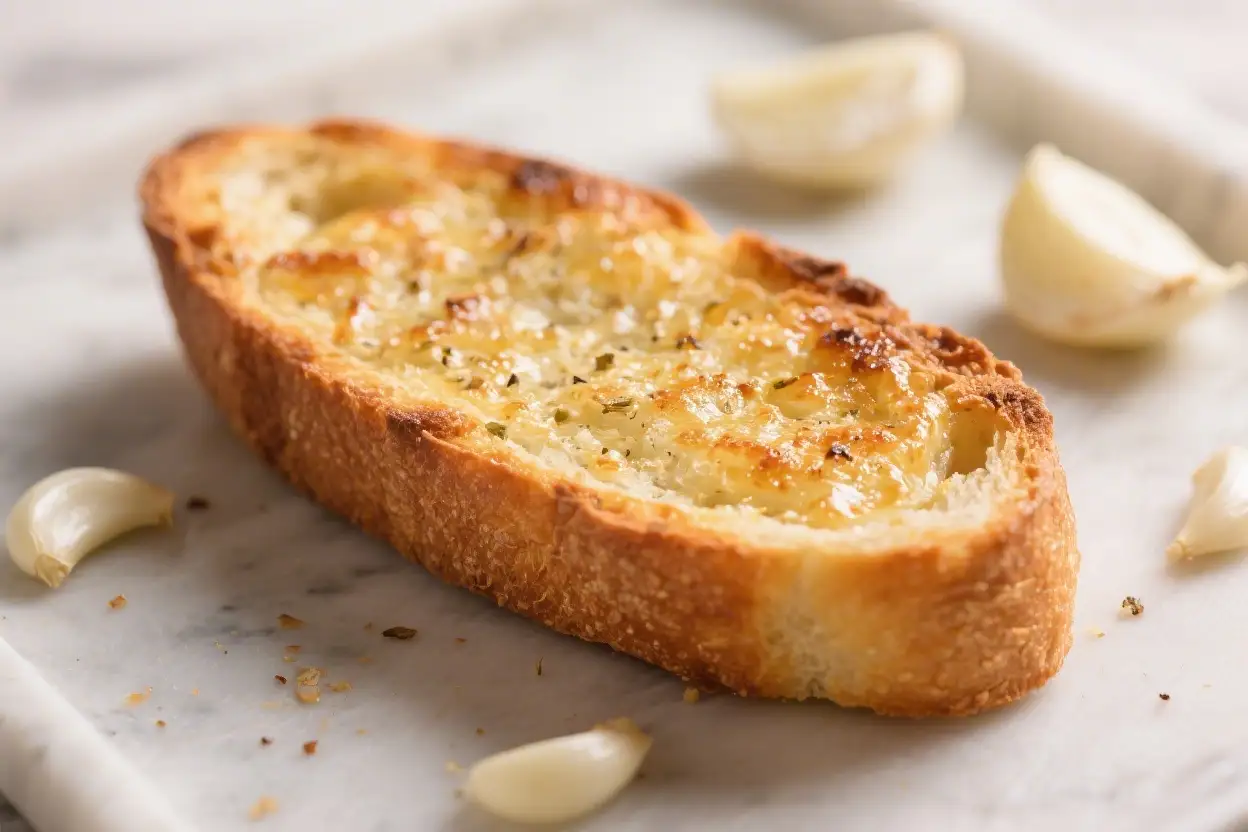
Garlic bread is one of those simple pleasures that never disappoints. It’s crisp on the edges, soft in the center, and loaded with buttery, garlicky goodness. This version is easy enough for a weeknight and reliable enough for guests.
You can make it with a few pantry staples, and it pairs with everything from pasta to soups—or stands proudly on its own. If you’ve ever wanted perfect golden slices without fuss, this method is for you.
What Makes This Special
This garlic bread hits the sweet spot between crisp and tender. The trick is a two-step bake that melts the butter into the bread first, then finishes under higher heat for color and crunch.
You get garlic flavor in every bite without burning the edges.
It also uses fresh garlic for bold flavor, plus a touch of parsley and Parmesan for balance. You can adjust it to your taste—more garlic, less cheese, or even a dairy-free spin. It’s fast, flexible, and consistently delicious.
Shopping List
- 1 large French baguette or Italian loaf (about 16–18 inches)
- 8 tablespoons (1 stick) unsalted butter, softened
- 4–5 garlic cloves, finely minced or grated
- 2 tablespoons fresh parsley, finely chopped (optional but recommended)
- 2 tablespoons grated Parmesan (optional for extra flavor)
- 1–2 tablespoons olive oil (for added crispness)
- 1/2 teaspoon kosher salt (adjust to taste)
- 1/4 teaspoon black pepper
- 1/4 teaspoon red pepper flakes (optional for a hint of heat)
- Lemon zest, a small pinch (optional for brightness)
How to Make It
- Preheat the oven to 375°F (190°C). Line a baking sheet with foil for easy cleanup.
This lower starting temperature helps the butter soak in without scorching the edges.
- Prepare the garlic butter. In a bowl, mash the softened butter with minced garlic, parsley, Parmesan, salt, pepper, red pepper flakes, and a drizzle of olive oil. If using lemon zest, add a pinch to lift the flavors.
- Slice the bread. Cut the loaf in half lengthwise to create two long slabs. For extra-crispy surfaces, you can lightly score the cut sides with shallow crosshatch marks.
- Spread evenly. Slather the garlic butter across both cut sides, edge to edge.
Don’t leave any dry spots. A thin, even layer prevents greasy pools and ensures even browning.
- First bake: 8–10 minutes. Place the bread butter-side up on the baking sheet and bake until the butter is melted and the edges start to set. The bread should still be pale at this stage.
- Boost the heat to 425°F (220°C). Bake another 5–8 minutes to get golden, toasty edges.
Keep an eye on it—every oven is a little different. You want crisp edges and a soft center.
- Optional broil for 1–2 minutes. If you like deeper color, switch to broil at the very end. Watch closely to avoid burning the garlic.
- Rest and slice. Let the bread sit for 2 minutes so the butter reabsorbs slightly.
Slice into thick pieces and serve hot.
Storage Instructions
- Room temperature: Best eaten fresh. If needed, store cooled leftovers in an airtight container for up to 1 day.
- Refrigerator: Wrap tightly in foil and refrigerate for up to 3 days. Reheat in a 350°F (175°C) oven for 8–10 minutes, unwrapped, until crisp.
- Freezer: Assemble the bread with garlic butter but don’t bake.
Wrap each half tightly in foil, then in a freezer bag. Freeze up to 2 months. Bake from frozen at 375°F (190°C) for 15–18 minutes, then finish at 425°F (220°C) for color.
- Avoid microwaving: It turns the texture chewy or soggy.
Health Benefits
Garlic brings more than flavor. It contains allicin, known for its antioxidant and antimicrobial properties.
Fresh parsley adds vitamin K and a burst of freshness that balances the richness.
Using a mix of butter and olive oil can help moderate saturated fat while keeping the bread crisp. Whole-grain or seeded loaves can boost fiber and make this side a bit more filling. Portion size matters, too—serve a reasonable slice alongside a balanced meal.
What Not to Do
- Don’t burn the garlic. Burnt garlic turns bitter. Keep the first bake gentle and broil only briefly.
- Don’t over-butter in clumps. Thick patches leave greasy spots and soggy pockets.
Spread evenly in a thin layer.
- Don’t skip the salt. Salt sharpens the garlic and butter. Use a small but deliberate pinch.
- Don’t slice too early. Let the bread rest a minute or two so the butter settles and slices stay neat.
- Don’t rely on the microwave to reheat. It ruins the crunch. Use the oven for a quick refresh.
Alternatives
- Dairy-free: Use a high-quality dairy-free butter or all olive oil.
Add a spoonful of nutritional yeast for a cheesy note.
- Herb-forward: Swap parsley for basil, chives, or oregano. A touch of thyme adds warmth.
- Cheesy top: Sprinkle shredded mozzarella or provolone during the final 3–4 minutes. For extra flavor, keep a little Parmesan in the butter too.
- Spicy version: Increase red pepper flakes or add a dash of Calabrian chili paste to the butter mix.
- Lemon-garlic twist: Add more lemon zest and a light squeeze of juice after baking for brightness.
- Roasted garlic: Roast a head of garlic at 400°F (205°C) for 35–40 minutes, squeeze out the cloves, and mash into the butter for a sweeter, mellower flavor.
- Whole-grain or sourdough: Use a sturdy loaf for extra chew and flavor depth.
Explore more irresistible bread recipes you won’t want to miss:
FAQ
Can I use garlic powder instead of fresh garlic?
Yes.
Use 1 to 1½ teaspoons garlic powder in place of fresh cloves. It won’t taste as bright, but it still gives solid garlic flavor and reduces the risk of burning.
What’s the best bread to use?
A French baguette or Italian loaf works best. You want a crusty exterior with a soft, airy crumb.
Sourdough adds tang and holds up well to butter.
How do I keep the bread from getting soggy?
Use an even, thin layer of garlic butter and start with the lower bake to let it absorb. Finish at higher heat to drive off excess moisture and crisp the edges.
Can I make it ahead?
Yes. Spread the butter on the bread and refrigerate, wrapped, for up to 24 hours.
Bake just before serving, or freeze unbaked halves for longer storage.
Is salted butter okay?
Absolutely. If using salted butter, reduce the added salt slightly. Taste the butter mixture before spreading to get the balance right.
How do I keep the garlic from burning under the broiler?
Don’t broil for more than 1–2 minutes and stay close.
You can also grate the garlic very fine so it melds into the butter and is less exposed.
What can I serve with garlic bread?
It’s great with pasta, roasted chicken, grilled steak, salads, and tomato-based soups. It also makes a fantastic base for bruschetta or a quick mozzarella melt.
Can I add fresh mozzarella?
Yes, but add it near the end. Place slices on the bread during the final 3–4 minutes so it melts without over-browning.
How do I make it extra crispy?
Brush a little olive oil on top after spreading the butter, and finish under high heat.
You can also toast the cut sides briefly before adding the butter for an ultra-crisp base.
What if I don’t have parsley?
Skip it or use dried Italian seasoning in a pinch. Start with 1 teaspoon, taste, and adjust.
Final Thoughts
This easy garlic bread delivers exactly what you crave: crisp edges, a soft middle, and a buttery garlic punch. With a few smart steps and simple ingredients, you’ll get bakery-quality results at home.
Keep a loaf in the freezer and a stick of butter ready—dinner just found its favorite side. Once you try it, you’ll wonder why you ever bought the pre-made kind.
Easy Garlic Bread Recipe – Crispy Buttery Oven Bread
Ingredients
- 1 large French baguette or Italian loaf (about 16–18 inches)
- 8 tablespoons (1 stick) unsalted butter, softened
- 4–5 garlic cloves, finely minced or grated
- 2 tablespoons fresh parsley, finely chopped (optional but recommended)
- 2 tablespoons grated Parmesan (optional for extra flavor)
- 1–2 tablespoons olive oil (for added crispness)
- 1/2 teaspoon kosher salt (adjust to taste)
- 1/4 teaspoon black pepper
- 1/4 teaspoon red pepper flakes (optional for a hint of heat)
- Lemon zest, a small pinch (optional for brightness)
Instructions
- Preheat the oven to 375°F (190°C). Line a baking sheet with foil for easy cleanup.This lower starting temperature helps the butter soak in without scorching the edges.
- Prepare the garlic butter. In a bowl, mash the softened butter with minced garlic, parsley, Parmesan, salt, pepper, red pepper flakes, and a drizzle of olive oil. If using lemon zest, add a pinch to lift the flavors.
- Slice the bread. Cut the loaf in half lengthwise to create two long slabs. For extra-crispy surfaces, you can lightly score the cut sides with shallow crosshatch marks.
- Spread evenly. Slather the garlic butter across both cut sides, edge to edge.Don’t leave any dry spots. A thin, even layer prevents greasy pools and ensures even browning.
- First bake: 8–10 minutes. Place the bread butter-side up on the baking sheet and bake until the butter is melted and the edges start to set. The bread should still be pale at this stage.
- Boost the heat to 425°F (220°C). Bake another 5–8 minutes to get golden, toasty edges.Keep an eye on it—every oven is a little different. You want crisp edges and a soft center.
- Optional broil for 1–2 minutes. If you like deeper color, switch to broil at the very end. Watch closely to avoid burning the garlic.
- Rest and slice. Let the bread sit for 2 minutes so the butter reabsorbs slightly.Slice into thick pieces and serve hot.