
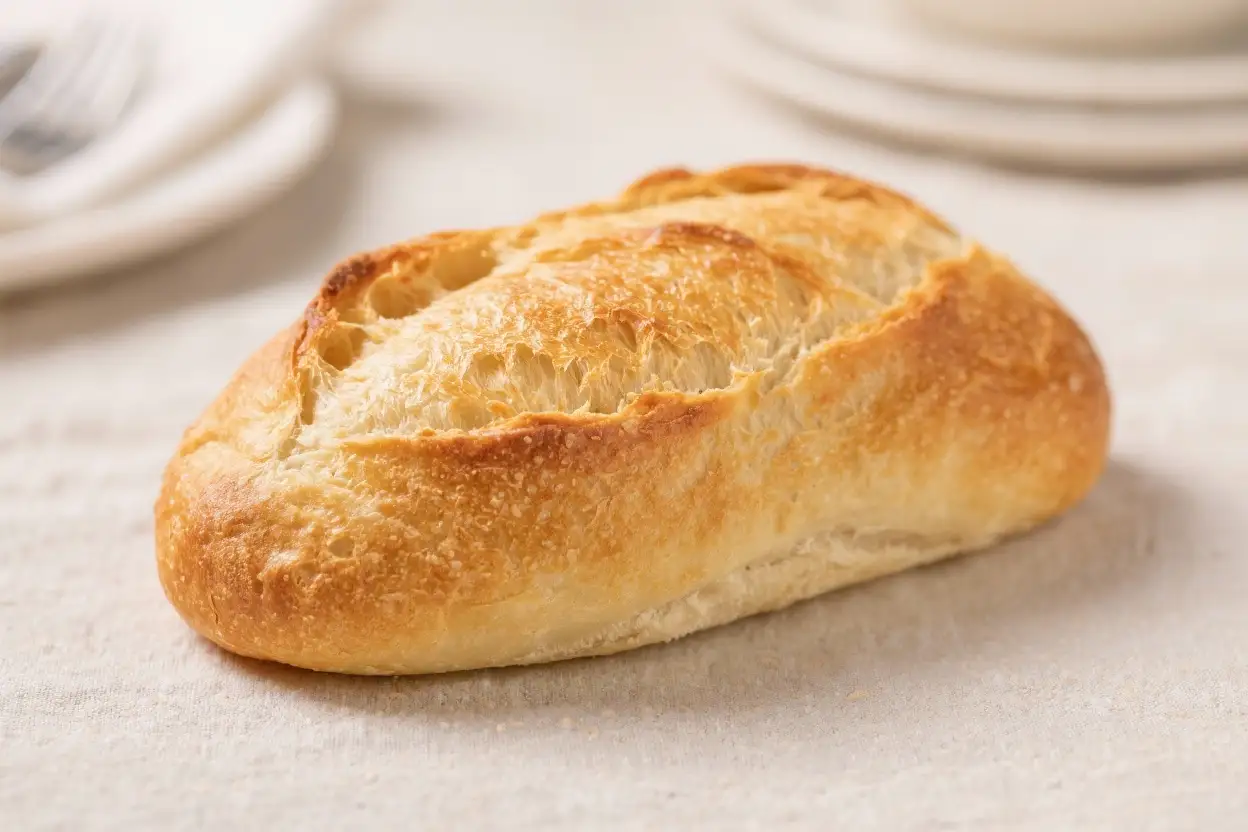
French bread looks fancy, but it’s really about patience and a few solid steps. This recipe gives you that classic crisp crust with a tender, open crumb inside. You’ll get the smell of a bakery at home and a loaf that’s perfect for soups, cheeses, or just good butter.
No special equipment required—just time and care. If you love straightforward, honest food, this is your kind of bread.
What Makes This Special
This loaf uses a slow rise to build flavor and texture. That means better chew, deeper aroma, and a crust that crackles when you tap it.
Steam in the oven also helps create the golden, blistered exterior. It’s a simple method with a few secrets: proper hydration, gentle handling, and a hot bake. The result tastes like something from a neighborhood boulangerie.
What You’ll Need
- 3 1/2 cups (440 g) bread flour (plus a little extra for dusting)
- 1 1/4 cups to 1 1/2 cups (300–360 ml) water, room temperature (start on the lower end; adjust as needed)
- 2 teaspoons (10 g) fine sea salt
- 1 teaspoon (3 g) instant yeast (or 1 1/4 teaspoons active dry yeast)
- Olive oil for lightly greasing a bowl
- Optional: 1 teaspoon sugar or honey if your kitchen is very cool
- For steam: a cup of hot water or a few ice cubes
How to Make It
- Mix the dough. In a large bowl, whisk flour, salt, and yeast.
Add 1 1/4 cups water and stir with a wooden spoon until a shaggy dough forms. If it’s too dry, add a tablespoon of water at a time. You’re aiming for a soft, slightly tacky dough that holds together.
- Rest, then knead briefly. Let the dough sit for 10 minutes.
This short rest makes it easier to handle. Turn it onto a lightly floured surface and knead for 5–7 minutes until smooth and elastic. If it sticks, dust lightly with flour, but don’t overdo it.
- First rise (bulk fermentation). Place the dough in a lightly oiled bowl.
Cover with a damp towel or plastic wrap. Let it rise at room temperature until doubled, about 60–90 minutes. Cooler kitchens may take 2 hours.
- Optional flavor boost: cold rest. For deeper flavor, punch down gently, cover, and refrigerate for 8–12 hours or overnight.
If skipping this step, move to shaping.
- Shape the loaf. Turn the dough onto a lightly floured surface. Gently press into a rectangle, then roll it up tightly like a jelly roll. Pinch the seam and tuck the ends under to form a bâtard (oval) or shape a longer baguette.
Keep handling gentle to preserve air bubbles.
- Second rise. Place the shaped dough seam-side down on parchment or a floured cloth. Cover lightly and let rise until puffy, about 30–45 minutes at room temperature. The dough should spring back slowly when poked.
- Preheat the oven. Set a baking stone or inverted sheet pan in the oven.
Place a metal pan on the bottom rack for steam. Preheat to 475°F (245°C) for at least 30 minutes to ensure everything is blazing hot.
- Score the loaf. Right before baking, use a sharp knife or razor to make 3–4 diagonal slashes, about 1/4 inch deep. This lets the bread expand without tearing.
- Steam and bake. Slide the loaf (on parchment) onto the hot stone or pan.
Carefully pour 1 cup of hot water into the lower pan or toss in a few ice cubes. Close the door fast to trap steam. Bake for 10 minutes with steam, then remove the steam pan, lower the oven to 450°F (230°C), and bake another 15–20 minutes until deeply golden.
- Check for doneness. The crust should be a rich brown, and the loaf should sound hollow when tapped on the bottom.
Internal temperature should be around 205–210°F (96–99°C).
- Cool completely. Place on a rack and let cool for at least 45 minutes. This sets the crumb and keeps it from getting gummy.
Keeping It Fresh
Fresh bread is best the day it’s baked. If you have leftovers, store at room temperature in a paper bag or wrapped in a clean towel.
Avoid plastic bags—they soften the crust. If it does soften, re-crisp in a 350°F (175°C) oven for 8–10 minutes. For longer storage, slice the loaf and freeze in a zip bag.
Toast slices straight from the freezer or warm the whole loaf in the oven. Frozen bread keeps well for up to a month without much loss in quality.
Why This is Good for You
This bread keeps ingredients simple: flour, water, yeast, and salt. No additives, no hidden sweeteners.
The long rise improves flavor and may help digestibility by giving the yeast time to work. You control the salt and the portion size. Enjoy it with olive oil, soups, or lean proteins for a balanced meal.
What Not to Do
- Don’t rush the rise. Underproofed dough won’t develop flavor or structure, and it may split oddly in the oven.
- Don’t drown the dough in flour. Too much dusting makes a dry, tight crumb.
Slight stickiness is normal.
- Don’t skip steam. No steam means a dull, tough crust. Even a few ice cubes make a big difference.
- Don’t slice hot bread. It’s tempting, but you’ll compress the crumb and lose moisture.
- Don’t bake in a cool oven. High heat is key to oven spring and that golden crust.
Alternatives
- Use a Dutch oven: Shape a round loaf, preheat the Dutch oven at 475°F (245°C), place the dough on parchment inside, cover and bake 20 minutes, then uncover and bake 15–20 minutes more. The lid traps steam, giving excellent crust.
- Whole wheat variation: Swap 25–30% of the flour for whole wheat.
Increase water slightly, as whole wheat absorbs more.
- Poolish pre-ferment: Mix 1 cup flour, 1 cup water, and a pinch of yeast. Ferment overnight. Next day, add remaining flour, water, salt, and yeast.
This boosts flavor and aroma.
- Herb and garlic: Add 1–2 teaspoons dried herbs or 1–2 cloves minced garlic during mixing. Keep additions modest to maintain the classic texture.
- Baguette format: Divide the dough into two or three pieces and shape into thinner loaves. Reduce bake time by 5–8 minutes.
Explore more irresistible bread recipes you won’t want to miss:
FAQ
Can I use all-purpose flour instead of bread flour?
Yes.
All-purpose flour will work, though the loaf may be slightly less chewy and a bit more tender. Reduce water by a tablespoon or two at first, and adjust as needed to keep the dough tacky, not soupy.
What if I only have active dry yeast?
You can use it. Bloom it in 1/4 cup warm water (not hot) with a pinch of sugar for 5–10 minutes until foamy, then add to the flour mixture.
Reduce the water in the main mix accordingly.
How do I get bigger holes in the crumb?
Aim for slightly higher hydration, gentle handling, and a thorough first rise. Avoid heavy kneading after the first rest, and be light during shaping so you don’t push out all the gas.
Why is my crust pale?
Usually the oven wasn’t hot enough or there wasn’t enough steam. Preheat longer, use a stone or heavy pan, and make sure to add steam in the first 10 minutes.
Bake to a deeper brown than you think; color equals flavor.
My loaf spread out instead of rising up. What happened?
This can come from overproofing, weak gluten development, or too-wet dough. Next time, knead a bit longer, use a touch less water, or shorten the final rise.
Shaping tightly also helps.
Do I need a scoring blade?
A new razor blade or very sharp serrated knife works fine. The key is a quick, confident slash at a shallow angle. Dust the blade with flour if it drags.
Can I make the dough in advance?
Yes.
After the first rise, refrigerate the dough up to 24 hours. Let it warm for 45–60 minutes before shaping and proofing. Cold fermentation improves flavor and flexibility with timing.
In Conclusion
Traditional French bread rewards patience and simple technique.
With a hot oven, a bit of steam, and gentle handling, you’ll get a loaf that’s crisp outside and soft within. Keep the ingredients minimal, let time do its work, and enjoy a golden crust that sings when you break it. This is everyday bread done right—honest, rustic, and endlessly useful.
Traditional French Bread Recipe with Golden Crust - Simple, Rustic, and Reliable
Ingredients
- 3 1/2 cups (440 g) bread flour (plus a little extra for dusting)
- 1 1/4 cups to 1 1/2 cups (300–360 ml) water, room temperature (start on the lower end; adjust as needed)
- 2 teaspoons (10 g) fine sea salt
- 1 teaspoon (3 g) instant yeast (or 1 1/4 teaspoons active dry yeast)
- Olive oil for lightly greasing a bowl
- Optional: 1 teaspoon sugar or honey if your kitchen is very cool
- For steam: a cup of hot water or a few ice cubes
Instructions
- Mix the dough. In a large bowl, whisk flour, salt, and yeast.Add 1 1/4 cups water and stir with a wooden spoon until a shaggy dough forms. If it’s too dry, add a tablespoon of water at a time. You’re aiming for a soft, slightly tacky dough that holds together.
- Rest, then knead briefly. Let the dough sit for 10 minutes.This short rest makes it easier to handle. Turn it onto a lightly floured surface and knead for 5–7 minutes until smooth and elastic. If it sticks, dust lightly with flour, but don’t overdo it.
- First rise (bulk fermentation). Place the dough in a lightly oiled bowl.Cover with a damp towel or plastic wrap. Let it rise at room temperature until doubled, about 60–90 minutes. Cooler kitchens may take 2 hours.
- Optional flavor boost: cold rest. For deeper flavor, punch down gently, cover, and refrigerate for 8–12 hours or overnight.If skipping this step, move to shaping.
- Shape the loaf. Turn the dough onto a lightly floured surface. Gently press into a rectangle, then roll it up tightly like a jelly roll. Pinch the seam and tuck the ends under to form a bâtard (oval) or shape a longer baguette.Keep handling gentle to preserve air bubbles.
- Second rise. Place the shaped dough seam-side down on parchment or a floured cloth. Cover lightly and let rise until puffy, about 30–45 minutes at room temperature. The dough should spring back slowly when poked.
- Preheat the oven. Set a baking stone or inverted sheet pan in the oven.Place a metal pan on the bottom rack for steam. Preheat to 475°F (245°C) for at least 30 minutes to ensure everything is blazing hot.
- Score the loaf. Right before baking, use a sharp knife or razor to make 3–4 diagonal slashes, about 1/4 inch deep. This lets the bread expand without tearing.
- Steam and bake. Slide the loaf (on parchment) onto the hot stone or pan.Carefully pour 1 cup of hot water into the lower pan or toss in a few ice cubes. Close the door fast to trap steam. Bake for 10 minutes with steam, then remove the steam pan, lower the oven to 450°F (230°C), and bake another 15–20 minutes until deeply golden.
- Check for doneness. The crust should be a rich brown, and the loaf should sound hollow when tapped on the bottom.Internal temperature should be around 205–210°F (96–99°C).
- Cool completely. Place on a rack and let cool for at least 45 minutes. This sets the crumb and keeps it from getting gummy.