
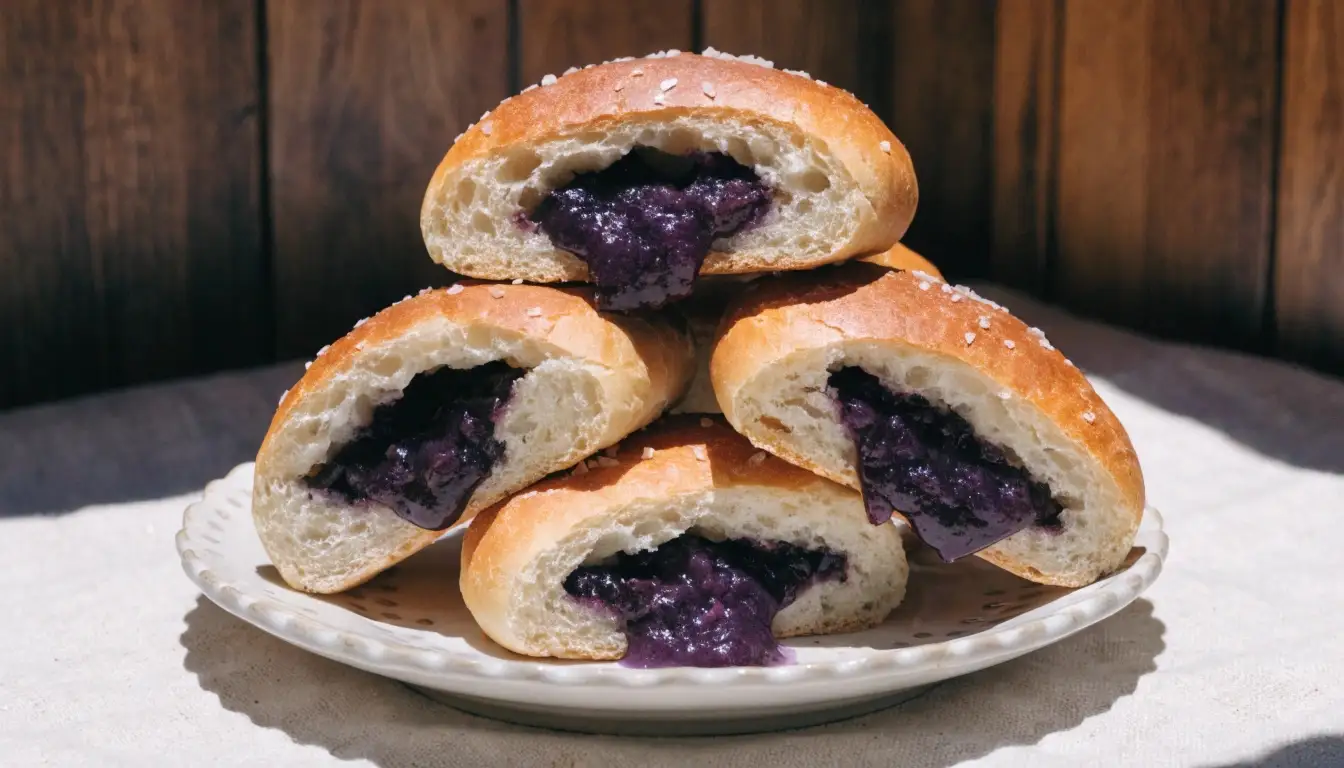
Soft milk bread with a gentle salty crust and a sweet, purple ube center hits that perfect balance of cozy and exciting. If you love Filipino flavors or just want a new baking project with serious payoff, this recipe will be your new favorite. The dough is light and pillowy, the ube jam is rich and creamy, and the finish has just enough salt to make each bite pop.
It’s the kind of bread you’ll want for breakfast, a snack, or a late-night treat. No special equipment needed—just a little patience and a lot of joy.
Why This Recipe Works
This bread uses a soft, enriched dough that stays tender for days. Milk, butter, and egg add richness, while ube jam brings sweetness and a hint of vanilla-like flavor.
A light brush of salted butter over warm rolls creates a delicate, salty snap on top that contrasts beautifully with the soft interior.
The shaping method tucks the ube jam securely inside so it doesn’t leak while baking. Resting the dough properly lets the gluten relax, making it easier to roll and fill without tearing. The result is fluffy, even crumb with pockets of ube in every bite.
What You’ll Need
- All-purpose flour – For a tender, not-too-chewy crumb.
- Instant yeast – Quick and reliable rise.
Active dry yeast works too.
- Granulated sugar – Feeds the yeast and gently sweetens the dough.
- Fine sea salt – Balances flavor and strengthens the dough.
- Warm milk – Adds moisture and richness; aim for 100–110°F (38–43°C).
- Unsalted butter – Softened for the dough; melted for brushing.
- Egg – Helps bind and enrich the dough.
- Ube jam (ube halaya) – Store-bought or homemade; thick consistency works best.
- Optional: Ube extract – For a deeper purple color and flavor.
- Flaky or coarse salt – For finishing; adds delicate crunch and contrast.
How to Make It
- Activate the yeast (if using active dry): In a small bowl, combine warm milk and a pinch of sugar. Sprinkle the yeast over and let it sit for 5–10 minutes until foamy. If using instant yeast, skip this step and add it directly to the flour.
- Make the dough: In a large bowl, whisk flour, sugar, and salt.
Add milk (and proofed yeast if applicable), egg, and softened butter. Mix with a spatula until a shaggy dough forms. If using a stand mixer, use the dough hook on low.
- Knead until smooth: Knead by hand on a lightly floured surface or in the mixer on medium-low for 8–10 minutes.
The dough should be smooth, slightly tacky, and elastic. Add a dusting of flour only if it’s very sticky.
- First rise: Shape the dough into a ball and place in a lightly greased bowl. Cover with a towel or plastic wrap and let rise in a warm spot until doubled, about 60–90 minutes.
- Prep the filling: Scoop ube jam into a bowl and stir to loosen.
If it’s very soft, refrigerate for 20 minutes so it firms up. You want it thick enough to hold shape.
- Divide the dough: Punch down the dough gently to release air. Turn it out and divide into 10–12 equal pieces.
Keep the pieces covered to prevent drying.
- Fill and shape: Working with one piece at a time, flatten into a small circle, slightly thicker at the center. Place 1–1.5 tablespoons of ube jam in the middle. Pull the edges up and over the filling, pinch to seal well, and roll the seam side down to form a smooth ball.
- Second rise: Place the buns on a parchment-lined baking sheet, spacing them 2 inches apart.
Cover loosely and let rise until puffy, 30–45 minutes. Preheat the oven to 350°F (175°C) toward the end of this rise.
- Optional egg wash: For shine, whisk 1 egg with 1 tablespoon milk and lightly brush the tops. This step is optional since we’ll also add butter later.
- Bake: Bake for 16–20 minutes, until the tops are lightly golden and the bottoms are set.
Avoid overbaking to keep them soft.
- Salted butter finish: While warm, brush tops with melted butter and sprinkle with a pinch of flaky or coarse salt. The butter helps the salt cling and adds a signature savory note.
- Cool slightly: Let the buns rest for 10–15 minutes before serving so the filling sets. Enjoy warm.
How to Store
- Room temperature: Store in an airtight container for up to 2 days.
Reheat briefly in the microwave or a low oven to refresh.
- Refrigerator: If your kitchen is warm, refrigerate up to 4 days. Warm before eating to bring back softness.
- Freezer: Wrap each bun tightly and freeze for up to 2 months. Thaw at room temperature, then reheat in a 300°F (150°C) oven for 8–10 minutes or microwave for 15–20 seconds.
Why This Is Good for You
Ube is more than a pretty color.
It contains fiber and natural antioxidants. Paired with a homemade dough, you control the ingredients and can manage sugar and salt to your taste. There’s also something nourishing about baking from scratch—mindful cooking that turns simple pantry items into comfort food.
While this isn’t a “diet” recipe, it offers a smarter sweet: moderate sugar in the dough, balanced by a salty finish and the inherent satisfaction that keeps you from overindulging.
You get joy, not just calories.
Pitfalls to Watch Out For
- Overfilling the buns: Too much ube jam can burst through seams. Stick to 1–1.5 tablespoons per bun and seal thoroughly.
- Tearing the dough: If the dough resists or tears, let it rest 5–10 minutes. Relaxed gluten makes shaping easier.
- Underproofing: Dense buns often mean the dough didn’t rise enough.
Wait for visible puffiness and a gentle bounce-back when poked.
- Overbaking: These rolls go from golden to dry quickly. Pull them when lightly colored; the residual heat will finish the centers.
- Too much salt on top: A light sprinkle is perfect. Heavy salting can overpower the ube’s gentle sweetness.
Variations You Can Try
- Cheese-ube combo: Add a small cube of cream cheese or mild cheddar with the ube jam for a rich, tangy surprise.
- Coconut touch: Brush with coconut milk instead of butter after baking, then sprinkle with toasted coconut flakes and a tiny pinch of salt.
- Ube swirl rolls: Roll the dough into a rectangle, spread with ube jam, roll up, slice, and bake as sweet rolls.
Drizzle a light coconut glaze.
- Whole wheat blend: Swap 25–30% of the flour for white whole wheat. Add 1–2 tablespoons extra milk if the dough feels stiff.
- Matcha-salt finish: Mix a pinch of matcha with flaky salt for an herbal note that plays nicely with ube.
Explore more irresistible bread recipes you won’t want to miss:
FAQ
Can I use bread flour instead of all-purpose?
Yes, but expect a slightly chewier texture. If using bread flour, add 1–2 teaspoons extra milk if the dough seems stiff, and knead well to achieve a smooth, elastic feel.
What if I can’t find ube jam?
Look in Asian or Filipino markets, or order online.
In a pinch, you can substitute purple sweet potato mash mixed with sweetened condensed milk and a touch of vanilla, though the flavor will be less distinctly ube.
How do I stop the filling from leaking?
Keep the filling thick, avoid overfilling, and pinch the seams firmly. Place seam side down on the tray and let the shaped buns rest so the seams settle before baking.
Do I need ube extract?
No. It’s optional.
Extract deepens the color and aroma, but good ube jam already carries that signature flavor.
Can I make the dough ahead?
Yes. After the first rise, punch down, cover tightly, and refrigerate overnight. Shape, fill, and let the buns come to room temperature and rise until puffy before baking.
Is it okay to hand knead?
Absolutely.
Hand kneading takes about 8–12 minutes. Aim for a smooth, elastic dough that springs back when poked lightly.
How salty should the topping be?
Just a whisper. Use a light brush of butter and a gentle pinch of flaky salt on each bun.
You should taste the salt, not be overwhelmed by it.
What temperature is the milk supposed to be?
Warm but not hot—around 100–110°F (38–43°C). If it’s too hot, it can kill the yeast; too cool, and the dough will rise slowly.
Can I add more sugar to the dough?
Yes, increase by 1–2 tablespoons if you prefer a sweeter bread. Keep in mind the ube jam adds plenty of sweetness, so balance to your taste.
How do I reheat without drying the bread?
Use a low oven (300°F/150°C) for 8–10 minutes or microwave for 10–15 seconds with a cup of water beside it to keep moisture in.
In Conclusion
Fluffy Salt Bread Stuffed with Ube Jam is the kind of bake that feels special but fits into everyday life.
It’s soft, lightly sweet, and finished with just enough salt to make the flavors shine. With a dependable dough and a few smart steps, you’ll get picture-perfect buns that taste even better than they look. Make a batch for brunch, share with friends, or stash a few in the freezer for a rainy day.
One bite, and you’ll know why this recipe earns a permanent spot in your rotation.

Fluffy Salt Bread Stuffed With Ube Jam – Soft, Sweet, and Perfectly Savory
Ingredients
- All-purpose flour – For a tender, not-too-chewy crumb.
- Instant yeast – Quick and reliable rise.Active dry yeast works too.
- Granulated sugar – Feeds the yeast and gently sweetens the dough.
- Fine sea salt – Balances flavor and strengthens the dough.
- Warm milk – Adds moisture and richness; aim for 100–110°F (38–43°C).
- Unsalted butter – Softened for the dough; melted for brushing.
- Egg – Helps bind and enrich the dough.
- Ube jam (ube halaya) – Store-bought or homemade; thick consistency works best.
- Optional: Ube extract – For a deeper purple color and flavor.
- Flaky or coarse salt – For finishing; adds delicate crunch and contrast.
Instructions
- Activate the yeast (if using active dry): In a small bowl, combine warm milk and a pinch of sugar. Sprinkle the yeast over and let it sit for 5–10 minutes until foamy. If using instant yeast, skip this step and add it directly to the flour.
- Make the dough: In a large bowl, whisk flour, sugar, and salt.Add milk (and proofed yeast if applicable), egg, and softened butter. Mix with a spatula until a shaggy dough forms. If using a stand mixer, use the dough hook on low.
- Knead until smooth: Knead by hand on a lightly floured surface or in the mixer on medium-low for 8–10 minutes.The dough should be smooth, slightly tacky, and elastic. Add a dusting of flour only if it’s very sticky.
- First rise: Shape the dough into a ball and place in a lightly greased bowl. Cover with a towel or plastic wrap and let rise in a warm spot until doubled, about 60–90 minutes.
- Prep the filling: Scoop ube jam into a bowl and stir to loosen.If it’s very soft, refrigerate for 20 minutes so it firms up. You want it thick enough to hold shape.
- Divide the dough: Punch down the dough gently to release air. Turn it out and divide into 10–12 equal pieces.Keep the pieces covered to prevent drying.
- Fill and shape: Working with one piece at a time, flatten into a small circle, slightly thicker at the center. Place 1–1.5 tablespoons of ube jam in the middle. Pull the edges up and over the filling, pinch to seal well, and roll the seam side down to form a smooth ball.
- Second rise: Place the buns on a parchment-lined baking sheet, spacing them 2 inches apart.Cover loosely and let rise until puffy, 30–45 minutes. Preheat the oven to 350°F (175°C) toward the end of this rise.
- Optional egg wash: For shine, whisk 1 egg with 1 tablespoon milk and lightly brush the tops. This step is optional since we’ll also add butter later.
- Bake: Bake for 16–20 minutes, until the tops are lightly golden and the bottoms are set.Avoid overbaking to keep them soft.
- Salted butter finish: While warm, brush tops with melted butter and sprinkle with a pinch of flaky or coarse salt. The butter helps the salt cling and adds a signature savory note.
- Cool slightly: Let the buns rest for 10–15 minutes before serving so the filling sets. Enjoy warm.