
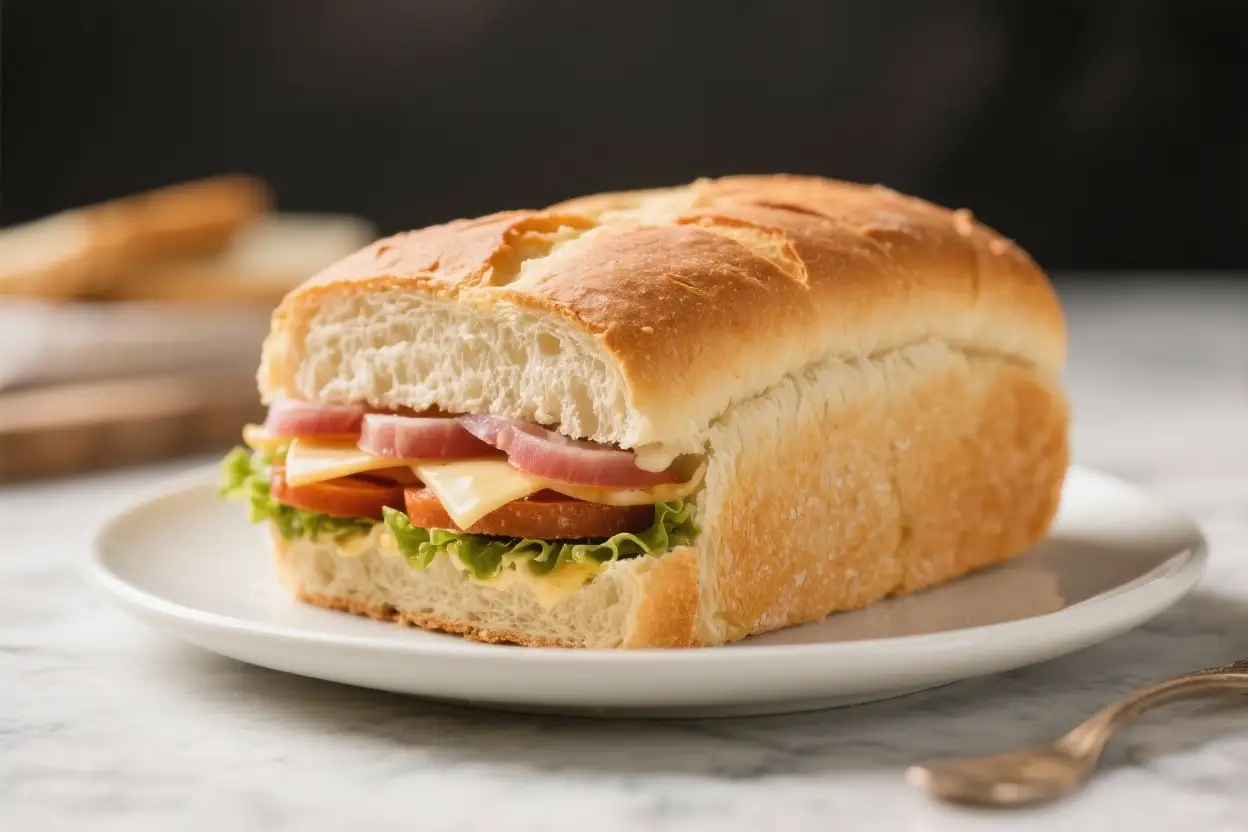
Nothing beats a warm loaf of homemade sandwich bread sitting on your counter. It smells amazing, tastes better than store-bought, and makes even a simple sandwich feel special. If you’ve been nervous about baking with yeast, this guide will walk you through it with confidence.
You’ll find simple steps, friendly tips, and a recipe that delivers soft, sliceable bread every time. Let’s get you baking something you’ll be proud to share.
What Makes This Recipe So Good
- Beginner-friendly method: Clear steps and common pantry ingredients make this a low-stress bake.
- Soft, sliceable loaf: Perfect texture for sandwiches, toast, and grilled cheese.
- No special equipment needed: A bowl, a spoon, and a loaf pan are enough. A mixer helps, but it’s optional.
- Reliable rise: The dough is forgiving and works well in most kitchens.
- Customizable: Add seeds, swap some flour, or make a honey version without changing the method.
Shopping List
- All-purpose flour (or bread flour): about 3 to 3 1/2 cups
- Warm water (105–115°F): 1 cup
- Milk (any kind, even non-dairy): 1/2 cup
- Active dry yeast or instant yeast: 2 1/4 teaspoons (one packet)
- Sugar or honey: 2 tablespoons
- Neutral oil or melted butter: 2 tablespoons
- Salt: 1 1/4 teaspoons
- Optional add-ins: 1 tablespoon butter for brushing, seeds (sesame, poppy, sunflower), oats for topping
Step-by-Step Instructions
- Proof the yeast (if using active dry): In a large bowl, mix warm water and sugar.
Sprinkle the yeast on top. Wait 5–10 minutes until foamy. If using instant yeast, skip proofing and add it with the flour later.
- Add liquids and salt: Stir in the milk, oil (or melted butter), and salt.
The liquid should be warm, not hot.
- Mix in the flour: Add 2 1/2 cups of flour and stir until a shaggy dough forms. Gradually add more flour, a little at a time, until the dough pulls away from the bowl and feels slightly tacky, not sticky.
- Knead: Turn the dough onto a lightly floured surface. Knead for 7–9 minutes by hand (or 5–6 minutes in a mixer) until smooth and elastic.
The dough should spring back when gently pressed.
- First rise: Place the dough in a lightly oiled bowl, turning it once to coat. Cover with a towel or plastic wrap. Let it rise in a warm spot until doubled, about 60–90 minutes.
- Shape the loaf: Gently deflate the dough.
Press it into a rectangle about the length of your loaf pan. Roll it up tightly from the short side, pinch the seam, and tuck in the ends. Place seam-side down in a greased 8.5×4.5-inch or 9×5-inch loaf pan.
- Second rise: Cover the pan and let the dough rise until it crowns about 1 inch above the rim, 30–45 minutes.
Preheat the oven to 350°F (175°C) during this time.
- Bake: Bake for 28–35 minutes until the top is deep golden and the loaf sounds hollow when tapped. Internal temperature should be around 190–195°F.
- Finish and cool: Remove from the pan right away to keep the crust from getting soggy. Brush the top with butter if you like a soft crust.
Cool on a rack for at least 1 hour before slicing.
How to Store
- Room temperature: Keep the loaf in an airtight bag or bread box for 3–4 days. Let it cool completely before sealing.
- Freeze: Slice the loaf, wrap tightly, and freeze up to 3 months. Toast straight from frozen, or thaw at room temperature.
- Refresh: If it feels a little dry after a day or two, warm slices in the toaster or a low oven for a few minutes.
Why This is Good for You
- Simple ingredients: You control the sugar, salt, and fat—no preservatives or long lists you can’t pronounce.
- Whole grain options: Swap in part whole wheat flour for added fiber and nutrients without losing softness.
- Balanced energy: Paired with protein and veggies, this bread makes a steady, satisfying meal base.
- Mindful cooking: Baking can be calming, and the reward is a wholesome staple for your week.
Common Mistakes to Avoid
- Water that’s too hot: Anything above 120°F can kill yeast.
Aim for warm bathwater temperature.
- Adding too much flour: A slightly tacky dough bakes softer. If it’s dry and stiff, the loaf will be dense.
- Under-kneading: Proper kneading builds structure. Look for a smooth, stretchy dough that bounces back.
- Skipping the full rise: Let the dough double on the first rise and crown in the pan on the second.
- Cutting too soon: Slicing hot bread releases steam and dries the loaf.
Cool for the best texture.
Variations You Can Try
- Honey Wheat: Use 1 1/2 cups all-purpose flour and 1 1/2 cups whole wheat flour. Add 1 extra tablespoon honey and 1 more tablespoon oil for tenderness.
- Oat Top: Brush the shaped loaf with milk, then sprinkle rolled oats on top before the second rise.
- Seeded Sandwich Loaf: Mix 2–3 tablespoons of sesame, sunflower, or flax seeds into the dough. Sprinkle more on top if you like.
- Buttermilk Bread: Swap the milk for buttermilk and reduce the water slightly until the dough feels right.
This gives a gentle tang and soft crumb.
- Garlic Herb: Add 1 teaspoon garlic powder and 2 teaspoons dried herbs (Italian blend or dill) to the flour for a savory twist.
Explore more irresistible bread recipes you won’t want to miss:
FAQ
Can I use only water instead of milk?
Yes. The bread will still rise and taste great. Milk adds tenderness and a slightly richer flavor, but water-only loaves are light and soft too.
What’s the difference between active dry and instant yeast?
Active dry yeast is typically proofed in warm water before mixing.
Instant yeast can be added directly to the dry ingredients. Both work here; just follow the steps for the type you’re using.
How do I know I’ve kneaded enough?
The dough should be smooth and elastic. When you press it with a finger, it should slowly spring back.
You can also do the “windowpane test”: stretch a small piece until thin—if it doesn’t tear easily, you’re good.
Why did my loaf sink after baking?
It likely over-proofed during the second rise. Next time, bake when the dough rises about 1 inch over the pan’s rim and feels puffy but still slightly springy.
Can I make this without a stand mixer?
Absolutely. A wooden spoon and your hands are all you need.
It’s a great way to learn how dough should feel.
How do I get a softer crust?
Brush the hot loaf with melted butter right after baking, and store it in a sealed bag after it cools. Steam inside the bag helps soften the crust.
Can I bake two loaves at once?
Yes. Double the ingredients and use two pans.
Rotate the pans halfway through baking for even color.
Wrapping Up
Homemade sandwich bread is simpler than it seems, and the results are consistently rewarding. With a few basic ingredients and a little patience, you’ll get a soft, sturdy loaf that slices clean and tastes fresh. Once you’ve made it once or twice, try a variation and make it your own.
A good loaf on the counter turns weekday meals into something warm and welcome.

Easy Sandwich Bread Recipes for Beginners - Soft, Reliable, and Simple
Ingredients
- All-purpose flour (or bread flour): about 3 to 3 1/2 cups
- Warm water (105–115°F): 1 cup
- Milk (any kind, even non-dairy): 1/2 cup
- Active dry yeast or instant yeast: 2 1/4 teaspoons (one packet)
- Sugar or honey: 2 tablespoons
- Neutral oil or melted butter: 2 tablespoons
- Salt: 1 1/4 teaspoons
- Optional add-ins: 1 tablespoon butter for brushing, seeds (sesame, poppy, sunflower), oats for topping
Instructions
- Proof the yeast (if using active dry): In a large bowl, mix warm water and sugar.Sprinkle the yeast on top. Wait 5–10 minutes until foamy. If using instant yeast, skip proofing and add it with the flour later.
- Add liquids and salt: Stir in the milk, oil (or melted butter), and salt.The liquid should be warm, not hot.
- Mix in the flour: Add 2 1/2 cups of flour and stir until a shaggy dough forms. Gradually add more flour, a little at a time, until the dough pulls away from the bowl and feels slightly tacky, not sticky.
- Knead: Turn the dough onto a lightly floured surface. Knead for 7–9 minutes by hand (or 5–6 minutes in a mixer) until smooth and elastic.The dough should spring back when gently pressed.
- First rise: Place the dough in a lightly oiled bowl, turning it once to coat. Cover with a towel or plastic wrap. Let it rise in a warm spot until doubled, about 60–90 minutes.
- Shape the loaf: Gently deflate the dough.Press it into a rectangle about the length of your loaf pan. Roll it up tightly from the short side, pinch the seam, and tuck in the ends. Place seam-side down in a greased 8.5x4.5-inch or 9x5-inch loaf pan.
- Second rise: Cover the pan and let the dough rise until it crowns about 1 inch above the rim, 30–45 minutes.Preheat the oven to 350°F (175°C) during this time.
- Bake: Bake for 28–35 minutes until the top is deep golden and the loaf sounds hollow when tapped. Internal temperature should be around 190–195°F.
- Finish and cool: Remove from the pan right away to keep the crust from getting soggy. Brush the top with butter if you like a soft crust.Cool on a rack for at least 1 hour before slicing.