
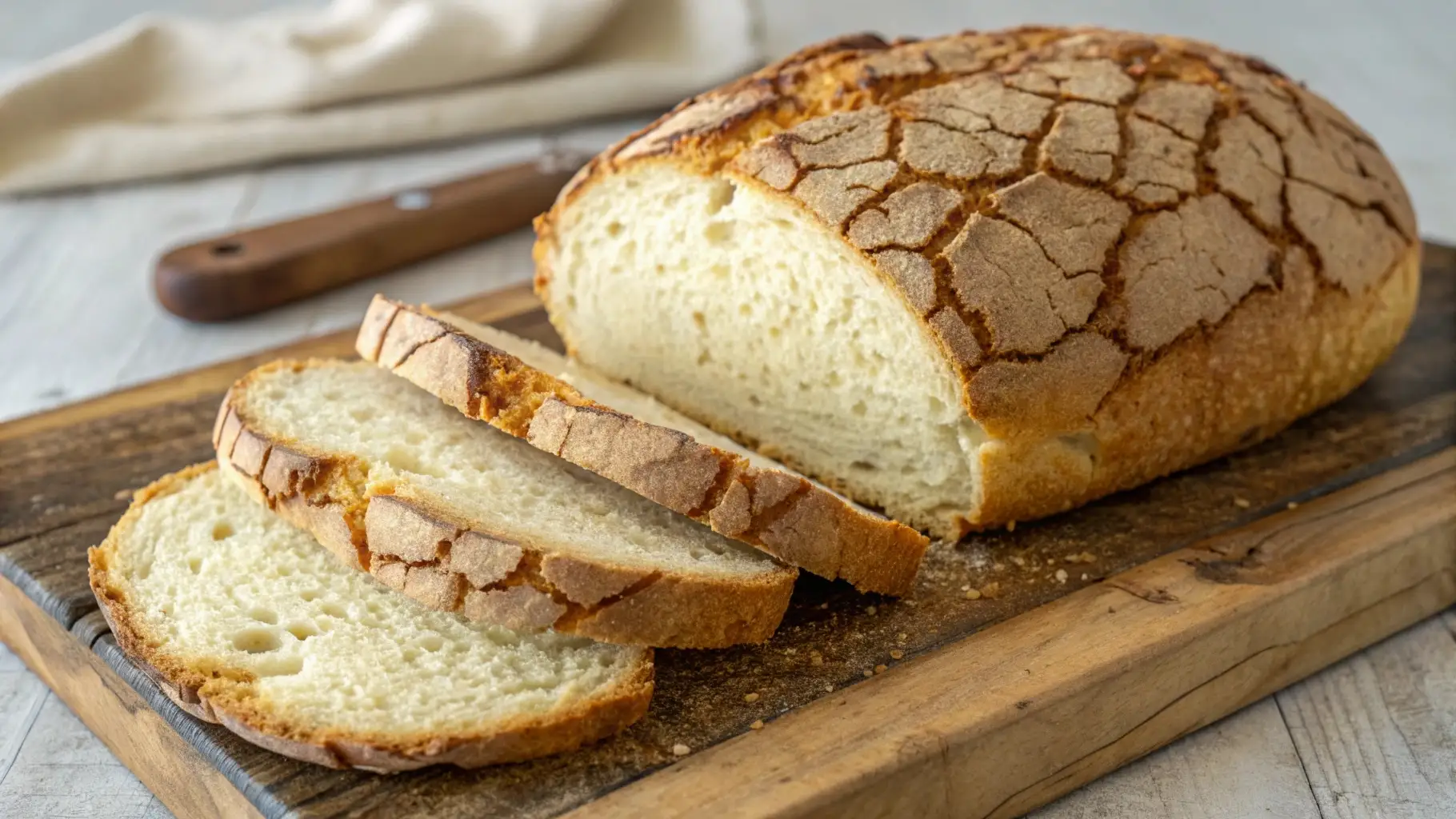
If you’ve ever bitten into a sandwich with a shattering, crackly top and a soft, tender crumb, you’ve likely met Dutch crunch bread. This bakery classic, also called tiger bread, is famous for its mottled crust and satisfying crunch. The good news: you can make it at home with simple pantry ingredients.
The method is straightforward, the results are impressive, and the payoff for your sandwiches is huge. Once you try it, you’ll want it on repeat for lunch all week.
What Makes This Recipe So Good
- That signature crunch: The rice flour paste bakes into a crisp, crackled shell that’s light, toasty, and delicately sweet.
- Perfect sandwich texture: The loaf is soft and sliceable inside, with enough structure to hold fillings without squishing.
- Simple ingredients: All-purpose flour, yeast, milk, and pantry staples—no special equipment required.
- Make-ahead friendly: The dough can cold-proof overnight for deeper flavor and flexible timing.
- Customizable: Shape into a sandwich loaf, rolls, or mini buns. Adjust sweetness and crunch as you like.
What You’ll Need
Bread Dough
- 3 1/4 cups (400 g) all-purpose flour, plus extra for dusting
- 1 cup (240 ml) warm milk (about 105–110°F), or use water for a lighter loaf
- 2 tablespoons (25 g) granulated sugar
- 2 tablespoons (28 g) unsalted butter, softened (or 2 tablespoons olive oil)
- 2 1/4 teaspoons (7 g) instant or active dry yeast
- 1 1/2 teaspoons fine sea salt
- 1 large egg (optional, for extra tenderness)
Dutch Crunch Topping
- 3/4 cup (100 g) rice flour (white rice flour works best)
- 2 tablespoons (25 g) granulated sugar
- 1/2 teaspoon fine sea salt
- 2 teaspoons instant yeast
- 1 tablespoon neutral oil (such as canola or sunflower)
- 1/2 cup to 2/3 cup (120–160 ml) warm water
How to Make It
- Activate the yeast (if using active dry): Mix warm milk with sugar and sprinkle in the yeast.
Let it sit 5–10 minutes until foamy. If using instant yeast, skip activation and add it directly to the flour.
- Make the dough: In a large bowl, combine flour and salt. Add milk mixture (or milk, sugar, and instant yeast), butter, and egg if using.
Stir with a spoon until a shaggy dough forms.
- Knead until smooth: Knead by hand on a lightly floured surface for 8–10 minutes, or in a stand mixer with a dough hook for 5–7 minutes, until the dough is smooth, elastic, and just slightly tacky.
- First rise: Place dough in a lightly oiled bowl, cover, and let rise in a warm spot until doubled, about 60–90 minutes.
- Shape the loaf: Gently press out air. Pat into a rectangle, roll tightly into a log, and pinch the seam. Place seam-side down in a greased 9×5-inch loaf pan.
- Second rise: Cover and let rise until the dough crowns about 1 inch over the rim, 45–60 minutes depending on room temperature.
- Mix the Dutch crunch paste: In a bowl, whisk rice flour, sugar, salt, and yeast.
Add oil and 1/2 cup warm water. Stir to a thick, spreadable paste—like pancake batter. Add more water a spoonful at a time if too thick.
- Apply the topping: Gently spread a generous layer of paste over the risen loaf, completely covering the top and a bit down the sides.
The thicker the layer, the bolder the crackle.
- Bake: Preheat oven to 375°F (190°C). Bake the loaf for 30–35 minutes, until the crust is deep golden and crackled and the internal temperature hits about 195–200°F (90–93°C).
- Cool: Let the loaf rest in the pan for 10 minutes, then transfer to a rack to cool completely before slicing. This sets the crumb and keeps slices neat.
Storage Instructions
- Room temperature: Store the cooled loaf in a bread box or paper bag for up to 2 days.
For longer storage, use a plastic bag to reduce drying, though the crust may soften.
- Freezer: Slice, wrap tightly, and freeze for up to 2 months. Toast slices straight from the freezer to revive the crunch.
- Refresh the crust: If the topping softens, warm slices in a 350°F (175°C) oven for 5–8 minutes to re-crisp.
Why This is Good for You
- Homemade control: You choose the ingredients—less sodium, fewer additives, and no mystery oils.
- Balanced carbs: A slice delivers steady energy, especially when paired with protein and veggies in a sandwich.
- Customizable nutrition: Swap part of the flour for whole wheat, or use olive oil for heart-healthy fats.
- Satisfying texture: The crisp top and soft interior make smaller portions feel more satisfying, which can help with mindful eating.
Common Mistakes to Avoid
- Too stiff crunch paste: If the topping is like putty, it won’t crackle well. Aim for a thick batter that spreads easily.
- Underproofing or overproofing: Underproofed dough rips; overproofed dough collapses.
Look for a slow spring-back when gently poked.
- Skipping the cool-down: Cutting hot bread compresses the crumb and makes ragged slices. Let it cool fully.
- Low oven temperature: A cooler oven won’t crisp the topping. Bake at 375°F for bold crackle and golden color.
- Too little topping: A thin layer won’t create the signature pattern.
Be generous—cover the top fully.
Alternatives
- Flour swap: Use bread flour for a chewier crumb. For a heartier loaf, replace 1 cup with whole wheat flour and add 1–2 tablespoons extra milk if needed.
- Dairy-free: Replace milk and butter with water and olive oil. The crust still crisps beautifully.
- Sweetness level: Increase sugar in the topping to 3 tablespoons for a more caramelized crackle, or reduce to 1 tablespoon for a leaner finish.
- Rolls instead of loaf: Divide dough into 8–10 pieces, shape into rounds, proof on a sheet, top with paste, and bake 18–22 minutes.
- Seeds and add-ins: Fold in sesame seeds or toasted oats for extra flavor.
Keep add-ins modest so the loaf still slices cleanly.
Explore more irresistible bread recipes you won’t want to miss:
FAQ
Can I make the dough the night before?
Yes. After the first knead, cover and refrigerate the dough overnight. The next day, bring it to room temperature, shape, proof, apply the topping, and bake.
Cold fermentation develops deeper flavor and gives you flexible timing.
What if I don’t have rice flour?
Rice flour is key to the signature crackle. Cornstarch or wheat flour won’t create the same effect. If needed, look for white rice flour in the baking or gluten-free aisle, or grind plain white rice in a high-powered blender and sift well.
Why didn’t my topping crack?
The paste was likely too thick or too thin, or you underapplied it.
Aim for a thick batter consistency and a generous layer. Also check oven temperature—too low and the topping sets without blistering.
Can I use a bread machine for the dough?
Yes. Use the dough cycle to mix and proof.
Remove, shape into a loaf, proof in a pan, apply the Dutch crunch topping, and bake in the oven as directed.
How do I get even slices?
Let the loaf cool completely, then use a long serrated bread knife with gentle sawing motions. For ultra-even slices, chill the loaf for 30 minutes before cutting.
Final Thoughts
Dutch crunch bread turns everyday sandwiches into something memorable. The method is simple, the ingredients are familiar, and the results look bakery-made.
Once you master the paste texture and proofing, it’s a reliable, rewarding loaf to bake on repeat. Keep a sliced loaf in the freezer, toast as needed, and enjoy that crispy top any day of the week.
Dutch Crunch Bread Bakery Style Crispy Sandwich Loaf – Crackly Top, Soft Center
Ingredients
- 3 1/4 cups (400 g) all-purpose flour, plus extra for dusting
- 1 cup (240 ml) warm milk (about 105–110°F), or use water for a lighter loaf
- 2 tablespoons (25 g) granulated sugar
- 2 tablespoons (28 g) unsalted butter, softened (or 2 tablespoons olive oil)
- 2 1/4 teaspoons (7 g) instant or active dry yeast
- 1 1/2 teaspoons fine sea salt
- 1 large egg (optional, for extra tenderness)
- 3/4 cup (100 g) rice flour (white rice flour works best)
- 2 tablespoons (25 g) granulated sugar
- 1/2 teaspoon fine sea salt
- 2 teaspoons instant yeast
- 1 tablespoon neutral oil (such as canola or sunflower)
- 1/2 cup to 2/3 cup (120–160 ml) warm water
Instructions
- Activate the yeast (if using active dry): Mix warm milk with sugar and sprinkle in the yeast.Let it sit 5–10 minutes until foamy. If using instant yeast, skip activation and add it directly to the flour.
- Make the dough: In a large bowl, combine flour and salt. Add milk mixture (or milk, sugar, and instant yeast), butter, and egg if using.Stir with a spoon until a shaggy dough forms.
- Knead until smooth: Knead by hand on a lightly floured surface for 8–10 minutes, or in a stand mixer with a dough hook for 5–7 minutes, until the dough is smooth, elastic, and just slightly tacky.
- First rise: Place dough in a lightly oiled bowl, cover, and let rise in a warm spot until doubled, about 60–90 minutes.
- Shape the loaf: Gently press out air. Pat into a rectangle, roll tightly into a log, and pinch the seam. Place seam-side down in a greased 9×5-inch loaf pan.
- Second rise: Cover and let rise until the dough crowns about 1 inch over the rim, 45–60 minutes depending on room temperature.
- Mix the Dutch crunch paste: In a bowl, whisk rice flour, sugar, salt, and yeast.Add oil and 1/2 cup warm water. Stir to a thick, spreadable paste—like pancake batter. Add more water a spoonful at a time if too thick.
- Apply the topping: Gently spread a generous layer of paste over the risen loaf, completely covering the top and a bit down the sides.The thicker the layer, the bolder the crackle.
- Bake: Preheat oven to 375°F (190°C). Bake the loaf for 30–35 minutes, until the crust is deep golden and crackled and the internal temperature hits about 195–200°F (90–93°C).
- Cool: Let the loaf rest in the pan for 10 minutes, then transfer to a rack to cool completely before slicing. This sets the crumb and keeps slices neat.