
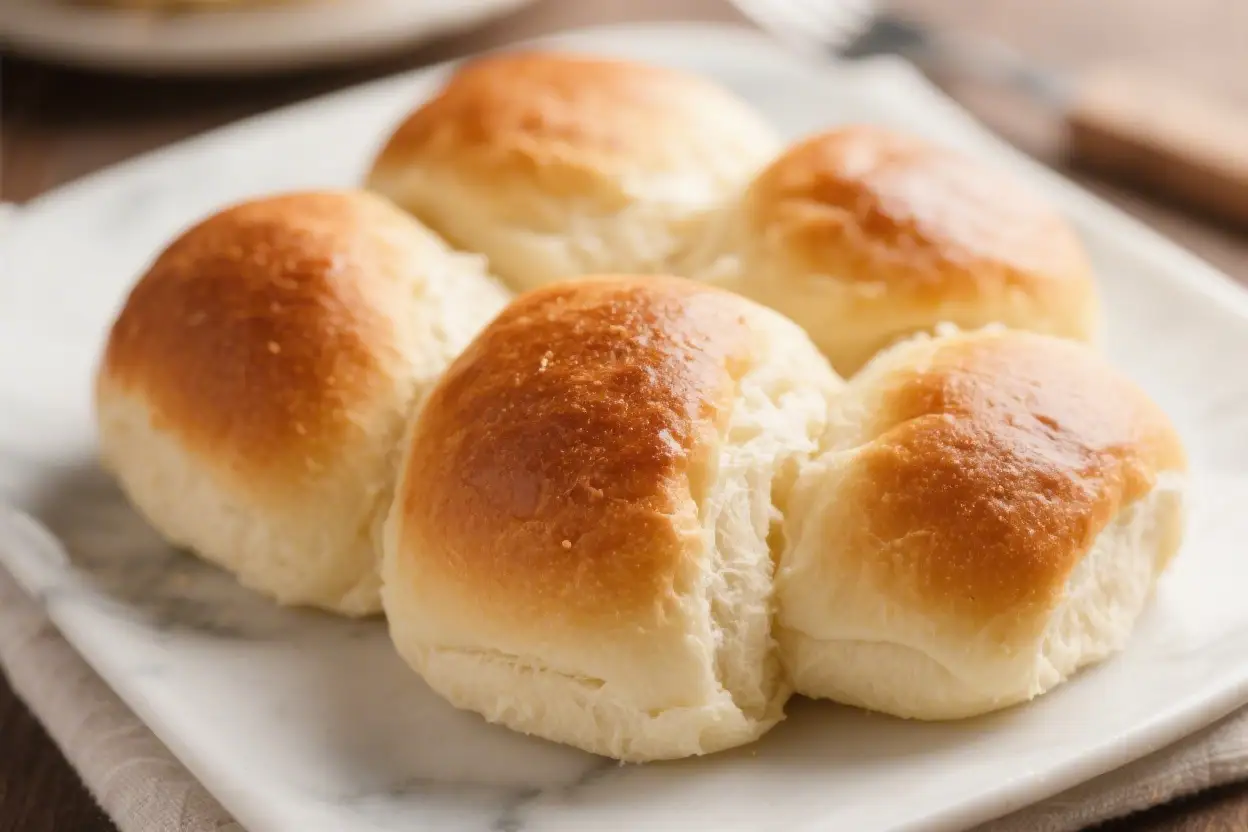
Soft, warm dinner rolls have a way of making any meal feel special. These fluffy, buttery rolls are simple to make and perfect for weeknights, holidays, or whenever you want something cozy on the table. The dough comes together easily, and you don’t need fancy equipment.
If you’ve never baked bread before, don’t worry—this recipe is forgiving and reliable. You’ll end up with golden rolls that pull apart beautifully and taste incredible with just a bit of butter.
What Makes This Recipe So Good
- Soft and pillowy texture: These rolls bake up light, fluffy, and tender, thanks to milk, butter, and just the right kneading.
- Buttery flavor: Melted butter in the dough and brushed on top gives these rolls a rich, comforting taste.
- Beginner-friendly: Clear steps, common ingredients, and simple techniques make this great for first-time bread makers.
- Versatile: Serve with soup, roast dinners, salads, or breakfast. They also make great mini sliders.
- Make-ahead options: The dough can be prepped ahead and baked fresh when you need it.
What You’ll Need
- 4 cups (500g) all-purpose flour, plus extra for dusting
- 2 1/4 teaspoons (1 packet) active dry yeast
- 1 cup (240ml) warm milk, about 105–110°F (40–43°C)
- 1/3 cup (70g) granulated sugar
- 1 large egg, room temperature
- 1/3 cup (75g) unsalted butter, melted and slightly cooled (plus more for brushing)
- 1 teaspoon fine salt
- Optional: 1–2 tablespoons honey for extra sweetness
- Optional: flaky sea salt for finishing
Step-by-Step Instructions
- Activate the yeast: In a large bowl, whisk warm milk and sugar.
Sprinkle the yeast over the top and let it sit for 5–10 minutes until foamy. If it doesn’t foam, your yeast may be inactive or the milk was too hot or too cold.
- Mix the dough: Add the egg, melted butter, and salt to the yeast mixture. Whisk to combine.
Add about 3 1/2 cups of flour and stir with a spoon or dough hook until a shaggy dough forms. Add the remaining flour as needed, a little at a time, until the dough is soft and slightly tacky but not sticky.
- Knead: Knead the dough on a lightly floured surface for 7–10 minutes by hand (or 5–7 minutes in a stand mixer on low). The dough should be smooth, elastic, and bounce back when gently pressed.
- First rise: Place the dough in a lightly greased bowl, cover with plastic wrap or a clean towel, and let it rise in a warm spot until doubled in size, about 60–90 minutes.
- Shape the rolls: Gently punch down the dough to release air.
Turn it out and divide into 12–16 equal pieces, depending on the size you prefer. Tuck edges under to form smooth balls. For even size, weigh each piece (about 60–75g each).
- Second rise: Arrange the dough balls in a greased 9×13-inch baking dish or on a parchment-lined sheet, spacing evenly.
Cover and let rise until puffy and touching, about 30–45 minutes.
- Preheat and brush: Preheat oven to 375°F (190°C). Brush the tops lightly with melted butter for a golden finish.
- Bake: Bake 15–20 minutes, until the tops are golden brown and the internal temperature reaches about 190°F (88°C). If browning too quickly, tent loosely with foil.
- Finish: Brush warm rolls with more melted butter.
Sprinkle with flaky sea salt if you like. Let cool for 10 minutes before serving.
How to Store
- Room temperature: Keep cooled rolls in an airtight container for up to 3 days. Add a paper towel to absorb moisture and keep them soft.
- Freezer: Freeze baked rolls in a zip-top bag for up to 2 months.
Reheat in a 300°F (150°C) oven for 10–12 minutes, covered with foil.
- Make-ahead dough: After shaping, cover the pan tightly and refrigerate up to 18 hours. Bring to room temperature and let them finish proofing before baking.
- Par-bake option: Bake until just set and pale, about 12 minutes. Cool, freeze, then finish baking from frozen at 350°F (175°C) for 10–12 minutes.
Benefits of This Recipe
- Budget-friendly: Pantry staples turn into bakery-quality bread at home.
- Customizable: Add herbs, garlic, or cheese to match your meal.
- Family favorite: Kid-approved, perfect for picky eaters and big gatherings.
- Reliable results: Clear signs to watch for—like dough feel and rise—help ensure success.
What Not to Do
- Don’t overheat the milk: Milk hotter than 115°F (46°C) can kill your yeast and prevent rising.
- Don’t add too much flour: A slightly tacky dough bakes softer.
Too much flour makes dense rolls.
- Don’t skip the second rise: That final proof gives rolls their airy texture.
- Don’t rush baking: Underbaked rolls look done on top but are gummy inside. Check for a golden top and 190°F (88°C) internal temp if possible.
- Don’t slice too soon: Letting them sit for 10 minutes prevents tearing and keeps them soft.
Alternatives
- Whole wheat version: Use 50% whole wheat flour and 50% all-purpose. Add 1–2 tablespoons extra milk if needed to keep the dough soft.
- Garlic herb rolls: Mix 1–2 teaspoons dried Italian herbs and 1/2 teaspoon garlic powder into the dough.
Brush baked rolls with garlic butter and parsley.
- Cheesy rolls: Fold in 1 cup shredded cheddar or mozzarella during the last minute of kneading.
- Dairy-free: Use warm unsweetened plant milk and a neutral oil or dairy-free butter substitute. Flavor will be slightly different but still delicious.
- Honey butter finish: Stir 1 tablespoon honey into the melted butter for brushing on top.
Explore more irresistible bread recipes you won’t want to miss:
FAQ
Can I use instant yeast instead of active dry yeast?
Yes. Use the same amount of instant yeast and skip the activation step.
Mix it directly with the flour and other dry ingredients, then add the warm milk and wet ingredients.
Why didn’t my dough rise?
Common reasons include yeast that’s expired, milk that was too hot or too cold, or a cool room. Make sure your yeast foams, keep the dough in a warm draft-free spot, and give it more time if your kitchen is chilly.
How do I make these ahead for a holiday meal?
Shape the rolls, cover tightly, and refrigerate overnight. The next day, let them sit at room temperature until puffy (30–60 minutes) and bake as directed.
You can also bake and freeze, then reheat just before serving.
Can I make smaller or larger rolls?
Absolutely. For sliders, divide into 16–20 pieces. For bigger, bakery-style rolls, divide into 9–12 pieces and bake a few minutes longer.
Watch the color and check for doneness.
Do I need a stand mixer?
No. A wooden spoon and your hands are enough. A mixer makes kneading faster, but hand-kneaded dough works perfectly and gives you great control over texture.
How do I get an extra golden top?
Brush with melted butter or an egg wash (1 egg beaten with 1 tablespoon milk) before baking.
Butter after baking adds shine and flavor, while egg wash adds deeper color.
Can I add sourdough starter?
You can replace up to 1/2 cup of the milk with 1/2 cup active starter and slightly reduce the flour. Expect a mild tang and possibly a longer rise time.
Final Thoughts
These homemade dinner rolls are the kind of recipe you’ll keep coming back to. They’re soft, buttery, and simple enough for any day of the week, yet special enough for holidays and guests.
With a few basic ingredients and a little patience, you’ll have warm bread on the table that everyone will reach for. Make a batch, brush on that butter, and enjoy the comfort of fresh-baked rolls anytime.
Homemade Dinner Rolls Soft Buttery Bread for Any Meal - Fluffy, Warm, and Easy
Ingredients
- 4 cups (500g) all-purpose flour, plus extra for dusting
- 2 1/4 teaspoons (1 packet) active dry yeast
- 1 cup (240ml) warm milk, about 105–110°F (40–43°C)
- 1/3 cup (70g) granulated sugar
- 1 large egg, room temperature
- 1/3 cup (75g) unsalted butter, melted and slightly cooled (plus more for brushing)
- 1 teaspoon fine salt
- Optional: 1–2 tablespoons honey for extra sweetness
- Optional: flaky sea salt for finishing
Instructions
- Activate the yeast: In a large bowl, whisk warm milk and sugar.Sprinkle the yeast over the top and let it sit for 5–10 minutes until foamy. If it doesn’t foam, your yeast may be inactive or the milk was too hot or too cold.
- Mix the dough: Add the egg, melted butter, and salt to the yeast mixture. Whisk to combine.Add about 3 1/2 cups of flour and stir with a spoon or dough hook until a shaggy dough forms. Add the remaining flour as needed, a little at a time, until the dough is soft and slightly tacky but not sticky.
- Knead: Knead the dough on a lightly floured surface for 7–10 minutes by hand (or 5–7 minutes in a stand mixer on low). The dough should be smooth, elastic, and bounce back when gently pressed.
- First rise: Place the dough in a lightly greased bowl, cover with plastic wrap or a clean towel, and let it rise in a warm spot until doubled in size, about 60–90 minutes.
- Shape the rolls: Gently punch down the dough to release air.Turn it out and divide into 12–16 equal pieces, depending on the size you prefer. Tuck edges under to form smooth balls. For even size, weigh each piece (about 60–75g each).
- Second rise: Arrange the dough balls in a greased 9x13-inch baking dish or on a parchment-lined sheet, spacing evenly.Cover and let rise until puffy and touching, about 30–45 minutes.
- Preheat and brush: Preheat oven to 375°F (190°C). Brush the tops lightly with melted butter for a golden finish.
- Bake: Bake 15–20 minutes, until the tops are golden brown and the internal temperature reaches about 190°F (88°C). If browning too quickly, tent loosely with foil.
- Finish: Brush warm rolls with more melted butter.Sprinkle with flaky sea salt if you like. Let cool for 10 minutes before serving.