
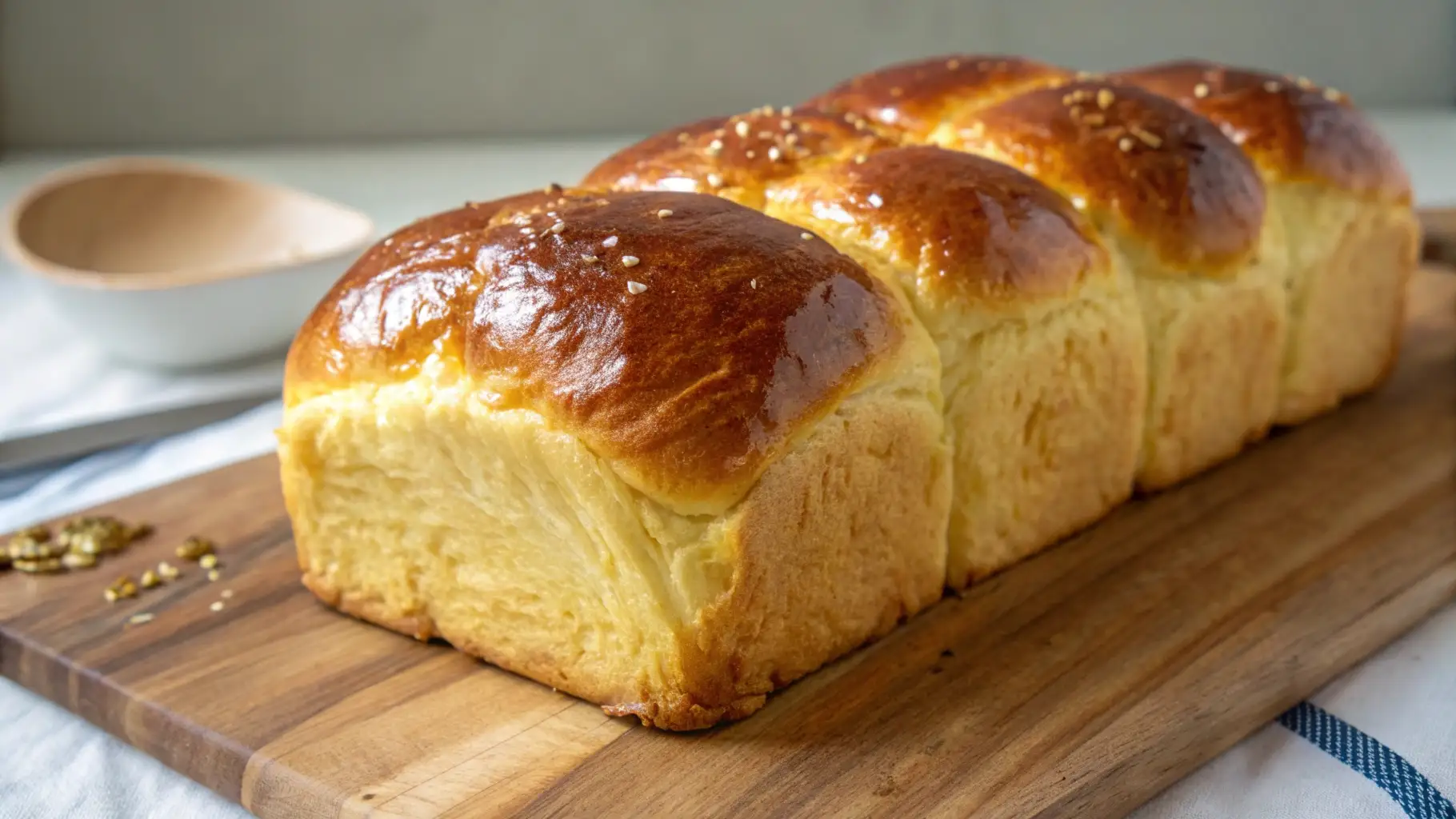
Brioche is the kind of bread that makes even a simple sandwich feel special. It’s rich, buttery, and impossibly soft, yet still structured enough to slice neatly. This loaf brings that bakery-style tenderness to your kitchen without complicated steps.
If you’ve ever wanted a plush, golden loaf for toast, French toast, or the best grilled cheese of your life, this is it. The dough is forgiving, the rise is reliable, and the result is a cloud-like crumb with a shiny, golden top.
Why This Recipe Works
- High-hydration, enriched dough: Eggs and butter create a soft, plush crumb while milk keeps it moist for days.
- Gradual butter incorporation: Adding butter slowly helps build a smooth, elastic dough without greasiness.
- Two rises for flavor and structure: The first rise builds flavor; the second shapes and strengthens the loaf for a tall, even bake.
- Chilled rest option: A cold proof makes shaping easier and improves the flavor, with a flexible timeline for busy schedules.
- Milk wash and steam: A quick milk brush and a steamy oven help the crust brown evenly and stay soft.
What You’ll Need
- Bread flour: 3 1/2 cups (420 g) for structure and chew. All-purpose works in a pinch but may be slightly less tall.
- Whole milk: 3/4 cup (180 ml), warmed to 100–110°F (38–43°C) for yeast activation.
- Instant yeast: 2 1/4 teaspoons (7 g).Active dry works too—bloom it in warm milk first.
- Granulated sugar: 1/4 cup (50 g) to feed the yeast and add gentle sweetness.
- Large eggs: 3, at room temperature, for richness and color.
- Unsalted butter: 6 tablespoons (85 g), very soft but not melted.
- Fine salt: 1 1/4 teaspoons to balance sweetness and deepen flavor.
- Milk (for brushing): 1 tablespoon for a soft, satiny crust.
- Optional: 1 teaspoon vanilla or 1/4 teaspoon almond extract for subtle aroma (nice for French toast).
- Equipment: Stand mixer with dough hook (recommended), 9×5-inch loaf pan, plastic wrap or clean towel, kitchen scale (helpful), and a pastry brush.
How to Make It
- Warm the milk and prep the yeast: Heat milk to just warm (not hot). If using active dry yeast, stir it into the milk with a pinch of sugar and let it foam for 5–10 minutes. Instant yeast can go straight into the flour.
- Mix the base dough: In the bowl of a stand mixer, combine bread flour, sugar, salt, and instant yeast (if using).Add warm milk and eggs. Mix on low until a shaggy dough forms, 2 minutes.
- Knead to develop gluten: Increase to medium speed and knead for 5–7 minutes until smooth and elastic. The dough should pull from the sides but still be a bit sticky.
- Add butter gradually: With the mixer on low, add the soft butter 1 tablespoon at a time, letting each piece fully incorporate before adding the next.This takes 5–7 minutes. Scrape the bowl as needed.
- Knead to windowpane: Once all butter is in, knead another 5–8 minutes on medium. The dough should be glossy, stretchy, and pass a windowpane test (you can stretch a bit thin enough to see light without tearing).If very sticky, add 1–2 tablespoons flour—but keep it soft.
- First rise: Shape into a ball, place in a lightly greased bowl, cover, and let rise at warm room temp until doubled, about 1 1/2–2 hours.
- Optional chill: For easier shaping and better flavor, you can refrigerate the dough after it has risen, covered, for 2–12 hours. Bring back to room temp for 20–30 minutes before shaping.
- Shape the loaf: Lightly flour your surface. Gently press the dough into a rectangle roughly 8×12 inches.Roll it up snugly from the short side, pinch the seam, and tuck the ends. For a more even crumb, divide into 3 equal pieces, roll each into a tight log, and place side-by-side in the pan.
- Second rise: Place the shaped dough into a greased 9×5-inch loaf pan. Cover and let rise until the dough crowns about 1 inch over the rim, 45–75 minutes depending on room temp.
- Preheat and prep: Heat oven to 350°F (175°C).Brush the top lightly with milk for a tender sheen. For extra softness, place a small oven-safe dish with hot water on the lower rack to create gentle steam.
- Bake: Bake 30–35 minutes until deep golden brown and the internal temp reaches about 190–195°F (88–90°C). Tent with foil at 20–25 minutes if browning too fast.
- Cool properly: Let the loaf rest in the pan for 10 minutes, then turn out onto a rack.Cool at least 1 hour before slicing to set the crumb.
Storage Instructions
- Room temperature: Wrap well in plastic or store in a zip-top bag for 3–4 days. Avoid the fridge—it dries bread out.
- Freezer: Slice, then freeze in a well-sealed bag for up to 2 months. Toast straight from frozen, or thaw at room temp.
- Refresh: If the crust softens too much, reheat slices in a toaster or a 325°F (165°C) oven for 5–7 minutes.
Why This is Good for You
- No preservatives: You control every ingredient, so it’s fresher and cleaner than store-bought.
- Satisfying and balanced: The combination of protein from eggs and complex carbs from flour makes it filling and steadying.
- Portion-friendly: Slicing your own loaf helps you choose the thickness you need—thin for sandwiches, thicker for toast.
- Mood food: Warm, homemade bread is comfort in a slice, and cooking at home builds kitchen confidence.
Pitfalls to Watch Out For
- Butter too cold or added too fast: It won’t blend smoothly and can make the dough greasy.Keep butter very soft and go slowly.
- Under-kneading: The dough needs proper gluten development for that tall, fluffy rise. Look for a smooth, elastic feel and windowpane.
- Over-flouring: A sticky dough is normal. Adding too much flour creates a dense loaf.Oil your hands instead of dusting heavily.
- Over-proofing: If it rises too long, the dough can collapse and taste yeasty. Aim for about 1 inch above the pan rim before baking.
- Slicing too soon: Cutting while hot compresses the crumb. Let it cool fully for neat slices.
Alternatives
- Dairy-free: Use plant milk and a high-fat vegan butter that’s solid at room temp.Texture will be slightly different but still soft.
- All-purpose flour: Substitute 1:1. The loaf may be a bit less lofty but remains tender.
- Slightly sweeter: Increase sugar to 1/3 cup (65 g) and add 1 teaspoon vanilla for a breakfast-leaning loaf.
- Whole wheat blend: Swap in 1 cup (120 g) whole wheat flour and increase milk by 1–2 tablespoons. Expect a heartier texture.
- Overnight method: After the first rise, refrigerate the dough overnight.Shape cold and proof slightly longer the next day.
- Topping twist: Brush with egg wash and sprinkle sesame or poppy seeds for a bakery look and nutty flavor.
Explore more irresistible bread recipes you won’t want to miss:
FAQ
Can I make this without a stand mixer?
Yes, but it’s a workout. Mix with a spoon, then knead by hand for 12–15 minutes before adding the butter. Incorporate the butter a little at a time, kneading until smooth and elastic.
A dough scraper helps manage stickiness.
How do I know when the dough is kneaded enough?
It should feel bouncy and stretchy, and a small piece should stretch thin without tearing (windowpane). The dough will still be slightly tacky but not a gloopy mess. If it tears quickly, keep kneading.
My loaf browned too fast.
What went wrong?
Your oven may run hot, or the top rack might be too close to the heat source. Next time, bake on a lower rack and tent with foil once it’s golden. Check your oven temp with an oven thermometer for accuracy.
Can I use active dry yeast instead of instant?
Absolutely.
Bloom active dry yeast in the warm milk with a pinch of sugar until foamy, then proceed. Rising times may be slightly longer.
Why is my bread dense?
Common causes are under-kneading, over-flouring, or under-proofing. Make sure the dough is well-developed, keep it soft, and let it rise until truly doubled the first time and well above the pan the second time.
How can I make the crust shinier?
Use an egg wash (1 egg beaten with 1 tablespoon milk) instead of a milk wash.
Brush gently right before baking for a deep golden, glossy finish.
Is this good for French toast?
It’s perfect. The rich crumb soaks up custard without falling apart. Slice it a little thicker (about 3/4 inch) and let the slices stale lightly for the best texture.
Wrapping Up
This brioche sandwich loaf gives you bakery-level softness with home-kitchen simplicity.
With a slow butter addition, a patient rise, and a gentle bake, you’ll get a tender crumb and golden top every time. Keep a loaf on hand for sandwiches, toast, and weekend French toast—you’ll wonder how you ever settled for store-bought. Once you’ve tried it, you’ll be making it on repeat.
Soft Brioche Sandwich Loaf Recipe – Fluffy Homemade Bread
Ingredients
- Bread flour: 3 1/2 cups (420 g) for structure and chew. All-purpose works in a pinch but may be slightly less tall.
- Whole milk: 3/4 cup (180 ml), warmed to 100–110°F (38–43°C) for yeast activation.
- Instant yeast: 2 1/4 teaspoons (7 g).Active dry works too—bloom it in warm milk first.
- Granulated sugar: 1/4 cup (50 g) to feed the yeast and add gentle sweetness.
- Large eggs: 3, at room temperature, for richness and color.
- Unsalted butter: 6 tablespoons (85 g), very soft but not melted.
- Fine salt: 1 1/4 teaspoons to balance sweetness and deepen flavor.
- Milk (for brushing): 1 tablespoon for a soft, satiny crust.
- Optional: 1 teaspoon vanilla or 1/4 teaspoon almond extract for subtle aroma (nice for French toast).
- Equipment: Stand mixer with dough hook (recommended), 9x5-inch loaf pan, plastic wrap or clean towel, kitchen scale (helpful), and a pastry brush.
Instructions
- Warm the milk and prep the yeast: Heat milk to just warm (not hot). If using active dry yeast, stir it into the milk with a pinch of sugar and let it foam for 5–10 minutes. Instant yeast can go straight into the flour.
- Mix the base dough: In the bowl of a stand mixer, combine bread flour, sugar, salt, and instant yeast (if using).Add warm milk and eggs. Mix on low until a shaggy dough forms, 2 minutes.
- Knead to develop gluten: Increase to medium speed and knead for 5–7 minutes until smooth and elastic. The dough should pull from the sides but still be a bit sticky.
- Add butter gradually: With the mixer on low, add the soft butter 1 tablespoon at a time, letting each piece fully incorporate before adding the next.This takes 5–7 minutes. Scrape the bowl as needed.
- Knead to windowpane: Once all butter is in, knead another 5–8 minutes on medium. The dough should be glossy, stretchy, and pass a windowpane test (you can stretch a bit thin enough to see light without tearing).If very sticky, add 1–2 tablespoons flour—but keep it soft.
- First rise: Shape into a ball, place in a lightly greased bowl, cover, and let rise at warm room temp until doubled, about 1 1/2–2 hours.
- Optional chill: For easier shaping and better flavor, you can refrigerate the dough after it has risen, covered, for 2–12 hours. Bring back to room temp for 20–30 minutes before shaping.
- Shape the loaf: Lightly flour your surface. Gently press the dough into a rectangle roughly 8x12 inches.Roll it up snugly from the short side, pinch the seam, and tuck the ends. For a more even crumb, divide into 3 equal pieces, roll each into a tight log, and place side-by-side in the pan.
- Second rise: Place the shaped dough into a greased 9x5-inch loaf pan. Cover and let rise until the dough crowns about 1 inch over the rim, 45–75 minutes depending on room temp.
- Preheat and prep: Heat oven to 350°F (175°C).Brush the top lightly with milk for a tender sheen. For extra softness, place a small oven-safe dish with hot water on the lower rack to create gentle steam.
- Bake: Bake 30–35 minutes until deep golden brown and the internal temp reaches about 190–195°F (88–90°C). Tent with foil at 20–25 minutes if browning too fast.
- Cool properly: Let the loaf rest in the pan for 10 minutes, then turn out onto a rack.Cool at least 1 hour before slicing to set the crumb.