
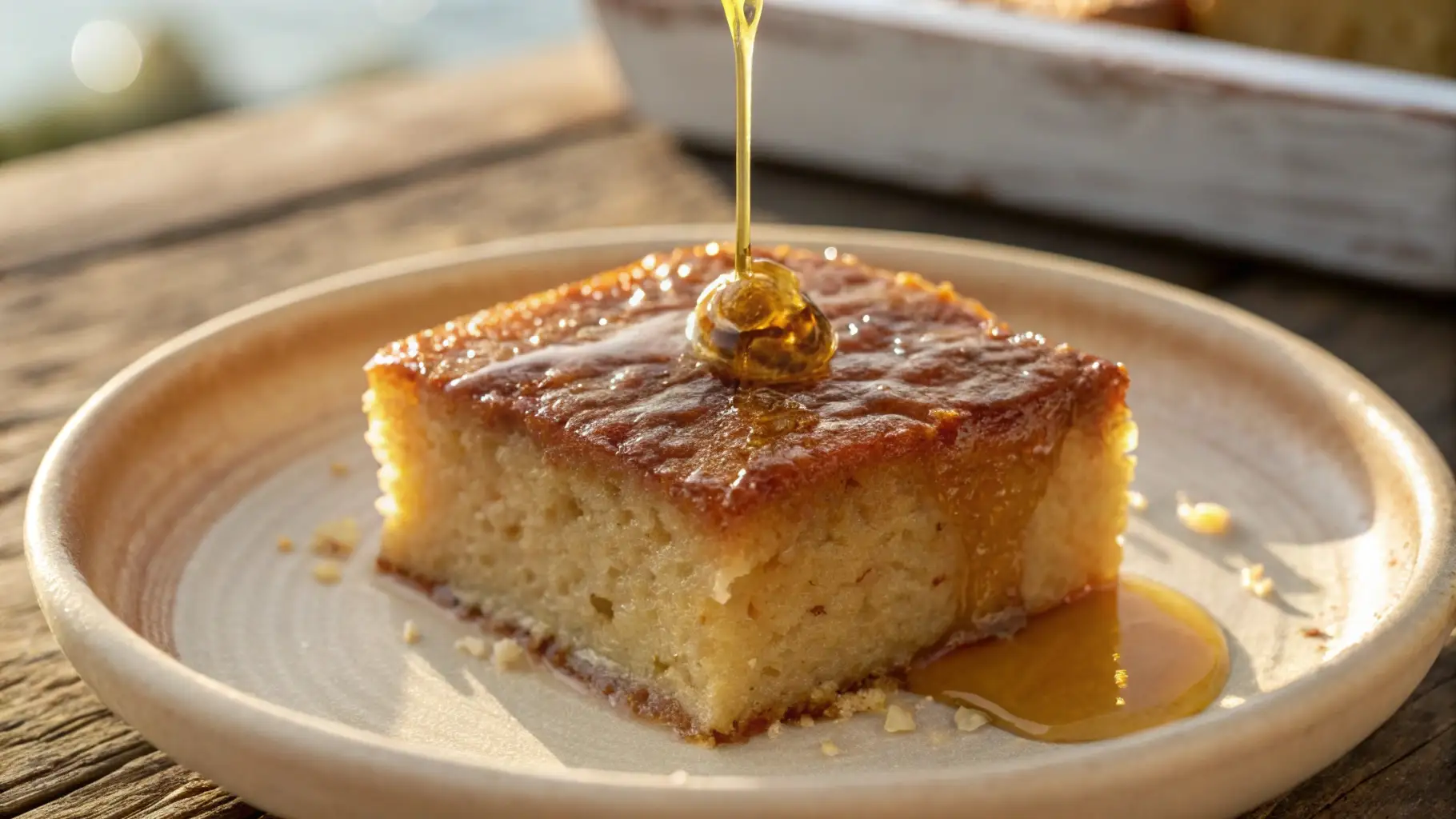
Greek honey cake is one of those desserts that feels like home. It’s simple, fragrant, and incredibly moist, thanks to a generous pour of warm honey syrup. This semolina-based cake has a tender, slightly nubby crumb that soaks up flavor without getting soggy.
It’s not fussy, doesn’t require fancy tools, and tastes even better the next day. If you love desserts that are comforting, aromatic, and not overly sweet, this one delivers.
Why This Recipe Works
- Semolina creates structure and texture: It gives the cake a delicate crumb with a pleasant bite, perfect for absorbing syrup without falling apart.
- Oil keeps it moist: Using olive oil or a neutral oil means the cake stays soft for days, even after soaking up syrup.
- Warm syrup meets cool cake: This classic technique helps the syrup seep in evenly, giving every slice consistent flavor and moisture.
- Balanced sweetness: The cake batter isn’t very sweet; most sweetness comes from the honey syrup, so it tastes rich, not cloying.
- Spices and citrus lift the flavor: Cinnamon, orange, and lemon give warmth and brightness without overshadowing the honey.
What You’ll Need
- For the cake:
- 1 cup fine semolina
- 1 cup all-purpose flour
- 2 teaspoons baking powder
- 1/2 teaspoon baking soda
- 1/2 teaspoon ground cinnamon
- 1/4 teaspoon fine salt
- 3 large eggs, room temperature
- 1/2 cup granulated sugar
- 1/2 cup olive oil (or neutral oil)
- 1 cup plain Greek yogurt (whole milk preferred)
- Zest of 1 orange
- Zest of 1/2 lemon
- 1 teaspoon vanilla extract
- For the honey syrup:
- 3/4 cup honey
- 3/4 cup water
- 1/3 cup sugar
- 1 cinnamon stick
- 2 wide strips of orange peel (optional)
- 1 tablespoon lemon juice
- To finish (optional):
- Chopped walnuts or pistachios
- A drizzle of extra honey
- A light dusting of ground cinnamon
Step-by-Step Instructions
- Prep the pan and oven: Heat the oven to 350°F (175°C). Grease a 9-inch (23 cm) square or round baking pan and line the base with parchment for easy release.
- Mix dry ingredients: In a bowl, whisk semolina, flour, baking powder, baking soda, cinnamon, and salt.
Set aside.
- Whisk wet ingredients: In a larger bowl, whisk eggs and sugar until slightly thick and pale, about 1 minute by hand. Add oil, yogurt, citrus zests, and vanilla. Whisk until smooth.
- Combine: Add the dry mixture to the wet mixture.
Stir gently with a spatula until just combined. The batter will be thick but pourable.
- Bake: Pour the batter into the prepared pan and smooth the top. Bake for 28–35 minutes, until golden and a toothpick comes out clean or with a few moist crumbs.
- Make the syrup while the cake bakes: In a small saucepan, combine honey, water, sugar, cinnamon stick, and orange peel.
Bring to a gentle simmer and cook for 5 minutes. Remove from heat, stir in lemon juice, and let sit. Keep warm.
- Cool the cake slightly: When the cake is done, place the pan on a rack and let it rest for 10 minutes.
This helps the crumb set so it can take on syrup evenly.
- Cut and soak: Score or cut the cake into squares or diamonds in the pan. Slowly ladle the warm syrup over the warm cake in several passes, letting it soak in before adding more. You may not need every drop; aim for moist, not soggy.
- Rest: Allow the cake to cool to room temperature, uncovered, so the syrup distributes evenly.
This can take 1–2 hours.
- Finish and serve: Sprinkle with chopped nuts, a light dusting of cinnamon, or a small drizzle of honey. Serve at room temperature. The flavor improves by the next day.
Keeping It Fresh
- Room temperature: Store covered at room temperature for up to 3 days.
The syrup keeps it moist.
- Refrigerator: If your kitchen is warm, refrigerate after day 2. Wrap well to prevent drying. Let slices come to room temp before serving.
- Freezer: Freeze tightly wrapped slices for up to 2 months.
Thaw overnight in the fridge or at room temperature for a few hours.
- Refresh: A 10-second microwave zap softens the crumb and wakes up the aroma.
Benefits of This Recipe
- Reliable texture: Semolina ensures the cake stays tender while handling a generous amount of syrup.
- Approachable ingredients: Everything is easy to find, and measurements are forgiving.
- Make-ahead friendly: The cake tastes better the next day, making it great for gatherings.
- Customizable flavor: Adjust spices, citrus, or nuts to match your taste or what you have on hand.
- Not overly sweet: The balance of honey, citrus, and spice keeps it light and fragrant.
What Not to Do
- Don’t pour cold syrup on a cold cake: You’ll get patchy absorption. Use warm syrup on a warm (not hot) cake.
- Don’t overmix the batter: This can make the cake dense. Stir just until you no longer see dry streaks.
- Don’t oversoak: Add syrup gradually.
Stop when the top looks glossy and the edges are moist, but the cake still holds shape.
- Don’t skip the rest time: The cake needs time to drink in the syrup and settle for best flavor and texture.
- Don’t use coarse semolina: Fine semolina integrates better and keeps the crumb tender.
Recipe Variations
- Nutty top: Sprinkle the batter with chopped walnuts or pistachios before baking for a toasty crunch.
- Rose or orange blossom: Add 1–2 teaspoons of floral water to the syrup at the end for a subtle perfume.
- Coconut twist: Swap 1/3 cup of the semolina for fine desiccated coconut and add a pinch of cardamom.
- Extra citrus: Use both orange and lemon zest in the batter and increase lemon juice in syrup to 2 tablespoons for more tang.
- Spice-forward: Add a pinch of ground cloves or nutmeg to the dry mix for a warmer profile.
- Lighter sweetness: Reduce syrup sugar to 2 tablespoons and let the honey shine.
- Olive oil spotlight: Use a fruity extra-virgin olive oil for a pronounced, savory-sweet note.
Explore more irresistible cake recipes you won’t want to miss:
FAQ
Can I make this without yogurt?
Yes. Substitute with sour cream or buttermilk. If using buttermilk, reduce the baking soda to 1/4 teaspoon and keep an eye on batter thickness; it should be pourable but not runny.
What’s the difference between this and basbousa or revani?
They’re cousins.
Greek revani and Middle Eastern basbousa also use semolina and syrup. This version leans on yogurt, citrus zest, and a honey-forward syrup, giving it a distinct Greek character and a softer, cake-like crumb.
Can I use only honey in the syrup and skip the sugar?
You can. The syrup will be slightly less viscous and more intensely honey-flavored.
Simmer gently to avoid scorching, and consider adding a pinch of salt to round the sweetness.
How do I know I’ve added enough syrup?
The surface should look shiny and moist, with syrup absorbed within a few minutes. Press lightly with a spoon; it should feel springy, not soggy. If syrup pools and doesn’t soak in after a minute, you’ve reached the limit.
What size pan works best?
A 9-inch square or round pan is ideal.
A 9×13-inch pan also works but yields a thinner cake; start checking doneness at 20–24 minutes and adjust syrup amounts slightly.
Can I make it gluten-free?
Try a 1:1 gluten-free flour blend combined with fine cornmeal or a fine gluten-free semolina substitute. Texture will differ slightly, but the syrup helps keep it moist.
Is olive oil too strong for this cake?
Not if you use a mild or medium-intensity olive oil. It adds a lovely depth.
If you prefer a neutral profile, use sunflower or canola oil.
How far in advance can I make it?
Up to 2 days ahead is perfect. Store covered at room temperature, then garnish with nuts just before serving to keep them crisp.
Can I reduce the sugar in the cake batter?
Yes. The batter sugar is already modest, but you can cut it to 1/3 cup.
The syrup provides most of the sweetness, so the cake will still taste balanced.
What if I don’t have citrus zest?
Use 1–2 teaspoons of citrus extract or add a little extra vanilla. The cake will still be delicious, though zest adds brightness that’s hard to beat.
Final Thoughts
This Greek honey cake is the kind of dessert that wins people over with its simplicity. The semolina crumb, the golden syrup, and the gentle spice make each slice feel comforting and special.
It’s easy to prepare, holds well for days, and adapts to your pantry. Keep it classic, or try a twist that suits your taste. Either way, you’ll have a moist, fragrant cake that’s quietly irresistible.
Greek Honey Cake Moist Semolina Honey Syrup Cake – Simple, Sweet, and Comforting
Ingredients
- For the cake: 1 cup fine semolina
- 1 cup all-purpose flour
- 2 teaspoons baking powder
- 1/2 teaspoon baking soda
- 1/2 teaspoon ground cinnamon
- 1/4 teaspoon fine salt
- 3 large eggs, room temperature
- 1/2 cup granulated sugar
- 1/2 cup olive oil (or neutral oil)
- 1 cup plain Greek yogurt (whole milk preferred)
- Zest of 1 orange
- Zest of 1/2 lemon
- 1 teaspoon vanilla extract
- For the honey syrup: 3/4 cup honey
- 3/4 cup water
- 1/3 cup sugar
- 1 cinnamon stick
- 2 wide strips of orange peel (optional)
- 1 tablespoon lemon juice
- To finish (optional): Chopped walnuts or pistachios
- A drizzle of extra honey
- A light dusting of ground cinnamon
Instructions
- Prep the pan and oven: Heat the oven to 350°F (175°C). Grease a 9-inch (23 cm) square or round baking pan and line the base with parchment for easy release.
- Mix dry ingredients: In a bowl, whisk semolina, flour, baking powder, baking soda, cinnamon, and salt.Set aside.
- Whisk wet ingredients: In a larger bowl, whisk eggs and sugar until slightly thick and pale, about 1 minute by hand. Add oil, yogurt, citrus zests, and vanilla. Whisk until smooth.
- Combine: Add the dry mixture to the wet mixture.Stir gently with a spatula until just combined. The batter will be thick but pourable.
- Bake: Pour the batter into the prepared pan and smooth the top. Bake for 28–35 minutes, until golden and a toothpick comes out clean or with a few moist crumbs.
- Make the syrup while the cake bakes: In a small saucepan, combine honey, water, sugar, cinnamon stick, and orange peel.Bring to a gentle simmer and cook for 5 minutes. Remove from heat, stir in lemon juice, and let sit. Keep warm.
- Cool the cake slightly: When the cake is done, place the pan on a rack and let it rest for 10 minutes.This helps the crumb set so it can take on syrup evenly.
- Cut and soak: Score or cut the cake into squares or diamonds in the pan. Slowly ladle the warm syrup over the warm cake in several passes, letting it soak in before adding more. You may not need every drop; aim for moist, not soggy.
- Rest: Allow the cake to cool to room temperature, uncovered, so the syrup distributes evenly.This can take 1–2 hours.
- Finish and serve: Sprinkle with chopped nuts, a light dusting of cinnamon, or a small drizzle of honey. Serve at room temperature. The flavor improves by the next day.