
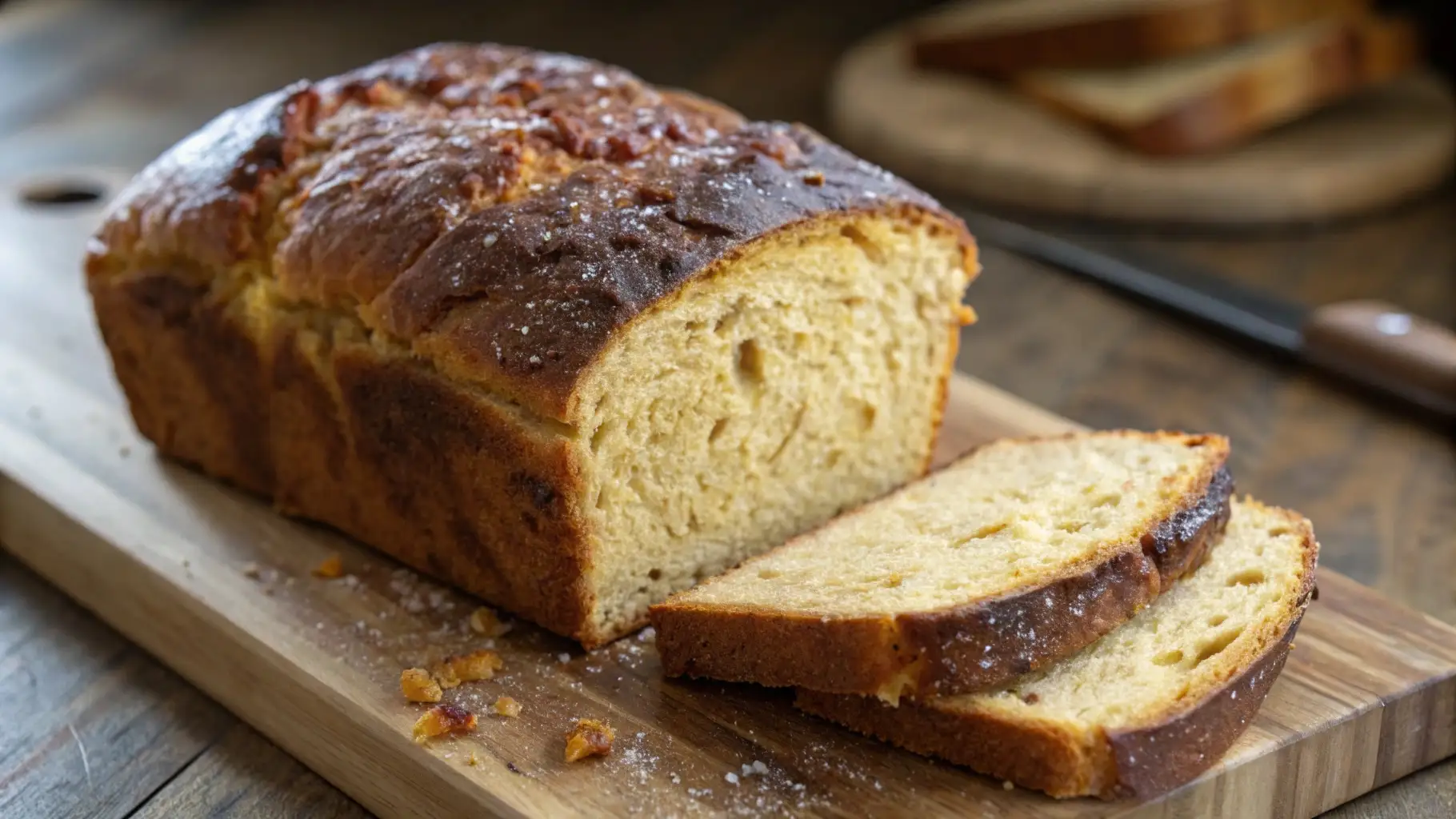
Anadama bread is one of those old-fashioned loaves that tastes like home. It’s sturdy, slightly sweet, and packed with the cozy flavor of molasses and cornmeal. If you like a hearty slice that toasts beautifully and stands up to butter, jam, or a fried egg, this is your loaf.
The dough is forgiving, the crumb is tender, and the crust bakes to a warm, golden brown. Whether you’re new to baking or a seasoned bread fan, this recipe is friendly, reliable, and deeply satisfying.
Why This Recipe Works
This classic dough pairs all-purpose or bread flour with cornmeal, which adds gentle texture and a subtle crunch without making the loaf heavy. Molasses brings rich flavor and natural sweetness while helping the crust brown nicely in the oven.
A brief cornmeal “soak” with hot water softens the grain and keeps the loaf moist. The result is a bread that is flavorful, sliceable, and sturdy—just right for sandwiches or toast. With simple, step-by-step instructions, you’ll get consistent results every time.
Shopping List
- Yellow cornmeal (not instant; medium grind works best)
- All-purpose flour or bread flour
- Unsulphured molasses
- Active dry yeast or instant yeast
- Warm water
- Whole milk (or water, if you prefer)
- Unsalted butter
- Salt
- Optional: Honey or brown sugar (for a touch more sweetness)
- Optional: Cornmeal or flour for dusting
How to Make It
- Make the cornmeal soaker: In a heatproof bowl, combine 1/2 cup yellow cornmeal with 1 cup very hot water (not boiling).
Stir well, then let it sit for 15–20 minutes to soften. This step keeps the loaf moist and prevents a gritty texture.
- Warm the liquids: In a small saucepan, warm 1/2 cup whole milk, 1/3 cup molasses, and 3 tablespoons unsalted butter over low heat until the butter just melts. Remove from heat and let cool until lukewarm (about 100–110°F).
If it’s too hot, it can kill the yeast.
- Activate the yeast (if using active dry): In a large bowl, mix 1/4 cup warm water with 2 1/4 teaspoons active dry yeast and a pinch of sugar. Let it stand until foamy, about 5–10 minutes. If using instant yeast, you can skip this and add it directly to the flour.
- Build the dough: In a large mixing bowl, combine 3 to 3 1/2 cups all-purpose or bread flour with 1 1/2 teaspoons salt.
Add the softened cornmeal mixture, the lukewarm molasses mixture, and the yeast (foamy or instant). Stir with a sturdy spoon until a rough dough forms.
- Knead until smooth: Turn the dough onto a lightly floured surface. Knead 8–10 minutes, adding small sprinkles of flour only as needed to prevent sticking.
Aim for a dough that is soft, slightly tacky, but not sticky.
- First rise: Place the dough in a lightly greased bowl, cover, and let it rise in a warm spot until doubled, about 60–90 minutes. It should look puffy and feel airy when gently pressed.
- Shape the loaf: Gently deflate the dough. Pat into a rectangle, then roll it up snugly from the short end.
Pinch the seam and tuck the ends under. Place into a greased 9×5-inch loaf pan. For a rustic finish, dust the top with a little cornmeal.
- Second rise: Cover the pan loosely and let the dough rise until it crowns about 1 inch over the rim, 35–55 minutes depending on room temperature.
When lightly pressed, the dough should spring back slowly and leave a slight indent.
- Bake: Preheat the oven to 375°F (190°C). Bake the loaf for 35–40 minutes, until deeply golden and the internal temperature reads 195–200°F. If the top browns too fast, tent loosely with foil for the last 10 minutes.
- Finish and cool: Remove from the pan and cool on a rack for at least 1 hour before slicing.
For a soft crust, brush the hot loaf lightly with melted butter.
Storage Instructions
- Room temperature: Wrap the cooled loaf in a clean towel or store in a bread box for 2–3 days. Avoid the fridge; it dries bread out.
- Freezer: Slice, then wrap tightly in plastic and a freezer bag. Freeze up to 3 months.
Toast slices straight from the freezer.
- Refresh: If the loaf feels a bit stale, warm slices in a low oven or toast to bring back the crisp edges and soft center.
Why This is Good for You
Anadama bread brings together whole-grain cornmeal and a modest amount of sweetener for a balanced, hearty loaf. Cornmeal adds fiber and trace minerals while providing long-lasting energy. Molasses offers a touch of iron and a deep flavor that satisfies without loads of sugar.
Because the bread is substantial, a small slice feels filling, especially paired with protein or healthy fats.
Pitfalls to Watch Out For
- Overheating the liquids: If the milk-molasses mixture is too hot, it can kill the yeast. Aim for lukewarm, not hot.
- Using instant cornmeal: Very fine or instant cornmeal can make the dough pasty. Medium-grind works best for texture.
- Too much flour: The dough should be slightly tacky.
Over-flouring during kneading leads to a dense loaf.
- Underbaking: A pale loaf may be gummy inside. Check for a deep brown crust and a 195–200°F internal temp.
- Skipping the rest: Cutting too early releases steam and dries the loaf. Let it cool at least 60 minutes.
Alternatives
- Flour swap: Use half bread flour and half all-purpose for a chewier crumb.
For more whole grains, replace up to 1 cup with white whole wheat flour and add 1–2 tablespoons extra liquid.
- Sweetener tweaks: Blend molasses with 1–2 tablespoons honey for a lighter sweetness. For a bolder flavor, use blackstrap sparingly; it’s more bitter.
- Dairy-free: Replace milk with water or unsweetened oat milk. Use oil instead of butter (2 tablespoons).
- Shaping options: Form into a round and bake on a sheet for a rustic boule.
Adjust bake time slightly and check for doneness early.
- Add-ins: Stir in a handful of toasted oats or seeds for extra texture. Keep add-ins under 1/2 cup to maintain structure.
Explore more irresistible bread recipes you won’t want to miss:
FAQ
What does Anadama bread taste like?
It’s mildly sweet with a warm molasses flavor and a gentle crunch from cornmeal. The crumb is tender and moist, and the crust browns beautifully.
Think hearty but not heavy.
Can I make this with a stand mixer?
Yes. Use the dough hook on low speed to bring the dough together, then knead on medium-low for 6–8 minutes. Stop and scrape the bowl as needed.
The dough should clean the sides but still feel slightly tacky.
Is active dry yeast the same as instant yeast?
They’re similar. Active dry usually needs proofing in warm water, while instant can go straight into the flour. If swapping, use the same amount and watch your rise times; instant may be a bit faster.
How do I know when the dough has risen enough?
Look for a clear puff and a light, airy feel.
When you press a fingertip gently into the dough, it should spring back slowly and leave a small indent. If it snaps back quickly, it needs more time.
Can I make the dough ahead and chill it?
Yes. After the first rise, shape the loaf and refrigerate it covered overnight.
Let it come to room temperature and finish rising before baking. Chilled dough may need extra time to proof.
What should I serve with Anadama bread?
It shines with salted butter, sharp cheddar, or jam. It also makes excellent toast, a sturdy BLT, or a base for baked beans and stews.
The subtle sweetness pairs well with savory toppings.
Why is my loaf dense?
Common causes include too much flour, under-kneading, or cool rise conditions. Aim for a soft, slightly tacky dough, knead until smooth and elastic, and let it rise in a warm, draft-free spot.
Can I bake two loaves at once?
Absolutely. Double all ingredients and divide the dough evenly.
Bake on the center rack, rotating pans halfway through for even browning. Total time should be similar, but check doneness.
Final Thoughts
Traditional Anadama bread is a humble classic with real character. The cornmeal adds texture, the molasses brings depth, and the loaf holds up to anything you spread or stack on it.
Once you make it, you’ll see why it’s been a New England favorite for generations. Keep this recipe handy, tweak it to your taste, and enjoy a reliable, flavorful loaf any day of the week.
Traditional Anadama Bread Recipe for Bread Lovers – A New England Classic
Ingredients
- Yellow cornmeal (not instant; medium grind works best)
- All-purpose flour or bread flour
- Unsulphured molasses
- Active dry yeast or instant yeast
- Warm water
- Whole milk (or water, if you prefer)
- Unsalted butter
- Salt
- Optional: Honey or brown sugar (for a touch more sweetness)
- Optional: Cornmeal or flour for dusting
Instructions
- Make the cornmeal soaker: In a heatproof bowl, combine 1/2 cup yellow cornmeal with 1 cup very hot water (not boiling).Stir well, then let it sit for 15–20 minutes to soften. This step keeps the loaf moist and prevents a gritty texture.
- Warm the liquids: In a small saucepan, warm 1/2 cup whole milk, 1/3 cup molasses, and 3 tablespoons unsalted butter over low heat until the butter just melts. Remove from heat and let cool until lukewarm (about 100–110°F).If it’s too hot, it can kill the yeast.
- Activate the yeast (if using active dry): In a large bowl, mix 1/4 cup warm water with 2 1/4 teaspoons active dry yeast and a pinch of sugar. Let it stand until foamy, about 5–10 minutes. If using instant yeast, you can skip this and add it directly to the flour.
- Build the dough: In a large mixing bowl, combine 3 to 3 1/2 cups all-purpose or bread flour with 1 1/2 teaspoons salt.Add the softened cornmeal mixture, the lukewarm molasses mixture, and the yeast (foamy or instant). Stir with a sturdy spoon until a rough dough forms.
- Knead until smooth: Turn the dough onto a lightly floured surface. Knead 8–10 minutes, adding small sprinkles of flour only as needed to prevent sticking.Aim for a dough that is soft, slightly tacky, but not sticky.
- First rise: Place the dough in a lightly greased bowl, cover, and let it rise in a warm spot until doubled, about 60–90 minutes. It should look puffy and feel airy when gently pressed.
- Shape the loaf: Gently deflate the dough. Pat into a rectangle, then roll it up snugly from the short end.Pinch the seam and tuck the ends under. Place into a greased 9×5-inch loaf pan. For a rustic finish, dust the top with a little cornmeal.
- Second rise: Cover the pan loosely and let the dough rise until it crowns about 1 inch over the rim, 35–55 minutes depending on room temperature.When lightly pressed, the dough should spring back slowly and leave a slight indent.
- Bake: Preheat the oven to 375°F (190°C). Bake the loaf for 35–40 minutes, until deeply golden and the internal temperature reads 195–200°F. If the top browns too fast, tent loosely with foil for the last 10 minutes.
- Finish and cool: Remove from the pan and cool on a rack for at least 1 hour before slicing.For a soft crust, brush the hot loaf lightly with melted butter.