
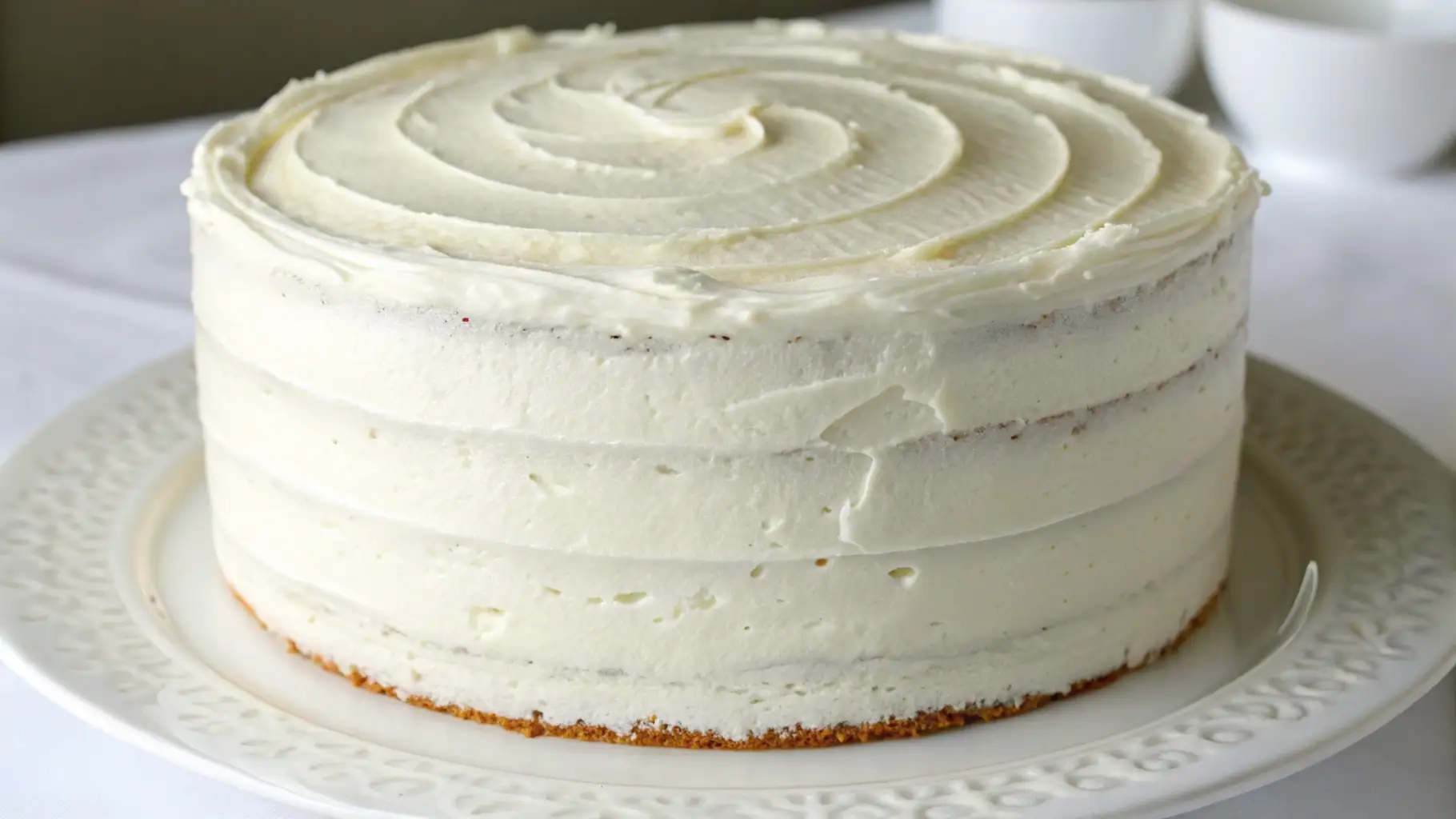
If you’ve been craving a cake that’s soft, light, and perfectly sweet, this white layer cake delivers every time. It’s the kind of dessert that fits any occasion: birthdays, brunch, or a simple Sunday treat. The crumb is tender, the flavor is clean, and the frosting adds just the right touch of creamy richness.
You’ll use simple pantry staples, but the results taste like a bakery classic. No fancy techniques—just reliable steps and a few smart tips.
What Makes This Special
This cake is all about texture and balance. It’s a true white cake, which means it uses egg whites only for a delicate crumb and lighter color.
Real vanilla gives it a warm, aromatic flavor that’s never heavy or overpowering. With buttermilk and a hint of butter, you get moisture without greasiness. Best of all, it bakes into even layers that stack beautifully for a picture-perfect slice.
Ingredients
- For the cake:
- 2 3/4 cups (330 g) cake flour, spooned and leveled
- 1 1/2 cups (300 g) granulated sugar
- 1 tbsp baking powder
- 1/2 tsp baking soda
- 1/2 tsp fine salt
- 3/4 cup (170 g) unsalted butter, room temperature
- 1 cup (240 ml) buttermilk, room temperature
- 6 large egg whites (about 3/4 cup), room temperature
- 2 tsp pure vanilla extract
- 1/2 tsp almond extract (optional, for a bakery-style note)
- For the vanilla buttercream:
- 1 cup (227 g) unsalted butter, room temperature
- 3 1/2 to 4 cups (420–480 g) powdered sugar, sifted
- 1/4 cup (60 ml) heavy cream or whole milk, plus more as needed
- 2 tsp pure vanilla extract
- Pinch of salt
Instructions
- Prep the pans and oven: Heat oven to 350°F (175°C).
Grease and line two 8-inch round cake pans with parchment. Lightly flour the sides. This helps the layers release cleanly.
- Combine dry ingredients: In a large bowl, whisk cake flour, sugar, baking powder, baking soda, and salt.
Keeping dry ingredients evenly mixed prevents tunneling and dense spots.
- Beat in butter: Add the softened butter to the dry mixture. Mix on medium speed until the mixture looks like fine crumbs, 1–2 minutes. This reverse-creaming method creates a fine, tender crumb.
- Mix wet ingredients: In a measuring cup, whisk buttermilk, egg whites, vanilla, and almond extract (if using).
Make sure everything is room temperature for a smooth batter.
- Build the batter: Add half the wet mixture to the flour-butter mixture. Mix on medium until combined and fluffy, about 30–45 seconds. Add the remaining wet mixture and mix just until smooth, 20–30 seconds.
Do not overmix.
- Portion and level: Divide batter evenly between the pans. Tap each pan lightly on the counter to pop large air bubbles and level the surface with an offset spatula.
- Bake: Bake for 24–28 minutes, or until the centers spring back when touched and a toothpick comes out clean or with a few moist crumbs. Rotate pans once halfway if your oven has hot spots.
- Cool: Let cakes cool in pans for 10 minutes.
Run a knife around the edges and invert onto a wire rack. Peel off parchment and cool completely. Warm layers will melt the frosting, so be patient.
- Make the buttercream: Beat butter on medium-high until creamy and pale, 2–3 minutes.
Add powdered sugar 1 cup at a time, mixing on low to combine, then on medium to fluff. Add vanilla, salt, and cream. Beat 1–2 minutes until smooth.
Adjust thickness with more cream (thinner) or powdered sugar (thicker).
- Assemble: If the cake tops are domed, level them with a serrated knife. Place one layer on a board. Add about 1 cup frosting and spread evenly.
Top with the second layer, cut side down for a flat surface.
- Crumb coat: Spread a thin layer of frosting over the top and sides to trap crumbs. Chill for 15–20 minutes.
- Finish and decorate: Apply the remaining frosting, smoothing with a spatula. Add sprinkles, coconut, or keep it classic and clean.
Slice with a warm knife for neat pieces.
Storage Instructions
- Room temperature: Keep the frosted cake covered at cool room temperature for up to 2 days. Avoid direct sunlight or heat.
- Refrigerator: Store covered for up to 5 days. Let slices sit at room temperature 30–45 minutes before serving for the best texture.
- Freezer: Wrap unfrosted layers tightly in plastic and then foil.
Freeze up to 2 months. Thaw in the fridge overnight, then frost. Leftover frosted slices also freeze well when wrapped securely.
Health Benefits
While this is a classic treat, there are a few thoughtful choices here.
Using egg whites lowers fat and cholesterol compared to whole eggs. The cake’s sweetness is balanced, so it doesn’t taste cloying, helping with portion satisfaction. Buttermilk adds tang and tenderness without adding a lot of fat.
For lighter servings, pair a small slice with fresh berries for fiber and freshness.
Common Mistakes to Avoid
- Cold ingredients: Using cold egg whites or buttermilk can seize the butter and create a lumpy batter. Bring everything to room temperature.
- Overmixing: Beating the batter too long after adding liquids develops gluten. This leads to a tough, dense cake.
- Wrong flour type: Cake flour is key for a fine, tender crumb.
If you substitute all-purpose flour, the texture will be heavier.
- Overbaking: Dry cake is usually from baking a few minutes too long. Start checking early and look for a few moist crumbs on the tester.
- Skipping the crumb coat: Without it, crumbs drag into your final layer of frosting. A quick chill makes a huge difference.
Variations You Can Try
- Lemon-vanilla: Add 1 tbsp lemon zest to the batter and 1–2 tbsp fresh lemon juice to the frosting.
Bright and aromatic.
- Coconut white cake: Replace 1/4 cup of the buttermilk with canned coconut milk and fold 1/2 cup shredded coconut into the batter.
- Berry layers: Spread a thin layer of raspberry or strawberry jam between the cake and the frosting. Keep the frosting layer slightly thicker to prevent sliding.
- Almond celebration cake: Increase almond extract to 1 tsp and top with toasted sliced almonds for crunch.
- Whipped frosting: Swap buttercream for stabilized whipped cream and berries for a lighter finish. Keep refrigerated.
Explore more irresistible cake recipes you won’t want to miss:
FAQ
Can I use whole eggs instead of egg whites?
Yes, but it will become a yellow vanilla cake rather than a true white cake.
Use 3 whole eggs in place of the 6 egg whites. The flavor will be richer and the crumb slightly denser.
What can I use if I don’t have cake flour?
Make a quick substitute: measure 2 3/4 cups all-purpose flour, remove 5 tablespoons, and replace with 5 tablespoons cornstarch. Sift well.
The texture won’t be quite as fine as cake flour, but it’s close.
Do I need buttermilk?
Buttermilk helps with tenderness and flavor. If you don’t have it, mix 1 cup milk with 1 tablespoon lemon juice or white vinegar. Let it sit for 5 minutes, then use as directed.
How do I prevent domed or uneven layers?
Make sure your oven is fully preheated and avoid overmixing.
You can also use cake strips soaked in water around the pans to encourage even baking. Level the tops after cooling if needed.
Can I bake this in a 9×13-inch pan?
Yes. Bake at 350°F (175°C) for 28–35 minutes, checking early.
Cool completely before frosting. This is a great option for casual gatherings.
How do I get a whiter color?
Use clear vanilla extract if you want a brighter white look, though pure vanilla tastes better. Avoid overbrowning by baking on the middle rack and removing as soon as done.
Why is my buttercream gritty?
That usually means the powdered sugar wasn’t sifted or fully beaten in.
Sift the sugar and beat the frosting longer. A splash more cream can help smooth it out.
Can I make it ahead?
Yes. Bake layers a day ahead, wrap tightly, and store at room temperature or in the fridge.
Frost the day you plan to serve for the freshest taste and texture.
In Conclusion
This White Layer Cake Soft Fluffy Classic Vanilla Dessert is simple, elegant, and reliable. With tender crumbs, clean vanilla flavor, and a creamy frosting, it’s the kind of cake people ask for again and again. Follow the steps, mind the little details, and you’ll have a bakery-worthy showpiece at home.
Slice generously, share happily, and enjoy every soft, vanilla-scented bite.
White Layer Cake Soft Fluffy Classic Vanilla Dessert – A Tender, Timeless Favorite
Ingredients
- For the cake:
- 2 3/4 cups (330 g) cake flour, spooned and leveled
- 1 1/2 cups (300 g) granulated sugar
- 1 tbsp baking powder
- 1/2 tsp baking soda
- 1/2 tsp fine salt
- 3/4 cup (170 g) unsalted butter, room temperature
- 1 cup (240 ml) buttermilk, room temperature
- 6 large egg whites (about 3/4 cup), room temperature
- 2 tsp pure vanilla extract
- 1/2 tsp almond extract (optional, for a bakery-style note)
- For the vanilla buttercream:
- 1 cup (227 g) unsalted butter, room temperature
- 3 1/2 to 4 cups (420–480 g) powdered sugar, sifted
- 1/4 cup (60 ml) heavy cream or whole milk, plus more as needed
- 2 tsp pure vanilla extract
- Pinch of salt
Instructions
- Prep the pans and oven: Heat oven to 350°F (175°C).Grease and line two 8-inch round cake pans with parchment. Lightly flour the sides. This helps the layers release cleanly.
- Combine dry ingredients: In a large bowl, whisk cake flour, sugar, baking powder, baking soda, and salt.Keeping dry ingredients evenly mixed prevents tunneling and dense spots.
- Beat in butter: Add the softened butter to the dry mixture. Mix on medium speed until the mixture looks like fine crumbs, 1–2 minutes. This reverse-creaming method creates a fine, tender crumb.
- Mix wet ingredients: In a measuring cup, whisk buttermilk, egg whites, vanilla, and almond extract (if using).Make sure everything is room temperature for a smooth batter.
- Build the batter: Add half the wet mixture to the flour-butter mixture. Mix on medium until combined and fluffy, about 30–45 seconds. Add the remaining wet mixture and mix just until smooth, 20–30 seconds.Do not overmix.
- Portion and level: Divide batter evenly between the pans. Tap each pan lightly on the counter to pop large air bubbles and level the surface with an offset spatula.
- Bake: Bake for 24–28 minutes, or until the centers spring back when touched and a toothpick comes out clean or with a few moist crumbs. Rotate pans once halfway if your oven has hot spots.
- Cool: Let cakes cool in pans for 10 minutes.Run a knife around the edges and invert onto a wire rack. Peel off parchment and cool completely. Warm layers will melt the frosting, so be patient.
- Make the buttercream: Beat butter on medium-high until creamy and pale, 2–3 minutes.Add powdered sugar 1 cup at a time, mixing on low to combine, then on medium to fluff. Add vanilla, salt, and cream. Beat 1–2 minutes until smooth.Adjust thickness with more cream (thinner) or powdered sugar (thicker).
- Assemble: If the cake tops are domed, level them with a serrated knife. Place one layer on a board. Add about 1 cup frosting and spread evenly.Top with the second layer, cut side down for a flat surface.
- Crumb coat: Spread a thin layer of frosting over the top and sides to trap crumbs. Chill for 15–20 minutes.
- Finish and decorate: Apply the remaining frosting, smoothing with a spatula. Add sprinkles, coconut, or keep it classic and clean.Slice with a warm knife for neat pieces.