
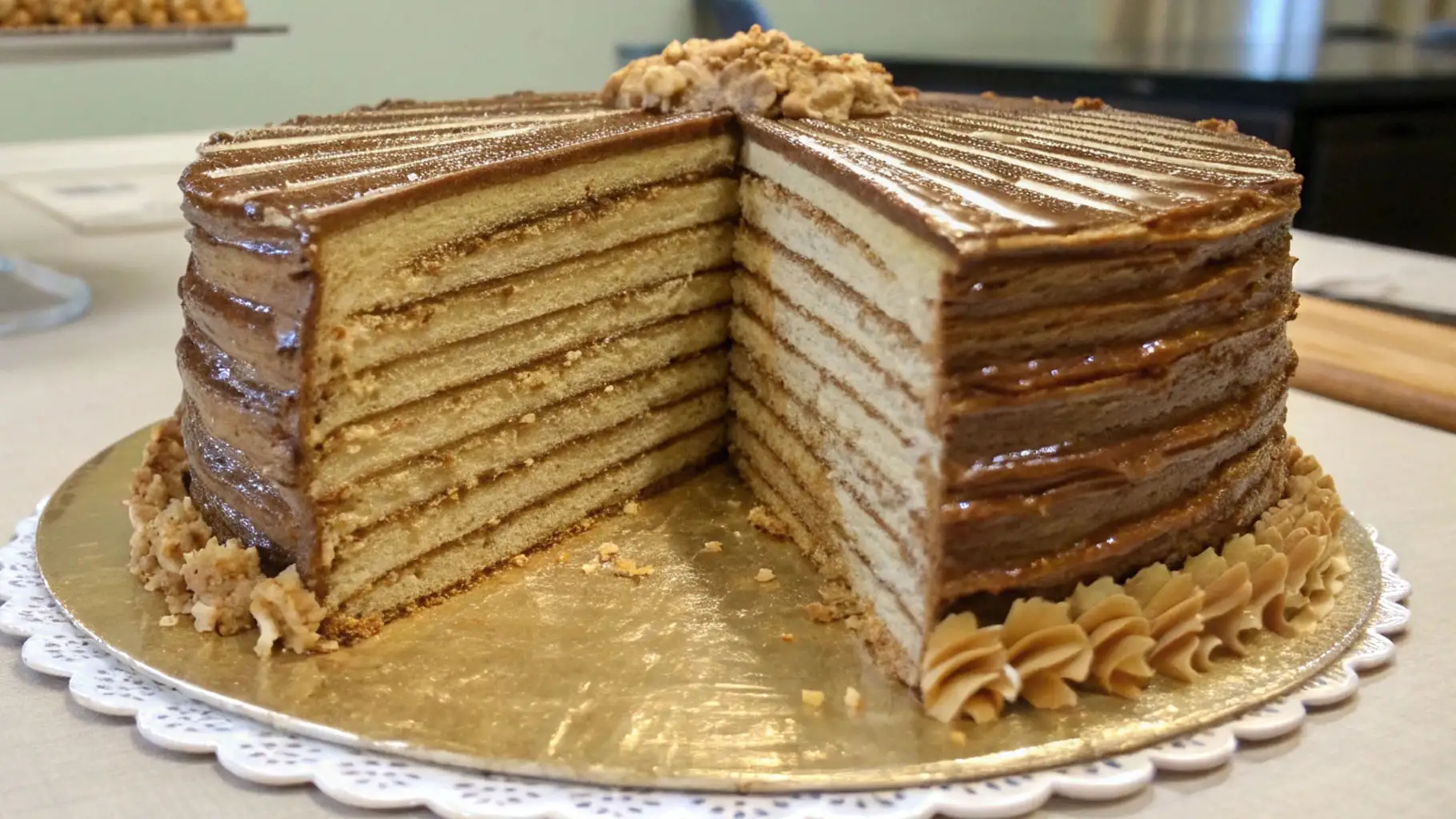
Smith Island Cake looks impressive, but it’s friendlier to make than you might think. Picture eight to ten whisper-thin vanilla layers stacked with glossy chocolate frosting between each one. Every slice is a showstopper with a melt-in-your-mouth bite and just the right sweetness.
This cake has roots on Maryland’s Eastern Shore, where home bakers perfected it for celebrations and community gatherings. If you want a classic dessert that feels both cozy and special, this is the one.
What Makes This Special
Smith Island Cake stands out for its many thin layers, each one tender and lightly buttery. Instead of a heavy sponge, you get delicate layers that stay moist.
The old-fashioned cooked chocolate frosting brings a deep, fudge-like flavor without being cloying. It spreads easily, seeps into the layers a bit, and sets with a soft sheen. The result is a balanced, nostalgic cake that tastes like something a skilled grandmother would make for a holiday table.
What You’ll Need
- All-purpose flour – 3 cups, spooned and leveled
- Baking powder – 2 teaspoons
- Kosher salt – 1 teaspoon
- Unsalted butter – 1 cup (2 sticks), softened
- Granulated sugar – 2 cups
- Large eggs – 5, at room temperature
- Whole milk – 1 cup, at room temperature
- Vanilla extract – 2 teaspoons
- Vegetable oil – 2 tablespoons (for extra tenderness)
For the chocolate frosting (old-fashioned cooked style):
- Granulated sugar – 2 cups
- Evaporated milk – 1 cup (not sweetened condensed)
- Unsalted butter – 1 cup (2 sticks)
- Unsweetened cocoa powder – 3/4 cup, sifted
- Vanilla extract – 2 teaspoons
- Kosher salt – a pinch
Equipment:
- Two or three 8-inch round cake pans (you’ll bake layers in batches)
- Parchment rounds
- Offset spatula
- Wire racks
- Cooling space for multiple thin layers
How to Make It
- Prep the pans and oven. Heat the oven to 350°F (175°C).
Grease two or three 8-inch pans, line with parchment, and grease again. Lightly flour or use baking spray. You’ll be baking 8–10 thin layers in rounds, reusing the pans.
- Whisk dry ingredients. In a bowl, whisk flour, baking powder, and salt until well combined.
Set aside.
- Cream butter and sugar. In a large bowl, beat the butter and sugar until light and fluffy, about 3 minutes. Add eggs one at a time, beating well after each. Mix in vanilla and oil.
- Finish the batter. Add the dry ingredients in three parts, alternating with the milk, starting and ending with dry.
Mix on low just until smooth. The batter should be pourable but not runny.
- Divide for thin layers. You’re aiming for 8–10 layers. For 8-inch pans, each layer will take about 1/2 to 2/3 cup of batter.
Spread thinly to the edges with an offset spatula.
- Bake quickly. Bake each batch 8–10 minutes, until the edges are lightly golden and a toothpick comes out clean. Cool the layers a few minutes in the pan, then turn out onto racks. Keep parchment on until you’re ready to stack to prevent sticking.
- Make the frosting. In a medium saucepan, combine sugar, evaporated milk, butter, cocoa, and a pinch of salt.
Bring to a gentle boil over medium heat, stirring often. Simmer 3–4 minutes, stirring, until smooth and slightly thickened. Remove from heat and stir in vanilla.
- Get the texture right. Let the frosting cool 10–15 minutes.
It should be warm, glossy, and spreadable—not runny. If it thickens too much, warm it slightly; if it’s thin, let it sit a few more minutes.
- Stack the layers. Place the first cake layer on a serving plate. Spread a thin, even coat of warm frosting over the top, letting some spill over the edges.
Repeat with each layer. Keep layers level and frosting thin so it doesn’t slide.
- Finish the sides. Use remaining frosting to cover the sides. Don’t worry about a perfectly smooth finish; this cake looks charming with a slightly rustic coat.
- Let it set. Allow the cake to rest at cool room temperature 1–2 hours.
The frosting will soak in a little and the layers will settle together for a clean slice.
Keeping It Fresh
Smith Island Cake actually tastes better the next day. The layers have time to mingle with the frosting, making every bite silky. Cover loosely with a cake dome or inverted bowl and store at room temperature for up to 2 days.
For longer storage, refrigerate up to 5 days, well covered. Bring slices to room temperature before serving for the best texture. You can also freeze well-wrapped slices for up to 2 months.
Why This is Good for You
This dessert isn’t health food, but there are upsides to making it yourself.
You control quality ingredients—real butter, milk, and cocoa—without preservatives. Thin layers mean moderation by design; a small slice still feels satisfying. Sharing a cake like this brings people together, and that social connection is its own kind of nourishment.
If you’re mindful about portion size, you can enjoy a classic treat without overdoing it.
Pitfalls to Watch Out For
- Too-thick layers: Keep them thin so they bake quickly and stay tender. Measure the batter for each pan.
- Overbaking: Even a minute too long can dry out thin layers. Pull them when edges are just golden.
- Runny frosting: If it’s too warm, layers will slide.
Let it cool to a spreadable, soft-fudge consistency before stacking.
- Rushed cooling: Turn layers out carefully and let them cool on racks. Warm layers break easily.
- Skimping on parchment: Always line the pans. These thin layers stick without it.
Variations You Can Try
- Yellow coconut version: Add 1/2 teaspoon almond extract to the batter and press sweetened shredded coconut onto the frosted sides.
- Peanut butter swirl frosting: Whisk 1/2 cup creamy peanut butter into the warm frosting for a Reese’s-style vibe.
- Mocha frosting: Stir 2 teaspoons instant espresso powder into the cocoa mixture for a coffee-kissed finish.
- Lemon layers, vanilla frosting: Add 1 tablespoon lemon zest and 2 tablespoons lemon juice to the batter.
Swap the chocolate frosting for a simple vanilla boiled icing.
- Party sprinkles: Fold rainbow sprinkles into the batter for a funfetti look, and press more onto the sides.
Explore more irresistible cake recipes you won’t want to miss:
FAQ
Can I bake more than three layers at a time?
Yes, if you have more pans and oven space. Just keep layers thin and rotate pans halfway through baking for even color. Work quickly, and don’t let batter sit too long before baking.
What if I only have 9-inch pans?
That’s fine.
You’ll get slightly wider, thinner layers and may end up with 7–8 layers instead of 8–10. Check for doneness a minute earlier since they’ll bake fast.
How do I prevent the layers from cracking?
Use parchment, don’t overbake, and let layers cool a few minutes in the pan before turning them out. Slide a thin spatula under the layer to support it as you move it.
My frosting turned grainy—what happened?
Cooked frosting can crystallize if it’s boiled too hard or stirred irregularly.
Keep it at a gentle simmer and stir steadily. If it grains, whisk in a tablespoon of corn syrup or strain and rewarm gently.
Can I make the layers ahead?
Yes. Wrap cooled layers tightly in plastic and store at room temperature for 24 hours or freeze up to 2 months.
Thaw wrapped to avoid condensation, then assemble with fresh frosting.
Is buttercream an acceptable substitute?
It works, but the classic texture comes from cooked chocolate frosting. If you use buttercream, keep it soft and spread very thin between layers to avoid slipping.
How do I get clean slices?
Let the cake rest at least an hour after frosting. Use a sharp, thin knife and wipe it clean between cuts.
A gentle sawing motion helps keep layers crisp and even.
Can I reduce the sugar?
You can cut the cake sugar by about 1/4 cup and the frosting by 1/4 cup without major texture issues. Keep in mind the frosting’s sheen and set may change slightly.
Wrapping Up
Classic Smith Island Cake is all about simple ingredients, careful technique, and patience. Those thin layers and warm chocolate frosting create a dessert that feels both humble and celebratory.
Take your time, keep the layers light, and let the frosting do the work. When you slice it, you’ll see why this old-fashioned cake has stayed a favorite for generations.
Classic Smith Island Cake Recipe Old Fashioned Layer Cake – Thin Layers, Rich Chocolate Frosting
Ingredients
- All-purpose flour – 3 cups, spooned and leveled
- Baking powder – 2 teaspoons
- Kosher salt – 1 teaspoon
- Unsalted butter – 1 cup (2 sticks), softened
- Granulated sugar – 2 cups
- Large eggs – 5, at room temperature
- Whole milk – 1 cup, at room temperature
- Vanilla extract – 2 teaspoons
- Vegetable oil – 2 tablespoons (for extra tenderness)
- Granulated sugar – 2 cups
- Evaporated milk – 1 cup (not sweetened condensed)
- Unsalted butter – 1 cup (2 sticks)
- Unsweetened cocoa powder – 3/4 cup, sifted
- Vanilla extract – 2 teaspoons
- Kosher salt – a pinch
- Two or three 8-inch round cake pans (you’ll bake layers in batches)
- Parchment rounds
- Offset spatula
- Wire racks
- Cooling space for multiple thin layers
Instructions
- Prep the pans and oven. Heat the oven to 350°F (175°C).Grease two or three 8-inch pans, line with parchment, and grease again. Lightly flour or use baking spray. You’ll be baking 8–10 thin layers in rounds, reusing the pans.
- Whisk dry ingredients. In a bowl, whisk flour, baking powder, and salt until well combined.Set aside.
- Cream butter and sugar. In a large bowl, beat the butter and sugar until light and fluffy, about 3 minutes. Add eggs one at a time, beating well after each. Mix in vanilla and oil.
- Finish the batter. Add the dry ingredients in three parts, alternating with the milk, starting and ending with dry.Mix on low just until smooth. The batter should be pourable but not runny.
- Divide for thin layers. You’re aiming for 8–10 layers. For 8-inch pans, each layer will take about 1/2 to 2/3 cup of batter.Spread thinly to the edges with an offset spatula.
- Bake quickly. Bake each batch 8–10 minutes, until the edges are lightly golden and a toothpick comes out clean. Cool the layers a few minutes in the pan, then turn out onto racks. Keep parchment on until you’re ready to stack to prevent sticking.
- Make the frosting. In a medium saucepan, combine sugar, evaporated milk, butter, cocoa, and a pinch of salt.Bring to a gentle boil over medium heat, stirring often. Simmer 3–4 minutes, stirring, until smooth and slightly thickened. Remove from heat and stir in vanilla.
- Get the texture right. Let the frosting cool 10–15 minutes.It should be warm, glossy, and spreadable—not runny. If it thickens too much, warm it slightly; if it’s thin, let it sit a few more minutes.
- Stack the layers. Place the first cake layer on a serving plate. Spread a thin, even coat of warm frosting over the top, letting some spill over the edges.Repeat with each layer. Keep layers level and frosting thin so it doesn’t slide.
- Finish the sides. Use remaining frosting to cover the sides. Don’t worry about a perfectly smooth finish; this cake looks charming with a slightly rustic coat.
- Let it set. Allow the cake to rest at cool room temperature 1–2 hours.The frosting will soak in a little and the layers will settle together for a clean slice.