
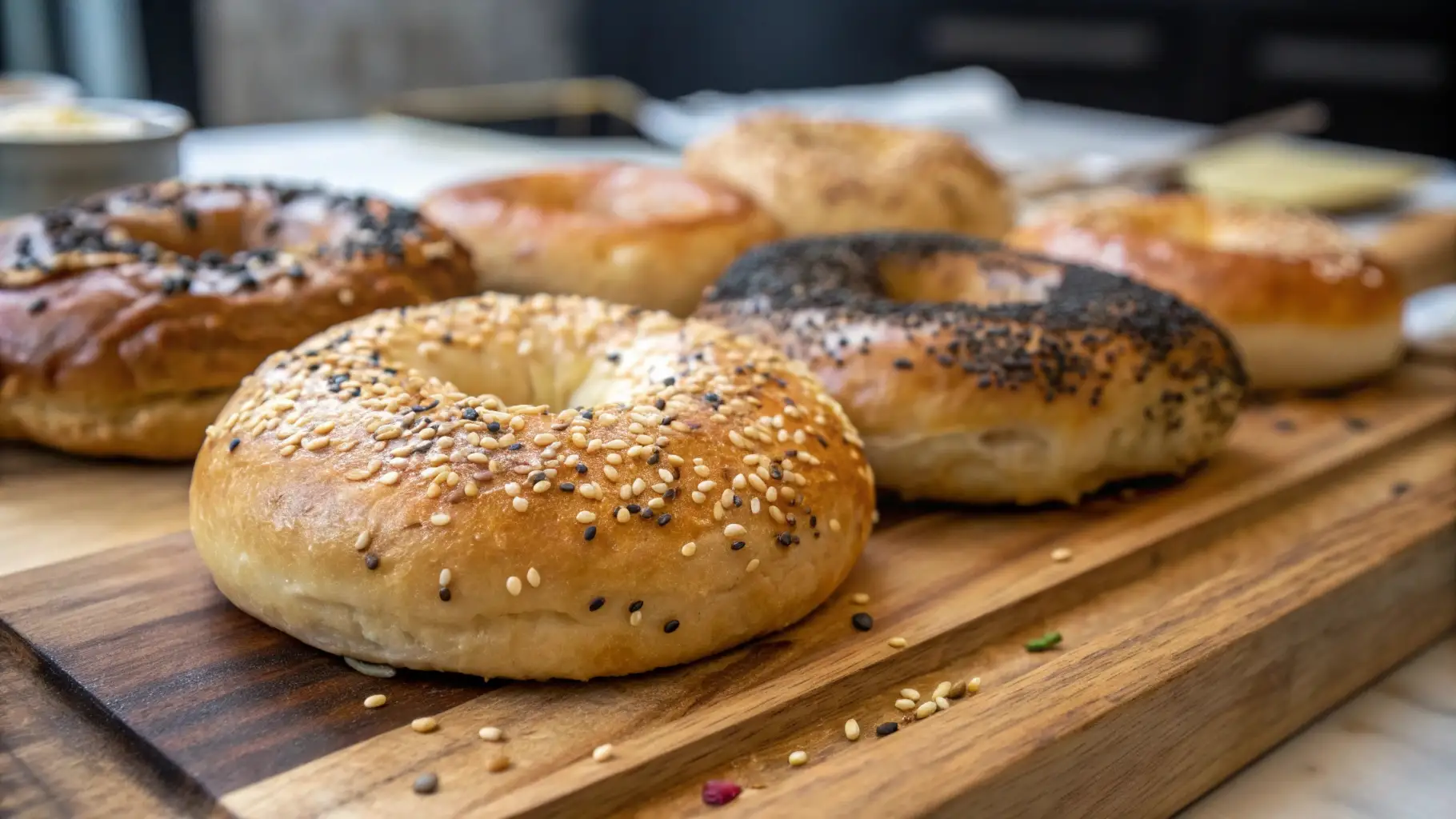
New York bagels have a special kind of magic: a glossy crust, a chewy bite, and that unmistakable fresh-baked smell. If you’ve ever felt intimidated by homemade bagels, this beginner-friendly recipe will change that. You’ll learn the simple rhythm—mix, rest, shape, boil, bake—and why each step matters.
No fancy equipment is needed, just a little patience and a few pantry staples. By the end, you’ll have a dozen bakery-style bagels you’ll be proud to share.
What Makes This Recipe So Good
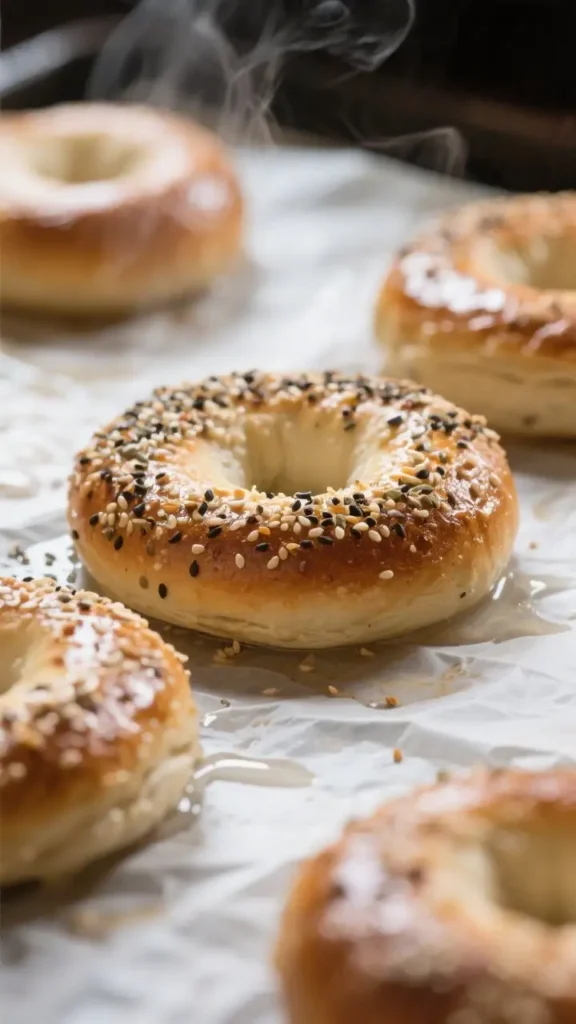
- Authentic texture and flavor: These bagels are chewy inside with a shiny, crisp crust—just like a New York deli.
- Beginner-friendly method: Clear steps, simple ingredients, and flexible timing make it approachable for first-timers.
- Boiling with barley malt or honey: This adds color, shine, and a hint of traditional bagel flavor.
- Overnight option: A cold proof boosts flavor and makes baking easier in the morning.
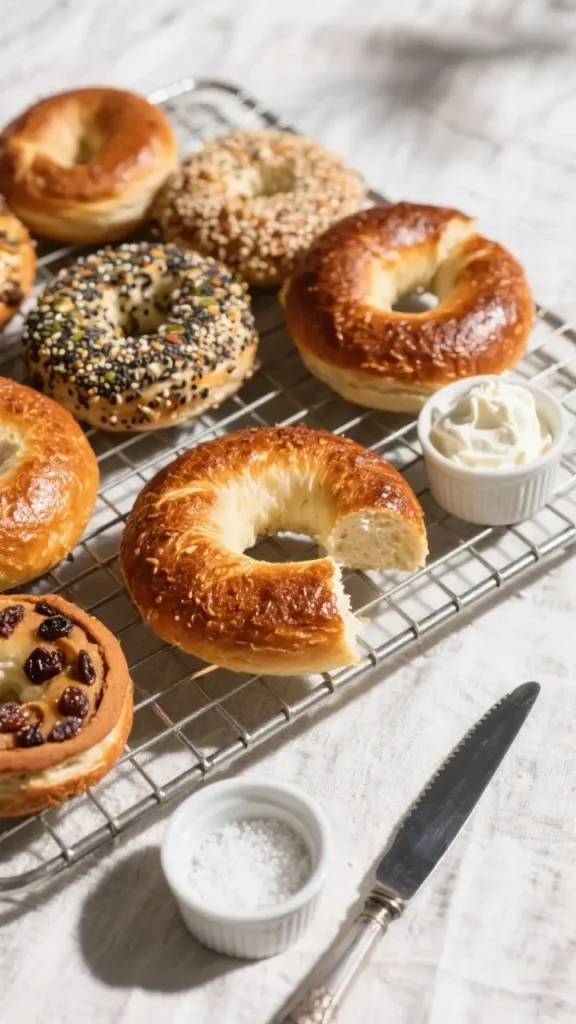
- Customizable: Sesame, poppy, everything seasoning, cinnamon-raisin—use this dough as a base for all your favorites.
Ingredients
- Bread flour: 5 cups (about 600 g), plus extra for dusting
- Warm water: 1.5 cups (360 ml), around 100–105°F (38–41°C)
- Instant yeast: 2 teaspoons (or active dry yeast, 2.25 teaspoons)
- Sugar: 1 tablespoon
- Barley malt syrup or honey: 1 tablespoon for the dough, plus 2 tablespoons for the boiling water
- Fine sea salt: 2 teaspoons
- Optional toppings: sesame seeds, poppy seeds, everything seasoning, flaky salt
- Optional mix-ins: 1/2 cup raisins (for cinnamon-raisin), 1 teaspoon cinnamon
Step-by-Step Instructions
- Make the dough: In a large bowl, whisk warm water, sugar, and yeast. If using active dry yeast, let it sit for 5 minutes until foamy.
Add barley malt (or honey), salt, and most of the flour. Mix with a spoon until a shaggy dough forms, then add the remaining flour as needed to make a firm dough.
- Knead until smooth: Turn the dough onto a lightly floured surface. Knead for 8–10 minutes until smooth, elastic, and slightly tacky but not sticky.
Add small sprinkles of flour only if it’s sticking badly. A stand mixer with a dough hook works too (6–8 minutes on medium-low).
- First rise: Place the dough in a lightly oiled bowl, cover, and let it rise at room temperature until puffy and about doubled, 60–90 minutes depending on your kitchen warmth.
- Divide and pre-shape: Turn the dough out and gently deflate. Divide into 10–12 equal pieces (about 90–100 g each for standard bagels).
Shape each into a tight ball by tucking edges under and rolling against the counter.
- Shape the bagels: Use the poke method: flour your finger, poke a hole in the center of each ball, then gently stretch to a 1.5–2 inch hole. They’ll spring back a bit—that’s fine. Place on parchment-lined baking sheets lightly dusted with flour or semolina.
- Proof: Cover loosely and let the shaped bagels rest 20–30 minutes.
They should look slightly puffed but still firm. For deeper flavor, cover and refrigerate up to 24 hours; bake straight from the fridge.
- Preheat and prepare the water bath: Heat oven to 450°F (232°C). Bring a wide pot of water to a steady boil.
Stir in 2 tablespoons barley malt syrup or honey and 1 teaspoon baking soda (optional for extra browning). Keep the water at a gentle boil.
- Boil the bagels: Boil 2–3 bagels at a time for 30–45 seconds per side. Longer boils mean chewier crusts.
Remove with a slotted spoon and place back on the parchment. While still tacky, sprinkle with toppings.
- Bake: Bake for 16–20 minutes, rotating pans halfway, until deep golden brown with a shiny surface. If you like them darker, give them another 2–3 minutes.
- Cool properly: Transfer to a wire rack and let cool at least 20 minutes.
This sets the crumb and makes slicing easier.
How to Store
- Room temperature: Keep in a paper bag or loosely covered container for up to 24 hours. Avoid sealed plastic at room temp—it makes the crust soft.
- Freeze: Slice bagels, then freeze in a zip-top bag for up to 2 months. Toast straight from frozen for the best texture.
- Refresh: Day-old bagels come back to life with a quick toast or 5 minutes in a 350°F (175°C) oven.
Why This is Good for You
- Simple, real ingredients: Flour, water, yeast, and a touch of sweetener.
No additives, and you control the sodium and sugar.
- Satisfying energy: The mix of complex carbs and a chewy crumb keeps you full and focused.
- Custom toppings: Add fiber and minerals with seeds, or pair with protein like eggs, smoked salmon, or cream cheese.
- Mindful baking: Hands-on kneading and shaping can be relaxing and rewarding—plus you get fresh bagels at the end.
What Not to Do
- Don’t skip the boil: That quick bath is what gives bagels their classic crust and shine.
- Don’t use all-purpose flour unless you must: Bread flour’s higher protein makes the chew. If you use AP, expect a softer bite.
- Don’t over-flour the dough: Too much flour makes tough bagels. Aim for slightly tacky, not dry.
- Don’t overproof: If the shaped bagels double in size, they can deflate in the boil.
Slightly puffy is perfect.
- Don’t crowd the pot or the pan: Give each bagel space to boil and bake evenly.
Alternatives
- No barley malt? Use honey or brown sugar. Barley malt is traditional, but honey still gives great color and flavor.
- Whole wheat version: Swap 1–2 cups of bread flour for whole wheat. Add a splash more water if needed; whole wheat absorbs more.
- Overnight cold proof: After shaping, refrigerate up to 24 hours.
Boil and bake straight from the fridge for richer flavor.
- Flavor variations: Cinnamon-raisin (add 1/2 cup raisins and 1 teaspoon cinnamon), onion or garlic (top with dried onion/garlic flakes), or cheddar-jalapeño (press grated cheese and sliced jalapeños on top after boiling).
- Vegan-friendly: The base recipe is naturally dairy-free and egg-free. Brush with water instead of egg wash if you usually use one.
Explore more irresistible bread recipes you won’t want to miss:
FAQ
Can I make these without a stand mixer?
Yes. A sturdy spoon and your hands are enough.
Knead for 8–10 minutes until the dough is smooth and elastic. It should spring back when poked.
What if my dough is too sticky?
Add flour 1 tablespoon at a time while kneading. Aim for tacky but not gluey.
Humidity and flour brands vary, so adjust gradually.
Why are my bagels flat after boiling?
They were likely overproofed. Next time, shorten the final rest or refrigerate the shaped bagels and boil them cold. Also make sure the water is at a gentle boil, not a wild churn.
How big should the hole be?
Bigger than you think—about 1.5–2 inches.
The hole shrinks during proofing, boiling, and baking. Starting larger prevents a “closed doughnut” look.
Can I use all-purpose flour?
You can, but expect a softer, less chewy result. If using AP flour, knead thoroughly and avoid adding excess flour to keep some chew.
Do I need egg wash for shine?
No.
The shine mostly comes from boiling with barley malt or honey. Egg wash adds gloss and helps toppings stick, but it’s optional.
How do I get toppings to stick?
Add them right after boiling while the surface is still tacky. Press gently so the seeds adhere, or use a light egg wash before baking.
What’s the best way to slice bagels safely?
Let them cool, then use a serrated knife and slice with the bagel flat on a cutting board, hand on top, fingers lifted.
Or use a bagel slicer for extra safety.
In Conclusion
Homemade New York bagels are well within reach, even if you’re brand new to bread baking. With a solid dough, a quick boil, and a hot oven, you’ll get that classic chew and shine every time. Keep the steps simple, don’t rush the rests, and let the ingredients do the work.
Once you taste your own fresh batch, store-bought will be hard to go back to. Enjoy them warm with butter, cream cheese, or your favorite toppings—and make another dozen soon.
Perfect New York Bagels Recipe for Beginners – Chewy, Shiny, and Surprisingly Simple
Ingredients
- Bread flour: 5 cups (about 600 g), plus extra for dusting
- Warm water: 1.5 cups (360 ml), around 100–105°F (38–41°C)
- Instant yeast: 2 teaspoons (or active dry yeast, 2.25 teaspoons)
- Sugar: 1 tablespoon
- Barley malt syrup or honey: 1 tablespoon for the dough, plus 2 tablespoons for the boiling water
- Fine sea salt: 2 teaspoons
- Optional toppings: sesame seeds, poppy seeds, everything seasoning, flaky salt
- Optional mix-ins: 1/2 cup raisins (for cinnamon-raisin), 1 teaspoon cinnamon
Instructions
- Make the dough: In a large bowl, whisk warm water, sugar, and yeast. If using active dry yeast, let it sit for 5 minutes until foamy.Add barley malt (or honey), salt, and most of the flour. Mix with a spoon until a shaggy dough forms, then add the remaining flour as needed to make a firm dough.
- Knead until smooth: Turn the dough onto a lightly floured surface. Knead for 8–10 minutes until smooth, elastic, and slightly tacky but not sticky.Add small sprinkles of flour only if it’s sticking badly. A stand mixer with a dough hook works too (6–8 minutes on medium-low).
- First rise: Place the dough in a lightly oiled bowl, cover, and let it rise at room temperature until puffy and about doubled, 60–90 minutes depending on your kitchen warmth.
- Divide and pre-shape: Turn the dough out and gently deflate. Divide into 10–12 equal pieces (about 90–100 g each for standard bagels).Shape each into a tight ball by tucking edges under and rolling against the counter.
- Shape the bagels: Use the poke method: flour your finger, poke a hole in the center of each ball, then gently stretch to a 1.5–2 inch hole. They’ll spring back a bit—that’s fine. Place on parchment-lined baking sheets lightly dusted with flour or semolina.
- Proof: Cover loosely and let the shaped bagels rest 20–30 minutes.They should look slightly puffed but still firm. For deeper flavor, cover and refrigerate up to 24 hours; bake straight from the fridge.
- Preheat and prepare the water bath: Heat oven to 450°F (232°C). Bring a wide pot of water to a steady boil.Stir in 2 tablespoons barley malt syrup or honey and 1 teaspoon baking soda (optional for extra browning). Keep the water at a gentle boil.
- Boil the bagels: Boil 2–3 bagels at a time for 30–45 seconds per side. Longer boils mean chewier crusts.Remove with a slotted spoon and place back on the parchment. While still tacky, sprinkle with toppings.
- Bake: Bake for 16–20 minutes, rotating pans halfway, until deep golden brown with a shiny surface. If you like them darker, give them another 2–3 minutes.
- Cool properly: Transfer to a wire rack and let cool at least 20 minutes.This sets the crumb and makes slicing easier.