
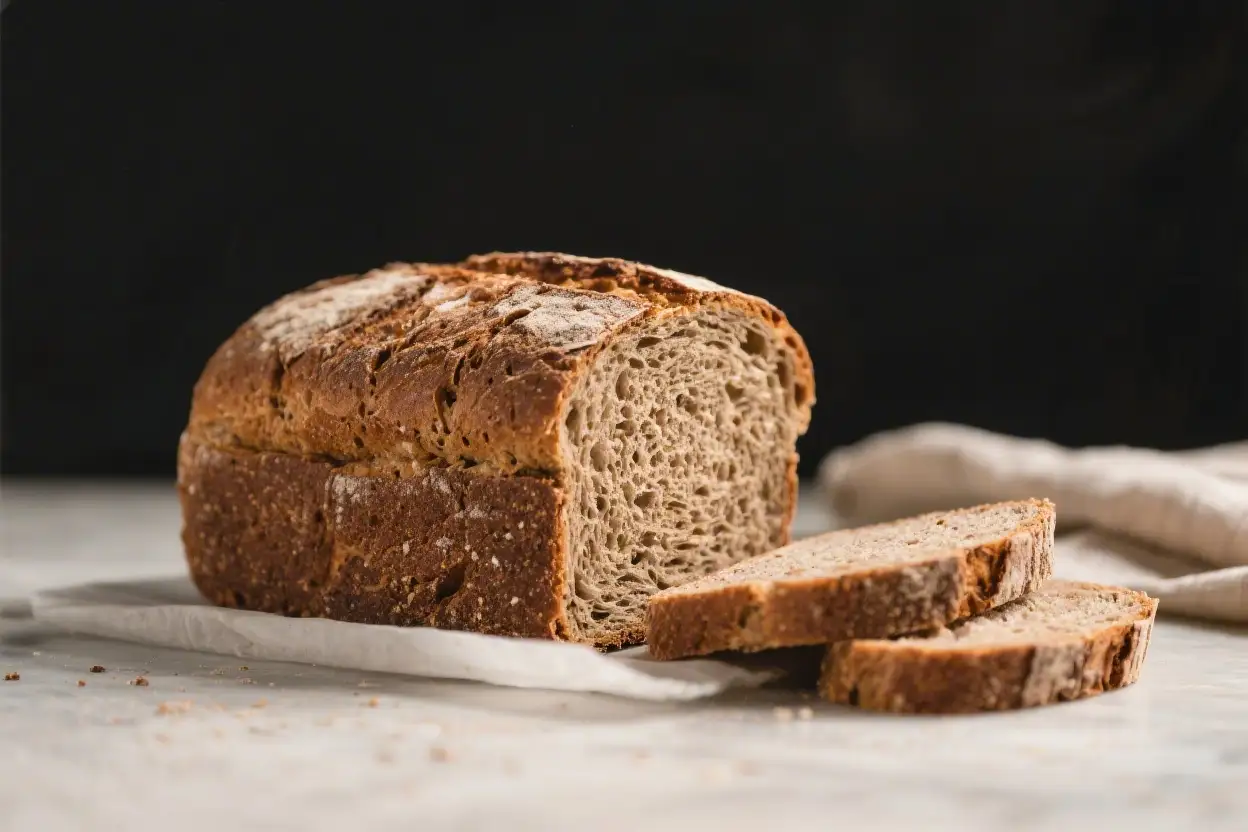
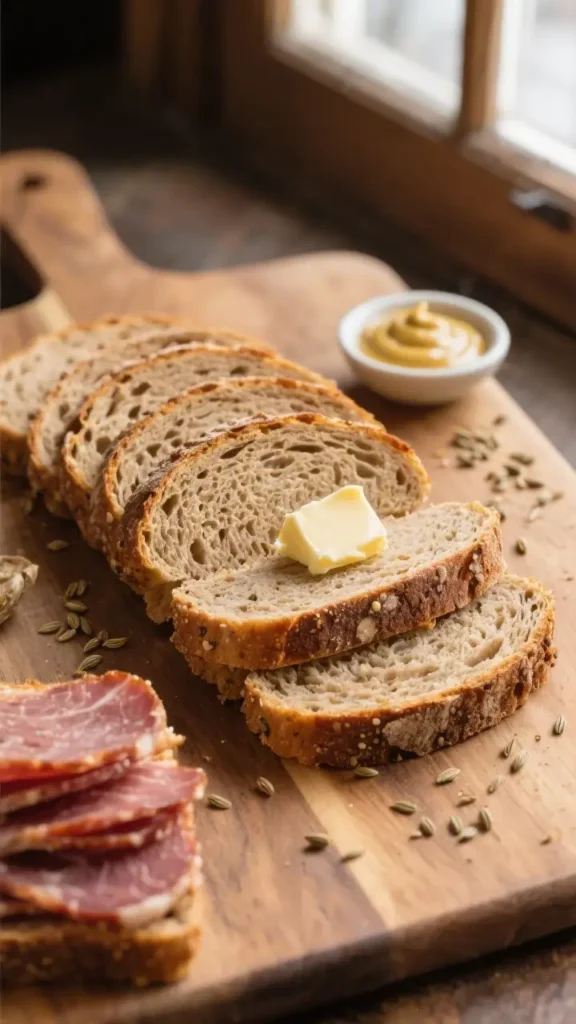
There’s nothing quite like a slice of real deli-style rye bread—chewy, aromatic, and perfect with butter or piled high with pastrami. Making it at home is easier than you might think, and the results are far better than most store-bought loaves. This recipe gives you that classic tang, a sturdy crumb, and a thin, crisp crust.
If you enjoy baking bread or just love a great sandwich, this is a satisfying project with a big payoff.
What Makes This Recipe So Good
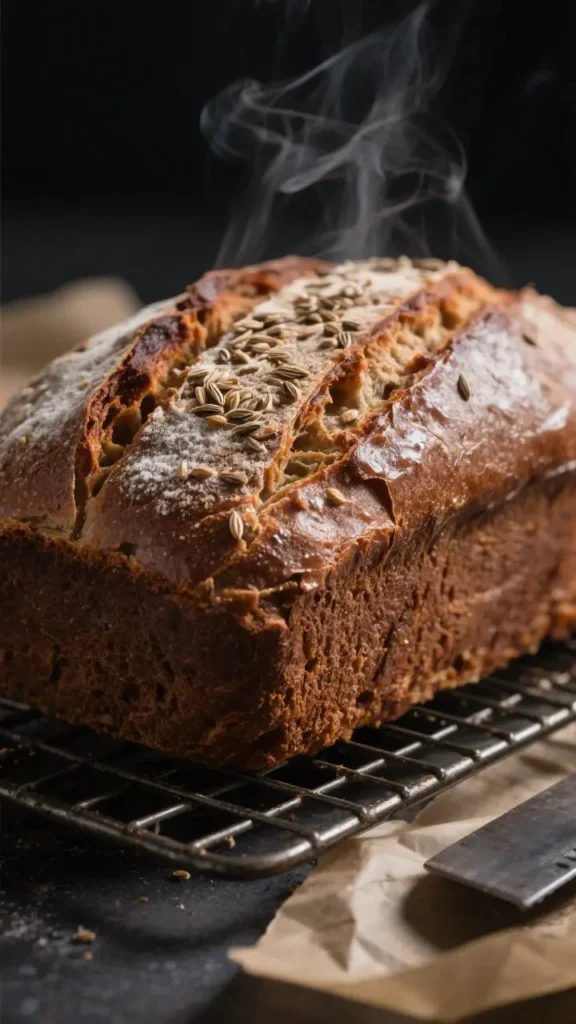
- Authentic deli flavor: Caraway seeds, rye flour, and a touch of acidity create that unmistakable New York–style taste.
- Perfect texture: A blend of bread flour and rye flour keeps the loaf sturdy yet tender, with a good chew for slicing thin.
- Reliable rise: Instant yeast and a simple rye “soaker” help the dough rise well, even with the heavier rye flour.
- Balanced crust: A cornstarch glaze gives the loaf a light sheen and a delicate, crisp finish.
- Great for sandwiches: This bread holds up to juicy fillings without falling apart, just like a proper deli loaf.
What You’ll Need
- Rye soaker (optional but recommended):
- 1/2 cup medium rye flour
- 1/3 cup warm water
- 1 teaspoon apple cider vinegar or lemon juice
- Dough:
- 2 cups bread flour
- 1 1/2 cups medium rye flour (plus extra for dusting)
- 2 teaspoons instant yeast
- 2 teaspoons kosher salt
- 1 tablespoon caraway seeds (plus more for topping, optional)
- 1 tablespoon sugar or honey
- 1 tablespoon vegetable oil or softened butter
- 1 cup warm water (plus 1–3 tablespoons more as needed)
- 1 tablespoon unsulfured molasses (optional, for color and depth)
- 1 tablespoon vital wheat gluten (optional, for extra structure)
- Cornstarch glaze (for shine):
- 1/2 teaspoon cornstarch
- 1/4 cup water
- Tools:
- Stand mixer with dough hook (or a bowl and sturdy spoon)
- Large mixing bowl
- Baking sheet or loaf pan (8.5×4.5 inches)
- Parchment paper
- Sharp knife or lame for scoring
Instructions
- Make the rye soaker: In a small bowl, mix 1/2 cup rye flour, 1/3 cup warm water, and vinegar. Cover and let rest 30–60 minutes. This softens the rye and boosts flavor.
- Mix the dry ingredients: In a large bowl, combine bread flour, 1 1/2 cups rye flour, instant yeast, salt, caraway seeds, sugar, and vital wheat gluten (if using).
- Add the wet ingredients: Stir in the rye soaker, warm water, oil or butter, and molasses (if using).
Mix until a shaggy dough forms. If it’s too dry, add water 1 tablespoon at a time.
- Knead the dough: Knead by hand for 8–10 minutes or in a stand mixer on medium-low for 5–6 minutes. The dough will be slightly tacky but should pull away from the bowl.
Dust lightly with rye flour if sticky, but avoid over-flouring.
- First rise: Shape into a ball and place in a lightly oiled bowl. Cover and let rise in a warm spot until puffy and nearly doubled, about 60–90 minutes.
- Shape the loaf: Turn the dough onto a lightly floured surface. Gently press into a rectangle, then roll it up tightly into a loaf, pinching the seam closed.
Place seam-side down on a parchment-lined baking sheet or into a greased loaf pan.
- Second rise: Cover and let rise again until the loaf has risen by about 60–75% and springs back slowly when poked, 45–75 minutes depending on room temperature.
- Preheat the oven: Heat to 425°F (220°C). Place a small oven-safe pan on the lower rack for steam (optional, improves crust).
- Make the cornstarch glaze: In a small saucepan, whisk cornstarch with 1 tablespoon water to make a slurry. Add remaining water, bring to a brief boil, then cool.
Brush a thin layer over the risen loaf. Sprinkle extra caraway seeds on top if you like.
- Score and bake: Use a sharp knife or lame to score 3 diagonal slashes across the top. Pour 1/2 cup hot water into the preheated pan for steam (if using).
Bake 15 minutes at 425°F, then reduce to 375°F (190°C) and bake 18–25 minutes more, until deep brown and the internal temperature reaches about 200–205°F (93–96°C).
- Finish with glaze: Brush a light second coat of cornstarch glaze on the hot loaf for shine. Cool completely on a rack—at least 1 hour—before slicing for clean, thin slices.
How to Store
- Room temperature: Wrap the fully cooled loaf in a clean kitchen towel or paper bag for 24 hours, then move to a bread box or wrap loosely in foil. Keeps 3–4 days.
- Freezer: Slice the bread, wrap tightly in plastic, then place in a freezer bag.
Freeze up to 2 months. Toast from frozen or thaw at room temperature.
- Avoid the fridge: Refrigeration speeds staling. Keep it at room temp or freeze.
Health Benefits
- More fiber: Rye flour provides dietary fiber that supports digestion and helps keep you satisfied longer.
- Lower glycemic impact: Compared with many white breads, rye can lead to a slower rise in blood sugar for some people.
- Micronutrients: Rye contains minerals like magnesium, phosphorus, and iron, plus beneficial compounds from caraway seeds.
- Fewer additives: Homemade bread skips preservatives and gives you control over salt and sugar levels.
What Not to Do
- Don’t skip the rest times: Rye needs time to hydrate.
Rushing the rises leads to a dense loaf.
- Don’t add too much flour: A slightly tacky dough is normal. Over-flouring makes the bread dry and tight.
- Don’t cut while hot: Slicing too soon compresses the crumb and makes gummy slices. Let it cool fully.
- Don’t overproof: If the dough doubles and looks fragile, it may collapse in the oven.
Aim for a puffy, not wobbly, rise.
- Don’t skip salt: Salt controls yeast and builds flavor. Reducing it too much can make the loaf bland and weak.
Alternatives
- Seed variations: Swap or mix seeds—fennel, anise, or nigella—for a different aroma profile.
- Sourdough rye: Replace the yeast with 150 g active sourdough starter, reduce water slightly, and extend rises until doubled. Expect a tangier loaf and longer fermentation.
- Onion rye: Fold in 1/2 cup finely chopped sautéed onions (cooled) during mixing for deli-onion flavor.
- Marble rye look: Split the dough, knead 1–2 teaspoons cocoa powder into half for color (not flavor), then twist and shape together.
- Whole-grain boost: Replace up to 1/2 cup bread flour with whole wheat for a heartier crumb.
Explore more irresistible bread recipes you won’t want to miss:
FAQ
Can I use only rye flour?
Rye alone doesn’t form strong gluten, so the loaf will be very dense and won’t rise much.
A blend of bread flour and rye flour gives you that classic deli texture with good sliceability.
What kind of rye flour should I buy?
Medium rye is the most versatile for this recipe. Light rye will be milder and lighter in color; dark or whole rye will be stronger, denser, and may need a touch more water.
Do I need caraway seeds?
No, but they’re traditional and add the signature deli flavor. If you’re not a fan, leave them out or use fennel seeds for a softer, sweet-licorice note.
Why use a cornstarch glaze?
It creates a classic deli-style sheen and a thin, crisp crust without heavy egg wash.
It also helps any seeds stick to the top.
How do I get a better rise with rye?
Use instant yeast, keep the dough slightly warm (75–80°F), and avoid adding too much extra flour. A longer first rise and proper shaping also help.
My loaf split on the side. What happened?
That’s usually from under-proofing or shallow scoring.
Let the loaf rise until puffy and score at a slight angle about 1/4 inch deep to guide the expansion.
Can I bake this in a Dutch oven?
Yes. Shape as a round, proof in a parchment-lined bowl, preheat the Dutch oven to 425°F, and bake covered for 20 minutes, then uncovered at 375°F for 15–20 minutes more.
What if I don’t have molasses?
Skip it or use honey. Molasses adds color and a hint of bittersweet depth, but the bread is still excellent without it.
How thin can I slice it?
Very thin once fully cooled.
For deli-worthy slices, use a sharp serrated knife and gentle sawing motions, or slice the next day when the crumb sets even more.
Is this bread vegan?
Yes, as long as you use oil instead of butter and skip any non-vegan add-ins. Everything else in the base recipe is plant-based.
In Conclusion
Homemade deli rye delivers big flavor, a sturdy crumb, and that nostalgic bakery aroma right from your kitchen. With a straightforward process and a few small touches—like a rye soaker, caraway, and a simple glaze—you’ll get professional results without fuss.
Bake it for weekend sandwiches, toast it with butter, or pair it with soup. However you slice it, this rye earns a permanent spot in your bread rotation.
Traditional Deli Rye Bread Recipe Made at Home – Simple, Hearty, and Flavorful
Ingredients
- Rye soaker (optional but recommended): 1/2 cup medium rye flour
- 1/3 cup warm water
- 1 teaspoon apple cider vinegar or lemon juice
- Dough: 2 cups bread flour
- 1 1/2 cups medium rye flour (plus extra for dusting)
- 2 teaspoons instant yeast
- 2 teaspoons kosher salt
- 1 tablespoon caraway seeds (plus more for topping, optional)
- 1 tablespoon sugar or honey
- 1 tablespoon vegetable oil or softened butter
- 1 cup warm water (plus 1–3 tablespoons more as needed)
- 1 tablespoon unsulfured molasses (optional, for color and depth)
- 1 tablespoon vital wheat gluten (optional, for extra structure)
- Cornstarch glaze (for shine): 1/2 teaspoon cornstarch
- 1/4 cup water
- Tools: Stand mixer with dough hook (or a bowl and sturdy spoon)
- Large mixing bowl
- Baking sheet or loaf pan (8.5×4.5 inches)
- Parchment paper
- Sharp knife or lame for scoring
Instructions
- Make the rye soaker: In a small bowl, mix 1/2 cup rye flour, 1/3 cup warm water, and vinegar. Cover and let rest 30–60 minutes. This softens the rye and boosts flavor.
- Mix the dry ingredients: In a large bowl, combine bread flour, 1 1/2 cups rye flour, instant yeast, salt, caraway seeds, sugar, and vital wheat gluten (if using).
- Add the wet ingredients: Stir in the rye soaker, warm water, oil or butter, and molasses (if using).Mix until a shaggy dough forms. If it’s too dry, add water 1 tablespoon at a time.
- Knead the dough: Knead by hand for 8–10 minutes or in a stand mixer on medium-low for 5–6 minutes. The dough will be slightly tacky but should pull away from the bowl.Dust lightly with rye flour if sticky, but avoid over-flouring.
- First rise: Shape into a ball and place in a lightly oiled bowl. Cover and let rise in a warm spot until puffy and nearly doubled, about 60–90 minutes.
- Shape the loaf: Turn the dough onto a lightly floured surface. Gently press into a rectangle, then roll it up tightly into a loaf, pinching the seam closed.Place seam-side down on a parchment-lined baking sheet or into a greased loaf pan.
- Second rise: Cover and let rise again until the loaf has risen by about 60–75% and springs back slowly when poked, 45–75 minutes depending on room temperature.
- Preheat the oven: Heat to 425°F (220°C). Place a small oven-safe pan on the lower rack for steam (optional, improves crust).
- Make the cornstarch glaze: In a small saucepan, whisk cornstarch with 1 tablespoon water to make a slurry. Add remaining water, bring to a brief boil, then cool.Brush a thin layer over the risen loaf. Sprinkle extra caraway seeds on top if you like.
- Score and bake: Use a sharp knife or lame to score 3 diagonal slashes across the top. Pour 1/2 cup hot water into the preheated pan for steam (if using).Bake 15 minutes at 425°F, then reduce to 375°F (190°C) and bake 18–25 minutes more, until deep brown and the internal temperature reaches about 200–205°F (93–96°C).
- Finish with glaze: Brush a light second coat of cornstarch glaze on the hot loaf for shine. Cool completely on a rack—at least 1 hour—before slicing for clean, thin slices.