
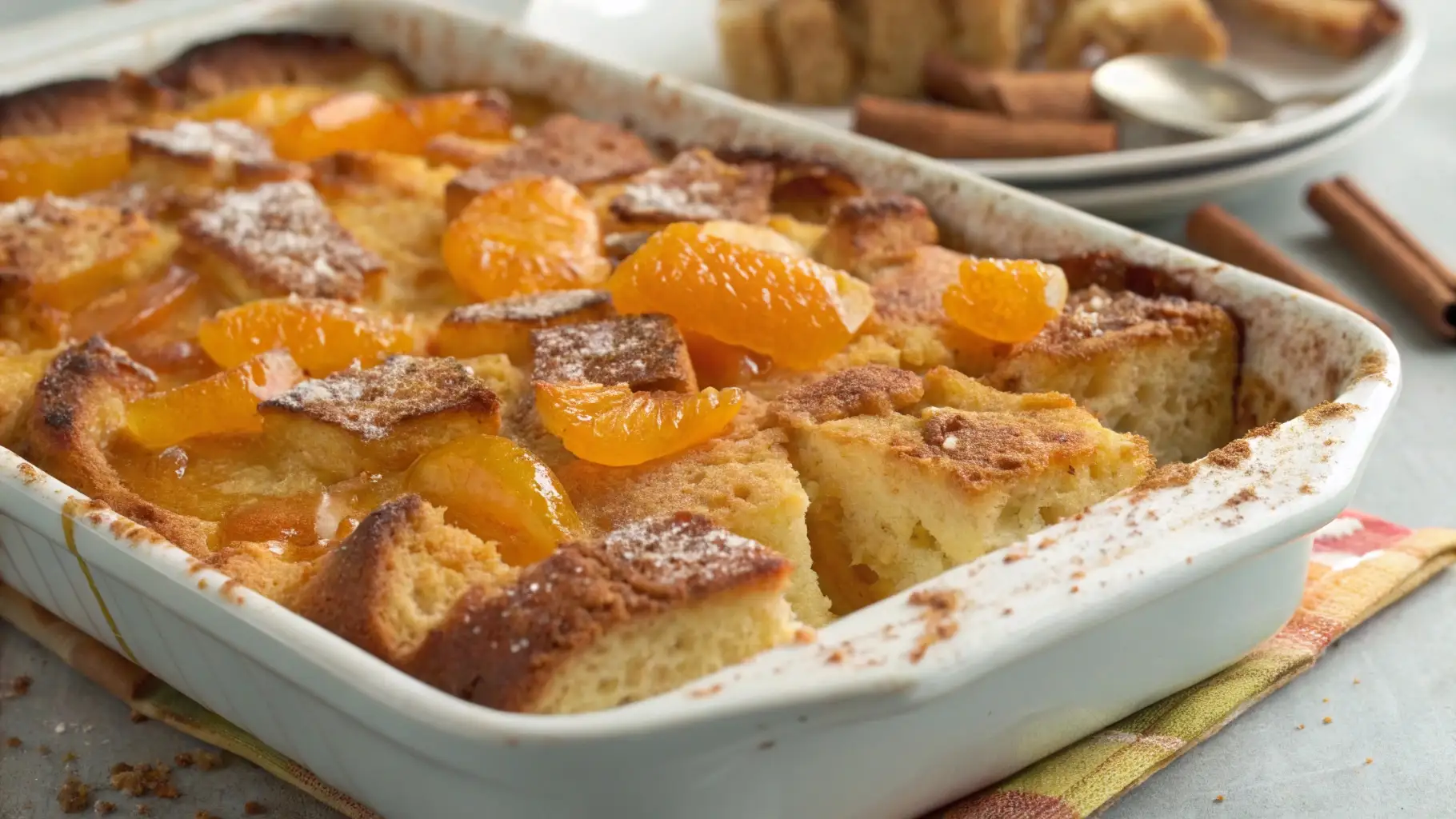
Warm, custardy bread pudding meets the sunny kick of orange marmalade in this cozy dessert that feels like a hug. It’s simple enough for a weeknight but special enough for guests. You get crispy, caramelized edges, a silky center, and a citrus glaze that keeps every bite bright.
The best part? It uses pantry staples and slightly stale bread, making it budget-friendly and low-stress.
What Makes This Recipe So Good
This bread pudding balances sweet and tart beautifully. The orange marmalade brings bold flavor without extra fuss, and a little vanilla and cinnamon round everything out.
You’ll get a soft, custardy interior with golden, toasty tops—exactly what a great bread pudding should be. It comes together fast, bakes in under an hour, and reheats like a dream. Plus, the citrus notes make it feel lighter than most heavy desserts.
Shopping List
- Bread: 1 loaf day-old brioche, challah, or French bread (about 12–14 ounces)
- Orange marmalade: 3/4 cup, plus extra for glazing
- Milk: 1 1/2 cups (whole milk preferred)
- Heavy cream: 1 cup
- Eggs: 4 large
- Sugar: 1/2 cup granulated
- Vanilla extract: 2 teaspoons
- Orange zest: From 1 large orange
- Cinnamon: 1/2 teaspoon
- Salt: 1/4 teaspoon
- Butter: 2 tablespoons, melted (plus more for greasing)
- Optional add-ins: 1/2 cup golden raisins, chopped dried apricots, or chocolate chips
- Optional topping: Powdered sugar for dusting or lightly sweetened whipped cream
How to Make It

- Prep the pan and oven. Heat the oven to 350°F (175°C).
Grease a 9×13-inch baking dish or a deep 2-quart casserole with butter.
- Cube the bread. Cut the bread into 1- to 1.5-inch cubes. If it’s very fresh, spread on a baking sheet and toast for 8–10 minutes to dry it out a bit.
- Make the custard. In a large bowl, whisk together milk, cream, eggs, sugar, vanilla, orange zest, cinnamon, and salt until smooth.
- Flavor with marmalade. Warm the marmalade in the microwave for 20–30 seconds to loosen. Whisk 1/2 cup of it into the custard.
Reserve the remaining 1/4 cup for later.
- Combine and soak. Add the bread cubes to the bowl and gently fold to coat every piece. Let it sit for 10–15 minutes, stirring once or twice so the custard absorbs evenly.
- Add extras (optional). Fold in raisins, apricots, or chocolate chips if using. Don’t overmix—keep the bread chunks intact.
- Transfer to the dish. Pour the mixture into the prepared pan.
Drizzle the melted butter over the top for extra golden edges.
- Marble with marmalade. Dollop the remaining 1/4 cup marmalade over the top in small spoonfuls. Use a knife to gently swirl it into the top layer.
- Bake. Bake for 40–50 minutes, until the center is set but still tender and the top is browned and crisp at the edges. A knife inserted near the center should come out mostly clean with a few moist crumbs.
- Finish and rest. Let the pudding rest for 10–15 minutes.
For shine, warm a tablespoon or two of marmalade and brush it over the top. Serve warm as is, or with whipped cream.
Keeping It Fresh
Cool leftovers completely, then cover and refrigerate for up to 4 days. Reheat individual portions in the microwave for 30–60 seconds, or warm the whole dish in a 300°F (150°C) oven for 15–20 minutes, covered with foil.
Bread pudding also freezes well. Wrap tightly and freeze for up to 2 months, then thaw in the fridge overnight before reheating.
Benefits of This Recipe
- Great use of leftovers: Stale bread becomes tender and luxurious instead of going to waste.
- Approachable ingredients: Everything is easy to find and budget-friendly.
- Balanced flavor: The bright citrus from marmalade keeps the dessert from feeling heavy.
- Make-ahead friendly: Assemble ahead and bake when you’re ready, or bake and reheat later.
- Customizable: Works with different breads, add-ins, and toppings.
Pitfalls to Watch Out For
- Using super fresh bread: It won’t soak up the custard well. Dry it out in the oven first.
- Overbaking: This leads to a dry, rubbery center.
Pull it when just set.
- Skipping the rest: The 10–15 minute rest after baking helps the custard settle and slice cleanly.
- Too much marmalade on top: A heavy layer can burn. Swirl small spoonfuls instead.
- Uneven soaking: Stir gently during the soak so every bite is custardy.
Variations You Can Try
- Chocolate-Orange Twist: Add 1/2 cup dark chocolate chips and a pinch of espresso powder. Finish with a light dusting of cocoa.
- Berry Burst: Sprinkle 1 cup fresh or frozen blueberries or raspberries over the top before baking.
The tart berries pair beautifully with orange.
- Almond Delight: Swap vanilla for almond extract (1 teaspoon) and add 1/2 cup sliced almonds. Top with a few extra almonds for crunch.
- Spiced Citrus: Add ground ginger and cardamom (1/4 teaspoon each) to the custard for a warm, fragrant twist.
- Cream Cheese Swirl: Dot the top with small spoonfuls of lightly sweetened, softened cream cheese and swirl with the marmalade.
- Gluten-Free: Use your favorite sturdy gluten-free bread. Let it soak a few extra minutes since some GF breads are drier.
- Dairy-Light: Use half-and-half or all milk and reduce the cream.
Texture will be slightly less rich but still delicious.
Explore more irresistible bread recipes you won’t want to miss:
FAQ
Can I make this ahead?
Yes. Assemble the bread and custard in the dish, cover, and refrigerate up to 12 hours. Swirl the marmalade on top just before baking to prevent sogginess, then bake as directed.
What bread works best?
Challah and brioche give the richest texture, while French bread or Italian bread holds shape well and toasts nicely.
Avoid very soft sandwich bread—it can turn mushy. Day-old is ideal.
Do I have to use heavy cream?
No. You can use all whole milk or a mix of milk and half-and-half.
The result will be slightly lighter but still soft and custardy.
How do I tell when it’s done?
The top should be golden and crisp, and the center should jiggle slightly but feel set. A knife inserted near the center should come out mostly clean. If it’s still very wet, bake a few more minutes.
Can I reduce the sugar?
Yes.
Because marmalade adds sweetness, you can cut the granulated sugar to 1/3 cup without losing balance. If your marmalade is very bitter, keep the full 1/2 cup.
What if I only have sweet orange jam, not marmalade?
That works, but the flavor will be sweeter and less complex. Add a bit of orange zest and a tiny pinch of salt to bring back the brightness and slight bitterness marmalade provides.
How do I keep the top from burning?
If the top browns too fast, tent the dish loosely with foil in the last 10–15 minutes.
A light butter drizzle helps browning in a controlled way, but don’t overload it with marmalade.
In Conclusion
This orange marmalade bread pudding is as comforting as it is cheerful. It turns humble ingredients into a dessert that feels special, with citrusy brightness in every bite. Serve it warm on a cold evening, or chill and reheat for a simple treat anytime.
Keep the method the same, play with add-ins, and you’ll have a reliable, crowd-pleasing dessert on repeat.
Best Orange Marmalade Bread Pudding Cozy Sweet Dessert – A Bright, Comforting Classic
Ingredients
- Bread: 1 loaf day-old brioche, challah, or French bread (about 12–14 ounces)
- Orange marmalade: 3/4 cup, plus extra for glazing
- Milk: 1 1/2 cups (whole milk preferred)
- Heavy cream: 1 cup
- Eggs: 4 large
- Sugar: 1/2 cup granulated
- Vanilla extract: 2 teaspoons
- Orange zest: From 1 large orange
- Cinnamon: 1/2 teaspoon
- Salt: 1/4 teaspoon
- Butter: 2 tablespoons, melted (plus more for greasing)
- Optional add-ins: 1/2 cup golden raisins, chopped dried apricots, or chocolate chips
- Optional topping: Powdered sugar for dusting or lightly sweetened whipped cream
Instructions
- Prep the pan and oven. Heat the oven to 350°F (175°C).Grease a 9×13-inch baking dish or a deep 2-quart casserole with butter.
- Cube the bread. Cut the bread into 1- to 1.5-inch cubes. If it’s very fresh, spread on a baking sheet and toast for 8–10 minutes to dry it out a bit.
- Make the custard. In a large bowl, whisk together milk, cream, eggs, sugar, vanilla, orange zest, cinnamon, and salt until smooth.
- Flavor with marmalade. Warm the marmalade in the microwave for 20–30 seconds to loosen. Whisk 1/2 cup of it into the custard.Reserve the remaining 1/4 cup for later.
- Combine and soak. Add the bread cubes to the bowl and gently fold to coat every piece. Let it sit for 10–15 minutes, stirring once or twice so the custard absorbs evenly.
- Add extras (optional). Fold in raisins, apricots, or chocolate chips if using. Don’t overmix—keep the bread chunks intact.
- Transfer to the dish. Pour the mixture into the prepared pan.Drizzle the melted butter over the top for extra golden edges.
- Marble with marmalade. Dollop the remaining 1/4 cup marmalade over the top in small spoonfuls. Use a knife to gently swirl it into the top layer.
- Bake. Bake for 40–50 minutes, until the center is set but still tender and the top is browned and crisp at the edges. A knife inserted near the center should come out mostly clean with a few moist crumbs.
- Finish and rest. Let the pudding rest for 10–15 minutes.For shine, warm a tablespoon or two of marmalade and brush it over the top. Serve warm as is, or with whipped cream.