
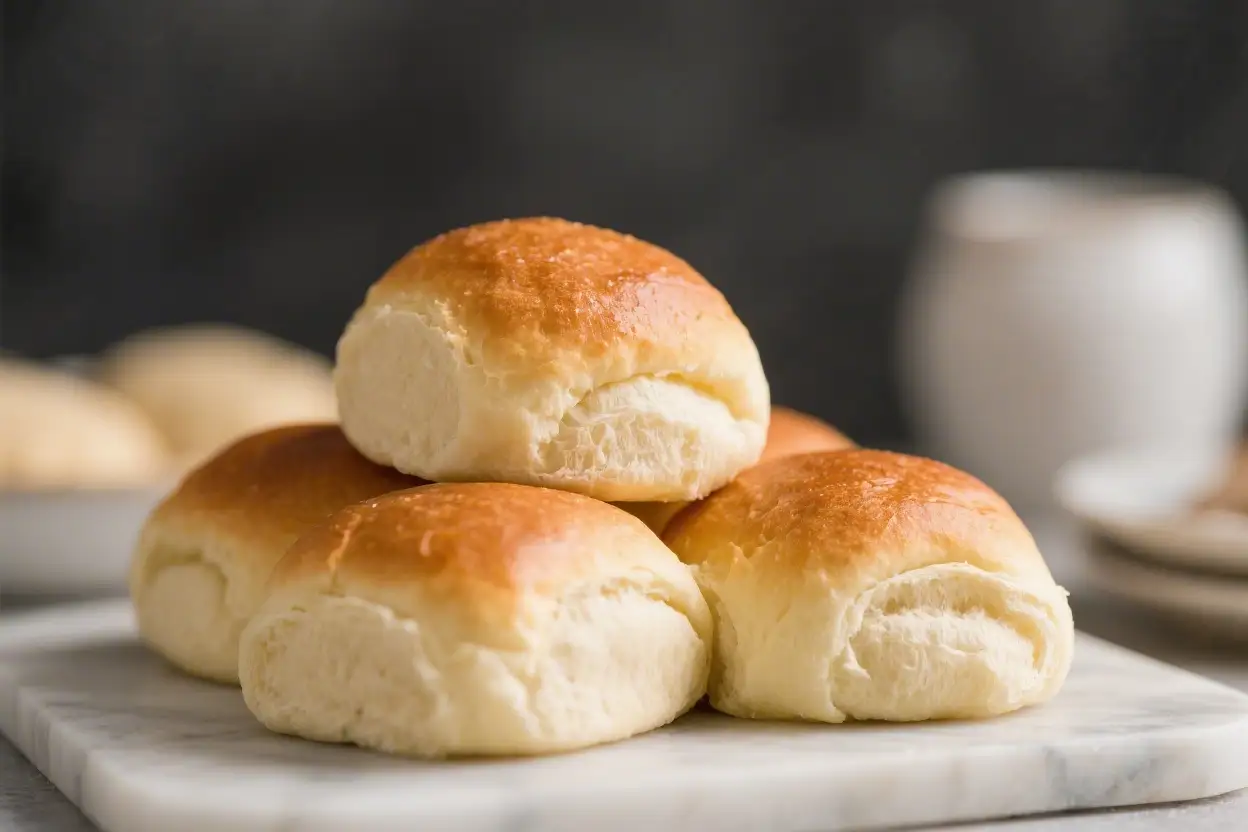
Parker House rolls are the kind of bread that make everyone pause at the table. They’re soft, buttery, and just a little sweet—perfect for soaking up gravy or enjoying warm with a pat of butter. This recipe keeps the classic fold that gives them their signature layers and tender crumb.
You don’t need to be a bread pro to pull these off; just follow the steps and give the dough a little time to rise. The result is a basket of golden, bakery-quality rolls that taste like pure comfort.
Why This Recipe Works
These Parker House rolls rely on a rich, enriched dough made with milk, butter, and a touch of sugar. That combination creates a soft, plush interior and a golden top.
The classic fold traps butter inside, adding layers and keeping the rolls extra tender.
Using instant yeast speeds up the process and keeps the dough predictable. A warm milk base helps the yeast wake up, while an overnight chill option gives you flexibility. Brushing the rolls with melted butter before and after baking delivers that iconic glossy finish and deep flavor.
What You’ll Need
- Whole milk: 1 cup (240 ml), warmed to about 110°F/43°C
- Instant yeast: 2 1/4 teaspoons (1 packet)
- Granulated sugar: 3 tablespoons
- Unsalted butter: 8 tablespoons (1/2 cup), melted and cooled slightly, plus more for brushing
- Eggs: 1 large whole egg + 1 egg yolk
- All-purpose flour: 3 1/2 to 4 cups (420–480 g), plus extra for dusting
- Kosher salt: 1 1/2 teaspoons
- Flaky sea salt (optional): For finishing
- Neutral oil or nonstick spray: For greasing the bowl
Instructions
- Warm the milk: Heat the milk until it’s warm to the touch, about 110°F/43°C.
It should feel like a warm bath, not hot. Too hot will kill the yeast.
- Combine wet ingredients: In a large bowl (or the bowl of a stand mixer), whisk the warm milk, sugar, melted butter, whole egg, and egg yolk until smooth.
- Add dry ingredients: Stir in 3 1/2 cups of flour and the kosher salt. Mix with a wooden spoon or the dough hook until a shaggy dough forms.
If the dough is very sticky, add more flour 1 tablespoon at a time.
- Knead the dough: Knead by hand on a lightly floured surface for 8–10 minutes, or in a stand mixer on medium-low for 5–7 minutes. The dough should be smooth, springy, and slightly tacky but not gluey.
- First rise: Lightly oil a bowl, place the dough inside, and turn to coat. Cover and let rise in a warm spot until doubled, about 60–90 minutes.
If your kitchen is cool, it may take longer.
- Prepare the pan and butter: Grease a 9×13-inch baking pan. Melt 2 tablespoons of butter for brushing.
- Shape the rolls: Turn the dough out onto a lightly floured surface. Pat or roll into a rectangle about 12×16 inches and 1/2 inch thick.
Using a bench scraper or knife, cut into 16 equal rectangles.
- Form the Parker House fold: Brush the surface lightly with melted butter. Fold each rectangle almost in half (like closing a book with the top edge offset slightly), then press gently to seal the folded edge. This creates the signature layered look.
- Pan the rolls: Arrange the folded rolls in the prepared pan, seam side down, snug but not crammed.
Leave a little space between them to allow for expansion.
- Second rise: Cover and let rise until puffy and touching, about 35–50 minutes. They should look airy and slightly jiggly when the pan moves.
- Preheat the oven: While the rolls rise, preheat to 350°F (175°C). Place an oven rack in the center.
- Bake: Brush the tops with more melted butter.
Bake for 18–22 minutes, until the rolls are lightly golden on top and reach an internal temperature of about 190°F (88°C).
- Finish with butter: Immediately brush the hot rolls with more melted butter. Sprinkle with flaky sea salt if you like. Cool in the pan for 10 minutes before serving.
Storage Instructions
- Room temperature: Keep cooled rolls in an airtight container for up to 2 days.
Rewarm in a 300°F (150°C) oven for 5–8 minutes to refresh.
- Freezer: Wrap tightly in plastic and foil and freeze for up to 2 months. Reheat from frozen at 325°F (165°C) for 12–15 minutes.
- Make-ahead (overnight option): After the first rise, cover the bowl and refrigerate the dough for up to 24 hours. Shape cold dough, let it rise until puffy, then bake.
- Par-bake for later: Bake until just set and pale (about 12–14 minutes).
Cool, freeze, then finish baking 6–8 minutes to serve.
Health Benefits
These rolls are an occasional treat, but there are a few upsides. Milk and eggs add protein and some vitamins like B12. Homemade bread also means no preservatives or unnecessary additives.
If you want a lighter option, you can reduce the butter brushed on top and swap part of the flour for whole wheat. Even a small swap improves fiber and micronutrient content without losing that soft texture.
Pitfalls to Watch Out For
- Milk too hot: If it’s above 120°F/49°C, it can kill the yeast. Aim for warm, not steaming.
- Too much flour: Over-flouring leads to dense rolls.
The dough should feel slightly tacky. Add flour sparingly.
- Under-kneading: Not developing enough gluten makes the rolls flat and crumbly. Knead until the dough springs back.
- Skipping the second rise: This step creates the pillowy texture.
Don’t rush it.
- Overbaking: These brown quickly. Pull them when golden with a soft top.
Recipe Variations
- Garlic herb: Stir 1–2 teaspoons of finely chopped rosemary or chives into the dough. Brush baked rolls with garlic butter.
- Honey butter: Replace 1 tablespoon of sugar with honey.
Finish with a honey-butter glaze.
- Buttermilk rolls: Swap milk for buttermilk for a slight tang and tender crumb. If the dough feels stiff, add 1–2 tablespoons of water.
- Cheddar chive: Fold 3/4 cup shredded sharp cheddar and 2 tablespoons chopped chives into the dough before shaping.
- Whole wheat blend: Use 1 cup whole wheat flour and 2 1/2 cups all-purpose. Add 1–2 tablespoons extra milk if needed.
Explore more irresistible bread recipes you won’t want to miss:
FAQ
Can I use active dry yeast instead of instant?
Yes.
Use the same amount, but proof it first: sprinkle active dry yeast over the warm milk with sugar and let it sit for 5–10 minutes until foamy. Then proceed with the recipe.
Do I need a stand mixer?
No. A wooden spoon and some elbow grease work just fine.
Just knead a little longer by hand until the dough is smooth and springy.
Why are my rolls dense?
Common causes are too much flour, under-kneading, or cutting the rise short. Make sure the dough stays slightly tacky, knead until elastic, and let it double in the first rise.
How can I make them ahead for a holiday meal?
Refrigerate the dough after the first rise for up to a day, or shape and refrigerate overnight. Bring to room temp, let them puff up, then bake right before serving.
What’s the best way to reheat leftovers?
Wrap the rolls in foil and warm in a 300°F (150°C) oven for 8–10 minutes.
A quick brush of butter before reheating helps restore softness and shine.
Can I make smaller or larger rolls?
Absolutely. Cut into 20–24 pieces for smaller rolls or 12 for larger. Adjust baking time down or up by a few minutes, watching for that light golden top.
Why is there an extra egg yolk?
The yolk adds richness, color, and tenderness.
It helps achieve that plush, bakery-style crumb that makes Parker House rolls special.
Do I have to do the classic fold?
No, but the fold creates layers and traps butter. If you prefer, shape into balls and snug them in the pan. They’ll still be soft and delicious.
Wrapping Up
These Soft Buttery Parker House Rolls are everything you want from a homemade bread: warm, tender, and full of buttery flavor.
With straightforward steps and simple ingredients, they’re easy enough for a weeknight and special enough for a holiday spread. Make a batch, brush on that last swipe of butter, and watch them disappear from the basket fast.
Soft Buttery Parker House Rolls Homemade Dinner Roll Recipe - Fluffy, Golden, and Irresistible
Ingredients
- Whole milk: 1 cup (240 ml), warmed to about 110°F/43°C
- Instant yeast: 2 1/4 teaspoons (1 packet)
- Granulated sugar: 3 tablespoons
- Unsalted butter: 8 tablespoons (1/2 cup), melted and cooled slightly, plus more for brushing
- Eggs: 1 large whole egg + 1 egg yolk
- All-purpose flour: 3 1/2 to 4 cups (420–480 g), plus extra for dusting
- Kosher salt: 1 1/2 teaspoons
- Flaky sea salt (optional): For finishing
- Neutral oil or nonstick spray: For greasing the bowl
Instructions
- Warm the milk: Heat the milk until it’s warm to the touch, about 110°F/43°C.It should feel like a warm bath, not hot. Too hot will kill the yeast.
- Combine wet ingredients: In a large bowl (or the bowl of a stand mixer), whisk the warm milk, sugar, melted butter, whole egg, and egg yolk until smooth.
- Add dry ingredients: Stir in 3 1/2 cups of flour and the kosher salt. Mix with a wooden spoon or the dough hook until a shaggy dough forms.If the dough is very sticky, add more flour 1 tablespoon at a time.
- Knead the dough: Knead by hand on a lightly floured surface for 8–10 minutes, or in a stand mixer on medium-low for 5–7 minutes. The dough should be smooth, springy, and slightly tacky but not gluey.
- First rise: Lightly oil a bowl, place the dough inside, and turn to coat. Cover and let rise in a warm spot until doubled, about 60–90 minutes.If your kitchen is cool, it may take longer.
- Prepare the pan and butter: Grease a 9x13-inch baking pan. Melt 2 tablespoons of butter for brushing.
- Shape the rolls: Turn the dough out onto a lightly floured surface. Pat or roll into a rectangle about 12x16 inches and 1/2 inch thick.Using a bench scraper or knife, cut into 16 equal rectangles.
- Form the Parker House fold: Brush the surface lightly with melted butter. Fold each rectangle almost in half (like closing a book with the top edge offset slightly), then press gently to seal the folded edge. This creates the signature layered look.
- Pan the rolls: Arrange the folded rolls in the prepared pan, seam side down, snug but not crammed.Leave a little space between them to allow for expansion.
- Second rise: Cover and let rise until puffy and touching, about 35–50 minutes. They should look airy and slightly jiggly when the pan moves.
- Preheat the oven: While the rolls rise, preheat to 350°F (175°C). Place an oven rack in the center.
- Bake: Brush the tops with more melted butter.Bake for 18–22 minutes, until the rolls are lightly golden on top and reach an internal temperature of about 190°F (88°C).
- Finish with butter: Immediately brush the hot rolls with more melted butter. Sprinkle with flaky sea salt if you like. Cool in the pan for 10 minutes before serving.