
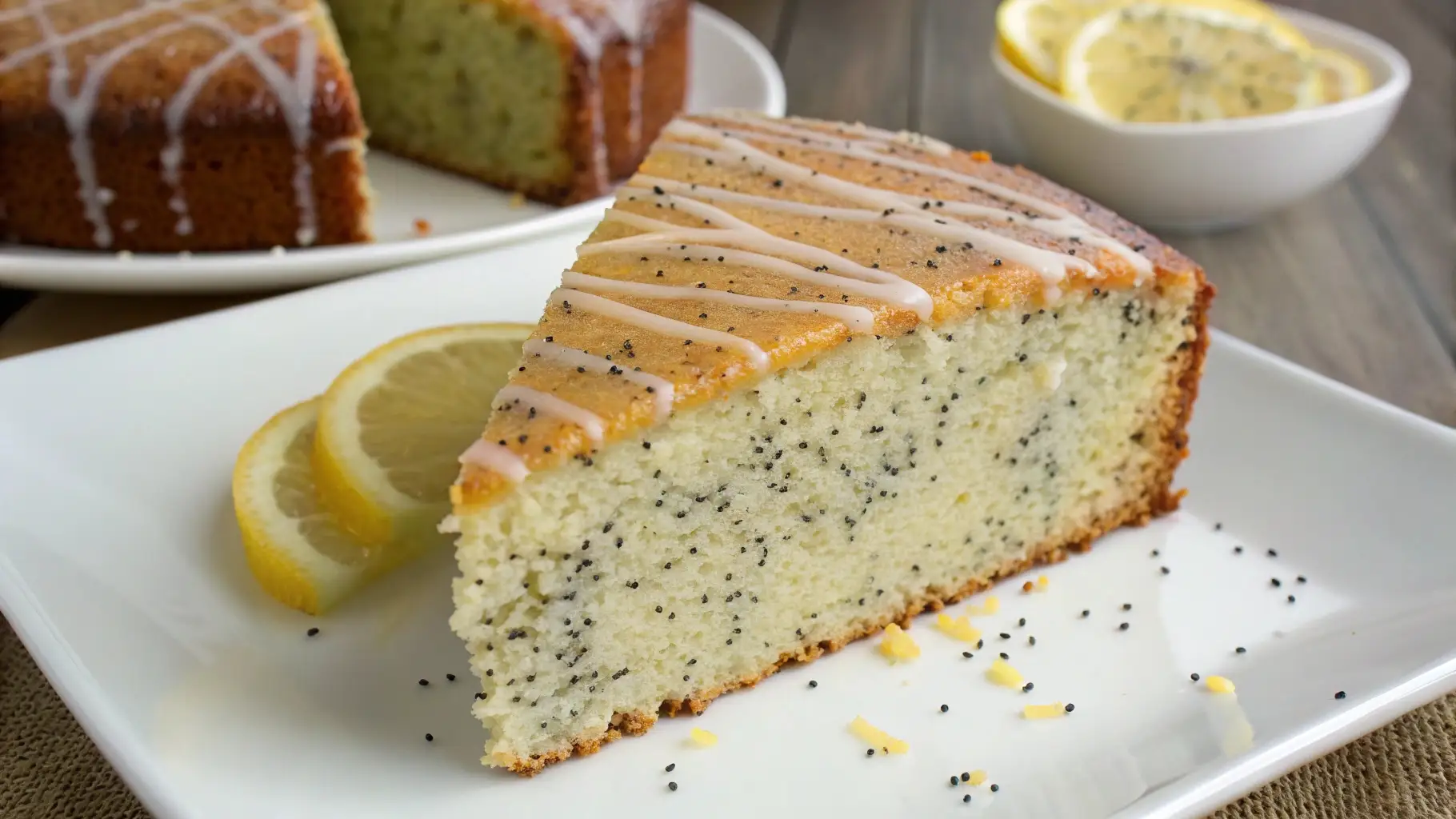
This lemon poppy seed cake is soft, sunny, and packed with real lemon flavor. The texture is tender and moist, thanks to yogurt and a simple syrup that locks in freshness. It’s the kind of everyday cake you can whip up on a weeknight but nice enough for brunch or a celebration.
The quick lemon glaze adds a pretty finish and extra zing. If you love citrus bakes that aren’t too sweet, this one checks every box.
Why This Recipe Works
- Moist crumb that lasts: A mix of oil and butter, plus yogurt, keeps the cake soft for days without drying out.
- Big lemon flavor: Rubbing lemon zest into the sugar and brushing on a light lemon syrup infuses flavor from the inside out.
- Easy technique: No mixer required. One bowl for wet, one for dry, then combine.
Simple and reliable.
- Balanced sweetness: The cake isn’t cloying. The glaze adds brightness without overpowering the lemon.
- Perfect poppy seed bite: Just enough seeds for a gentle crunch and classic look.
What You’ll Need
- All-purpose flour – Forms the base and keeps the crumb tender.
- Granulated sugar – Sweetens and helps aerate when rubbed with zest.
- Baking powder + baking soda – For lift and even rise.
- Fine sea salt – Balances sweetness and brightens lemon.
- Poppy seeds – For texture and that classic speckled look.
- Unsalted butter, melted – Flavor and softness.
- Neutral oil (canola or vegetable) – Keeps the cake moist, even when chilled.
- Plain Greek yogurt (or sour cream) – Tenderizes and adds subtle tang.
- Eggs – Structure and richness.
- Lemon zest – Use fresh; it carries the most aroma.
- Fresh lemon juice – For batter, syrup, and glaze.
- Vanilla extract – Rounds out the citrus.
- Milk – Loosens the batter for a silky pour.
- Powdered sugar – For the glaze.
How to Make It
- Prep the pan and oven: Heat oven to 350°F (175°C). Grease and line a 9×5-inch loaf pan with parchment, leaving a little overhang for easy lifting.
- Mix zest with sugar: In a large bowl, combine granulated sugar and lemon zest.
Use your fingers to rub the zest into the sugar until fragrant and slightly damp. This releases the lemon oils.
- Whisk in wet ingredients: Add melted butter, oil, yogurt, eggs, lemon juice, vanilla, and milk. Whisk until smooth and glossy.
- Combine dry ingredients: In a separate bowl, whisk flour, baking powder, baking soda, salt, and poppy seeds.
- Bring it together: Add the dry ingredients to the wet.
Whisk gently or fold with a spatula just until you no longer see dry flour. Do not overmix or the cake can turn dense.
- Bake: Pour the batter into the prepared pan and smooth the top. Bake 45–55 minutes, until the top is golden and a toothpick comes out clean or with a few moist crumbs.
- Make quick lemon syrup: While the cake bakes, stir together 2 tablespoons lemon juice and 2 tablespoons sugar until the sugar dissolves. Warm briefly if needed.
- Brush and cool: Let the cake cool in the pan 10 minutes, then lift it out onto a rack.
Brush the warm cake all over with the lemon syrup. Let it cool completely.
- Glaze: In a small bowl, whisk 1 cup powdered sugar with 2–3 tablespoons lemon juice until smooth and pourable. Drizzle over the fully cooled cake.
Let set 15–20 minutes before slicing.
Storage Instructions
- Room temperature: Store the glazed cake in an airtight container for up to 3 days. The syrup helps keep it moist.
- Refrigerator: For extra freshness, chill for up to 5 days. Bring slices to room temp before serving for best texture.
- Freezer: Wrap the unglazed cake tightly in plastic, then foil.
Freeze up to 2 months. Thaw overnight in the fridge, bring to room temp, and glaze before serving.
Health Benefits
- Lemon is rich in vitamin C, which supports immune health and adds bright flavor without extra calories.
- Poppy seeds provide minerals like calcium and magnesium, plus a touch of fiber for a pleasant crunch.
- Greek yogurt adds protein and helps reduce the need for extra fat while keeping the crumb tender.
- Controlled sweetness: The cake is balanced, and the glaze is thin, offering flavor without a heavy sugar load.
Common Mistakes to Avoid
- Overmixing the batter: Stir just until combined. Overworking develops gluten and makes the cake tough.
- Skipping the zest-sugar step: This quick rub boosts lemon aroma.
Don’t skip it if you want strong citrus flavor.
- Overbaking: Check early. Pull the cake when a toothpick comes out with a few moist crumbs and the top springs back lightly.
- Glazing while warm: Let the cake cool fully or the glaze will melt and slide off.
- Using bottled lemon juice: Fresh juice tastes brighter and cleaner. It’s worth the squeeze.
Variations You Can Try
- Lemon-Blueberry Poppy Seed: Fold in 1 cup fresh blueberries tossed in 1 tablespoon flour to prevent sinking.
- Meyer Lemon Twist: Swap regular lemons for Meyer lemons for a sweeter, floral flavor.
- Lemon-Orange Swirl: Use half lemon, half orange for juice and zest.
Glaze with orange juice for a creamsicle vibe.
- Almond Lemon: Add 1/2 teaspoon almond extract and sprinkle sliced almonds on top before baking.
- Bundt Cake Version: Double the recipe and bake in a standard 10–12 cup Bundt pan, 50–65 minutes, until done.
Explore more irresistible cake recipes you won’t want to miss:
FAQ
Can I use milk instead of yogurt?
Yes, but the cake will be less rich and slightly drier. If you must, use whole milk and add an extra tablespoon of oil to help with moisture. Sour cream is the closest substitute for yogurt.
Do I need to soak poppy seeds?
Not for this recipe.
The batter has enough moisture, and the bake time is sufficient to soften them slightly. If you prefer a softer crunch, let the batter rest 10 minutes before baking.
How do I know when the cake is done?
Look for a golden top that springs back when lightly pressed. A toothpick inserted in the center should come out clean or with a few moist crumbs, not wet batter.
Can I make this gluten-free?
Yes.
Use a cup-for-cup gluten-free flour blend that includes xanthan gum. Check doneness a few minutes early, as gluten-free cakes can brown faster.
What oil is best?
Use a neutral oil like canola, vegetable, or grapeseed. Olive oil can work, but choose a light variety to avoid overpowering the lemon.
Why is my glaze too thin or thick?
Adjust with small amounts.
If too thin, whisk in more powdered sugar a tablespoon at a time. If too thick, add lemon juice or milk by the teaspoon until it flows slowly off a spoon.
Can I reduce the sugar?
You can reduce granulated sugar in the batter by up to 1/4 cup without major changes. Keep the glaze as written, or thin it more and use less overall.
Is this safe for kids given poppy seeds?
Poppy seeds used in normal culinary amounts are generally considered safe.
If you have concerns or dietary restrictions, consult your healthcare provider.
Wrapping Up
This moist lemon poppy seed cake is bright, simple, and always a crowd-pleaser. With pantry staples, fresh citrus, and a quick glaze, you get bakery-style results at home. Make it for brunch, gifts, or a sunny afternoon treat—then enjoy how well it keeps all week.
Once you try it, you’ll want it in your regular baking rotation.
Moist Lemon Poppy Seed Cake (Easy Glazed Recipe) – Bright, Tender, and Foolproof
Ingredients
- All-purpose flour – Forms the base and keeps the crumb tender.
- Granulated sugar – Sweetens and helps aerate when rubbed with zest.
- Baking powder + baking soda – For lift and even rise.
- Fine sea salt – Balances sweetness and brightens lemon.
- Poppy seeds – For texture and that classic speckled look.
- Unsalted butter, melted – Flavor and softness.
- Neutral oil (canola or vegetable) – Keeps the cake moist, even when chilled.
- Plain Greek yogurt (or sour cream) – Tenderizes and adds subtle tang.
- Eggs – Structure and richness.
- Lemon zest – Use fresh; it carries the most aroma.
- Fresh lemon juice – For batter, syrup, and glaze.
- Vanilla extract – Rounds out the citrus.
- Milk – Loosens the batter for a silky pour.
- Powdered sugar – For the glaze.
Instructions
- Prep the pan and oven: Heat oven to 350°F (175°C). Grease and line a 9×5-inch loaf pan with parchment, leaving a little overhang for easy lifting.
- Mix zest with sugar: In a large bowl, combine granulated sugar and lemon zest.Use your fingers to rub the zest into the sugar until fragrant and slightly damp. This releases the lemon oils.
- Whisk in wet ingredients: Add melted butter, oil, yogurt, eggs, lemon juice, vanilla, and milk. Whisk until smooth and glossy.
- Combine dry ingredients: In a separate bowl, whisk flour, baking powder, baking soda, salt, and poppy seeds.
- Bring it together: Add the dry ingredients to the wet.Whisk gently or fold with a spatula just until you no longer see dry flour. Do not overmix or the cake can turn dense.
- Bake: Pour the batter into the prepared pan and smooth the top. Bake 45–55 minutes, until the top is golden and a toothpick comes out clean or with a few moist crumbs.
- Make quick lemon syrup: While the cake bakes, stir together 2 tablespoons lemon juice and 2 tablespoons sugar until the sugar dissolves. Warm briefly if needed.
- Brush and cool: Let the cake cool in the pan 10 minutes, then lift it out onto a rack.Brush the warm cake all over with the lemon syrup. Let it cool completely.
- Glaze: In a small bowl, whisk 1 cup powdered sugar with 2–3 tablespoons lemon juice until smooth and pourable. Drizzle over the fully cooled cake.Let set 15–20 minutes before slicing.