
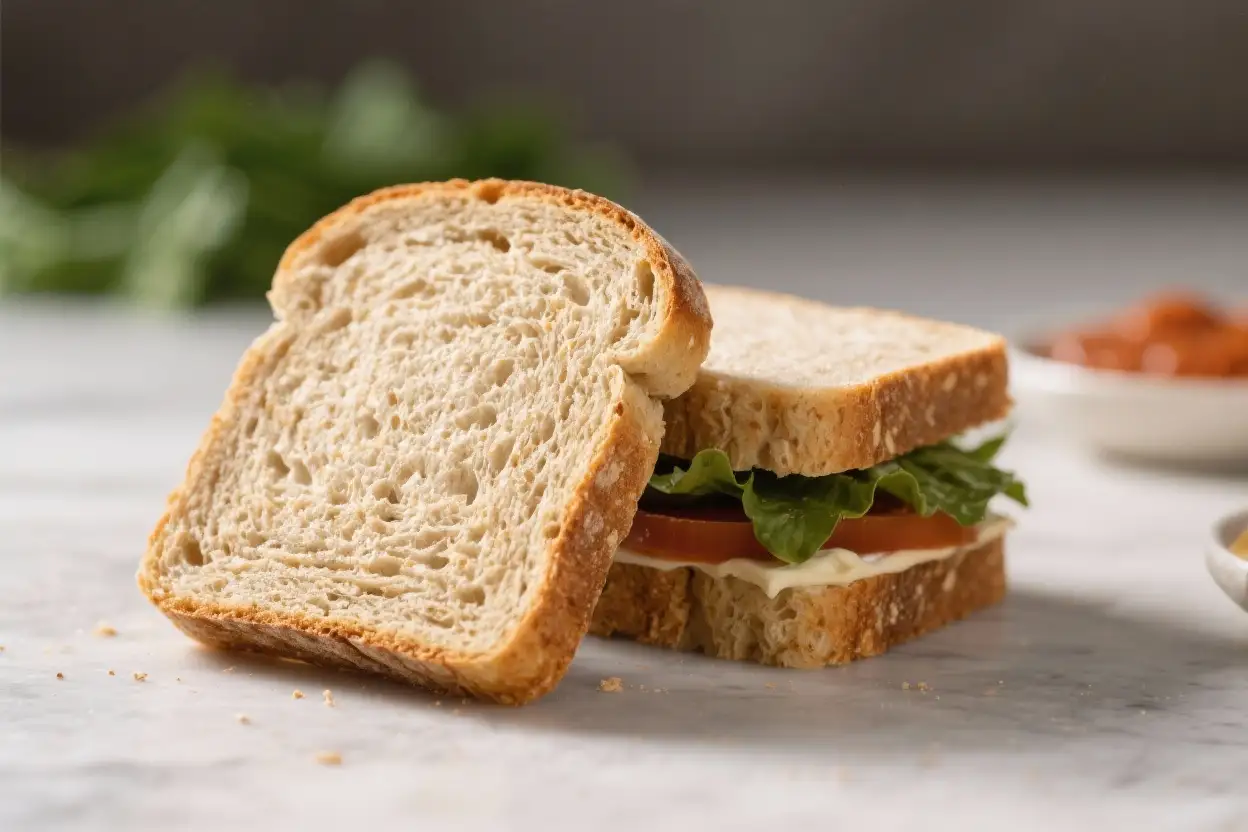
Warm, fresh sandwich bread doesn’t have to come from a bakery, and it definitely doesn’t need gluten to be good. This homemade gluten-free loaf is soft, springy, and slices without crumbling. It’s designed for everyday sandwiches—think turkey and avocado, BLTs, grilled cheese, or PB&J.
The process is straightforward, and the ingredients are easy to find. If you’ve struggled with dense, dry gluten-free bread, this recipe will change your mind.
What Makes This Recipe So Good
- Soft, sandwich-ready texture: No brick-like loaves here. This bread is moist and holds together when sliced thin.
- Quick rise, simple method: One rise, one pan, no fancy equipment required.
- Neutral flavor: Slightly nutty and lightly sweet, it works with savory and sweet fillings.
- Uses accessible ingredients: Everything is available at most grocery stores.
- Great leftover performance: Toasts beautifully and freezes well.
Shopping List
- Gluten-free all-purpose flour blend (2 1/2 cups; choose one with xanthan gum, or see notes)
- Tapioca starch (1/2 cup)
- Instant yeast (2 1/4 teaspoons; one standard packet)
- Granulated sugar (2 tablespoons) or honey
- Fine sea salt (1 1/4 teaspoons)
- Xanthan gum (1 teaspoon, only if your flour blend does not include it)
- Warm milk (1 cup; dairy or unsweetened almond/soy milk, about 105–115°F)
- Warm water (1/2 cup, about 105–115°F)
- Neutral oil (3 tablespoons; avocado, light olive, or canola)
- Large eggs (2, room temperature)
- Apple cider vinegar (1 teaspoon)
- Optional: Butter or oil for greasing the pan; sesame or poppy seeds for topping
How to Make It
- Prep the pan: Grease a 9×5-inch loaf pan and line it with a parchment sling for easy removal.
Set aside.
- Mix the dry ingredients: In a large bowl, whisk the gluten-free flour blend, tapioca starch, yeast, sugar, salt, and xanthan gum (if needed) until well combined.
- Combine the wet ingredients: In a separate bowl or measuring jug, whisk the warm milk, warm water, oil, eggs, and vinegar until smooth.
- Make the dough batter: Pour the wet mixture into the dry mixture. Beat with a hand mixer or stand mixer (paddle attachment) on medium for 2–3 minutes. The texture should be like thick cake batter—spreadable, not kneadable.
- Pan and smooth: Scrape the batter into the prepared pan.
Smooth the top with a damp spatula. If using seeds, sprinkle them on now and lightly press.
- Rise: Cover loosely with a clean towel. Let rise in a warm, draft-free spot until the dough crowns about 1/2 inch above the rim, 30–45 minutes.
Do not overproof.
- Preheat the oven: While the loaf rises, preheat to 350°F (175°C).
- Bake: Bake 40–50 minutes, until the top is golden and the internal temperature reaches about 205–210°F. If the top browns too quickly, tent with foil for the last 10–15 minutes.
- Cool properly: Let the bread cool in the pan for 10 minutes, then lift it out and cool completely on a rack, at least 1 hour. Slicing too soon can make it gummy.
- Slice and enjoy: Use a serrated knife to cut even slices.
For thinner slices, chill the loaf for 30 minutes first to firm it up.
How to Store
- Room temperature: Store sliced bread in an airtight container for up to 2 days. Add a paper towel to absorb moisture.
- Refrigerator: Not ideal for texture, but works if needed. Toast before serving.
- Freezer: Slice the loaf, then freeze slices with parchment between them in a freezer bag for up to 2 months.
Toast straight from frozen.
Why This is Good for You
- Gluten-free friendly: Safe for those with celiac disease or gluten sensitivity when made with certified ingredients.
- Better control over ingredients: No preservatives, artificial flavors, or excess sodium.
- Balanced macros: Eggs add protein and structure, while oil provides tender texture and satisfaction.
- Customizable nutrition: You can swap milk types, reduce sugar, or add seeds for fiber and healthy fats.
Common Mistakes to Avoid
- Using the wrong flour: Not all gluten-free blends behave the same. Use a reliable all-purpose blend designed for baking.
- Skipping xanthan gum: If your blend doesn’t include it, you need it for structure. Without it, the loaf may crumble.
- Overproofing: Letting the batter rise too much can cause collapse in the oven.
Bake when it’s just above the rim.
- Cutting while hot: The crumb needs time to set. Cool fully to avoid a gummy texture.
- Oven guesswork: An oven thermometer helps. Underbaked loaves stay damp inside.
Variations You Can Try
- Whole-grain boost: Replace 1/4 cup of the flour with certified gluten-free oat flour or sorghum flour for flavor and fiber.
- Seeded sandwich loaf: Fold 2 tablespoons each of sunflower seeds and pumpkin seeds into the batter.
Sprinkle more on top.
- Herb and garlic: Add 1 teaspoon garlic powder and 2 teaspoons dried Italian herbs for savory sandwiches and toast.
- Dairy-free: Use unsweetened almond, oat, or soy milk. Choose oil instead of butter for greasing.
- Honey wheat-style: Swap sugar for 2 tablespoons honey and add 1 tablespoon molasses for color and warmth.
Explore more irresistible bread recipes you won’t want to miss:
FAQ
Can I use active dry yeast instead of instant yeast?
Yes. Bloom 2 1/4 teaspoons active dry yeast in the warm water and sugar for 5–10 minutes until foamy, then add to the wet ingredients and proceed.
What if my flour blend already has xanthan gum?
Skip the extra xanthan gum.
Too much can make the bread rubbery. Check the blend label before adding any.
How do I know the loaf is done?
Look for a deep golden top and an internal temperature of about 205–210°F. If you don’t have a thermometer, tap the bottom—it should sound hollow and feel firm.
Can I make this without eggs?
Yes, but texture will be a bit denser.
Use 2 flax “eggs” (2 tablespoons ground flax + 6 tablespoons warm water, rested 10 minutes) and add 1 extra tablespoon oil.
Is there a substitute for tapioca starch?
You can use potato starch or cornstarch in a pinch, but tapioca gives the best chew and spring for sandwich slices.
Do I need a stand mixer?
No. A hand mixer works well. You can also mix by hand with a sturdy spatula, but beat thoroughly to aerate the batter.
Can I make rolls instead of a loaf?
Yes.
Scoop batter into greased muffin tins or a 9×13-inch pan, rise until puffy, and bake 18–25 minutes at 350°F.
Why did my loaf sink in the middle?
It may have overproofed, been underbaked, or lacked enough binder (xanthan). Measure carefully, don’t rush the bake, and cool it fully on a rack.
How thin can I slice it?
For deli-style thin slices, chill the loaf for 30–45 minutes after cooling, then use a sharp serrated knife in a gentle sawing motion.
Can I add sweet mix-ins like raisins?
Sure. Stir in 1/2 cup raisins and 1 teaspoon cinnamon for a breakfast loaf.
Reduce sugar slightly if you prefer less sweetness.
Final Thoughts
Homemade gluten-free sandwich bread doesn’t need to be complicated. With a reliable flour blend, proper moisture, and one easy rise, you get a soft, sliceable loaf that behaves like the real deal. Keep a stash of frozen slices for busy days, toast them to revive that fresh-baked texture, and build the sandwiches you actually want.
Once you make this a couple of times, it becomes a simple weekly routine—and it’s well worth it.
Homemade Gluten-Free Bread for Sandwiches – Soft, Sliceable, and Reliable
Ingredients
- Gluten-free all-purpose flour blend (2 1/2 cups; choose one with xanthan gum, or see notes)
- Tapioca starch (1/2 cup)
- Instant yeast (2 1/4 teaspoons; one standard packet)
- Granulated sugar (2 tablespoons) or honey
- Fine sea salt (1 1/4 teaspoons)
- Xanthan gum (1 teaspoon, only if your flour blend does not include it)
- Warm milk (1 cup; dairy or unsweetened almond/soy milk, about 105–115°F)
- Warm water (1/2 cup, about 105–115°F)
- Neutral oil (3 tablespoons; avocado, light olive, or canola)
- Large eggs (2, room temperature)
- Apple cider vinegar (1 teaspoon)
- Optional: Butter or oil for greasing the pan; sesame or poppy seeds for topping
Instructions
- Prep the pan: Grease a 9x5-inch loaf pan and line it with a parchment sling for easy removal.Set aside.
- Mix the dry ingredients: In a large bowl, whisk the gluten-free flour blend, tapioca starch, yeast, sugar, salt, and xanthan gum (if needed) until well combined.
- Combine the wet ingredients: In a separate bowl or measuring jug, whisk the warm milk, warm water, oil, eggs, and vinegar until smooth.
- Make the dough batter: Pour the wet mixture into the dry mixture. Beat with a hand mixer or stand mixer (paddle attachment) on medium for 2–3 minutes. The texture should be like thick cake batter—spreadable, not kneadable.
- Pan and smooth: Scrape the batter into the prepared pan.Smooth the top with a damp spatula. If using seeds, sprinkle them on now and lightly press.
- Rise: Cover loosely with a clean towel. Let rise in a warm, draft-free spot until the dough crowns about 1/2 inch above the rim, 30–45 minutes.Do not overproof.
- Preheat the oven: While the loaf rises, preheat to 350°F (175°C).
- Bake: Bake 40–50 minutes, until the top is golden and the internal temperature reaches about 205–210°F. If the top browns too quickly, tent with foil for the last 10–15 minutes.
- Cool properly: Let the bread cool in the pan for 10 minutes, then lift it out and cool completely on a rack, at least 1 hour. Slicing too soon can make it gummy.
- Slice and enjoy: Use a serrated knife to cut even slices.For thinner slices, chill the loaf for 30 minutes first to firm it up.