
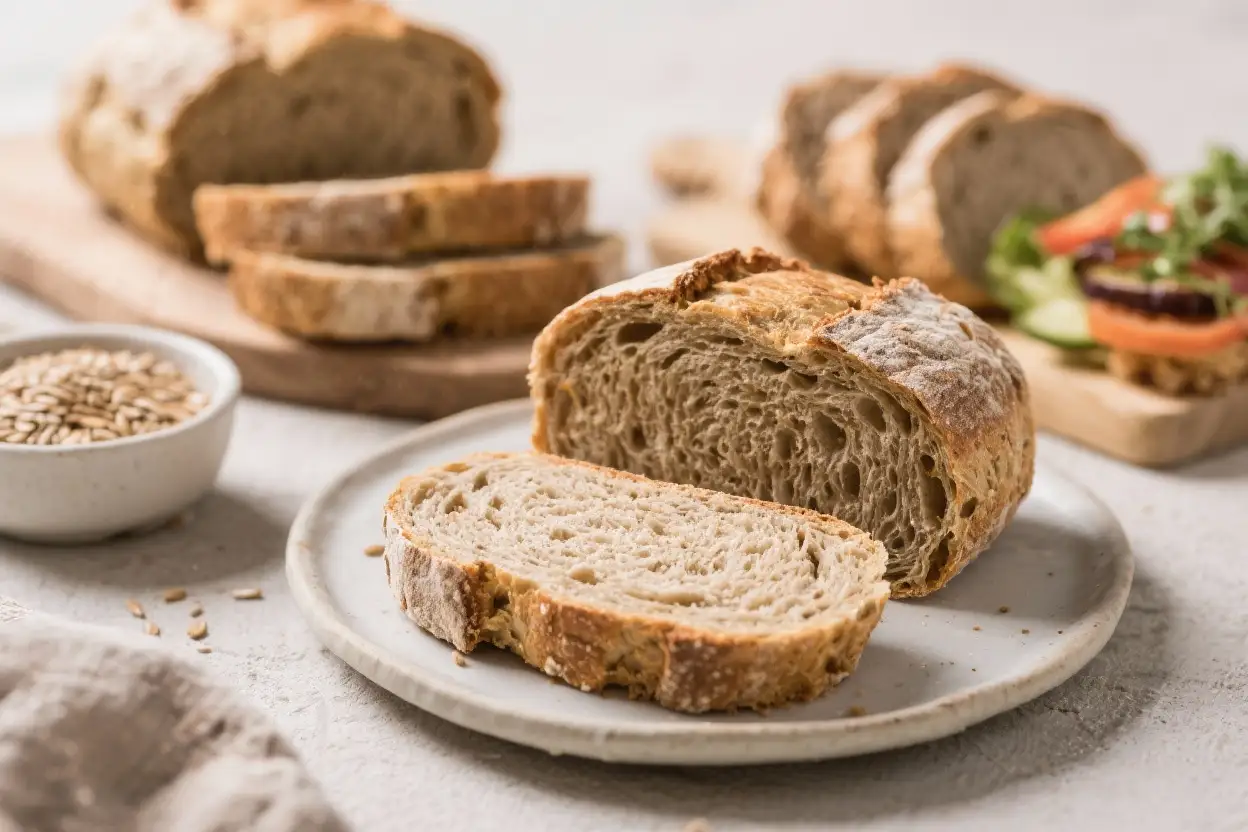
Whole wheat bread can turn a simple meal into something hearty and nourishing. It’s wholesome, versatile, and surprisingly easy to bake at home. If you’re looking to add more fiber and whole grains to your diet without sacrificing flavor, this is a great place to start.
We’ll walk through a reliable base recipe and offer variations so you can make it your own. Fresh, warm slices ready for soups, sandwiches, and toast—what’s not to love?
What Makes This Recipe So Good
- Simple ingredients: Just pantry staples—flour, water, yeast, a touch of sweetener, oil, and salt.
- Soft yet hearty texture: Whole wheat can be dense, but this recipe keeps it tender and sliceable.
- Flexible and forgiving: Works with regular whole wheat or white whole wheat flour. You can use honey, maple syrup, or sugar.
- Meal-prep friendly: One or two loaves can carry you through breakfasts and lunches all week.
- Great flavor: Nutty, slightly sweet, and perfect for toast, sandwiches, and savory sides.
Shopping List
- Whole wheat flour (3 to 3 1/2 cups; white whole wheat flour works too)
- Warm water (1 1/4 cups, about 105–115°F)
- Active dry yeast or instant yeast (2 1/4 teaspoons, one packet)
- Honey or maple syrup (2 tablespoons; granulated sugar also works)
- Olive oil or neutral oil (2 tablespoons; melted butter is an option)
- Salt (1 1/4 teaspoons)
- Optional add-ins: Rolled oats, ground flaxseed, sunflower seeds, pepitas, sesame seeds
- Optional for tenderness: 1/4 cup milk or yogurt, or 1 egg
Step-by-Step Instructions
- Proof the yeast: In a large bowl, combine warm water and honey.
Sprinkle yeast over the top. Let it sit 5–10 minutes until foamy. If using instant yeast, you can skip the proofing and mix directly into the flour, but still warm the water.
- Mix the dough: Add oil and salt to the yeast mixture.
Stir in 2 1/2 cups of whole wheat flour. If using milk, yogurt, or an egg, add it now. Mix until a shaggy dough forms.
- Knead: Turn the dough onto a lightly floured surface.
Knead 7–10 minutes, adding more flour a tablespoon at a time as needed. The dough should be slightly tacky but not sticky. If using a stand mixer, knead with a dough hook on medium-low for about 6–8 minutes.
- First rise: Shape the dough into a ball and place it in a lightly oiled bowl.
Cover with a clean towel or plastic wrap. Let it rise in a warm spot until doubled, about 1–1 1/2 hours.
- Shape: Punch down the dough to release air. Pat it into a rectangle and roll it tightly into a log, pinching the seam.
Tuck the ends under. Place in a greased 8.5 x 4.5-inch or 9 x 5-inch loaf pan.
- Second rise: Cover and let it rise again until the dough crowns about 1 inch over the pan, 30–60 minutes. It should spring back slowly when gently poked.
- Bake: Preheat the oven to 375°F (190°C).
Bake 30–35 minutes. The top should be golden brown, and the loaf should sound hollow when tapped. Internal temperature should reach about 190–200°F.
- Finish and cool: Brush the top with a little butter or oil if you want a softer crust.
Cool the loaf in the pan for 10 minutes, then remove and cool completely on a rack before slicing.
Storage Instructions
- Room temperature: Wrap tightly or store in a bread box for 3–4 days. Avoid the fridge—it dries bread out.
- Freezer: Slice, wrap well, and freeze up to 3 months. Toast slices straight from the freezer.
- Refresh: If the crust softens, re-crisp slices in a toaster or 350°F oven for 5–7 minutes.
Why This is Good for You
- Fiber-rich: Whole wheat keeps the bran and germ, which support digestion and help you feel full.
- Steady energy: Complex carbs release energy slowly, helping with blood sugar stability.
- Micronutrients intact: Whole grains offer magnesium, iron, B vitamins, and antioxidants.
- Better fats and sodium control: Homemade bread lets you choose oils and keep salt moderate.
Common Mistakes to Avoid
- Water too hot: If your water is over 120°F, you can kill the yeast.
Aim for warm, not hot.
- Too much flour: Whole wheat absorbs slowly. Add flour gradually during kneading and stop when the dough is just tacky.
- Skipping the second rise: It’s key for a lighter crumb and proper loaf height.
- Cutting too soon: Slicing hot bread compresses the crumb. Let it cool to set the structure.
- Old yeast: Expired yeast won’t rise well.
If unsure, proof it first to confirm it’s active.
Recipe Variations
- Honey Oat Wheat: Add 1/2 cup rolled oats and an extra tablespoon of honey. Sprinkle oats on top before baking.
- Seeded Multigrain: Mix in 2–4 tablespoons combined seeds (sunflower, sesame, flax, pepitas). Press a few on top after the second rise.
- Olive and Herb: Add 1 teaspoon dried rosemary and thyme, plus 1/2 cup chopped olives.
Reduce honey to 1 tablespoon for a more savory loaf.
- Apple Cinnamon Breakfast Bread: Add 1 teaspoon cinnamon and fold in 1/2 cup finely diced apple. Great for toast with almond butter.
- 50/50 Wheat-White Blend: For a lighter loaf, use half whole wheat and half bread flour. It rises higher and stays extra soft.
- Dairy-Soft Crumb: Replace 1/4 cup of the water with milk or add 2 tablespoons yogurt for a tender texture.
Explore more irresistible bread recipes you won’t want to miss:
FAQ
Can I make this bread without a stand mixer?
Yes.
Hand-kneading works well. It takes about 8–10 minutes. If the dough sticks, add flour a teaspoon at a time and keep going until it feels smooth and slightly tacky.
What’s the best flour for a soft whole wheat loaf?
White whole wheat flour makes a softer, milder loaf because it’s milled from a lighter wheat variety.
Regular whole wheat works too—just be careful not to add too much flour during kneading.
How do I know if I’ve kneaded enough?
The dough should feel elastic and spring back when pressed. If you gently stretch a small piece, it should form a thin, translucent “windowpane” without tearing quickly.
My bread didn’t rise much. What went wrong?
Common causes include old yeast, water that’s too hot or cold, or a cool kitchen.
Also check that you didn’t add too much flour, which makes the dough heavy.
Can I use a bread machine?
Yes. Use the whole wheat setting if available. Add ingredients in the order recommended by your machine, and check the dough during the first knead.
Adjust with a teaspoon of water or flour if needed.
How can I make the crust softer?
Brush the baked loaf with butter or oil, and cool it under a kitchen towel. A small amount of milk or an egg in the dough also softens the crumb and crust.
Is there a way to make it vegan?
Absolutely. Use oil and water, and skip any dairy or eggs.
Honey can be replaced with maple syrup or sugar.
Can I double the recipe?
Yes. Make two loaves and bake them side by side. Rotate pans halfway through for even browning if your oven has hot spots.
In Conclusion
Whole wheat bread is a staple you can trust—simple to bake, nourishing to eat, and easy to adapt.
With the right rise, just enough flour, and a few pantry staples, you’ll have a loaf that fits into breakfasts, lunches, and everything in between. Keep this base recipe handy, try a variation or two, and enjoy the steady comfort of warm, fresh bread at home.
Whole Wheat Bread Recipes for Healthy Meals - Simple, Hearty, and Satisfying
Ingredients
- Whole wheat flour (3 to 3 1/2 cups; white whole wheat flour works too)
- Warm water (1 1/4 cups, about 105–115°F)
- Active dry yeast or instant yeast (2 1/4 teaspoons, one packet)
- Honey or maple syrup (2 tablespoons; granulated sugar also works)
- Olive oil or neutral oil (2 tablespoons; melted butter is an option)
- Salt (1 1/4 teaspoons)
- Optional add-ins: Rolled oats, ground flaxseed, sunflower seeds, pepitas, sesame seeds
- Optional for tenderness: 1/4 cup milk or yogurt, or 1 egg
Instructions
- Proof the yeast: In a large bowl, combine warm water and honey.Sprinkle yeast over the top. Let it sit 5–10 minutes until foamy. If using instant yeast, you can skip the proofing and mix directly into the flour, but still warm the water.
- Mix the dough: Add oil and salt to the yeast mixture.Stir in 2 1/2 cups of whole wheat flour. If using milk, yogurt, or an egg, add it now. Mix until a shaggy dough forms.
- Knead: Turn the dough onto a lightly floured surface.Knead 7–10 minutes, adding more flour a tablespoon at a time as needed. The dough should be slightly tacky but not sticky. If using a stand mixer, knead with a dough hook on medium-low for about 6–8 minutes.
- First rise: Shape the dough into a ball and place it in a lightly oiled bowl.Cover with a clean towel or plastic wrap. Let it rise in a warm spot until doubled, about 1–1 1/2 hours.
- Shape: Punch down the dough to release air. Pat it into a rectangle and roll it tightly into a log, pinching the seam.Tuck the ends under. Place in a greased 8.5 x 4.5-inch or 9 x 5-inch loaf pan.
- Second rise: Cover and let it rise again until the dough crowns about 1 inch over the pan, 30–60 minutes. It should spring back slowly when gently poked.
- Bake: Preheat the oven to 375°F (190°C).Bake 30–35 minutes. The top should be golden brown, and the loaf should sound hollow when tapped. Internal temperature should reach about 190–200°F.
- Finish and cool: Brush the top with a little butter or oil if you want a softer crust.Cool the loaf in the pan for 10 minutes, then remove and cool completely on a rack before slicing.