

Have you ever wished your favorite chocolate dessert and your go-to sourdough loaf could be the same insanely good weekend treat? This chocolate sourdough bread brings the best of both worlds together: a naturally leavened chocolate bread with a soft, chewy crumb, a hint of tang, and just enough sweetness to feel indulgent without going over the top. It is the kind of cozy weekend baking project that makes your whole kitchen smell like a bakery and has everyone asking, “When is it ready to slice?”
What I love about this artisan-style chocolate sourdough loaf is how approachable it is. You still get that beautiful crust and bakery-quality results in your home oven, but the process is friendly to both beginner sourdough bakers and anyone who has been feeding a starter for years. Whether you serve it warm for a lazy Sunday breakfast, slice it up for an after-school snack, or dress it up as a special occasion brunch centerpiece, this bread is meant to be shared, savored, and baked on repeat.
Why You’ll Love This Chocolate Sourdough Bread
Think of this loaf as your go-to chocolate sourdough bread for when you want an insanely good weekend treat without fuss or fussy techniques. It is a naturally leavened chocolate bread with a deeply chocolatey, gently tangy flavor, a soft, chewy crumb, and a crisp, artisan-style crust that feels like it came from a bakery—only it is coming out of your home oven.
Here is what makes it special:
Bakery-quality results at home
You get an artisan-style chocolate sourdough loaf at home using simple tools and a straightforward method. No special equipment is required beyond a Dutch oven or sturdy baking pot, so you can achieve that dramatic rise and beautiful crust without professional gear.
Deep, complex chocolate flavor
Unsweetened cocoa and dark chocolate chips (or chunks) create a rich, deeply chocolatey tangy sourdough flavor that is indulgent yet not overly sweet. It works just as well for breakfast as it does for dessert.
Cozy weekend baking project
The timing is designed for a cozy weekend baking project: you mix and fold the dough in relaxed stages, let it bulk ferment, then finish with an overnight chill so the flavor can develop while you rest. By the time you are ready for a lazy Sunday breakfast or brunch, the dough is too.
Beginner-friendly, impressive results
Even if you are new to sourdough, this is an impressive but beginner-friendly recipe. Clear steps, simple stretch-and-folds, and a flexible schedule help you build confidence while still turning out a loaf that looks and tastes advanced.
Versatile for any occasion
Serve it plain in thick slices, toast it with butter for an afternoon pick-me-up, or dress it up with fruit and whipped cream for a special brunch. From casual snacking to holiday gatherings, this one loaf fits comfortably into almost any moment you want to make feel a little more special.
Naturally leavened and satisfying
Because it is naturally leavened, the bread has a light, open crumb that feels satisfying without being heavy. Each slice delivers that perfect balance of chew, crust, and chocolate, so a little goes a long way—and every bite feels worth it.
Ingredients for Chocolate Sourdough Bread
Before you start mixing, it helps to know exactly what each ingredient is doing in your chocolate sourdough bread. Think of this as your quick guide to building a naturally leavened chocolate bread with a soft, chewy crumb and deep, rich flavor.
Core Ingredients
Active, bubbly sourdough starter
You want a starter that has been recently fed, smells pleasantly tangy, and is full of bubbles. This is your natural yeast and the key to that gentle sourdough flavor and good oven spring.
High-protein bread flour
Bread flour gives the dough enough strength to support the cocoa, chocolate chips, and extra hydration. If you use all-purpose flour, the loaf may be softer, but you might see a slightly tighter crumb.
Unsweetened cocoa powder
This is what transforms a simple sourdough loaf into a deeply chocolatey sourdough bread. Use a good-quality natural or Dutch-processed cocoa for a fuller, more rounded flavor.
Dark chocolate chips or chunks
Fold these in for little pockets of melted chocolate throughout the crumb. Chips hold their shape a bit more, while chopped chocolate creates bigger, softer pools—both work beautifully.
Warm water
Slightly warm (not hot) water helps the dough come together and encourages a steady fermentation. It also supports a higher-hydration dough, which leads to a moist, tender interior.
Fine sea salt
Salt doesn’t just season the dough; it balances the sweetness and brings the chocolate notes to life. Fine sea salt dissolves easily and distributes more evenly than coarse salt.
Optional Flavor Boosters
Brown sugar or a touch of granulated sugar
A small amount of sugar rounds out the bitterness of the cocoa and adds a hint of dessert-like sweetness without turning the loaf into cake.
Espresso powder
A pinch of espresso powder won’t make the bread taste like coffee—it simply deepens the chocolate flavor and makes every bite feel more intense and satisfying.
Vanilla extract or orange zest
Vanilla adds warmth and familiarity, while orange zest gives a bright, aromatic twist. Either option pairs beautifully with dark chocolate and sourdough’s natural tang.
Nuts or dried fruit (optional)
Chopped hazelnuts, walnuts, or pecans add crunch, while dried cherries or cranberries add little bursts of sweetness. These mix-ins are totally optional but can turn your loaf into an even more special weekend treat.
A Few Practical Tips
Use a kitchen scale if you can. Precision with flour, water, and starter makes this artisan-style loaf more predictable and easier to repeat.
Make sure your sourdough starter is at its peak before you mix the dough. If it has doubled in size and passes the “float test,” you are in a good place to begin.
Choose good-quality cocoa and dark chocolate, as they have a big impact on flavor. When the ingredients shine, your finished bread tastes like something straight from a bakery.
With these ingredients ready, you are set up for a chocolate sourdough bread that looks impressive, tastes deeply chocolatey, and feels like an insanely good weekend treat every time you bake it.
Step-by-Step Instructions for Chocolate Sourdough Bread
You are going to follow a relaxed, step-by-step chocolate sourdough method that fits easily into a weekend rhythm. Read through once before you start so the timing feels natural.
Feed Your Sourdough Starter
Refresh your starter 4–8 hours before mixing the dough.
Keep it in a warm spot until it is bubbly, doubled in size, and active.
Your naturally leavened chocolate bread will only rise well if the starter is at its peak, so do not rush this part.
Mix and Autolyse the Dough
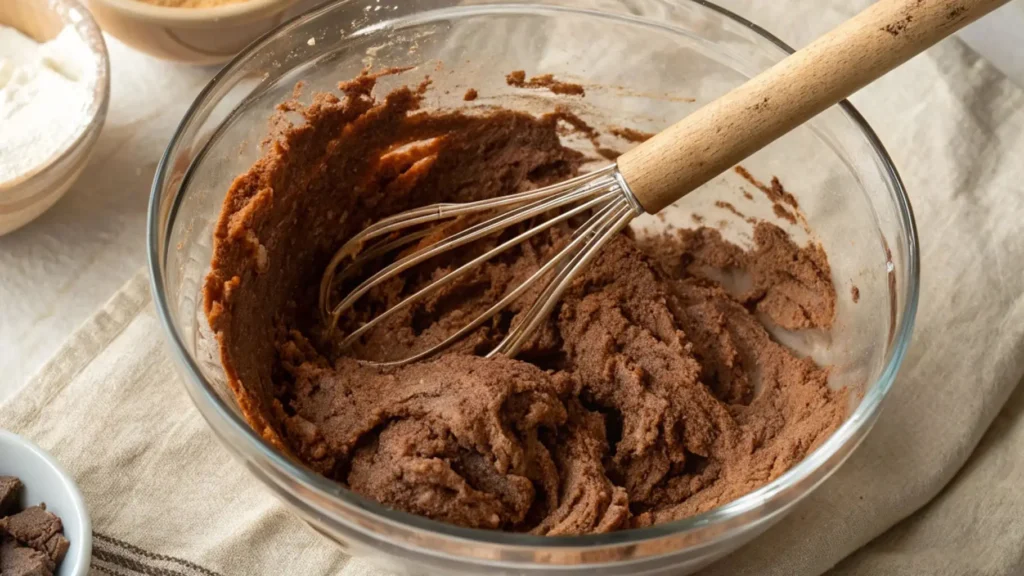
In a large bowl, whisk together the bread flour, cocoa powder, and any sugar you are using.
Add the active sourdough starter and warm water.
Mix with your hand or a dough whisk until no dry pockets remain. The dough will look rough and shaggy at this stage.
Let the dough rest, covered, for 30–45 minutes. This autolyse step allows the flour to hydrate and gluten to start forming, which makes the dough easier to work with later.
Add Salt and Flavor Boosters
Sprinkle the fine sea salt evenly over the dough.
Add any espresso powder, vanilla, or orange zest you are using.
Gently pinch and fold the dough until everything is well combined.
The dough should feel slightly sticky but cohesive. If it feels very dry, wet your hand lightly and work a touch more water into the dough rather than adding flour.
Bulk Fermentation with Stretch and Fold
Now you will build strength using a simple stretch and fold technique instead of kneading.
Cover the bowl and let the dough rest for 30 minutes.
With damp hands, grab one side of the dough, stretch it up, and fold it over the center.
Rotate the bowl a quarter turn and repeat until you have stretched and folded all the way around.
Repeat this mini “stretch and fold” session 3–4 times over the first 2 hours of bulk fermentation, resting about 30 minutes between each round.
Then, let the dough continue to bulk ferment at room temperature until it has risen by about 50–75%, feels airy, and jiggles slightly when you move the bowl. This can take 3–6 hours depending on room temperature and starter strength.
During the last round of folds, gently work in your dark chocolate chips or chunks (and any nuts or dried fruit) so they are evenly distributed without tearing the dough.
Pre-Shape and Shape the Loaf
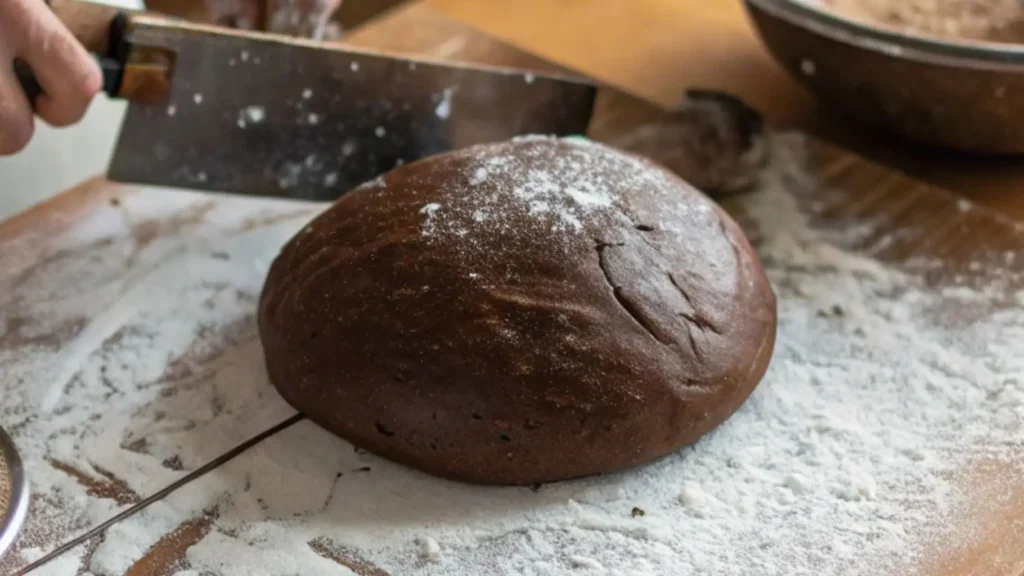
Lightly flour your work surface and gently turn the dough out of the bowl.
Use a bench scraper to tuck the edges under, forming a loose round. Let it rest for 15–20 minutes; this is your bench rest.
To shape, gently stretch the dough into a rough rectangle, fold the bottom third up, the top third down, then roll it up or tighten it into a round boule or oval batard, depending on your proofing basket.
Aim for a smooth, taut surface on top—this tension helps support a nice oven spring.
Final Proof and Overnight Cold Retard
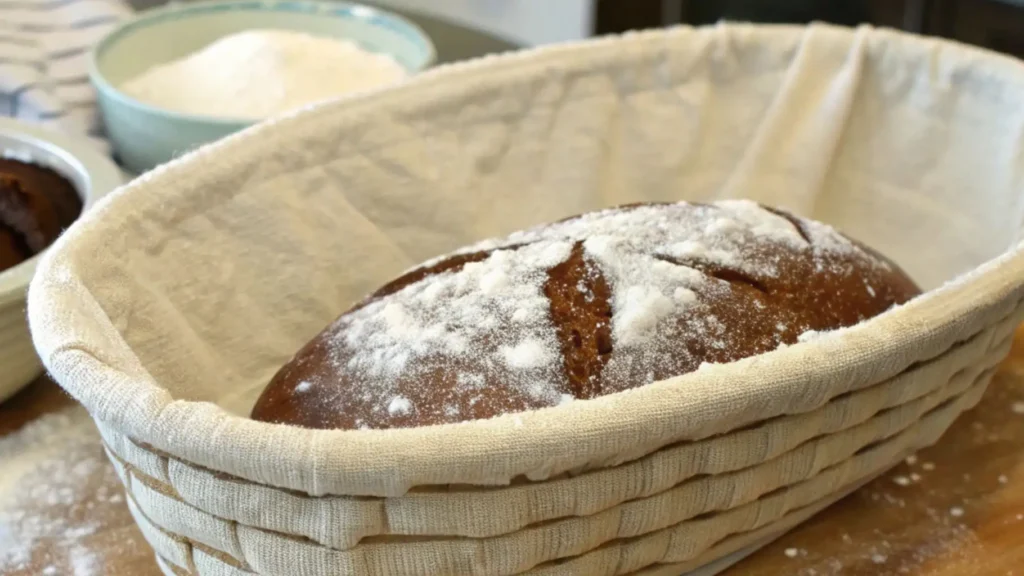
Generously flour your proofing basket (banneton) or line a bowl with a floured towel.
Place the shaped dough seam-side up in the basket.
Cover and let it proof at room temperature for 30–60 minutes, just until it starts to puff slightly.
For deeper flavor and easier scoring, cover the basket well and transfer it to the refrigerator for an overnight cold retard (8–16 hours). This slow, cold proof is what gives your chocolate sourdough bread its complex, tangy, bakery-style flavor.
Preheat the Oven and Dutch Oven
Place your Dutch oven (with lid on) in the oven.
Preheat to high heat (around 230–250°C / 450–480°F) for at least 30–45 minutes so everything is thoroughly hot.
A well-preheated Dutch oven is the secret to that crisp, artisan-style crust and good oven spring.
Score and Bake
Carefully remove the hot Dutch oven from the oven and line it with a piece of parchment paper.
Gently invert the chilled dough from the proofing basket onto the parchment, now seam-side down.
Use a lame or sharp knife to score the top with a deep slash or simple pattern—this guides the expansion and gives your loaf an attractive, rustic look.
Cover with the lid and bake for 20–25 minutes.
Remove the lid and bake for another 15–25 minutes, or until the crust is deeply browned and the loaf sounds hollow when tapped on the bottom.
If you like to be precise, the internal temperature should register around 96–98°C / 205–208°F.
Cool Completely Before Slicing
This is the hardest part, but it matters.
Transfer the loaf to a cooling rack and let it cool for at least 1–2 hours.
Slicing too early can make the crumb gummy and compress the structure, especially in a moist, chocolate-rich sourdough loaf.
Once cooled, you will see a soft, chewy crumb with pockets of melted chocolate and a crisp crust—an insanely good weekend treat that looks and tastes like it came from your favorite artisan bakery.
Pro Tips and Variations for Chocolate Sourdough Bread
This chocolate sourdough bread is already an insanely good weekend treat, but a few smart tweaks can make the process smoother and the flavor even better. Think of this section as the friendly notes you would jot in the margins of your recipe card.
Make the Schedule Work for You
Sourdough is flexible, so let it fit your weekend, not the other way around.
Cooler kitchen?
If your kitchen is cooler, bulk fermentation may take longer. Give the dough more time rather than rushing it; you are looking for volume increase and a light, airy feel, not a specific clock time.
Warmer kitchen?
In a warm kitchen, keep an eye on the dough so it does not overproof. You can shorten the room-temperature bulk fermentation and move the dough to the refrigerator sooner.
Overnight plan:
A simple rhythm many bakers love:
Mix and bulk ferment in the afternoon or evening.
Shape and refrigerate overnight.
Bake your naturally leavened chocolate bread first thing the next morning.
Handling a Chocolate-Rich, High-Hydration Dough
Chocolate sourdough can feel slightly stickier than a plain loaf, but a few small habits make it easier to handle:
Use damp hands:
Lightly wet your hands before stretch-and-fold sessions to prevent sticking instead of adding extra flour, which can dry out the dough.
Embrace the chill:
Chilling the shaped loaf during the cold retard firms up the dough, making it much easier to score cleanly and transfer to the Dutch oven.
Be gentle with mix-ins:
When you add dark chocolate chips, chunks, nuts, or dried fruit, fold them in during the last round of stretch and folds so you do not tear the gluten structure.
Boosting Chocolate Flavor
If you want an even more deeply chocolatey sourdough bread, try one or two of these subtle upgrades:
Add a pinch of espresso powder:
Espresso deepens the cocoa notes without making the loaf taste like coffee. A small amount goes a long way.
Choose darker chocolate:
Using 60–70% dark chocolate chips or chopped bars gives a more intense, grown-up chocolate flavor compared to very sweet chocolate.
Use quality cocoa powder:
A good natural or Dutch-processed cocoa will noticeably improve the taste and color of your artisan-style loaf.
Sweetness and Texture Variations
You can easily nudge this recipe toward breakfast, snack, or dessert territory:
For a breakfast loaf:
Keep added sugar on the lighter side.
Skip the glaze or toppings and serve it simply toasted with butter.
For a dessert-style treat:
Add a bit more sugar to the dough.
Fold in extra chocolate chunks and dried cherries or cranberries.
Finish with a light dusting of powdered sugar once the loaf has cooled.
For extra texture:
Stir in chopped hazelnuts, walnuts, or pecans for crunch.
Sprinkle a pinch of flaky sea salt on top before baking for a sweet-salty finish.
Flavor Twists to Try
Once you are comfortable with the base chocolate sourdough, you can create your own signature variations:
Orange & Dark Chocolate Sourdough
Add fresh orange zest to the dough for a fragrant, citrusy twist that pairs beautifully with the tang of sourdough.
Mocha Chocolate Sourdough
Increase the espresso powder slightly and add a touch of vanilla for a loaf that tastes like your favorite mocha in bread form.
Spiced Chocolate Sourdough
A pinch of cinnamon or cardamom gives a warm, cozy flavor that is perfect for holiday brunches and chilly weekends.
Troubleshooting Common Issues
If your chocolate sourdough bread is not quite where you want it, use these quick checks:
Loaf is dense or flat:
The sourdough starter may not have been fully active.
Bulk fermentation might have been too short. Next time, wait for a clear rise and a slightly jiggly, airy feel.
Crumb is gummy:
The loaf may have been underbaked or sliced too soon.
Extend the bake time slightly and always let the bread cool completely on a rack before cutting.
Chocolate scorched on top:
If some chocolate pieces are exposed, loosely tent the loaf with foil for the last part of the bake to prevent excessive browning.
With these pro tips and variations in your back pocket, every batch of chocolate sourdough bread becomes more intuitive, more flavorful, and more fun. Start with the base recipe, then play with timing, mix-ins, and flavors until you land on your own insanely good weekend treat.
Serving Suggestions for Chocolate Sourdough Bread
One of the best parts of this chocolate sourdough bread is how versatile it is. You can lean into breakfast, make it a cozy afternoon treat, or dress it up as a full-on dessert. Here are some easy, delicious ways to enjoy every slice.
For Breakfast and Brunch
Turn your artisan-style loaf into a star of the brunch table:
Toasted with salted butter
Slice thick, toast lightly, and finish with a generous swipe of salted butter. The heat wakes up the cocoa and dark chocolate, making each bite feel like a warm, not-too-sweet pastry.
With jam or berry compote
Pair slices with raspberry jam, cherry preserves, or a quick berry compote. The bright fruit cuts through the richness and highlights the tang of the sourdough.
Chocolate sourdough French toast
Use day-old bread for an insanely good French toast. Soak in a simple custard, pan-fry in butter, and serve with maple syrup, fresh berries, and a dollop of whipped cream.
Coffee lover’s pairing
Enjoy your warm slice with an espresso, cappuccino, or latte. The slightly bitter coffee and deeply chocolatey sourdough bread are a perfect match for a lazy weekend breakfast.
As a Cozy Snack
For everyday moments when you want something a little special:
Simple and kid-approved
Serve lightly toasted slices with a thin layer of butter or cream cheese for an easy after-school snack that feels like dessert but is not overly sweet.
With nut butters or chocolate spread
Add peanut butter, almond butter, or hazelnut spread for extra richness and staying power. It turns a single slice into a satisfying afternoon pick-me-up.
On a snack board
Include sliced chocolate sourdough on a small cheese or snack board with mild cheeses, fresh fruit, and nuts. It adds a fun, unexpected element to a casual grazing platter.
Dessert-Style Serving Ideas
When you want this naturally leavened chocolate bread to feel like a full dessert, try:
Warm with ice cream
Gently rewarm a slice in the oven or toaster and top with vanilla ice cream or gelato. Finish with a drizzle of chocolate sauce or salted caramel for a bakery-style dessert at home.
Whipped cream and berries
Serve toasted slices with lightly sweetened whipped cream and a handful of fresh berries or cherries. It tastes like a deconstructed chocolate shortcake with a tangy sourdough twist.
Chocolate sundae toast
Layer hazelnut spread, sliced bananas, and a scoop of ice cream over a toasted slice. Sprinkle with nuts or cocoa nibs for crunch and you have an instant crowd-pleaser.
For Special Occasions and Brunch Tables
This loaf makes a beautiful centerpiece when you are hosting:
Holiday brunch centerpiece
Arrange thick slices on a board with fresh fruit, small bowls of butter, jam, and chocolate spread. Add a dusting of powdered sugar over the loaf just before serving for a festive look.
Giftable treat
Bake the bread a day ahead, let it cool completely, then wrap it in parchment and twine. Paired with a bag of coffee or hot chocolate mix, it becomes a thoughtful homemade gift.
Making the Most of Leftovers
If you happen to have any slices left, they are perfect for:
French toast casserole
Cube the bread and layer it in a baking dish with custard for a make-ahead breakfast bake.
Bread pudding
Turn slightly stale chocolate sourdough into a rich bread pudding with milk, eggs, and a handful of extra chocolate chips.
With a few simple serving ideas and pairings, this chocolate sourdough bread easily shifts from breakfast to dessert, from casual snack to special-occasion showpiece—making it a truly insanely good weekend treat you will want to bake on repeat.
Bringing It All Together
By now, you can see how this chocolate sourdough bread brings together everything we love about slow, mindful baking and rich, comforting flavor. With a naturally leavened dough, deep cocoa notes, and pockets of melted dark chocolate, it is the kind of artisan-style loaf that feels special enough for company but relaxed enough for a cozy weekend baking project at home.
What you get from this recipe is more than just a loaf of bread:
A reliable method you can follow again and again for consistent, bakery-quality results.
A flexible schedule that works with real life, whether you are baking on a lazy Sunday or stretching the process over a busy weekend.
A versatile base recipe that welcomes your favorite mix-ins, toppings, and flavor twists so you can truly make it your own.
If you are newer to sourdough, let this be the loaf that builds your confidence—each step is there to guide you, not overwhelm you. And if you are already comfortable with starter, hydration, and fermentation, this chocolate sourdough bread is an insanely good weekend treat to add to your regular rotation.
Once you have baked it, pay attention to what you love most: the level of sweetness, the crust color, the crumb texture. Then, next time, make one small tweak and keep refining. That is the beauty of sourdough baking—you are always learning, tasting, and evolving.
However you slice it, this loaf is meant to be shared, savored, and enjoyed slowly. I hope it becomes one of those recipes you reach for whenever you want your kitchen to feel just a little bit warmer and more welcoming.
Explore more irresistible bread recipes you won’t want to miss:

chocolate sourdough bread insanely good weekend treat
Ingredients
- Before you start mixing it helps to know exactly what each ingredient is doing in your chocolate sourdough bread. Think of this as your quick guide to building a naturally leavened chocolate bread with a soft, chewy crumb and deep, rich flavor.
Core Ingredients
- Active bubbly sourdough starter
- You want a starter that has been recently fed smells pleasantly tangy, and is full of bubbles. This is your natural yeast and the key to that gentle sourdough flavor and good oven spring.
- High-protein bread flour
- Bread flour gives the dough enough strength to support the cocoa chocolate chips, and extra hydration. If you use all-purpose flour, the loaf may be softer, but you might see a slightly tighter crumb.
- Unsweetened cocoa powder
- This is what transforms a simple sourdough loaf into a deeply chocolatey sourdough bread. Use a good-quality natural or Dutch-processed cocoa for a fuller more rounded flavor.
- Dark chocolate chips or chunks
- Fold these in for little pockets of melted chocolate throughout the crumb. Chips hold their shape a bit more while chopped chocolate creates bigger, softer pools—both work beautifully.
- Warm water
- Slightly warm not hot water helps the dough come together and encourages a steady fermentation. It also supports a higher-hydration dough, which leads to a moist, tender interior.
- Fine sea salt
- Salt doesn’t just season the dough; it balances the sweetness and brings the chocolate notes to life. Fine sea salt dissolves easily and distributes more evenly than coarse salt.
Optional Flavor Boosters
- Brown sugar or a touch of granulated sugar
- A small amount of sugar rounds out the bitterness of the cocoa and adds a hint of dessert-like sweetness without turning the loaf into cake.
- Espresso powder
- A pinch of espresso powder won’t make the bread taste like coffee—it simply deepens the chocolate flavor and makes every bite feel more intense and satisfying.
- Vanilla extract or orange zest
- Vanilla adds warmth and familiarity while orange zest gives a bright, aromatic twist. Either option pairs beautifully with dark chocolate and sourdough’s natural tang.
- Nuts or dried fruit optional
- Chopped hazelnuts walnuts, or pecans add crunch, while dried cherries or cranberries add little bursts of sweetness. These mix-ins are totally optional but can turn your loaf into an even more special weekend treat.
A Few Practical Tips
- Use a kitchen scale if you can. Precision with flour water, and starter makes this artisan-style loaf more predictable and easier to repeat.
- Make sure your sourdough starter is at its peak before you mix the dough. If it has doubled in size and passes the “float test ” you are in a good place to begin.
- Choose good-quality cocoa and dark chocolate as they have a big impact on flavor. When the ingredients shine, your finished bread tastes like something straight from a bakery.
- With these ingredients ready you are set up for a chocolate sourdough bread that looks impressive, tastes deeply chocolatey, and feels like an insanely good weekend treat every time you bake it.
Instructions
- You are going to follow a relaxed, step-by-step chocolate sourdough method that fits easily into a weekend rhythm. Read through once before you start so the timing feels natural.
Feed Your Sourdough Starter
- Refresh your starter 4–8 hours before mixing the dough.
- Keep it in a warm spot until it is bubbly, doubled in size, and active.
- Your naturally leavened chocolate bread will only rise well if the starter is at its peak, so do not rush this part.
Mix and Autolyse the Dough
- In a large bowl, whisk together the bread flour, cocoa powder, and any sugar you are using.
- Add the active sourdough starter and warm water.
- Mix with your hand or a dough whisk until no dry pockets remain. The dough will look rough and shaggy at this stage.
- Let the dough rest, covered, for 30–45 minutes. This autolyse step allows the flour to hydrate and gluten to start forming, which makes the dough easier to work with later.
Add Salt and Flavor Boosters
- Sprinkle the fine sea salt evenly over the dough.
- Add any espresso powder, vanilla, or orange zest you are using.
- Gently pinch and fold the dough until everything is well combined.
- The dough should feel slightly sticky but cohesive. If it feels very dry, wet your hand lightly and work a touch more water into the dough rather than adding flour.
Bulk Fermentation with Stretch and Fold
- Now you will build strength using a simple stretch and fold technique instead of kneading.
- Cover the bowl and let the dough rest for 30 minutes.
- With damp hands, grab one side of the dough, stretch it up, and fold it over the center.
- Rotate the bowl a quarter turn and repeat until you have stretched and folded all the way around.
- Repeat this mini “stretch and fold” session 3–4 times over the first 2 hours of bulk fermentation, resting about 30 minutes between each round.
- Then, let the dough continue to bulk ferment at room temperature until it has risen by about 50–75%, feels airy, and jiggles slightly when you move the bowl. This can take 3–6 hours depending on room temperature and starter strength.
- During the last round of folds, gently work in your dark chocolate chips or chunks (and any nuts or dried fruit) so they are evenly distributed without tearing the dough.
Pre-Shape and Shape the Loaf
- Lightly flour your work surface and gently turn the dough out of the bowl.
- Use a bench scraper to tuck the edges under, forming a loose round. Let it rest for 15–20 minutes; this is your bench rest.
- To shape, gently stretch the dough into a rough rectangle, fold the bottom third up, the top third down, then roll it up or tighten it into a round boule or oval batard, depending on your proofing basket.
- Aim for a smooth, taut surface on top—this tension helps support a nice oven spring.
Final Proof and Overnight Cold Retard
- Generously flour your proofing basket (banneton) or line a bowl with a floured towel.
- Place the shaped dough seam-side up in the basket.
- Cover and let it proof at room temperature for 30–60 minutes, just until it starts to puff slightly.
- For deeper flavor and easier scoring, cover the basket well and transfer it to the refrigerator for an overnight cold retard (8–16 hours). This slow, cold proof is what gives your chocolate sourdough bread its complex, tangy, bakery-style flavor.
Preheat the Oven and Dutch Oven
- Place your Dutch oven (with lid on) in the oven.
- Preheat to high heat (around 230–250°C / 450–480°F) for at least 30–45 minutes so everything is thoroughly hot.
- A well-preheated Dutch oven is the secret to that crisp, artisan-style crust and good oven spring.
Score and Bake
- Carefully remove the hot Dutch oven from the oven and line it with a piece of parchment paper.
- Gently invert the chilled dough from the proofing basket onto the parchment, now seam-side down.
- Use a lame or sharp knife to score the top with a deep slash or simple pattern—this guides the expansion and gives your loaf an attractive, rustic look.
- Cover with the lid and bake for 20–25 minutes.
- Remove the lid and bake for another 15–25 minutes, or until the crust is deeply browned and the loaf sounds hollow when tapped on the bottom.
- If you like to be precise, the internal temperature should register around 96–98°C / 205–208°F.
Cool Completely Before Slicing
- This is the hardest part, but it matters.
- Transfer the loaf to a cooling rack and let it cool for at least 1–2 hours.
- Slicing too early can make the crumb gummy and compress the structure, especially in a moist, chocolate-rich sourdough loaf.
- Once cooled, you will see a soft, chewy crumb with pockets of melted chocolate and a crisp crust—an insanely good weekend treat that looks and tastes like it came from your favorite artisan bakery.
Notes
Nutrition Information (per serving – approx.)
- Calories: 200 kcal
- Total Fat: 6 g
- Saturated Fat: 3 g
- Cholesterol: 0–5 mg (depends on chocolate used)
- Sodium: 220 mg
- Total Carbohydrates: 30 g
- Dietary Fiber: 3 g
- Total Sugars: 8 g
- Protein: 5 g
FAQs – Chocolate Sourdough Bread
Can I use sourdough discard instead of active starter?
For this loaf, you really want a strong, active sourdough starter to build structure and give good oven spring. Sourdough discard is better suited for quick recipes like pancakes, brownies, or muffins. If you only have discard on hand, feed it once or twice until it is bubbly and doubled in size before using it in this chocolate sourdough bread.
How do I know when the dough has fermented enough?
Instead of watching the clock, watch the dough:
It should rise by about 50–75% in volume.
The surface will look smoother and slightly domed.
When you jiggle the bowl, the dough should feel light and airy, not dense.
If the dough still feels heavy and compact, give it more time at room temperature.
What if I don’t have a Dutch oven?
You can still bake an artisan-style chocolate sourdough loaf without a Dutch oven:
Place the shaped loaf on a preheated baking stone or sheet.
Add a metal pan to the oven’s lower rack and pour in hot water as you load the bread to create steam.
Bake at high heat and reduce slightly if the crust is browning too fast.
You may not get quite as dramatic an oven spring, but the result will still be delicious.
How should I store chocolate sourdough bread and how long does it stay fresh?
Once completely cooled, store the loaf:
At room temperature, wrapped in a clean kitchen towel or in a bread box, for up to 2–3 days.
For longer storage, slice the bread and keep it in an airtight container or bag.
Avoid refrigerating the loaf, as the fridge tends to dry out sourdough. Instead, toast slices to bring back the soft, chewy crumb and crisp crust.
Can I freeze this chocolate sourdough bread?
Yes, this bread freezes very well:
Let the loaf cool completely.
Slice it, then wrap the slices tightly in plastic or place in a freezer-safe bag, removing as much air as possible.
Freeze for up to 2–3 months.
To serve, you can toast slices straight from frozen or let them thaw at room temperature first.
Why is my chocolate sourdough bread dense or gummy?
A dense or gummy crumb usually comes down to one of a few factors:
The starter wasn’t fully active when you mixed the dough.
Bulk fermentation was too short, so the dough didn’t develop enough gas.
The loaf was underbaked or sliced before it cooled.
Next time, make sure your starter is bubbly and doubled, wait for a clear rise during bulk fermentation, and bake until the crust is deeply browned. Always let the bread cool for at least 1–2 hours before slicing.
Can I make this recipe dairy-free?
Absolutely. If the base recipe uses milk or butter, you can:
Swap milk for a plant-based milk (such as almond, oat, or soy).
Replace butter with a neutral oil or dairy-free butter.
The bread may be slightly different in flavor and tenderness, but it will still be a deeply chocolatey, naturally leavened loaf.
Can I use whole wheat flour instead of all bread flour?
You can replace up to 25–30% of the bread flour with whole wheat flour for a heartier, more rustic chocolate sourdough bread. Just keep in mind:
Whole wheat absorbs more water, so you may need a little extra to keep a soft, high-hydration dough.
The crumb will be slightly tighter and the flavor more nutty and earthy.
Start with a small substitution, see how you like the texture, and adjust on your next bake.