

What if a loaf could be both weeknight-easy and bakery-worthy? This semolina bread leans on durum semolina for a gently nutty flavor, a sunny hue, and that coveted golden crust with a chewy crumb. Whether you bake in a Dutch oven for dramatic oven spring or take the relaxed no-knead route, the method is simple enough for a first-timer and satisfying for seasoned bakers. I’ll show you the small “simple secrets” that matter—smart hydration, a brief rest for better gluten, and steam for lift—so every slice tastes like it came from an artisan shop. Prefer Italian-style rimacinata or curious about a light sourdough version? You’ll get clear options without fuss. Grab olive oil for dipping or plan tomorrow’s toast—this is the versatile, foolproof semolina loaf you’ll keep on repeat.
Key Benefits of Semolina Bread
Bakery results at home: Durum semolina delivers a sunny, golden crust and a tender, chewy crumb that feels artisan without the stress.
Shockingly simple method: Short rests do the heavy lifting; you’ll get reliable oven spring whether you bake in a Dutch oven or on a stone with steam.
Flavor that stands out: Semolina’s naturally nutty flavor pairs with olive oil, soups, or sandwiches, so one loaf works for many meals.
Weeknight-friendly timeline: Hands-on time stays low. Mix, rest, shape, bake—no complicated steps or special gear required.
Flexible hydration: The dough tolerates slight water changes, so you can adjust for your flour or kitchen climate and still get a great crumb.
Choose your path: Make it classic, no-knead, or sourdough-adjacent with a quick preferment—same base dough, different schedules.
Consistent structure: Simple cues like the windowpane check and a smooth, taut shape prevent dense or gummy slices.
Beautiful presentation: A lightly floured top and a clean score line create that photogenic, crackly finish every time.
Why it works for you
The semolina bread blend builds gluten gently, so shaping is easier for beginners.
Steam plus high heat boosts rise and color, giving you that crisp crust fast.
Clear checkpoints—smooth dough, lively rise, and a hollow-sounding loaf—remove guesswork.
Ingredients of Semolina Bread
Base Loaf (1 large boule or batard)
Durum semolina (fine or rimacinata) — 275 g
Sunny color and nutty flavor.
Bread flour — 225 g
Adds strength for a chewy crumb.
Warm water (24–27°C) — 330–350 g
Start at 340 g; adjust 1–2 tbsp for dough feel and climate.
Instant yeast — 6 g (about 2 tsp)
Use 8 g active dry; bloom in part of the warm water if preferred.
Fine sea salt — 10 g (about 1¾ tsp)
Olive oil — 15 g (1 tbsp)
Tenderizes and boosts aroma.
Honey or sugar — 10 g (2 tsp)
Gentle sweetness and faster browning.
Optional Boosters
Diastatic malt powder — 2–3 g
Enhances color and oven spring, especially in low-sugar bakes.
Vital wheat gluten — 5–8 g
Use if your bread flour is weak or you want extra structure.
For Shaping and Finish
Rice flour + semolina for dusting the banneton
Prevents sticking and keeps patterns sharp.
Sesame or nigella seeds for topping
Classic crunch and bakery look.
Parchment paper for easy transfer to a Dutch oven or stone
Smart Swaps and Notes
Flour ratio: 50/50 works well too; more semolina = deeper golden crust, slightly more tender crumb.
Hydration: Aim for a soft, tacky dough. If using coarse semolina, lean toward the higher water range.
No-knead path: Drop yeast to 2 g, use 360 g water, and bulk ferment 12–18 hours at cool room temp.
Sourdough variant: Replace yeast with 100 g ripe starter (100% hydration), reduce water to 310–320 g, and extend rise times.
Instructions for Semolina Bread
Before you start
Preheat a Dutch oven with its lid to 245°C / 475°F for 45 minutes, or place a baking stone/steel on the middle rack and a metal pan on the lower rack for steam.
Set out parchment, a banneton or bowl lined with a floured towel, and a sharp lame or knife.
Mix and quick autolyse (10 minutes)
In a bowl, whisk 275 g durum semolina (rimacinata) and 225 g bread flour.
Add 340 g warm water and stir until no dry spots remain.
Cover and rest 10 minutes. This short pause hydrates semolina for better gluten and a chewy crumb.
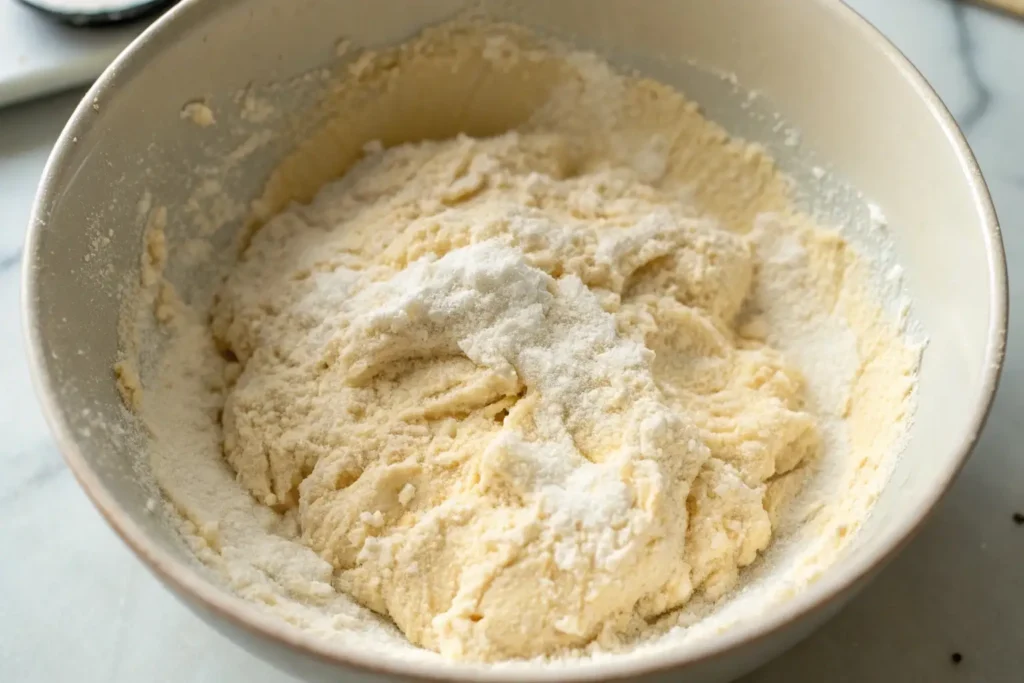
Add yeast, salt, and enrichers (3 minutes)
Sprinkle in 6 g instant yeast, 10 g fine salt, 15 g olive oil, and 10 g honey.
Mix with a dough hook on low 2–3 minutes or by hand with a damp scraper until cohesive and slightly tacky.
Dough should feel soft, not sticky. Add 5–10 g water if stiff, or dust a pinch of flour if overly wet.
Develop the dough (8 minutes or folds)
Mixer path: Knead on medium-low 6–8 minutes until smooth and elastic.
Hand path: Perform 3 rounds of stretch-and-fold every 10 minutes during the first 30 minutes.
Target: a light windowpane and a plump, satiny ball.
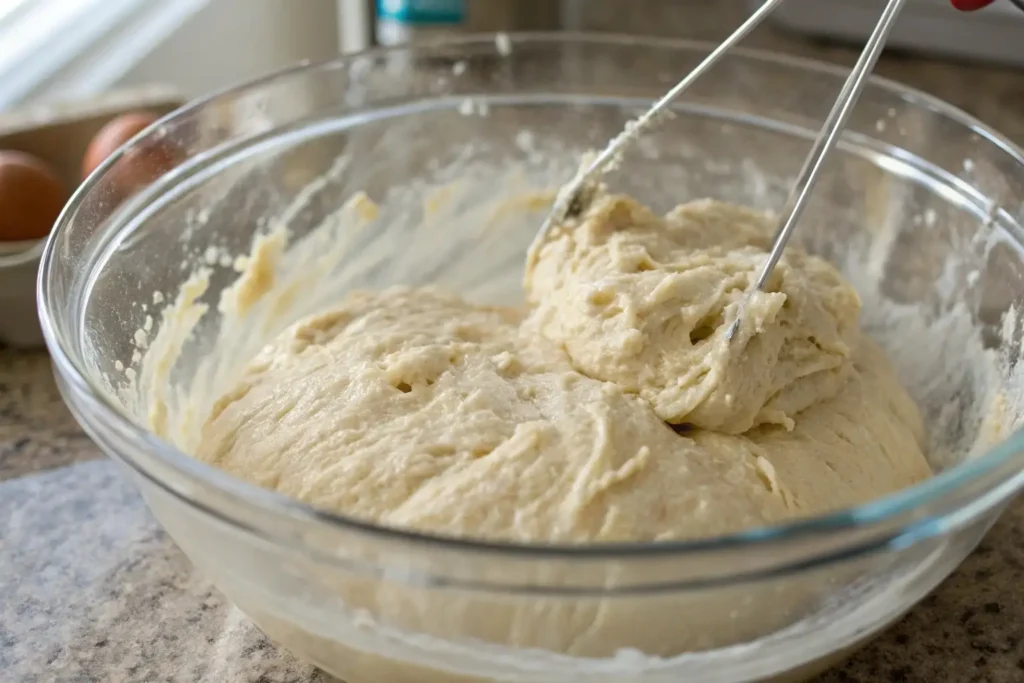
Bulk ferment (60–90 minutes)
Place dough in a lightly oiled bowl, cover, and ferment warm (24–26°C / 75–79°F).
It’s ready when puffed by ~70%, jiggles when shaken, and shows small surface bubbles.
If your kitchen is cool, add 30–45 minutes. Trust the look over the clock.
Pre-shape and bench rest (15 minutes)
Turn dough onto a lightly floured counter.
Pre-shape into a loose round. Cover and rest 15 minutes to relax gluten.
Final shape and proof (30–45 minutes)
Shape a tight boule or batard, creating surface tension by tucking the edges under and rolling gently.
Place seam-side up in a rice flour–dusted banneton.
Proof until slightly springy and passes the poke test: a floured fingertip indentation springs back slowly, leaving a faint mark.
7A) Bake in a Dutch oven
Flip dough onto parchment, seam-side down. Score 1–2 cm deep with a clean slash to guide oven spring.
Load into the preheated pot, cover, and bake 20 minutes.
Uncover and bake 15–20 minutes more until deep golden crust forms and the loaf registers 96–99°C / 205–210°F internally.
7B) Bake on a stone/steel with steam
Slide the scored loaf (on parchment) onto the hot stone.
Pour 1 cup hot water into the lower pan and close the door immediately.
Bake 15 minutes with steam, then vent the oven, remove the pan, and bake 15–20 minutes more to color.
8) Cool completely
Transfer to a rack and cool at least 60 minutes before slicing. This sets the crumb and prevents gumminess.
Signs you nailed it
A bold, blistered golden crust, a rhythmic hollow thump on the bottom, and a fragrant, nutty interior with even openness.
Pro Tips and Variations for Semolina Bread
Make the dough work for you
Hydration dialing: Start near the middle of the water range, then adjust by feel. Durum semolina absorbs steadily; aim for soft and tacky, not sticky. This supports an open, chewy crumb.
Short autolyse, big payoff: A 10–20 minute rest before kneading lets semolina hydrate and improves gluten so shaping is smoother.
Read fermentation, not the clock: Warm dough should rise ~70% in bulk and show tiny bubbles. Underproofed loaves split randomly; slightly overproofed loaves spread and color fast.
Score with intention: One confident, 1–2 cm slash directs oven spring. Dusting the surface lightly helps the blade glide.
Steam equals shine: For a golden crust, use a Dutch oven or add steam for the first 15–20 minutes, then vent to finish color.
Color booster option: A pinch of diastatic malt deepens browning if your oven runs cool.
Flour choices and texture
Rimacinata vs coarse semolina: Fine or rimacinata gives a silkier dough and neater slice; coarse brings a slightly more rustic bite.
Blend for balance: A 50/50 mix of durum semolina and bread flour balances nutty flavor with reliable structure. More semolina = richer color and a tenderer crumb.
Shaping and handling
Tension without tearing: Lightly flour the bench, keep the dough underside clean, and roll it tight to build surface tension.
Rice flour for the banneton: Mix rice flour with semolina to prevent sticking and preserve pattern detail.
Schedule upgrades
Overnight cold ferment: After shaping, refrigerate 8–18 hours. You’ll get deeper flavor, easier scoring, and crisp crust. Bake straight from cold.
No-knead path: Cut yeast to ~2 g and increase water slightly. Mix, cover, and bulk ferment 12–18 hours at cool room temp, then shape and bake.
Preferment lift: Swap part of the flour and water for a quick biga or poolish (8–12 hours). Expect better aroma and structure.
Sourdough variant
Starter swap: Use ~100 g ripe 100%-hydration starter in place of yeast; reduce water a bit. Bulk takes longer; look for that 60–70% rise.
Flavor notes: Sourdough + semolina yields a gentle tang that complements the grain’s nutty sweetness.
Add-ins and finishes
Classic seeds: Sesame, nigella, or fennel add perfume and crunch. Press seeds onto a lightly misted surface before scoring.
Citrus and herb: Lemon zest with thyme pairs well with seafood soups or spring salads.
Olive oil glaze: Brush a tiny amount after baking for a soft sheen without softening the crust too much.
Shapes and uses
Boule or batard: Best for artisan look and crackly crust.
Sandwich loaf: Pan it for a taller slice and softer sides.
Focaccia-style: Increase olive oil and hydration; dimple, seed, and bake on a sheet for a golden, airy slab.
Serving Suggestions for Semolina Bread
Bring out the loaf’s sunny color and golden crust by slicing after it’s fully cool. Aim for 1–1.5 cm slices for sandwiches, a little thinner for toast.
Simple and satisfying
Olive oil dip: Extra-virgin olive oil, a pinch of flaky salt, cracked pepper, and a splash of balsamic. Add crushed fennel or chili for heat.
Breakfast toast: Lightly toast for a caramelized edge and chewy crumb; top with honey–ricotta, tahini–date syrup, or soft-scrambled eggs.
Avocado smash: Lemon, chili flakes, and herbs on warm slices for a quick lunch.
Entertaining boards
Bruschetta bar: Rub warm slices with garlic, then offer bowls of marinated tomatoes, whipped feta, pesto, and olives.
Dips and spreads: Serve with hummus, muhammara, or artichoke dip; the semolina bread holds up without crumbling.
Sandwiches and melts
Panini: Mortadella, provolone, and pistachio pesto; press until crisp.
Mediterranean veggie: Roasted peppers, zucchini, goat cheese, and basil.
Tuna melt upgrade: Olive oil–packed tuna, capers, and sharp cheddar on toasted slices.
Soups, stews, and salads
Ideal alongside tomato soup, minestrone, or seafood stew.
Cube and toast into golden croutons for Caesar or fattoush.
Finishing touches
Seeded edge: Brush warm crust with a whisper of olive oil and roll in toasted sesame for aroma and crunch.
Garlic bread: Butter, parsley, and grated pecorino; broil briefly for blistered edges.
Refreshing leftovers
Mist slices with water and warm at 180°C / 350°F for 5–7 minutes to revive the crust.
For crostini, slice thin, bake until crisp, and store airtight for last-minute snacks.
Conclusion
You don’t need a bakery to get a golden crust and tender, chewy crumb. With a few simple habits—gentle hydration, a short rest, and steam—semolina bread made with durum semolina becomes reliably impressive, whether you use a Dutch oven, a stone, or the no-knead schedule.
Keep this loaf in your rotation and tweak it to your taste:
Go classic for an all-purpose table bread, or try a mild sourdough version for more character.
Swap rimacinata for a silkier slice, add sesame for crunch, or cold-proof overnight for deeper flavor.
Slice, toast, press, or pair with soup—one dough, many wins.
Bake it once, note your water and rise times, then repeat. Small adjustments lead to consistent, artisan results you can count on week after week.
Explore more irresistible bread recipes you won’t want to miss:
Miche Bread
Batard Bread
Sourdough Bread

Semolina Bread Shockingly Good with Simple Secrets
Ingredients
Base Loaf (1 large boule or batard)
- Durum semolina fine or rimacinata — 275 g
- Sunny color and nutty flavor.
- Bread flour — 225 g
- Adds strength for a chewy crumb.
- Warm water 24–27°C — 330–350 g
- Start at 340 g; adjust 1–2 tbsp for dough feel and climate.
- Instant yeast — 6 g about 2 tsp
- Use 8 g active dry; bloom in part of the warm water if preferred.
- Fine sea salt — 10 g about 1¾ tsp
- Olive oil — 15 g 1 tbsp
- Tenderizes and boosts aroma.
- Honey or sugar — 10 g 2 tsp
- Gentle sweetness and faster browning.
Optional Boosters
- Diastatic malt powder — 2–3 g
- Enhances color and oven spring especially in low-sugar bakes.
- Vital wheat gluten — 5–8 g
- Use if your bread flour is weak or you want extra structure.
For Shaping and Finish
- Rice flour + semolina for dusting the banneton
- Prevents sticking and keeps patterns sharp.
- Sesame or nigella seeds for topping
- Classic crunch and bakery look.
- Parchment paper for easy transfer to a Dutch oven or stone
Smart Swaps and Notes
- Flour ratio: 50/50 works well too; more semolina = deeper golden crust slightly more tender crumb.
- Hydration: Aim for a soft tacky dough. If using coarse semolina, lean toward the higher water range.
- No-knead path: Drop yeast to 2 g use 360 g water, and bulk ferment 12–18 hours at cool room temp.
- Sourdough variant: Replace yeast with 100 g ripe starter 100% hydration, reduce water to 310–320 g, and extend rise times.
Instructions
Before you start
- Preheat a Dutch oven with its lid to 245°C / 475°F for 45 minutes, or place a baking stone/steel on the middle rack and a metal pan on the lower rack for steam.
- Set out parchment, a banneton or bowl lined with a floured towel, and a sharp lame or knife.
Mix and quick autolyse (10 minutes)
- In a bowl, whisk 275 g durum semolina (rimacinata) and 225 g bread flour.
- Add 340 g warm water and stir until no dry spots remain.
- Cover and rest 10 minutes. This short pause hydrates semolina for better gluten and a chewy crumb.
Add yeast, salt, and enrichers (3 minutes)
- Sprinkle in 6 g instant yeast, 10 g fine salt, 15 g olive oil, and 10 g honey.
- Mix with a dough hook on low 2–3 minutes or by hand with a damp scraper until cohesive and slightly tacky.
- Dough should feel soft, not sticky. Add 5–10 g water if stiff, or dust a pinch of flour if overly wet.
Develop the dough (8 minutes or folds)
- Mixer path: Knead on medium-low 6–8 minutes until smooth and elastic.
- Hand path: Perform 3 rounds of stretch-and-fold every 10 minutes during the first 30 minutes.
- Target: a light windowpane and a plump, satiny ball.
Bulk ferment (60–90 minutes)
- Place dough in a lightly oiled bowl, cover, and ferment warm (24–26°C / 75–79°F).
- It’s ready when puffed by ~70%, jiggles when shaken, and shows small surface bubbles.
- If your kitchen is cool, add 30–45 minutes. Trust the look over the clock.
Pre-shape and bench rest (15 minutes)
- Turn dough onto a lightly floured counter.
- Pre-shape into a loose round. Cover and rest 15 minutes to relax gluten.
Final shape and proof (30–45 minutes)
- Shape a tight boule or batard, creating surface tension by tucking the edges under and rolling gently.
- Place seam-side up in a rice flour–dusted banneton.
- Proof until slightly springy and passes the poke test: a floured fingertip indentation springs back slowly, leaving a faint mark.
7A) Bake in a Dutch oven
- Flip dough onto parchment, seam-side down. Score 1–2 cm deep with a clean slash to guide oven spring.
- Load into the preheated pot, cover, and bake 20 minutes.
- Uncover and bake 15–20 minutes more until deep golden crust forms and the loaf registers 96–99°C / 205–210°F internally.
7B) Bake on a stone/steel with steam
- Slide the scored loaf (on parchment) onto the hot stone.
- Pour 1 cup hot water into the lower pan and close the door immediately.
- Bake 15 minutes with steam, then vent the oven, remove the pan, and bake 15–20 minutes more to color.
Cool completely
- Transfer to a rack and cool at least 60 minutes before slicing. This sets the crumb and prevents gumminess.
Signs you nailed it
- A bold, blistered golden crust, a rhythmic hollow thump on the bottom, and a fragrant, nutty interior with even openness.
Notes
- Calories: ~165 kcal
- Carbohydrates: ~32 g
- Protein: ~5 g
- Fat: ~2 g
- Saturated Fat: ~0.3 g
- Fiber: ~1–2 g
- Sugar: ~1 g
- Sodium: ~330 mg